


Bolt Foundry Overview
Bolt Foundry is a specialized platform designed to address a fundamental challenge in AI development: the inconsistency and unpredictability of Large Language Models (LLMs). It introduces a systematic approach, termed 'Context Engineering', to turn prompt engineering from a trial-and-error art form into a rigorous scientific discipline. At its core, Bolt Foundry provides an open-source command-line tool, `aibff`, that enables developers to create, run, and manage unit tests for their LLM-powered features, ensuring the reliability and quality of AI-generated content.
The central problem Bolt Foundry solves is that asking an LLM the same question multiple times often yields different responses in tone, length, and structure. This variability makes it difficult to integrate LLMs into production systems where consistency is key. Bolt Foundry's solution is to make AI behavior measurable and improvable through a structured testing framework.
How to use Bolt Foundry
Using Bolt Foundry involves a clear, step-by-step process designed for developers to quickly integrate into their workflow:
- Installation: Begin by downloading the `aibff` command-line tool from the official Bolt Foundry releases on GitHub. The tool is available for Linux, macOS, and Windows.
- API Key Setup: The `aibff` tool is model-agnostic and works with various AI providers like OpenAI, Anthropic, and others through OpenRouter. You need to obtain an API key from your chosen provider and set it as an environment variable (e.g., `export OPENROUTER_API_KEY=your-key`).
- Create a 'Grader': A grader is the heart of the testing process. It's a Markdown file (`.deck.md`) where you define the evaluation criteria for an AI's output. This includes a description of the task, specific requirements (e.g., professional tone, clarity, structure), and a detailed scoring system (e.g., +3 for a perfect response, -3 for a completely wrong one).
- Provide Test Samples: Alongside the grader, you create a context and samples file (in `.toml` or `.jsonl` format). This file contains a set of test cases, each with an input prompt, an ideal or expected output, and a corresponding score based on your grader's criteria. A good set includes examples across the entire scoring range.
- Run Calibration: With the grader and samples in place, you execute the `aibff calibrate` command. The tool sends the input prompts from your samples to the configured LLM, receives the generated outputs, and scores them against your predefined grader criteria.
- Analyze and Iterate: The calibration process yields a detailed report, including an overall reliability score and a sample-by-sample breakdown of performance. This data shows exactly where the AI succeeds and fails. Based on these insights, you can refine your prompts, adjust the grader's criteria, or add more diverse samples to improve the model's performance and re-run the calibration to measure the improvement.
Core Features of Bolt Foundry
- Structured Graders: Define objective evaluation criteria and scoring guidelines in simple Markdown files, making tests easy to create, read, and version control.
- Calibration Engine: The `aibff calibrate` command automates the process of testing LLM outputs against your graders, providing a quantifiable reliability score.
- Objective Measurement: Transforms subjective quality assessment into objective, data-driven metrics, allowing for consistent and repeatable evaluations.
- Model-Agnostic Comparison: Use the same grader to test and compare the performance of different LLMs (e.g., GPT-4 vs. Claude 3) for your specific use case, helping you choose the best model for the job.
- Open-Source Tooling: The core `aibff` tool is open-source, offering transparency, flexibility, and community-driven development.
- Context Engineering Framework: Promotes a systematic methodology for optimizing LLM performance through structured samples, graders, and proper information hierarchy.
Use Cases for Bolt Foundry
Bolt Foundry is valuable for any application where LLM output quality and consistency are critical:
- Customer Support Automation: Ensuring that AI-powered chatbots maintain a consistent, professional, and helpful tone in all interactions.
- Structured Data Generation: Validating that an LLM correctly generates structured data formats like JSON, XML, or YAML, as demonstrated in a case study where a company achieved 100% reliability for XML citation output.
- Content Creation Workflows: Maintaining a specific style, voice, and quality standard for AI-generated articles, marketing copy, or professional emails.
- Prompt & Model A/B Testing: Systematically comparing different prompt variations or foundation models to identify the most effective combination for a given task.
- Regression Testing for AI Systems: Ensuring that updates to prompts or models do not degrade the quality of outputs for existing use cases.
Advantages of Bolt Foundry
The primary advantage of Bolt Foundry is its ability to bring engineering rigor to the often-chaotic world of prompt engineering. It allows teams to move from 'prompt whispering' to a systematic, test-driven development (TDD) cycle for AI features. This leads to higher reliability, predictable performance in production, and a clear, data-backed path for improvement. Its open-source and model-agnostic nature provides flexibility and avoids vendor lock-in.
Pricing and Plans
The core command-line tool, `aibff`, is open-source and available for free. Developers can download and use it without any cost from Bolt Foundry. However, users are responsible for the costs associated with the API calls made to their chosen LLM providers (e.g., OpenAI, Anthropic, OpenRouter). While the tool itself is free, Bolt Foundry may offer enterprise-level support, consulting, or advanced cloud-based features as part of a commercial offering in the future.
Bolt Foundry Alternatives
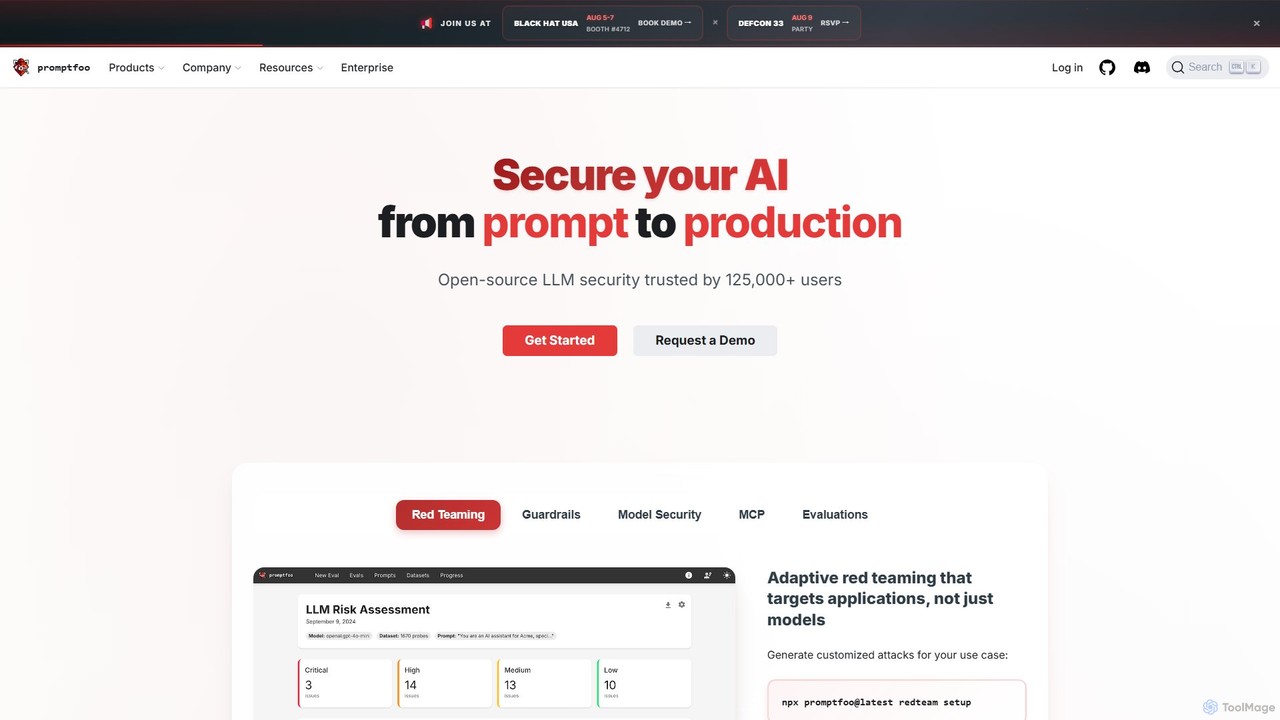
promptfoo
promptfoo is a comprehensive testing and evaluation framework for Large Language Models (LLMs). It helps developers and enterprises compare prompt quality, evaluate model performance, and enhance AI security through systematic testing, benchmarking, and AI-powered red teaming. It supports over 50 LLM providers, including local models, and offers a developer-friendly CLI for seamless integration into development workflows.
Low Code No Code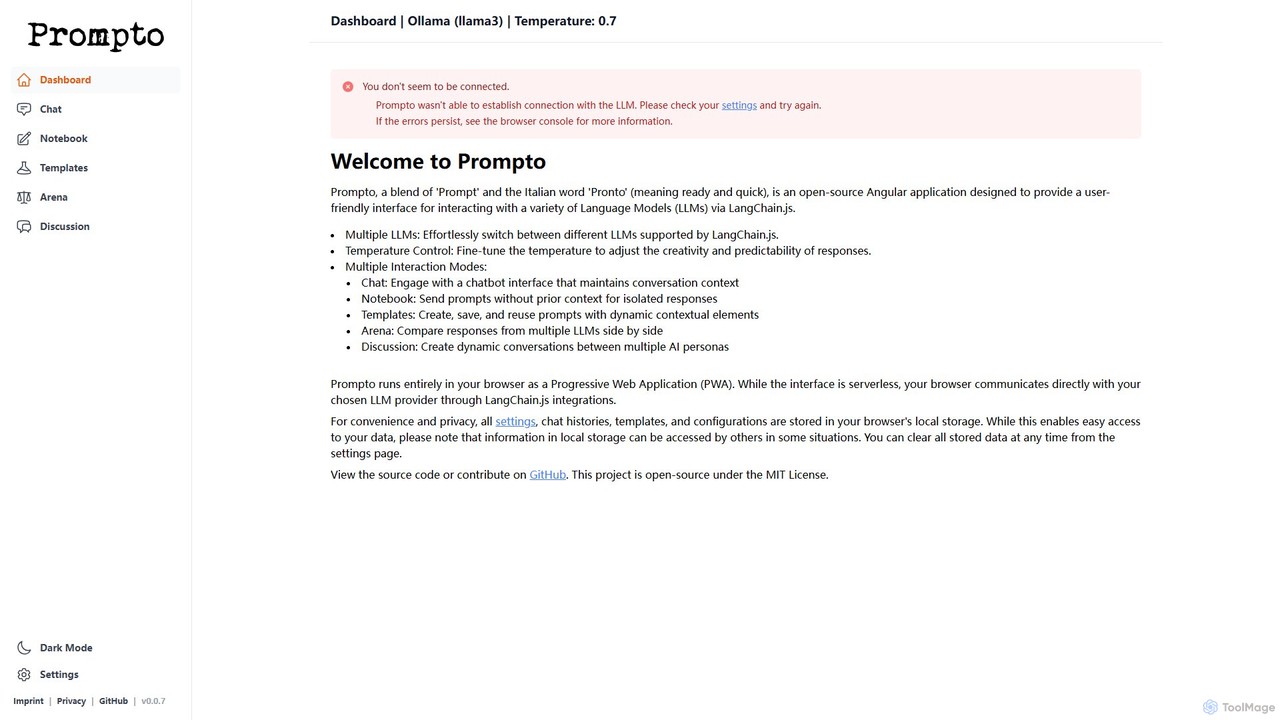
Prompto
Prompto is a free, open-source, browser-based interface for interacting with a wide range of Large Language Models (LLMs). It leverages LangChain.js to connect directly to providers like OpenAI, Anthropic, and local models via Ollama, offering advanced features like a model comparison Arena, prompt templates, and multi-AI discussions, all while prioritizing user privacy by storing data locally.
Model Comparison
promptbetter.ai
An AI-powered prompt engineering platform designed to help users create, refine, and optimize prompts for large language models (LLMs). It enhances prompt clarity, context, and structure to generate superior, more accurate, and consistent AI outputs for various tasks.
Code Assistant
MLflow
MLflow is an open-source platform for managing the end-to-end machine learning lifecycle. It enables developers and data scientists to track experiments, package code into reproducible runs, version and share models, and deploy them to production, supporting both traditional ML and modern GenAI applications.
Data Science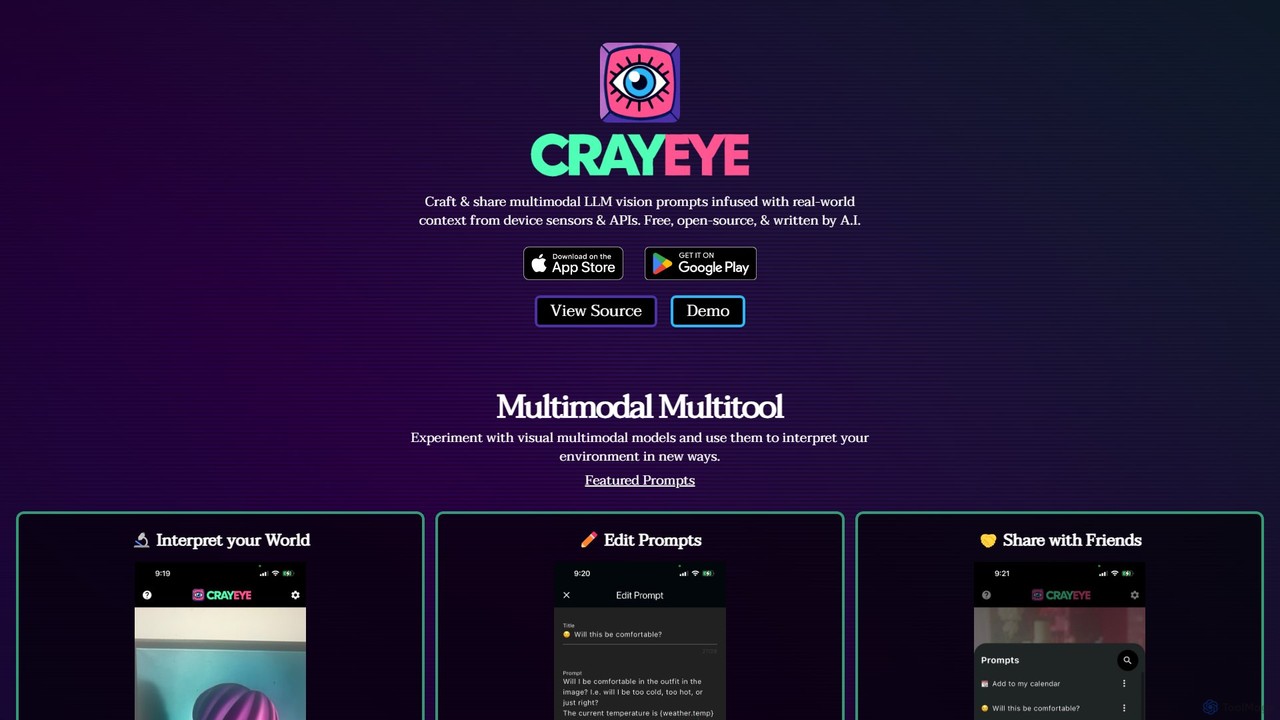
CrayEye
CrayEye is a free, open-source multimodal AI tool that lets you create and share vision prompts enriched with real-world context from your device's sensors (like camera, GPS) and APIs (like weather). Experiment with visual models to interpret your environment in new, context-aware ways.
Open SourceBolt Foundry Categories
Bolt Foundry Embed Widget
Copy this embed code to place the badge on your blog, article, or product site and send readers directly to this ToolMage detail page.

Related AI tools

Latitude
Latitude is an open-source development platform designed for building, evaluating, and deploying applications powered by Large Language Models (LLMs), with a special focus on creating autonomous AI agents. It provides a comprehensive suite of tools for developers to experiment, refine, and scale their AI solutions.
MlopsPrompto
Prompto is a free, open-source, browser-based interface for interacting with a wide range of Large Language Models (LLMs). It leverages LangChain.js to connect directly to providers like OpenAI, Anthropic, and local models via Ollama, offering advanced features like a model comparison Arena, prompt templates, and multi-AI discussions, all while prioritizing user privacy by storing data locally.
Model Comparison
Jyek
Jyek is an AI agent platform that understands objectives, creates execution plans, uses tools, and delivers verifiable results for complex, multi-step tasks.
Automation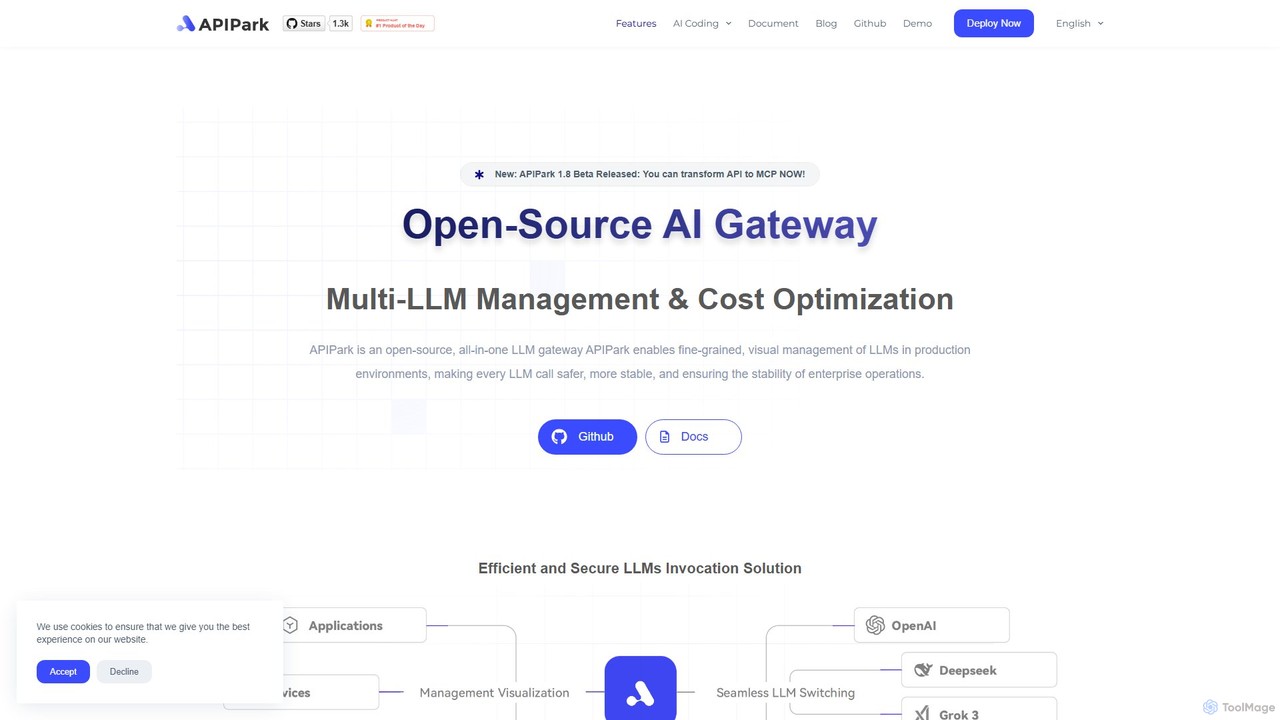
APIPark
APIPark is an open-source AI gateway and developer portal designed to help businesses manage, integrate, and deploy AI services efficiently. It centralizes LLM calls, reduces costs, and provides tools for API sharing, monitoring, and security.
Llm Gateway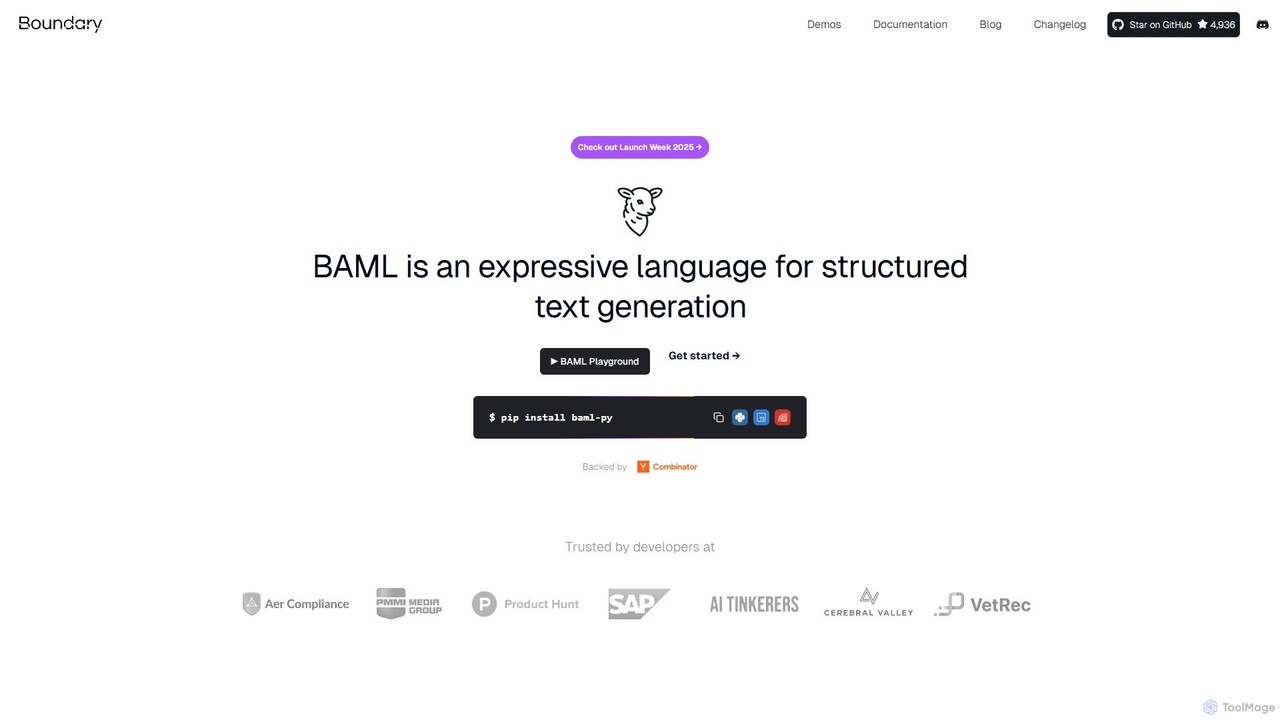
boundaryml
boundaryml (BAML) is a specialized programming language and toolkit for developers to reliably extract structured data from Large Language Models (LLMs). It transforms complex prompt engineering into a streamlined, code-like process, ensuring type-safe, error-corrected outputs across various LLMs and programming languages like Python and TypeScript. It's designed to enhance reliability, reduce costs, and accelerate development cycles for AI applications.
Api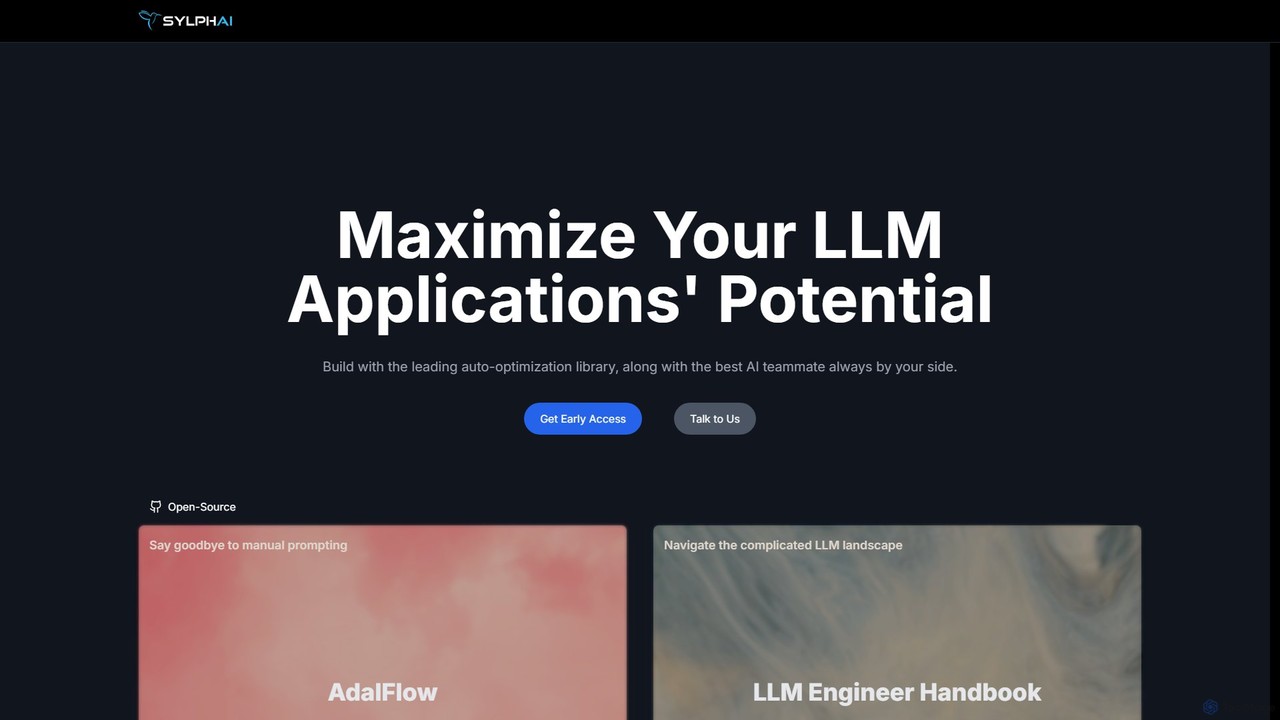
Sylph AI
Sylph AI is a development platform designed to maximize the potential of LLM applications. It features AdalFlow, a leading open-source library for building and auto-optimizing LLM task pipelines, and an AI Teammate that provides expert guidance throughout the entire development workflow, from ideation to production.
Libraries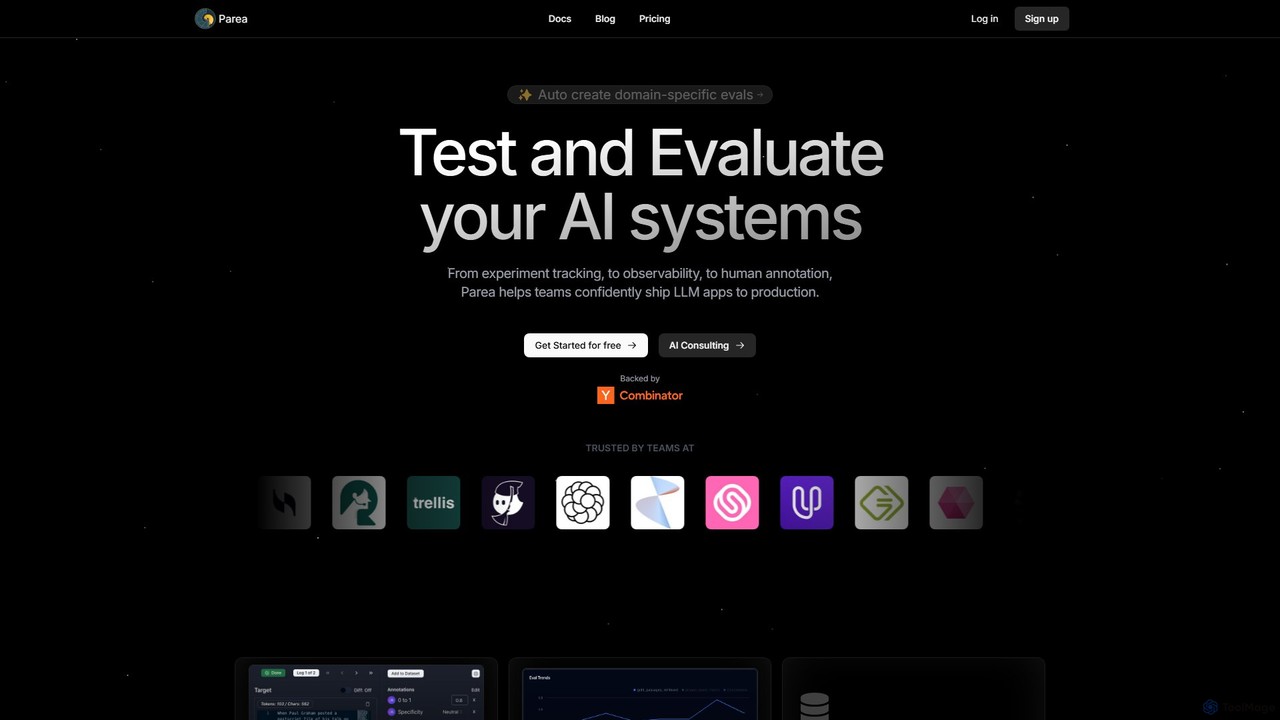
Parea AI
Parea AI is an end-to-end platform for developing, testing, and monitoring LLM applications. It provides tools for experiment tracking, observability, evaluation, and human annotation to help teams confidently ship AI systems to production.
Model Training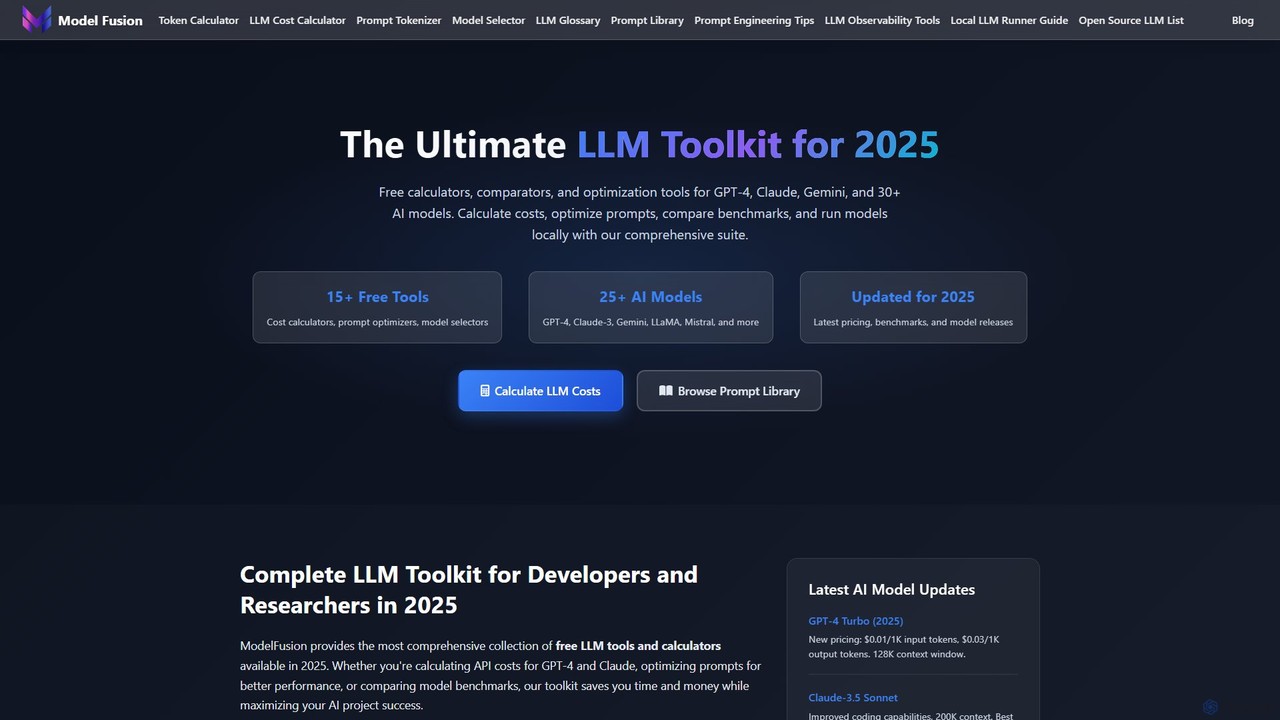
ModelFusion
ModelFusion is an all-in-one LLM toolkit for developers and researchers. It offers a suite of free tools, including a cost calculator, prompt library, and model comparator for over 30 AI models like GPT-4, Claude, and Gemini. It also provides a unified API and local model running guides to streamline AI development and optimize costs.
Api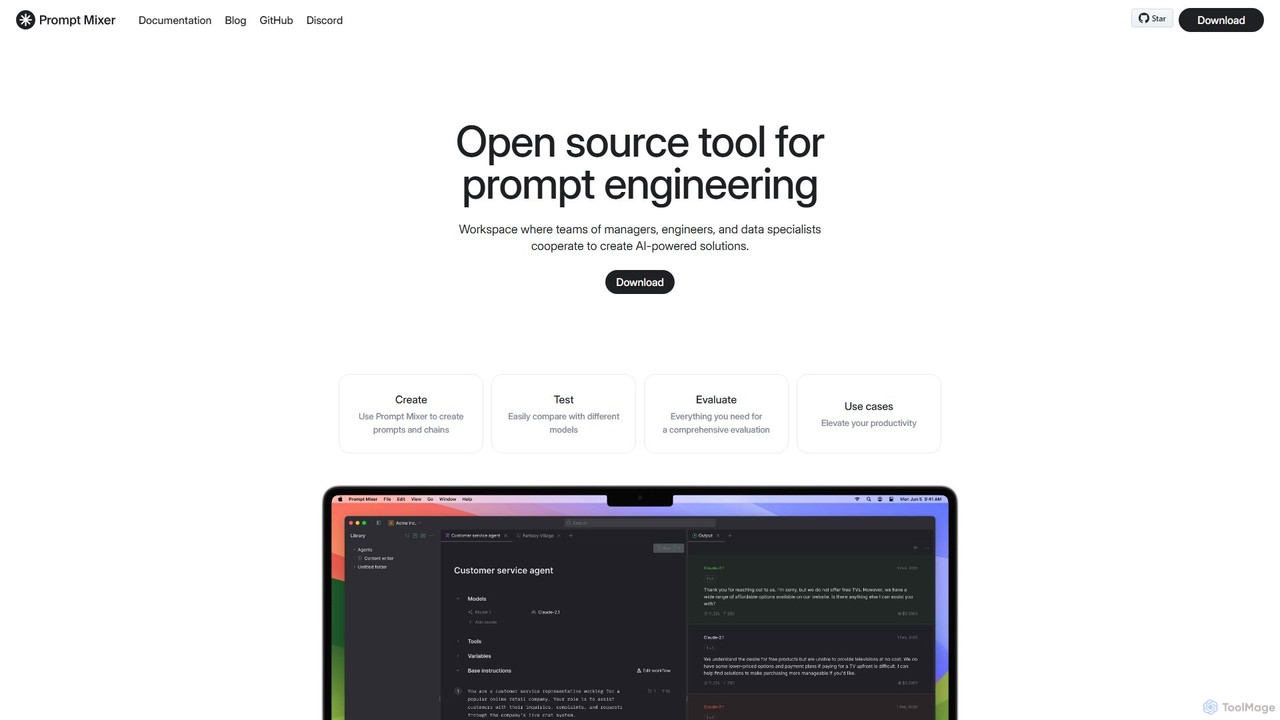
Prompt Mixer
Prompt Mixer is a powerful open-source tool for prompt engineering, providing a collaborative workspace for teams. It enables users to create, test, evaluate, and deploy AI-powered solutions by managing prompt chains, comparing different LLMs, and utilizing advanced evaluation metrics.
Prompt Engineering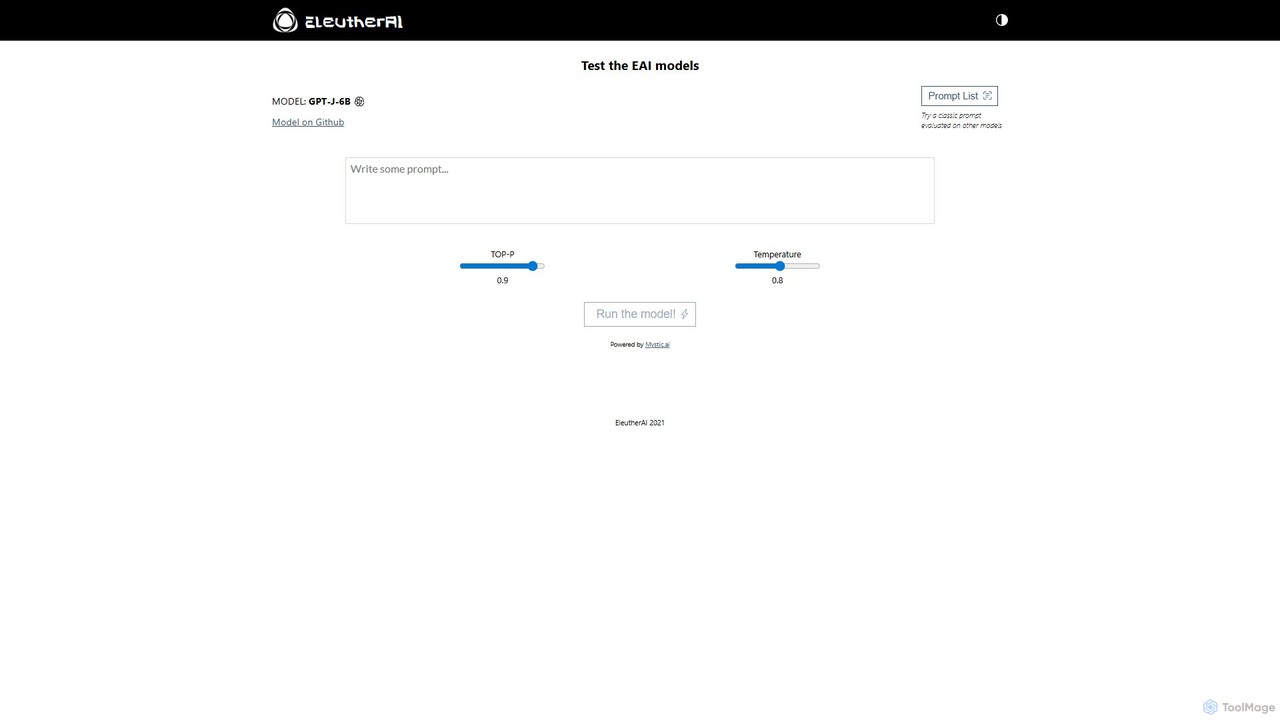
6b
6b is a free web-based interface by EleutherAI for testing the GPT-J-6B large language model. Users can input prompts, adjust parameters like temperature and top-p, and instantly generate text. It's an accessible tool for developers, researchers, and writers to experiment with a powerful 6-billion parameter open-source AI without any setup, exploring its capabilities in creative writing, coding, and content generation.
Ai Modelspromptfoo
promptfoo is a comprehensive testing and evaluation framework for Large Language Models (LLMs). It helps developers and enterprises compare prompt quality, evaluate model performance, and enhance AI security through systematic testing, benchmarking, and AI-powered red teaming. It supports over 50 LLM providers, including local models, and offers a developer-friendly CLI for seamless integration into development workflows.
Low Code No Codepromptbetter.ai
An AI-powered prompt engineering platform designed to help users create, refine, and optimize prompts for large language models (LLMs). It enhances prompt clarity, context, and structure to generate superior, more accurate, and consistent AI outputs for various tasks.
Code AssistantMLflow
MLflow is an open-source platform for managing the end-to-end machine learning lifecycle. It enables developers and data scientists to track experiments, package code into reproducible runs, version and share models, and deploy them to production, supporting both traditional ML and modern GenAI applications.
Data ScienceCrayEye
CrayEye is a free, open-source multimodal AI tool that lets you create and share vision prompts enriched with real-world context from your device's sensors (like camera, GPS) and APIs (like weather). Experiment with visual models to interpret your environment in new, context-aware ways.
Open Source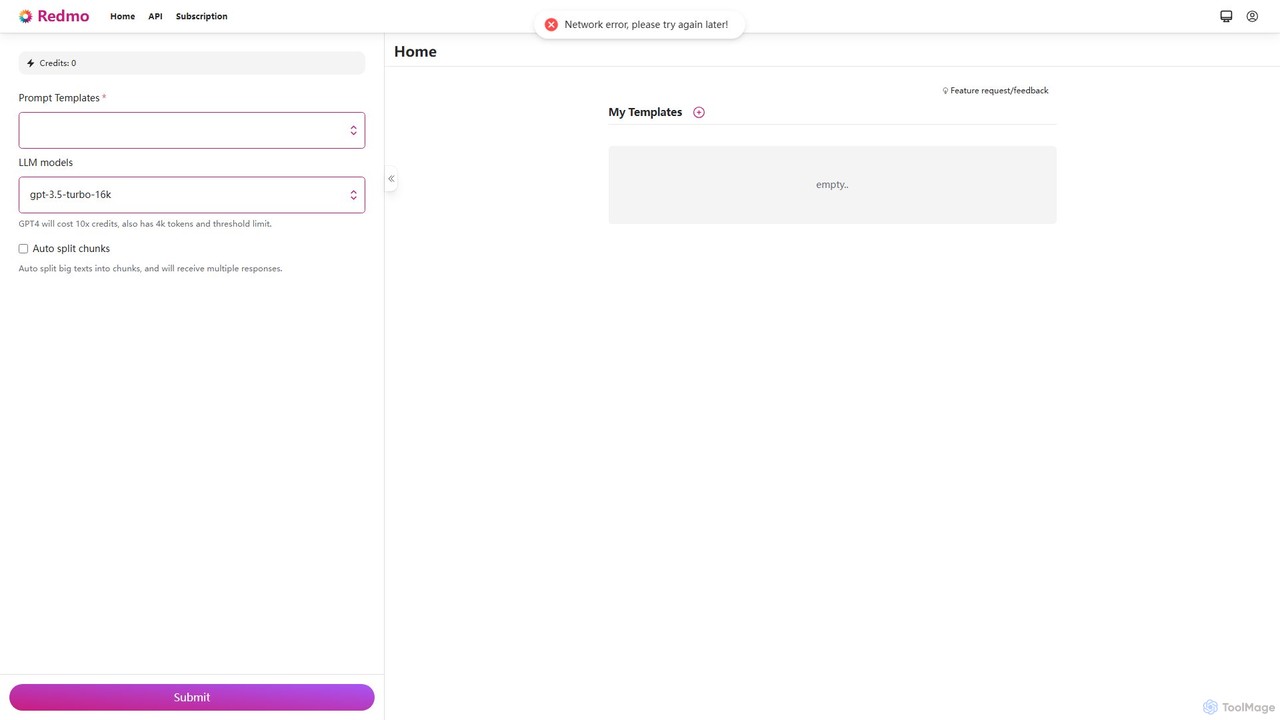
Redmo
Redmo is a powerful prompt engineering platform that enables users to create, manage, and execute dynamic prompt templates with variables. It offers API support for seamless integration and features multi-LLM compatibility, including GPT-4, to streamline and scale automated content generation and workflows.
Api Management
Bolt Foundry Comments (0)
Sign in to comment.
Sign inNo comments yet.