Development Best in category 5 results Project Management AI Tool

Popular AI tools in the Project Management field of Development include Saphira、Gitmore、APEX、Maige、Pentrix, etc., helping you quickly improve efficiency.

Gitmore

Gitmore

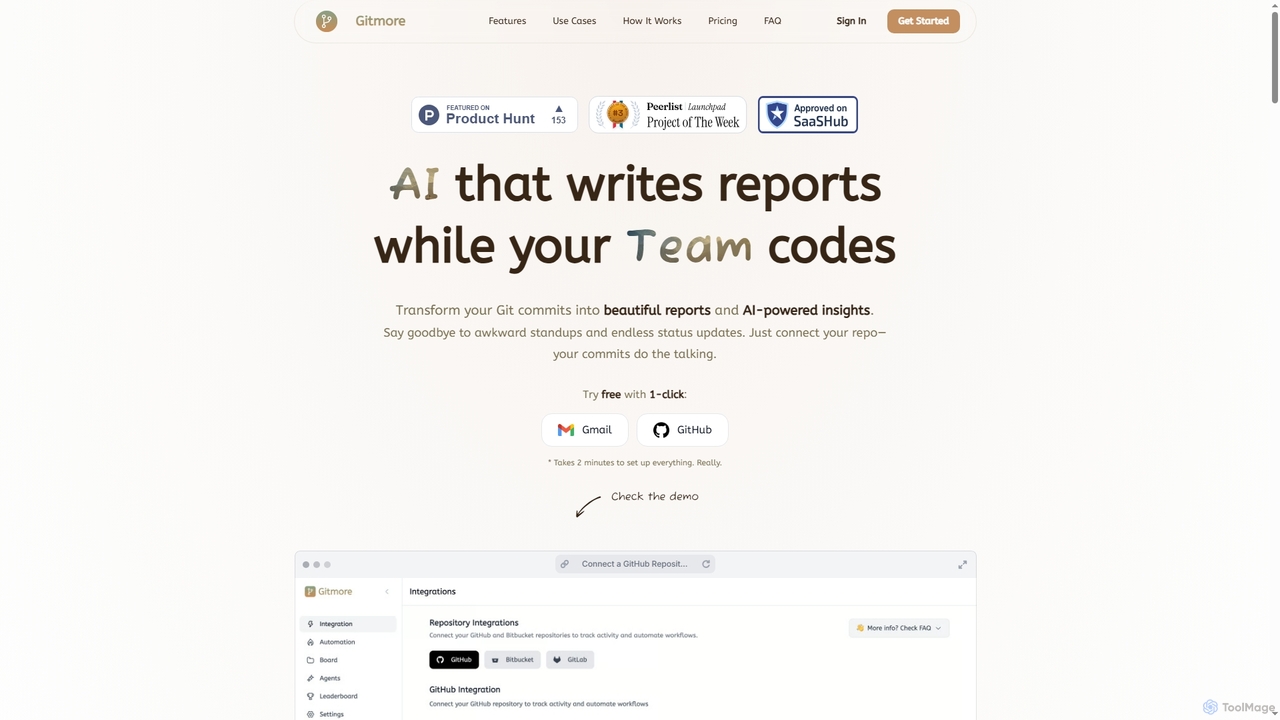
Gitmore is an AI-powered tool that automates technical team reporting and engineering updates. It transforms Git commits into …

4.2K
Pentrix

Pentrix

Pentrix is an AI-powered platform designed to streamline the entire product development and marketing lifecycle, from initial idea …

2.3K
APEX

APEX

APEX is an AI-powered product exploration and management platform designed to streamline the journey from idea to backlog. …

2.4K
Saphira

Saphira

Saphira is a Y Combinator-backed AI platform that automates product safety certification and compliance. It helps engineering teams …

7.9K
Maige

Maige

Maige is an intelligent, open-source AI copilot that automates GitHub repository management using natural language. It streamlines workflows …

2.3K

About Project Management

AI Project Management tools are a class of software that leverages artificial intelligence to automate, predict, and optimize project planning, execution, and monitoring. These tools utilize machine learning algorithms to analyze historical data, identify patterns, and provide intelligent recommendations for task scheduling, resource allocation, and risk assessment. They empower teams, particularly in development environments, to deliver projects more efficiently by anticipating bottlenecks and automating administrative work. This intelligent layer transforms traditional project tracking into a proactive management system.

Core Features

  • Predictive Analytics: Forecasts project timelines, budget adherence, and potential risks based on past performance and current data.
  • Intelligent Task Automation: Automatically assigns tasks, prioritizes backlogs, and adjusts deadlines based on team workload and project dependencies.
  • Resource Optimization: Recommends the best team members for specific tasks based on skills, availability, and historical performance.
  • Automated Reporting: Generates real-time, data-driven status reports and dashboards, highlighting key metrics and insights for stakeholders.

Use Cases

These tools are highly effective for software development teams managing complex Agile sprints, marketing agencies coordinating multi-channel campaigns, and large enterprises overseeing cross-functional initiatives. They are particularly valuable in environments where project variables are numerous and interdependencies are complex, helping to maintain clarity and control.

How to Choose

When selecting an AI Project Management tool, consider its integration capabilities with your existing development stack (e.g., Git, Jira, Slack). Evaluate the accuracy and transparency of its AI-driven predictions and recommendations. Also, assess its scalability to support your team's size and project complexity, and ensure its workflow customization options align with your team's processes.

Project ManagementUse Cases

1

Automated Sprint Planning for Agile Teams

A product manager for a software development team uses an AI project management tool to plan the next two-week sprint. Instead of manually estimating story points and assigning tasks, the AI analyzes the backlog, considers each developer's historical velocity and current workload, and proposes a balanced sprint plan. It flags potential overload on a specific developer and suggests reassigning a task to another available engineer, ensuring a realistic and achievable sprint goal. This reduces planning time by hours and improves forecast accuracy.

2

Proactive Risk Mitigation for Enterprise Projects

A project manager overseeing a large-scale infrastructure deployment uses an AI tool to monitor progress. The system analyzes thousands of data points daily, including task dependencies, vendor timelines, and team communication sentiment. It identifies a high-risk pattern indicating a critical hardware vendor is likely to miss their delivery date. The tool alerts the manager two weeks in advance, providing enough time to arrange a backup supplier and adjust the project timeline, preventing a costly delay that would have otherwise been unforeseen.

3

Optimizing Resource Allocation in a Creative Agency

A director at a marketing agency needs to assign a new web design project to a team. The AI project management tool analyzes the project requirements (e.g., JavaScript expertise, UI/UX skills) and cross-references them with the skills, availability, and current workload of all designers and developers. It recommends an optimal team composition, suggesting a specific UI designer who recently finished a similar project and a developer with high proficiency in the required framework. This data-driven approach replaces guesswork and ensures the right people are on the right project, improving quality and efficiency.

4

Automated Progress Reporting for Stakeholders

A team lead is responsible for providing weekly progress updates to executive stakeholders. Instead of spending hours manually compiling data from different systems (Jira, GitHub, time-tracking software), they use an AI project management tool. The tool automatically synthesizes this data into a concise, visual dashboard. It highlights key achievements, tracks budget vs. actual spend, and flags any tasks that are falling behind schedule. The report is automatically generated and emailed every Friday, saving the team lead significant time and providing stakeholders with consistent, accurate updates.

5

Intelligent Budget Forecasting and Control

A finance manager for an R&D department uses an AI project management tool to monitor the budget of a year-long project. The tool integrates with time-tracking and expense systems. It not only shows real-time spending but also uses predictive models to forecast the total project cost based on the current burn rate and project velocity. In the third quarter, it projects a 15% budget overrun. This early warning allows the manager to work with the project lead to re-scope certain features or reallocate resources, keeping the project financially on track.

6

Streamlining Cross-Functional Product Launches

For a new product launch, a project manager coordinates between engineering, marketing, and sales teams. The AI tool visualizes the entire project timeline with all inter-team dependencies. When the engineering team reports a one-week delay on a key feature, the AI automatically adjusts the dependent marketing tasks, such as the creation of tutorials and a press release. It notifies the marketing lead of the new timeline, preventing them from starting work based on outdated information and ensuring all teams remain synchronized without constant manual check-ins.

Project ManagementFrequently Asked Questions