Document Management Best in category 2 results Data Extraction AI Tool

Popular AI tools in the Data Extraction field of Document Management include Extractify、Parsemania, etc., helping you quickly improve efficiency.

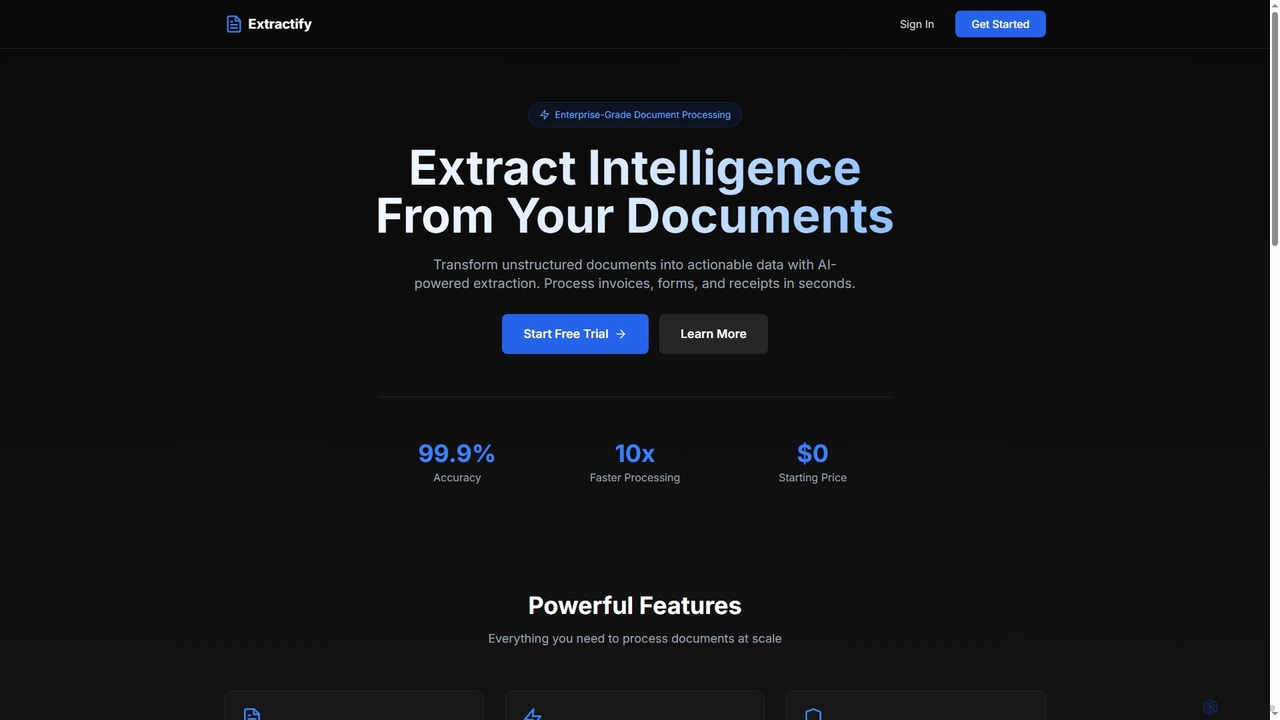
Extractify

Extractify

Extractify is an AI-powered document processing tool that transforms unstructured documents like invoices, forms, and receipts into actionable, …

3.6K
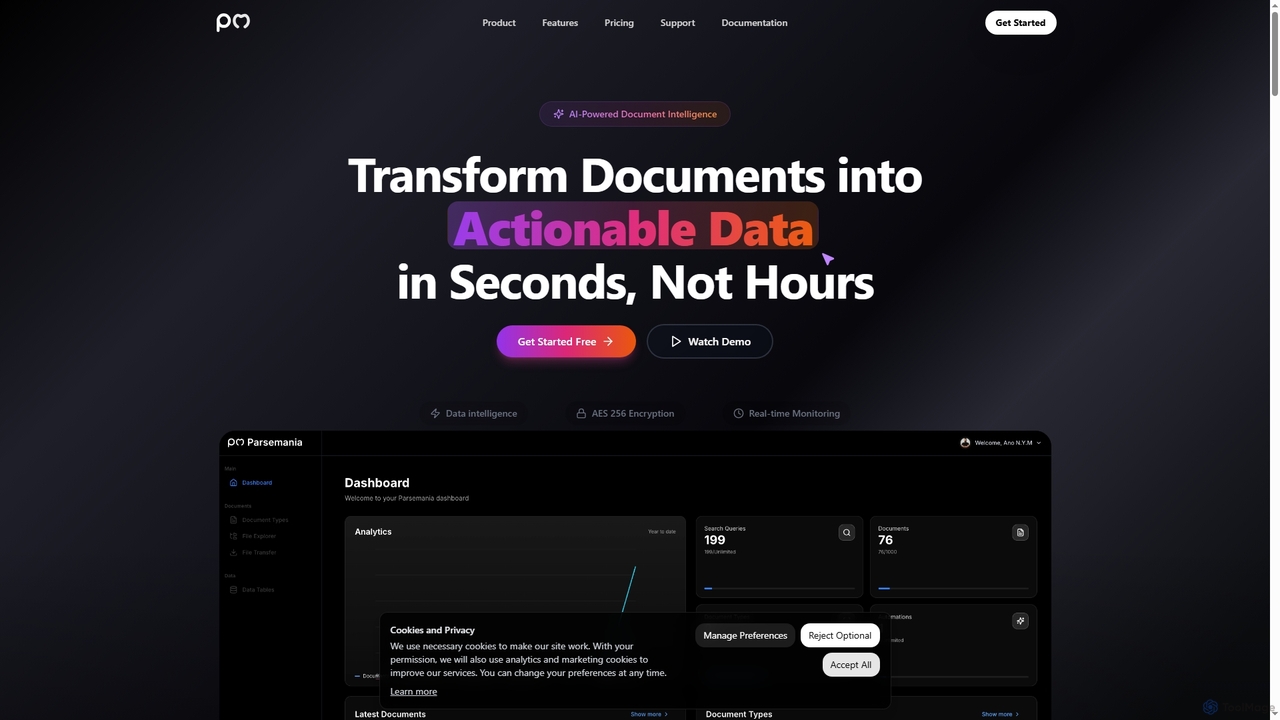
Parsemania

Parsemania

Parsemania is an AI-powered document intelligence platform that transforms unstructured documents into actionable data. It automates data extraction, …

3.2K

About Data Extraction

Data Extraction tools are AI-powered solutions designed to automatically identify, extract, and structure specific information from various types of documents. Utilizing advanced technologies like Natural Language Processing (NLP), Optical Character Recognition (OCR), and machine learning, these tools transform unstructured or semi-structured data into usable formats. They are crucial for automating manual data entry, improving accuracy, and accelerating information processing within broader document management workflows.

Core Features

  • Automated Data Identification: Automatically locates and categorizes key data fields such as names, dates, amounts, and addresses from diverse documents.
  • Multi-format Support: Processes information from a wide range of sources including PDFs, scanned images, handwritten notes, web pages, and digital documents.
  • Structured Output Generation: Exports extracted data into organized formats like CSV, JSON, XML, or directly integrates with databases and business systems via APIs.
  • Template-free & Adaptive Learning: Many tools can learn document layouts without predefined templates, adapting to variations and new document types over time.
  • Validation & Error Handling: Incorporates mechanisms for data validation, flagging discrepancies, and often includes human-in-the-loop review for enhanced accuracy.

Applicable Scenarios

These tools are indispensable for organizations dealing with high volumes of documents, such as financial institutions processing loan applications, legal firms analyzing contracts, or healthcare providers abstracting patient records. They streamline operations by converting raw document data into actionable insights, supporting compliance, and reducing operational costs.

How to Choose

When selecting a Data Extraction tool, consider its accuracy rates across your document types, compatibility with various file formats, and integration capabilities with existing enterprise systems. Evaluate its scalability to handle future data volumes, the level of customization offered for specific extraction rules, and robust security features to protect sensitive information.

Data ExtractionUse Cases

1

Automated Invoice Processing

Finance departments leverage AI data extraction to automatically pull critical information like vendor names, invoice numbers, line items, and total amounts from incoming invoices. This eliminates manual data entry, significantly speeds up accounts payable processes, and reduces human error, ensuring timely payments and accurate financial records.

2

Contract Clause Identification

Legal professionals and compliance officers utilize these tools to quickly identify and extract specific clauses, terms, dates, and parties from large volumes of legal contracts. This accelerates contract review, due diligence processes, and ensures adherence to regulatory requirements, saving countless hours of manual searching.

3

Customer Feedback Analysis

Marketing and product teams use data extraction to pull key themes, sentiment, and specific keywords from customer reviews, survey responses, and social media comments. By structuring this qualitative data, businesses can gain actionable insights into customer preferences, product performance, and emerging market trends.

4

Research Data Collection

Researchers across various fields employ AI data extraction to systematically gather specific data points, statistics, and methodologies from academic papers, reports, and scientific articles. This automates the tedious process of literature review and data synthesis, enabling faster analysis and discovery.

5

Supply Chain Document Digitization

Logistics and supply chain companies use data extraction to digitize and process information from shipping manifests, bills of lading, customs declarations, and delivery receipts. This improves inventory management, tracks goods more efficiently, and enhances overall supply chain visibility and compliance.

6

Healthcare Record Abstraction

Healthcare providers and medical coders apply data extraction to abstract relevant patient information, diagnoses, procedures, and medication details from unstructured clinical notes and medical records. This streamlines billing, ensures accurate coding for insurance claims, and supports clinical research and public health initiatives.

Data ExtractionFrequently Asked Questions