ToolMage
Sign in

Best 1 Fulfillment AI tools for Ecommerce

Popular Fulfillment AI tools in Ecommerce include WareIQ, helping you work more efficiently.

WareIQ
Paid

WareIQ

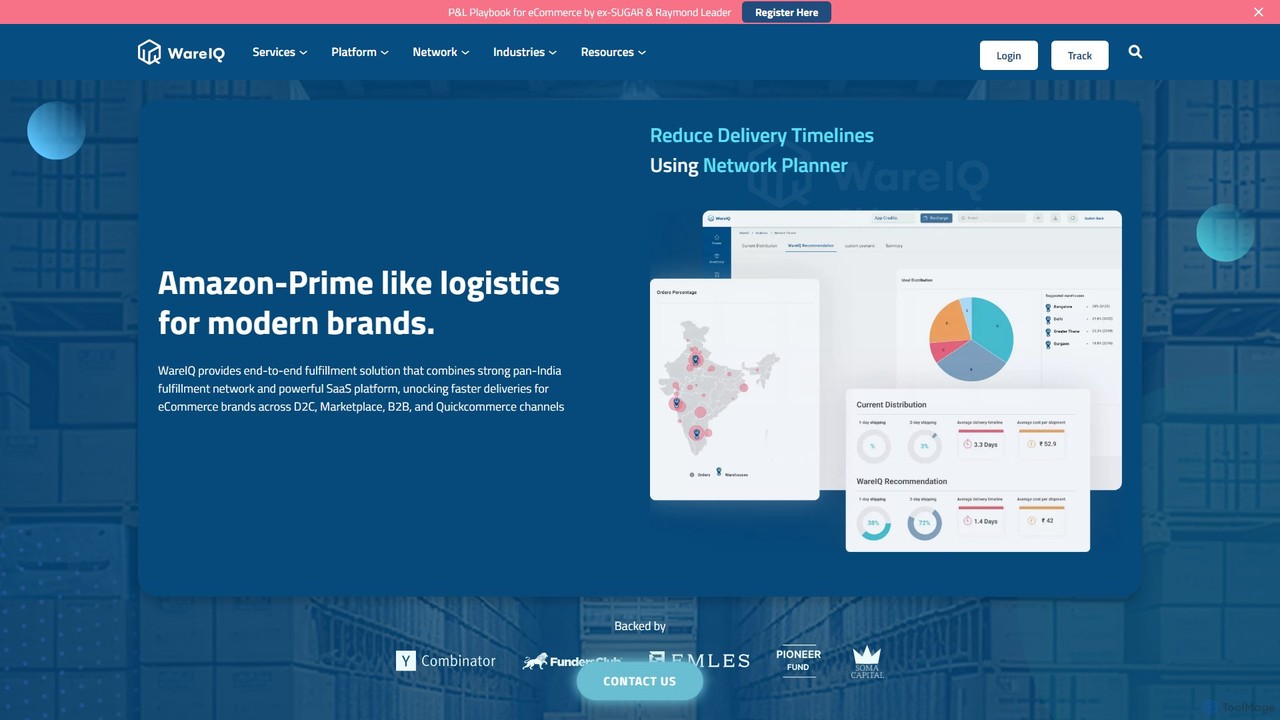
WareIQ is an AI-powered, tech-first fulfillment platform for eCommerce brands in India. It provides an end-to-end logistics solution, combining a pan-India network of fulfillment centers with a smart SaaS platform. WareIQ enables brands to offer Amazon Prime-like same-day and next-day delivery, optimize inventory placement using AI, reduce logistics costs, and manage multi-channel sales (D2C, marketplaces, B2B) seamlessly.

Logistics
Visits 87.8KFavorites 119Likes 117

About Fulfillment

AI Fulfillment tools are a specialized category of ecommerce software that automates and optimizes the entire order processing lifecycle, from inventory management to final delivery. These tools leverage machine learning to predict demand, intelligently route orders, and select the most efficient shipping carriers in real-time. By automating complex logistical decisions, they enable online businesses to reduce operational costs, minimize shipping errors, and significantly improve delivery speed. This ultimately enhances customer satisfaction and supports scalable growth for ecommerce brands.

Core Features

  • Predictive Inventory Management: Uses historical data and trend analysis to forecast demand and recommend optimal stock levels, preventing stockouts and overstocking.
  • Intelligent Order Routing: Automatically assigns orders to the most suitable warehouse or fulfillment center based on inventory location, shipping costs, and delivery speed.
  • Automated Carrier Selection: Compares rates and service levels from multiple shipping carriers in real-time to select the most cost-effective or fastest option for each package.
  • AI-Powered Warehouse Automation: Optimizes picking paths, manages robotic systems (AMRs), and automates sorting processes to increase warehouse efficiency.
  • Returns Management (Reverse Logistics): Streamlines the returns process by automating label generation, tracking, and dispositioning of returned items.

Use Cases

These tools are essential for growing Direct-to-Consumer (DTC) brands, multi-channel marketplace sellers, and Third-Party Logistics (3PL) providers. They are particularly valuable for businesses managing multiple warehouses or dealing with high order volumes, where manual processing becomes inefficient and prone to errors. Any ecommerce company looking to scale its operations while maintaining a competitive edge in delivery speed and cost will benefit from AI fulfillment solutions.

How to Choose

When selecting an AI Fulfillment tool, consider its integration capabilities with your existing ecommerce platform (e.g., Shopify, Magento, BigCommerce) and Warehouse Management System (WMS). Evaluate the tool's scalability to handle your projected order volume and the sophistication of its predictive analytics. Also, assess the level of automation offered for carrier selection and returns management, and compare pricing models to ensure they align with your business's operational scale and budget.

Fulfillment use cases

1

Automating Order Routing for Multi-Warehouse Retailers

An online retailer with warehouses across North America uses an AI fulfillment tool to optimize shipping. When a customer places an order, the system instantly analyzes stock levels at each location, calculates shipping costs, and estimates delivery times. It automatically routes the order to the warehouse that can fulfill it fastest and most cost-effectively, often splitting orders for multiple items between locations. This process reduces average delivery time by 25% and cuts shipping expenses by 15%, without any manual intervention from the logistics team.

2

Automate Order Processing for D2C Brands

A direct-to-consumer (D2C) fashion brand uses an AI fulfillment tool to manage its growing order volume. The platform automatically syncs new orders from their Shopify store and Instagram Shop. It then intelligently selects the most cost-effective shipping carrier for each destination, prints shipping labels in bulk, and updates tracking information for customers. This automation reduces manual data entry by over 95% and cuts shipping costs by 15% through optimized carrier selection.

3

Predictive Restocking for Seasonal Products

A fashion brand selling seasonal apparel uses an AI fulfillment platform to prevent stockouts during peak seasons like Black Friday. The AI analyzes historical sales data, current market trends, and social media sentiment to forecast demand for specific items. Based on these predictions, it automatically generates purchase orders and recommends stock transfers between stores and warehouses. This proactive approach ensures popular sizes and colors are always available, maximizing sales opportunities and improving inventory turnover by 30%.

4

Optimize Inventory Across Multiple Warehouses

An electronics retailer with warehouses on the East and West coasts uses a fulfillment platform to maintain balanced inventory. The AI analyzes sales data and forecasts demand by region, suggesting optimal stock levels for each location. When an order is placed, the system automatically routes it to the nearest warehouse with available stock, ensuring two-day shipping for most customers. This prevents regional stockouts and reduces cross-country shipping expenses, improving both delivery speed and profit margins.

5

Optimizing Carrier Selection for Cost Efficiency

A direct-to-consumer (DTC) electronics brand ships thousands of packages daily. Their AI fulfillment system integrates with multiple carriers like FedEx, UPS, and DHL. For every order, the system's algorithm compares real-time shipping rates, delivery speeds, and carrier performance history for that specific destination. It automatically selects the optimal carrier based on predefined business rules, such as 'lowest cost for standard shipping' or 'fastest delivery for express'. This dynamic decision-making saves the company an average of $1.20 per shipment, accumulating to significant savings annually.

6

Streamline the Product Returns Process

A home goods company simplifies its reverse logistics using a fulfillment tool's returns management module. Customers can initiate a return through a branded online portal, where they receive a pre-paid shipping label instantly. When the returned item is received at the warehouse, staff scan the label, and the system automatically triggers a refund to the customer and updates the inventory count. This self-service process reduces customer service inquiries by 40% and speeds up refund processing time from days to hours.

7

Manage Multi-Channel Sales Inventory

A seller of specialty coffee beans sells through their own website, Amazon, and a wholesale portal. They use a fulfillment tool to sync inventory across all three channels. When a bag of coffee is sold on Amazon, the inventory count is instantly updated on their website and wholesale portal to prevent overselling. The platform provides a unified dashboard to view sales and inventory data from all channels, helping the owner make better purchasing decisions and maintain accurate stock levels without manual reconciliation.

8

Streamlining Returns Management (Reverse Logistics)

An online shoe company uses an AI fulfillment tool to manage its high volume of returns. When a customer initiates a return through the online portal, the system automatically generates a shipping label and provides tracking updates. Upon arrival at the warehouse, an AI-powered scanner inspects the returned shoes for wear and tear. Based on the scan, the system automatically decides whether to restock the item as 'new', list it on a resale marketplace as 'used-like new', or dispose of it. This automates 90% of the return inspection and disposition process, reducing labor costs and speeding up refunds.

9

Provide Proactive Shipping Notifications

An online subscription box service uses its fulfillment software to enhance customer communication. Once an order is packed and a shipping label is created, the system automatically sends an email and SMS notification to the customer with the tracking number. It also sends proactive updates for key transit milestones, such as 'Out for Delivery' and 'Delivered'. This keeps customers informed, reduces 'Where is my order?' (WISMO) inquiries, and builds trust by creating a transparent delivery experience.

10

AI-Powered Kitting and Bundling Automation

A subscription box company curates boxes with multiple, varying products each month. Their AI fulfillment software analyzes upcoming orders and inventory levels of individual components. It then generates optimized 'kitting' tasks for warehouse staff, creating a step-by-step guide on which items to assemble into boxes and in what quantity. The AI also predicts future component needs based on subscription growth, preventing shortages of a single item that could delay thousands of shipments. This automation reduces kitting errors by 95% and improves assembly speed significantly.

11

Generate Analytics for Logistics Performance

A 3PL (Third-Party Logistics) provider uses its fulfillment software to monitor performance for its clients. The platform's analytics dashboard visualizes key metrics like order accuracy rate, on-time shipping percentage, and average cost per shipment. They can generate custom reports to show clients how their logistics operations are performing against set KPIs. This data-driven approach helps the 3PL identify operational bottlenecks, improve efficiency, and demonstrate value to their ecommerce clients.

12

Enhancing 3PL Client Onboarding and Management

A Third-Party Logistics (3PL) provider uses an AI fulfillment platform to serve its diverse ecommerce clients. When a new client joins, the platform's AI automatically maps the client's product data from their Shopify store to the 3PL's warehouse management system, reducing manual setup time from days to hours. The platform provides each client with a dashboard showing real-time inventory, order status, and shipping costs. The AI also generates performance reports, highlighting opportunities for clients to save on shipping or optimize inventory, adding significant value to the 3PL's service offering.

Fulfillment FAQ

What are AI Fulfillment tools?

AI Fulfillment tools are software platforms that automate the logistics of an ecommerce business after a customer makes a purchase. They handle tasks like inventory management, order processing, packing, shipping, and returns management. By using AI, these tools can optimize warehouse operations, predict inventory needs, and select the most efficient shipping routes, helping businesses save time and money while improving customer satisfaction.

What are AI Fulfillment tools?

AI Fulfillment tools are advanced software solutions designed for ecommerce that use artificial intelligence to automate and optimize logistics. They handle tasks like predicting inventory needs, routing orders to the best warehouse, selecting the cheapest or fastest shipping carrier, and managing returns. Unlike traditional logistics software, they use machine learning to make intelligent, data-driven decisions in real-time, helping businesses scale more efficiently, reduce costs, and improve customer delivery experiences.

How to choose the right AI Fulfillment tool?

To choose the right tool, consider these factors:

  • Integrations: Ensure it connects seamlessly with your ecommerce platform (e.g., Shopify, WooCommerce), marketplaces (e.g., Amazon, eBay), and preferred shipping carriers.
  • Scalability: Select a platform that can grow with your business, handling increases in order volume and warehouse locations without performance issues.
  • Feature Set: Evaluate if its features match your needs, such as multi-warehouse inventory management, batch order processing, or advanced returns handling.
  • Pricing: Understand the pricing model (e.g., per-shipment, subscription-based) and ensure it aligns with your budget and operational scale.
How to choose the right AI Fulfillment tool?

When choosing an AI Fulfillment tool, evaluate these key factors:

  • Integrations: Ensure it seamlessly connects with your ecommerce platform (e.g., Shopify, BigCommerce), marketplaces (e.g., Amazon), and existing Warehouse Management System (WMS).
  • Scalability: Select a tool that can handle your current order volume and scale with your business growth without significant performance degradation.
  • Feature Set: Prioritize features that address your biggest pain points, such as multi-warehouse routing, predictive inventory analytics, or automated carrier rate shopping.
  • Analytics and Reporting: Look for a platform that provides clear, actionable insights into your logistics performance, costs, and delivery times.
What's the difference between an AI Fulfillment tool and a standard WMS?

A standard Warehouse Management System (WMS) focuses on managing operations *within* the four walls of a warehouse, such as tracking inventory locations, managing picking and packing, and coordinating staff. An AI Fulfillment tool has a broader scope. It often integrates with a WMS but adds a layer of intelligence *across* the entire supply chain. Its key differentiators are predictive analytics (forecasting demand), intelligent decision-making (automated order routing and carrier selection), and end-to-end optimization, from the customer's click to the final delivery.

What's the difference between a Fulfillment tool and an Ecommerce platform?

An Ecommerce platform (like Shopify or BigCommerce) is primarily for building and managing your online store—the customer-facing part where sales happen. A Fulfillment tool focuses on what happens *after* the sale. It manages the backend logistics: syncing inventory, processing orders from all sales channels, picking, packing, and shipping. While some ecommerce platforms have basic fulfillment features, dedicated fulfillment tools offer more advanced, specialized capabilities for managing complex logistics, especially for businesses with high order volumes or multiple warehouses.

Who should use AI Fulfillment tools?

AI Fulfillment tools are most beneficial for:

  • Growing D2C Brands: Businesses that are scaling quickly and can no longer manage orders manually.
  • Multi-channel Sellers: Retailers selling on multiple platforms (e.g., website, Amazon, social media) who need to centralize inventory and order management.
  • Businesses with Multiple Warehouses: Companies that need to intelligently route orders and manage stock across different locations.
  • Third-Party Logistics (3PL) Providers: Companies that manage fulfillment for other businesses and require a robust platform to handle multiple clients and complex operations.
What are the key benefits of using AI in order fulfillment?

The primary benefits of using AI in order fulfillment include:

  • Cost Reduction: By optimizing shipping routes, selecting the most affordable carriers, and improving inventory management to reduce holding costs.
  • Increased Speed: Automating decisions and warehouse processes leads to faster order processing and shorter delivery times.
  • Improved Accuracy: AI reduces human error in order picking, packing, and shipping, leading to fewer incorrect shipments and higher customer satisfaction.
  • Enhanced Scalability: Automation allows businesses to handle significant increases in order volume without a proportional increase in manual labor and operational complexity.
Who should use AI Fulfillment tools?

AI Fulfillment tools are most beneficial for:

  • Growing Ecommerce Brands: Businesses that are scaling quickly and find their manual fulfillment processes are becoming a bottleneck.
  • Multi-Channel Sellers: Companies selling on their own website, Amazon, eBay, and other marketplaces who need to synchronize inventory and orders across all channels.
  • Businesses with Multiple Warehouses: Retailers who need to intelligently route orders to the optimal fulfillment location to save on shipping costs and time.
  • Third-Party Logistics (3PL) Providers: Companies that manage fulfillment for other businesses and need to optimize operations for multiple clients efficiently.
Can fulfillment tools help reduce shipping costs?

Yes, significantly. AI fulfillment tools can reduce shipping costs in several ways. They often feature a rate shopping capability that automatically compares prices across multiple carriers (like USPS, FedEx, UPS) for each shipment and selects the cheapest or fastest option based on your rules. They also help by verifying addresses to prevent failed deliveries and associated fees. For businesses with multiple warehouses, these tools can route orders to the closest location to the customer, reducing shipping distances and costs.