The HS Code
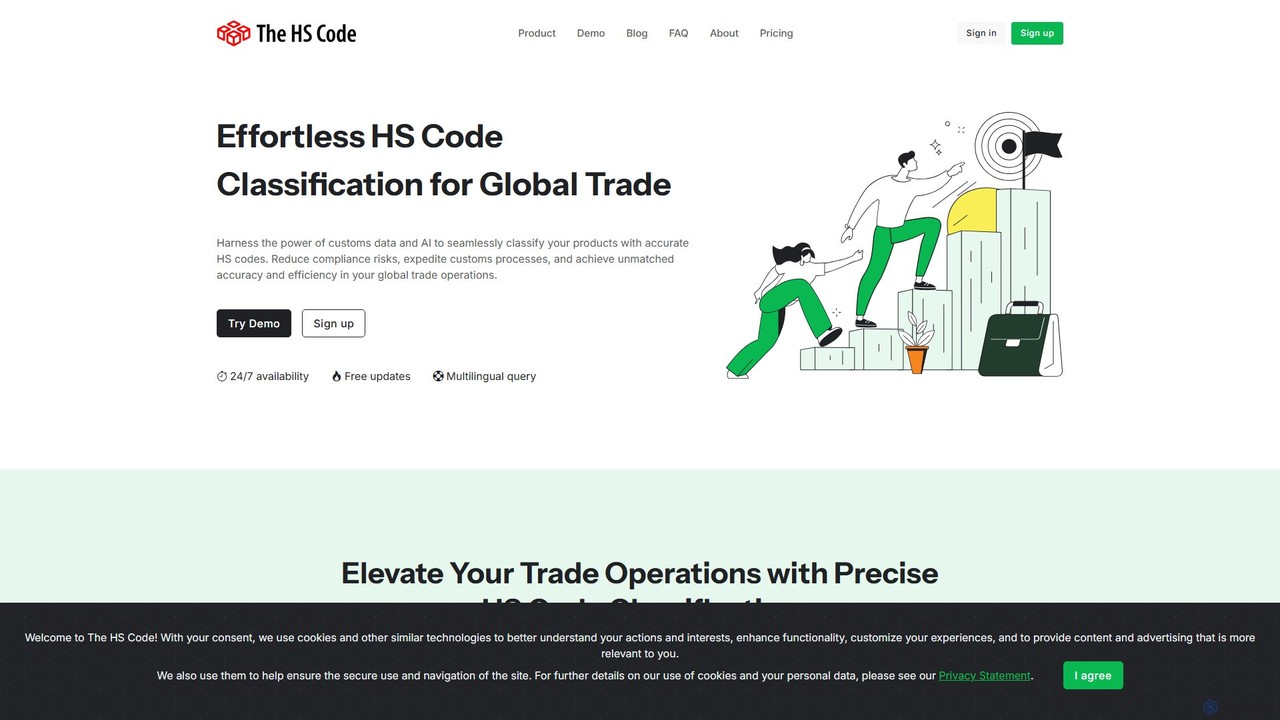
An AI-powered tool designed for effortless and accurate HS code classification in global trade. It leverages customs data …
An AI-powered tool designed for effortless and accurate HS code classification in global trade. It leverages customs data and advanced AI to help businesses reduce compliance risks, expedite customs processes, and improve operational efficiency by providing precise Harmonized System codes from simple product descriptions.
About Logistics
AI Logistics tools are specialized artificial intelligence applications designed to optimize and automate various stages of the supply chain, from procurement and warehousing to transportation and last-mile delivery. Within the broader context of e-commerce, these tools are crucial for managing the complex flow of goods, ensuring efficient order fulfillment, and enhancing customer satisfaction. They leverage machine learning, predictive analytics, and automation to streamline operations, reduce operational costs, and improve overall supply chain resilience.
Core Features
- Demand Forecasting: Accurately predicts future product demand by analyzing historical sales data, market trends, and external factors, minimizing stockouts and overstocking.
- Route Optimization: Dynamically plans the most efficient delivery routes for fleets, considering traffic, weather, delivery windows, and vehicle capacity to reduce fuel costs and delivery times.
- Warehouse Automation: Integrates AI-powered robotics, automated guided vehicles (AGVs), and intelligent sorting systems to enhance picking, packing, and inventory management efficiency.
- Inventory Optimization: Provides real-time visibility into stock levels, predicts optimal reorder points, and automates replenishment processes to maintain ideal inventory levels across multiple locations.
- Supply Chain Visibility: Offers end-to-end tracking of goods, identifies potential disruptions, and provides proactive alerts for delays or anomalies, improving transparency and responsiveness.
Applicable Scenarios
AI Logistics tools are indispensable for e-commerce businesses managing high volumes of orders, third-party logistics (3PL) providers seeking to optimize their fleet and warehouse operations, and manufacturers aiming for lean and resilient supply chains. They are particularly valuable in scenarios requiring dynamic adjustments to delivery schedules, precise inventory control, and automated warehouse processes to meet fluctuating market demands.
How to Choose
When selecting AI Logistics tools, consider their integration capabilities with existing ERP, WMS, or e-commerce platforms to ensure seamless data flow. Evaluate the specific functionalities offered, such as advanced forecasting, real-time tracking, or automation features, to match your operational needs. Assess the scalability of the solution to accommodate future growth and scrutinize data security protocols to protect sensitive supply chain information. Finally, compare the total cost of ownership against the projected return on investment in terms of efficiency gains and cost reductions.

LogisticsUse Cases
Optimizing E-commerce Last-Mile Delivery Routes
E-commerce logistics managers utilize AI tools to dynamically plan and optimize delivery routes for their fleet. By analyzing real-time traffic, weather conditions, delivery addresses, and vehicle capacity, the AI generates the most efficient paths, reducing fuel consumption, driver hours, and ensuring timely customer deliveries, especially during peak seasons.
Automating Warehouse Picking and Packing
Warehouse operators deploy AI-powered robots and intelligent systems to automate the picking and packing processes. AI algorithms analyze order data to guide robots to optimal storage locations, identify items, and prepare them for shipment, significantly increasing throughput, reducing human error, and lowering labor costs in large distribution centers.
Predictive Inventory Management for Retailers
Retail businesses leverage AI logistics tools to forecast product demand with high accuracy. The AI analyzes historical sales, seasonal trends, promotional impacts, and external market data to predict future inventory needs, automatically triggering reorder alerts and optimizing stock levels across multiple stores and warehouses to prevent stockouts and minimize carrying costs.
Real-time Supply Chain Anomaly Detection
Supply chain professionals use AI to monitor the entire logistics network in real-time. The AI continuously analyzes data from sensors, GPS trackers, and various systems to detect unusual patterns or deviations, such as unexpected delays, temperature fluctuations in sensitive shipments, or potential security breaches, enabling proactive intervention and risk mitigation.
Streamlining International Freight and Customs
International trade companies employ AI logistics platforms to simplify complex cross-border shipments. AI algorithms help classify goods, calculate duties and taxes, identify necessary documentation, and predict potential customs delays based on historical data and regulatory changes, accelerating clearance processes and reducing compliance risks.
Optimizing Fleet Maintenance Schedules
Logistics companies utilize AI for predictive maintenance of their vehicle fleets. Sensors on trucks collect operational data, which AI analyzes to predict potential equipment failures before they occur. This allows for proactive scheduling of maintenance, minimizing unexpected breakdowns, extending vehicle lifespan, and ensuring continuous operational readiness.