Ecommerce Best in category 3 results Market Research AI Tool

Popular AI tools in the Market Research field of Ecommerce include Particl、Etshop、ViableView, etc., helping you quickly improve efficiency.

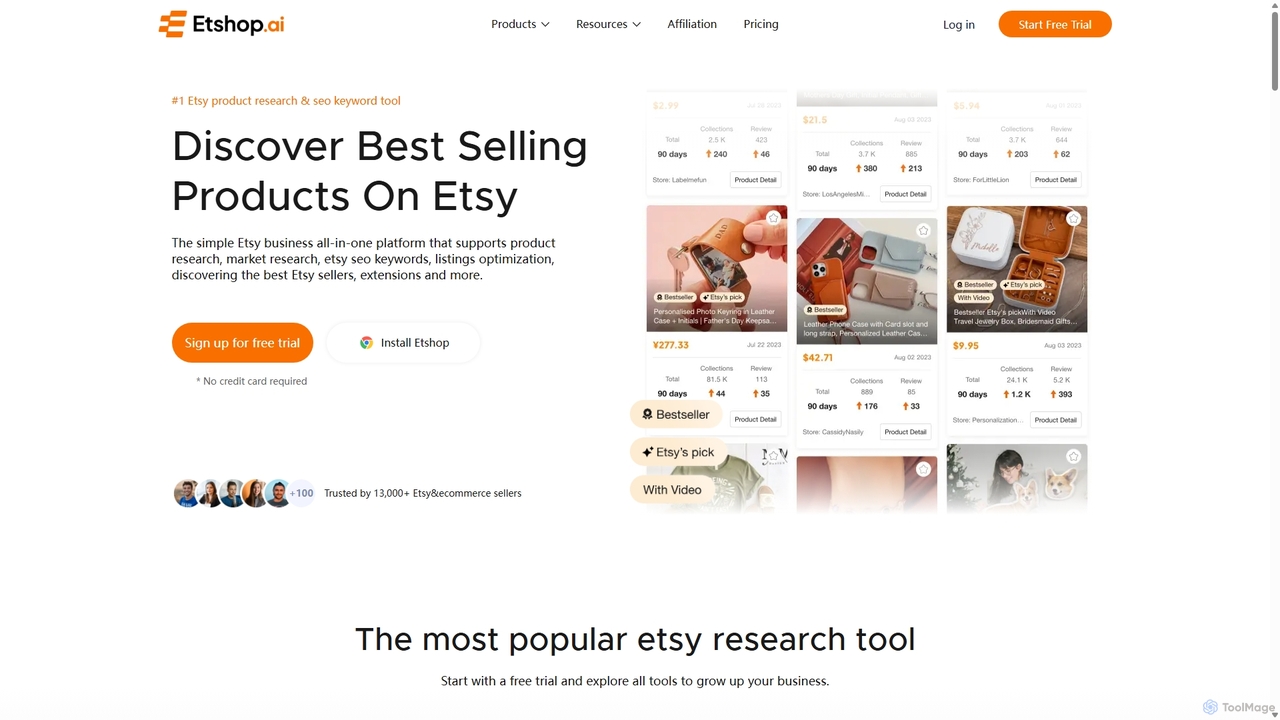
Etshop

Etshop

Etshop is an all-in-one AI-powered platform for Etsy sellers, providing comprehensive tools for product research, market analysis, store …

32.7K
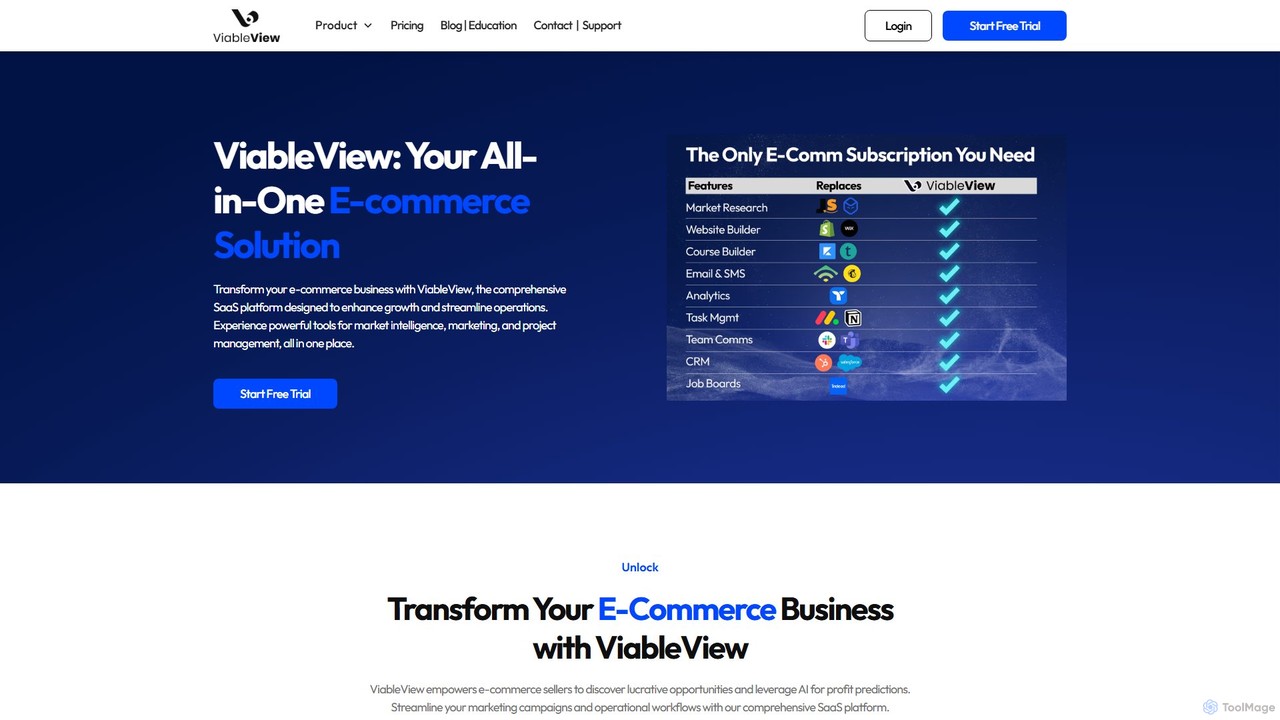
ViableView

ViableView

ViableView is an all-in-one, AI-powered platform for e-commerce businesses. It integrates market research, product discovery, marketing automation (email, …

5.6K
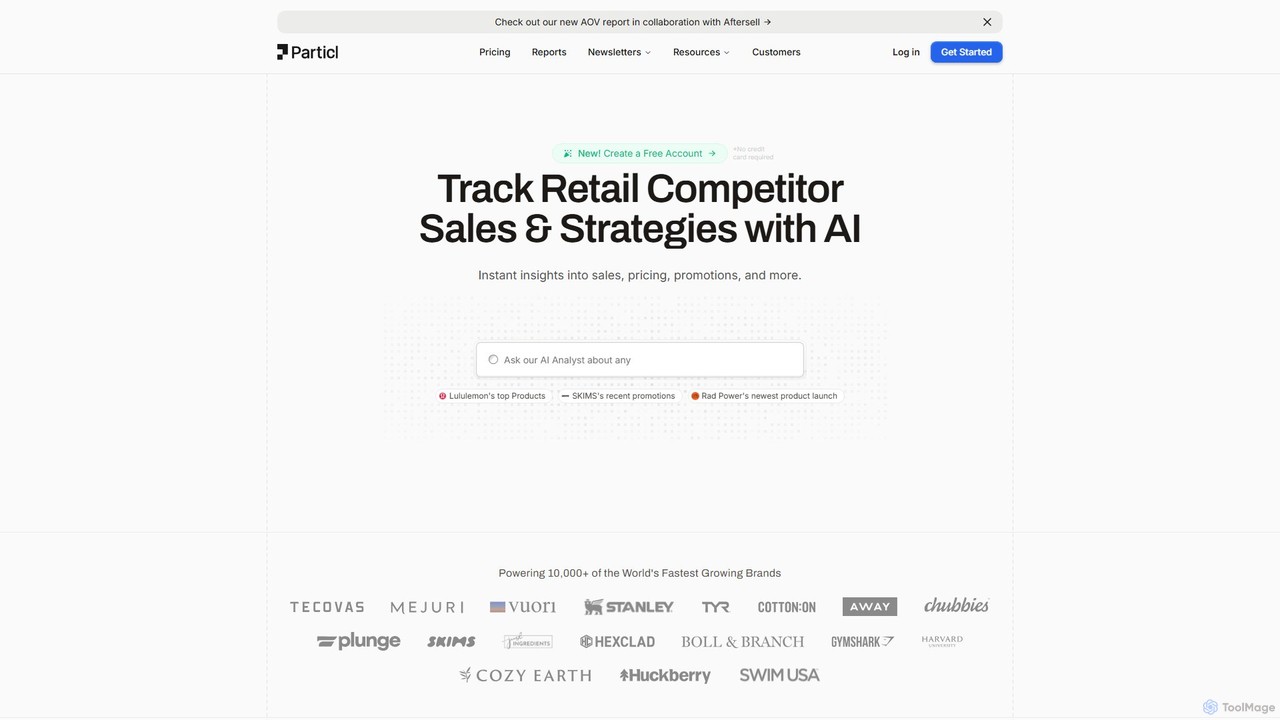
Particl

Particl

Particl is an AI-powered competitor tracking platform for e-commerce and retail brands. It delivers real-time insights into competitor …

114.1K

About Market Research

AI Market Research tools are a class of software that uses artificial intelligence to analyze vast amounts of data for ecommerce insights. These tools process information from social media, customer reviews, search trends, and competitor websites to identify patterns and opportunities automatically. They empower online businesses to make data-driven decisions, from discovering profitable product niches to optimizing marketing strategies. Unlike traditional methods, AI provides real-time analysis at a scale and speed that is humanly impossible.

Core Features

  • Trend Spotting: Automatically identifies emerging consumer trends and product demands from social media and search data.
  • Competitor Analysis: Tracks competitors' pricing, promotions, product catalogs, and marketing campaigns in real-time.
  • Sentiment Analysis: Analyzes customer reviews and social mentions to gauge public opinion about products and brands.
  • Niche Discovery: Uncovers high-demand, low-competition market segments and product opportunities.
  • Audience Insights: Creates detailed profiles of target audiences, including their interests, behaviors, and pain points.

Use Cases

These tools are essential for ecommerce entrepreneurs, product managers, and marketing teams. They are used to validate new product ideas before launch, identify underserved customer segments, monitor brand health, and adjust advertising campaigns based on real-time consumer feedback. For example, a store owner can use them to find the next trending product to add to their inventory.

How to Choose

When selecting an AI Market Research tool, consider the data sources it covers (e.g., Amazon, TikTok, Google Trends). Evaluate the specific analytical capabilities you need, such as sentiment analysis versus competitor price tracking. Check for integration options with your ecommerce platform, like Shopify or WooCommerce. Finally, assess the user interface's intuitiveness and whether the pricing model aligns with your business scale.

Market ResearchUse Cases

1

Identify a Profitable Product Niche

An aspiring ecommerce entrepreneur wants to start a new online store but needs to find a high-demand, low-competition product. They use an AI market research tool to analyze search trends on Google, social media discussions on Reddit, and sales data from Amazon for various product categories. The tool processes millions of data points and identifies 'eco-friendly pet travel accessories' as a rapidly growing niche with high search volume but few dominant sellers. This data-backed insight gives the entrepreneur the confidence to source products and launch their store, significantly reducing the risk of entering a saturated market.

2

Analyze Customer Feedback for Product Improvement

A product manager for a direct-to-consumer skincare brand notices mixed reviews for a new facial serum. To understand the root cause, they use an AI tool to aggregate and analyze thousands of customer reviews from their website, social media, and retail partner sites. The AI performs sentiment analysis and topic modeling, revealing that while customers praise the serum's 'texture' and 'effectiveness', there is a significant volume of negative comments related to its 'strong fragrance'. This specific, actionable insight allows the product team to prioritize the development of a fragrance-free version, directly addressing customer feedback and improving product-market fit.

3

Monitor Competitor Pricing and Promotions

The marketing manager of an online electronics store needs to remain competitive during a major holiday sales season. They configure an AI market research tool to continuously track the product pages of their top three competitors. The tool automatically detects and alerts the manager of any price changes, new discount codes, or 'buy one, get one' offers launched by the competition. This real-time intelligence allows the marketing team to react swiftly, either by matching a competitor's price on a key product or by launching a more attractive counter-promotion, thus protecting their market share and maximizing sales revenue during the critical period.

4

Discover High-Potential SEO Keywords

An SEO specialist for an online coffee subscription box company wants to attract more organic traffic. They use an AI market research tool to analyze search queries, forum discussions, and competitor content related to 'specialty coffee'. The AI goes beyond simple keyword volume, identifying emerging long-tail keywords like 'best single-origin coffee for french press' and 'how to brew anaerobic fermentation coffee'. It also identifies question-based queries that are perfect for blog content. Armed with this list of high-intent, low-competition keywords, the specialist creates targeted blog posts and product pages that rank higher in search results, driving qualified traffic to the store.

5

Validate International Market Expansion

A successful online fashion brand in the US is considering expanding to the Australian market. Before investing heavily, the strategy team uses an AI market research tool to gauge demand. The tool analyzes Australian social media trends, search behavior, and local competitor offerings. The AI reveals a strong interest in 'sustainable and ethically made clothing' among Australian consumers, a core value of the US brand. However, it also highlights a preference for different color palettes and seasonal timing. This crucial data allows the brand to adapt its product catalog and marketing calendar specifically for Australia, ensuring a more successful market entry.

6

Optimize Ad Campaigns with Audience Insights

A digital marketer for a company selling high-end kitchen gadgets is planning a new ad campaign on social media. They use an AI research tool to analyze online conversations and audience data related to 'home cooking' and 'gastronomy'. The tool identifies a key audience segment: young professionals who follow celebrity chefs, are interested in 'meal prep', and frequently share photos of their culinary creations. The AI also reveals that this segment responds best to video content showcasing product efficiency. Using these insights, the marketer creates highly targeted video ads for this specific demographic, resulting in a higher click-through rate and a lower cost per acquisition compared to previous, broader campaigns.

Market ResearchFrequently Asked Questions