MarqVision
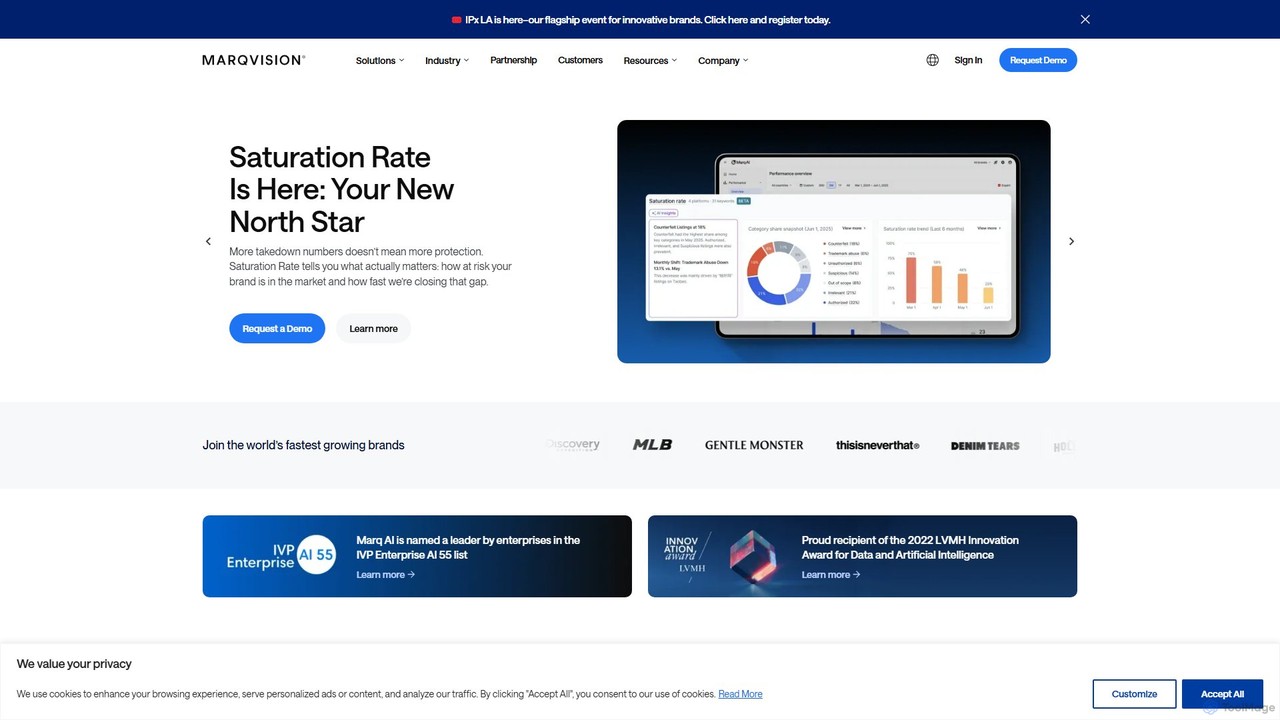
MarqVision is an AI-powered brand protection platform that helps businesses automatically detect and remove counterfeit products, digital piracy, …
MarqVision is an AI-powered brand protection platform that helps businesses automatically detect and remove counterfeit products, digital piracy, and brand impersonations online. Using advanced image recognition and machine learning, it scans global marketplaces, social media, and websites to identify IP infringements, automating the entire enforcement process from detection to takedown.
About Monitoring
Monitoring in e-commerce refers to AI-powered tools designed to continuously track, analyze, and report on various aspects of an online business's performance and operations. These tools leverage advanced algorithms to detect anomalies, predict trends, and provide actionable insights from vast datasets, ensuring optimal store health and strategic decision-making. They help e-commerce businesses maintain competitive advantage and operational efficiency.
Core Features
- Performance Tracking: Real-time monitoring of website traffic, sales, conversion rates, and user engagement metrics.
- Anomaly Detection: Automatically identifies unusual patterns in sales, traffic, or customer behavior that may indicate issues or opportunities.
- Competitor Analysis: Tracks competitor pricing, promotions, product launches, and market share to inform strategic adjustments.
- Inventory & Pricing Optimization: Monitors stock levels, demand fluctuations, and competitor pricing to suggest optimal inventory and pricing strategies.
- Customer Behavior Insights: Analyzes user journeys, purchase patterns, and feedback to understand customer preferences and pain points.
Use Cases
E-commerce businesses use AI monitoring to proactively identify potential issues like website downtime or sudden sales drops, optimize pricing strategies based on real-time market data, and gain deeper insights into customer preferences for personalized marketing. It also aids in fraud detection and supply chain optimization.
How to Choose
When selecting an AI monitoring tool for e-commerce, consider its integration capabilities with existing platforms (e.g., Shopify, Magento), the breadth of data sources it can analyze (e.g., sales, marketing, logistics), its anomaly detection accuracy, and the clarity of its reporting and alert systems. Scalability and customization options for specific business needs are also crucial.

MonitoringUse Cases
Real-time Sales Performance Tracking
E-commerce managers use AI monitoring tools to observe sales trends, conversion rates, and average order value in real-time. The tool identifies sudden drops or spikes, alerting the team to investigate potential issues like website errors or successful marketing campaigns, enabling quick responses to optimize revenue.
Automated Competitor Price Monitoring
Online retailers deploy AI monitoring to continuously scan competitor websites for price changes on key products. This allows them to automatically adjust their own pricing to remain competitive, identify arbitrage opportunities, and maintain desired profit margins without manual effort.
Detecting Website Performance Anomalies
Site reliability engineers or e-commerce operations teams utilize monitoring AI to detect unusual website load times, server errors, or checkout process failures. The system flags these anomalies immediately, preventing significant revenue loss due to technical glitches and ensuring a smooth customer experience.
Optimizing Inventory Levels with Demand Prediction
Inventory managers leverage AI monitoring to analyze historical sales data, seasonal trends, and external factors to predict future product demand. The tool provides alerts for potential stockouts or overstock situations, helping to optimize inventory levels and reduce carrying costs while meeting customer needs.
Identifying Fraudulent Transactions
E-commerce security teams use AI monitoring to analyze transaction patterns, user behavior, and payment methods for suspicious activities. The AI can flag potentially fraudulent orders in real-time, minimizing financial losses and protecting customer data by preventing unauthorized purchases.
Personalizing Customer Experience through Behavior Analysis
Marketing teams employ AI monitoring to track individual customer journeys, product views, and purchase history. This data helps segment customers and personalize product recommendations, email campaigns, and website content, leading to higher engagement and conversion rates.