Winchat
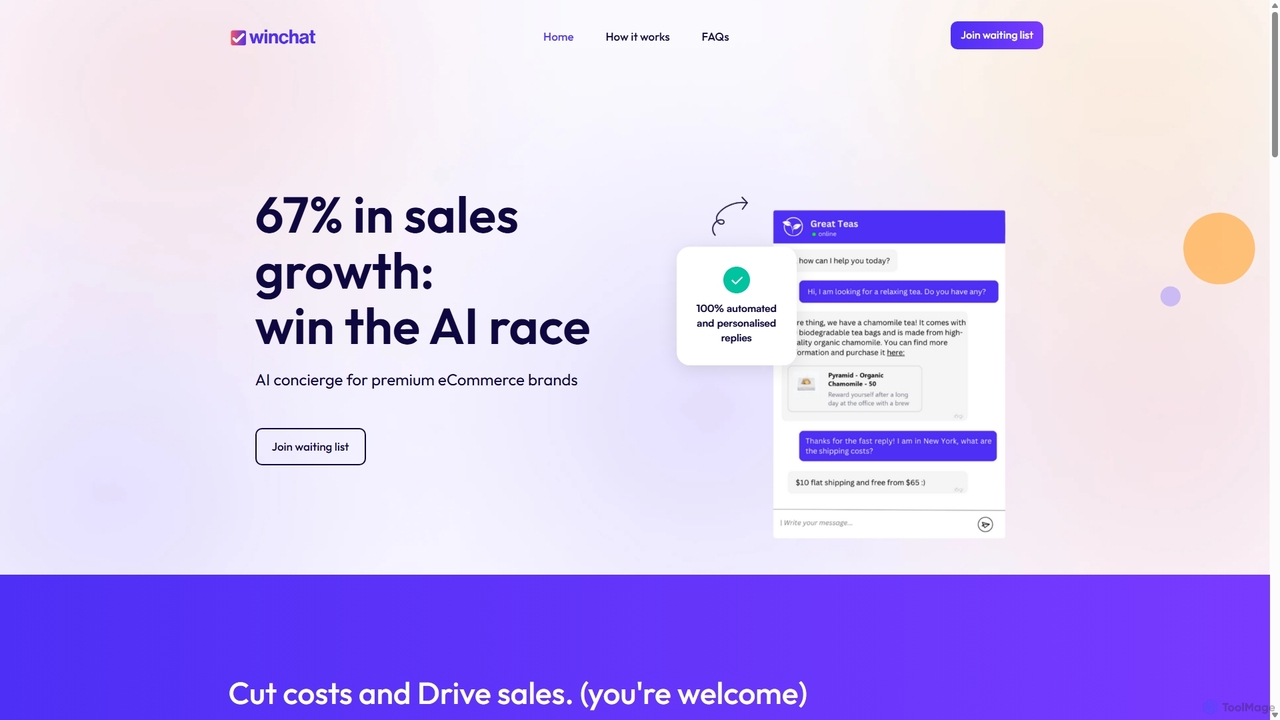
Winchat is a leading AI chatbot for eCommerce, powered by GPT-4. It provides 24/7 automated, personalized customer support …
Winchat is a leading AI chatbot for eCommerce, powered by GPT-4. It provides 24/7 automated, personalized customer support in over 100 languages, aiming to increase sales, boost Average Order Value (AOV) through one-click upsells, and reduce support costs. It features a no-code, 45-second setup and integrates with major platforms like Shopify and Woocommerce.
HeiChat
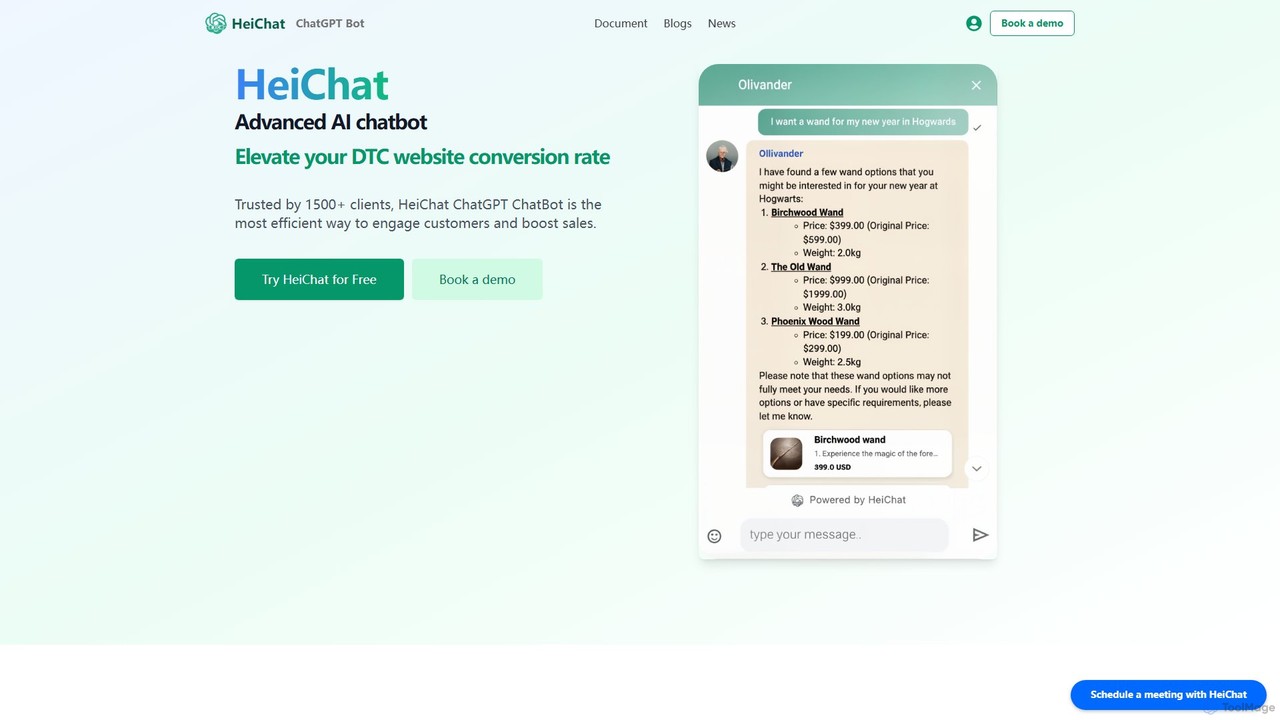
HeiChat is an advanced AI chatbot for e-commerce, powered by GPT-4 and Claude. It integrates seamlessly with platforms …
HeiChat is an advanced AI chatbot for e-commerce, powered by GPT-4 and Claude. It integrates seamlessly with platforms like Shopify and WooCommerce to boost sales by providing 24/7 multilingual customer support, personalized product recommendations, and instant answers to customer queries. This no-code tool helps businesses increase conversion rates, reduce support costs, and gain valuable customer insights through an intuitive analytics dashboard.
Autochat
Autochat is an advanced AI-driven WhatsApp automation platform designed to boost sales and customer support. It enables businesses …
Autochat is an advanced AI-driven WhatsApp automation platform designed to boost sales and customer support. It enables businesses to create no-code chatbots, manage team inboxes, launch bulk messaging campaigns, and facilitate in-chat eCommerce. Powered by GPT-4, Autochat helps convert conversations into revenue and enhance customer loyalty.
RevoChat
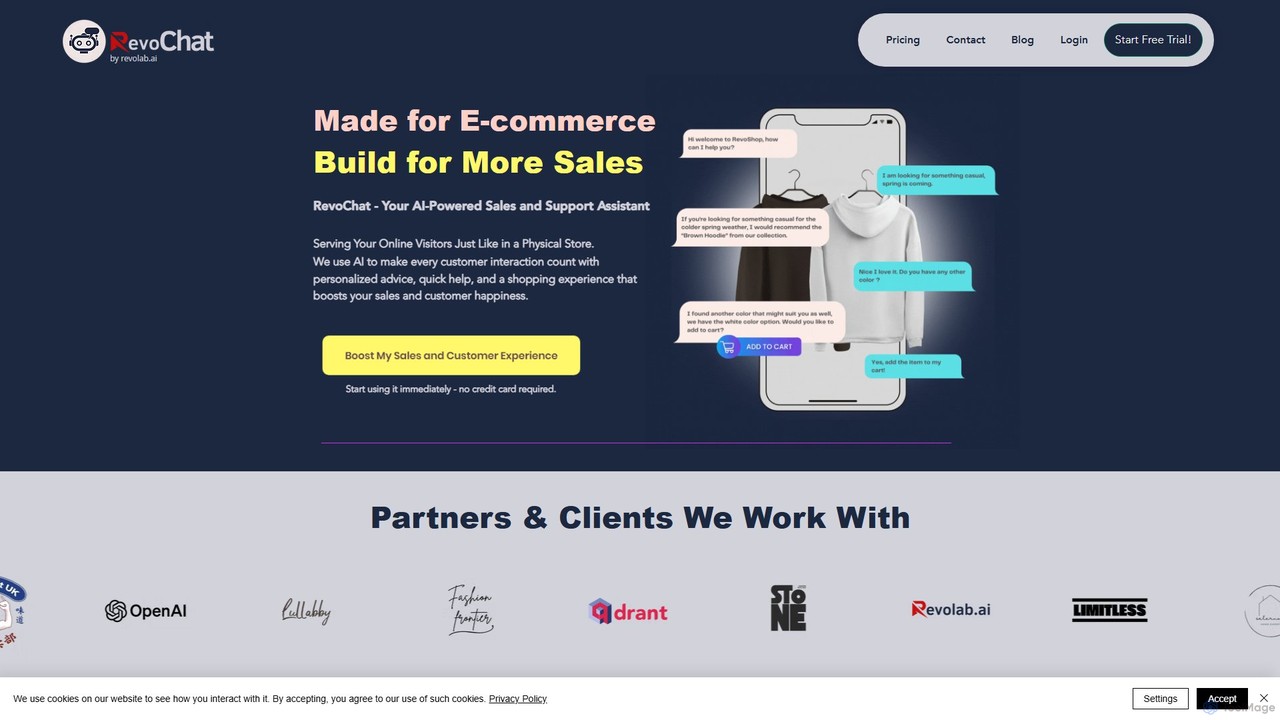
RevoChat is an AI-powered sales and support chatbot designed for e-commerce businesses. It integrates with Shopify and WooCommerce …
RevoChat is an AI-powered sales and support chatbot designed for e-commerce businesses. It integrates with Shopify and WooCommerce to provide 24/7 personalized product recommendations, answer common customer queries, and guide visitors through their shopping journey. By simulating an in-store sales assistant, RevoChat aims to boost sales, increase average order value, and enhance overall customer satisfaction without requiring any coding knowledge for setup.
bexy
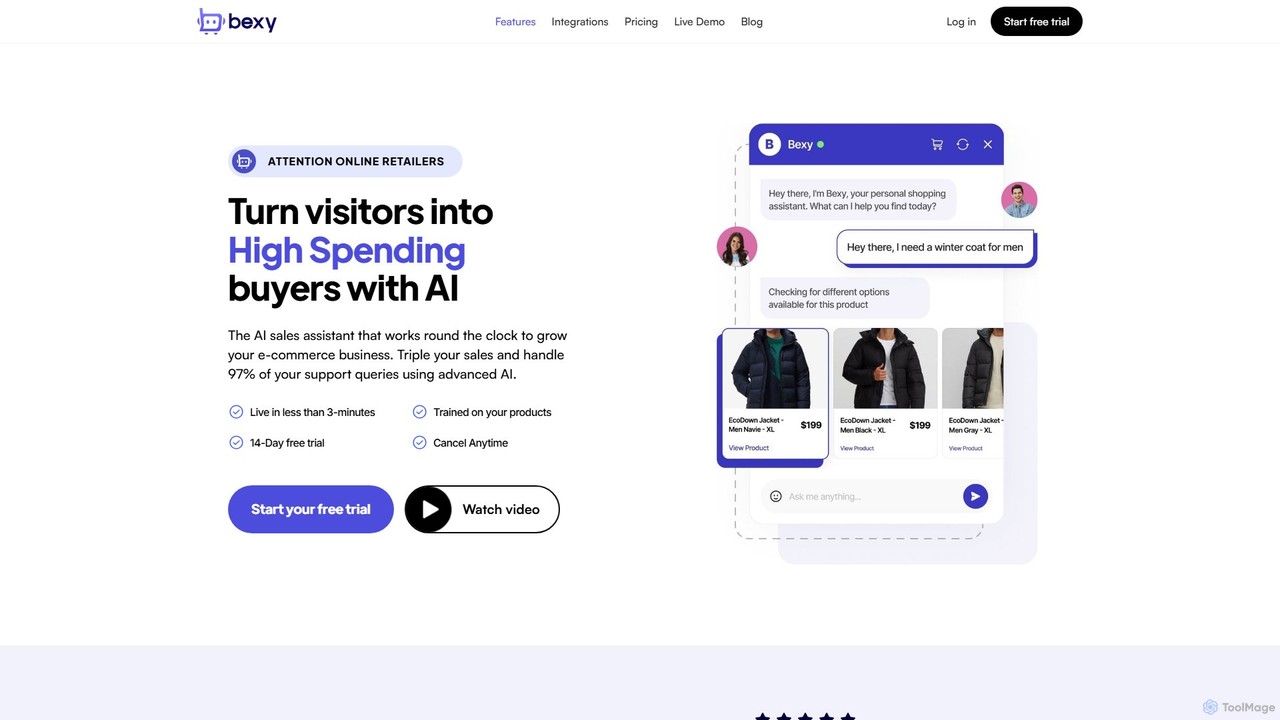
bexy is an AI-powered sales assistant for e-commerce businesses, designed to convert visitors into high-spending buyers. Powered by …
bexy is an AI-powered sales assistant for e-commerce businesses, designed to convert visitors into high-spending buyers. Powered by ChatGPT, it operates 24/7 to boost sales, handle up to 97% of support queries, and enhance the customer shopping experience with personalized recommendations, proactive engagement, and multi-language support.
BIK
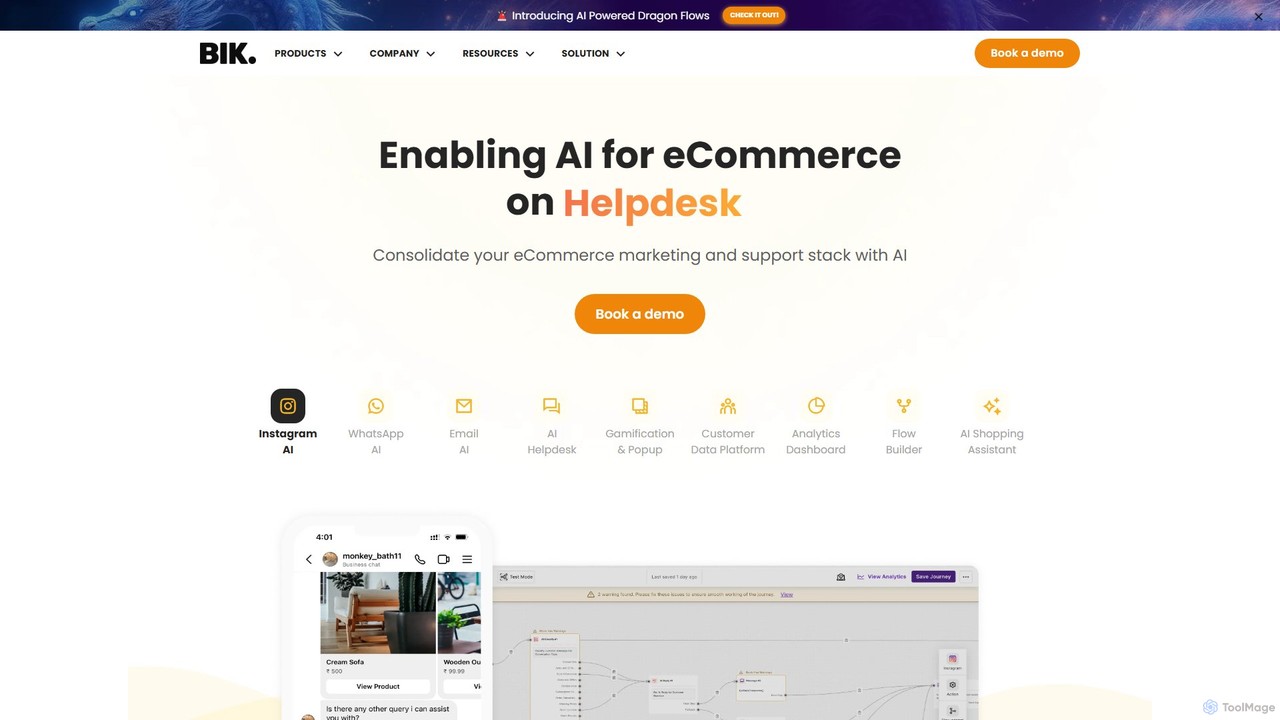
BIK is an all-in-one AI-powered conversational commerce platform designed for eCommerce businesses. It unifies marketing, customer support, and …
BIK is an all-in-one AI-powered conversational commerce platform designed for eCommerce businesses. It unifies marketing, customer support, and sales automation across channels like WhatsApp, Instagram, and website popups. By leveraging generative AI, BIK helps D2C brands increase revenue, enhance customer engagement, and improve operational efficiency.
Octocom
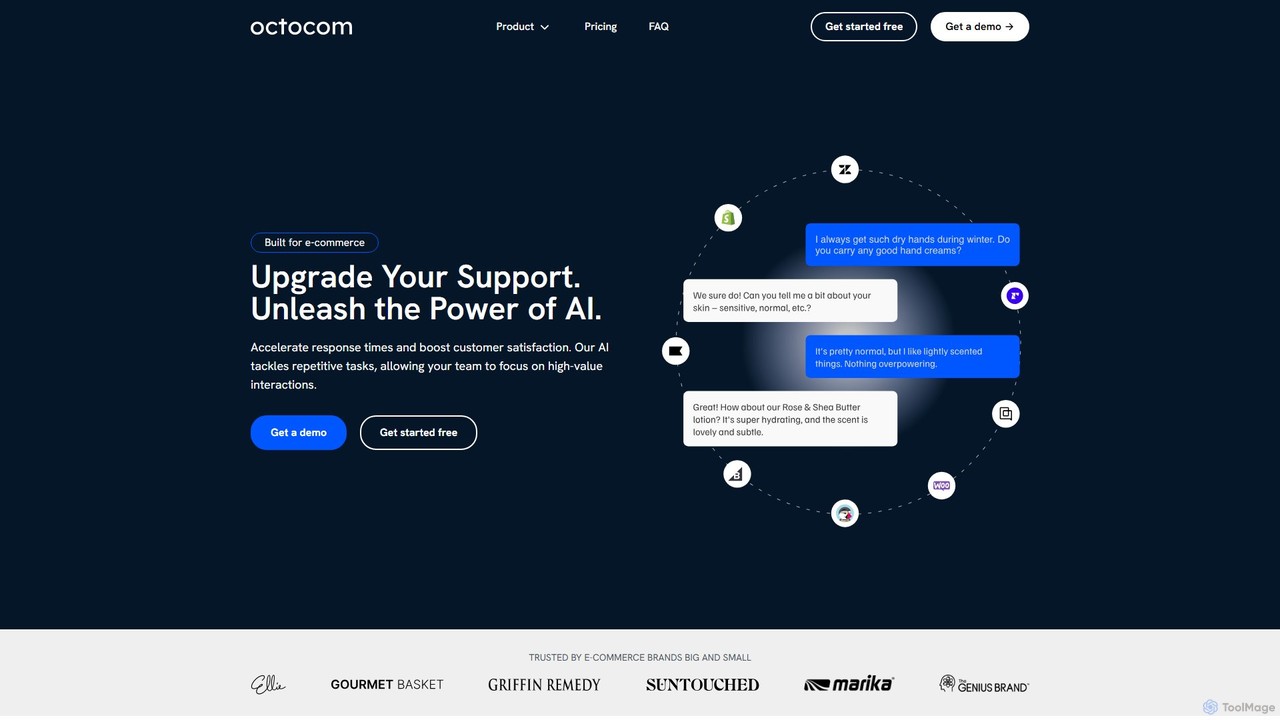
Octocom is an AI-first customer support solution designed for e-commerce. It automates up to 90% of support tickets …
Octocom is an AI-first customer support solution designed for e-commerce. It automates up to 90% of support tickets across channels like email, chat, and social media. The AI handles order tracking, returns, product questions, and even acts as a shopping consultant to boost sales. It integrates with major help desks and e-commerce platforms, providing 24/7, human-like support in over 100 languages to enhance customer satisfaction and increase revenue.
Zipchat
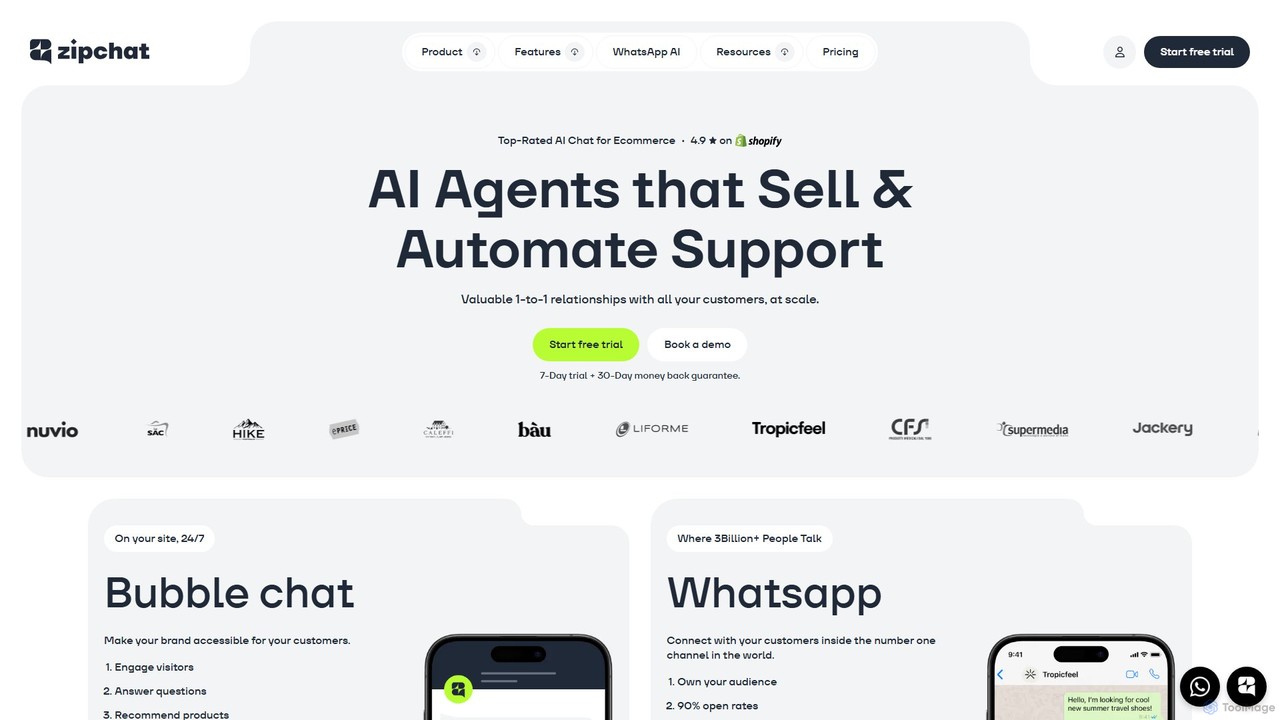
Zipchat is an advanced AI chatbot designed for e-commerce businesses to boost sales and automate customer support. It …
Zipchat is an advanced AI chatbot designed for e-commerce businesses to boost sales and automate customer support. It engages website visitors 24/7, answers questions, recommends products, and recovers abandoned carts. With seamless integration for websites like Shopify and platforms like WhatsApp, Zipchat uses conversational AI to provide personalized experiences. It's easy to set up without code and supports over 95 languages to serve a global customer base.
About Sales Automation
Sales Automation tools are AI-powered platforms designed to streamline and automate repetitive tasks throughout the sales funnel. These tools use machine learning to handle tasks like lead scoring, personalized email outreach, and follow-up scheduling, allowing sales teams to focus on strategic activities and closing deals. By automating key touchpoints, businesses can increase lead conversion rates, shorten the sales cycle, and gain data-driven insights into sales performance. They are a critical component for scaling sales operations within both B2B and e-commerce contexts.
Core Features
- AI-Powered Lead Scoring: Automatically analyzes and ranks leads based on their likelihood to convert, helping teams prioritize efforts.
- Automated Outreach Sequences: Creates and executes multi-step, multi-channel (email, SMS, social) communication campaigns for prospects.
- CRM Integration & Data Sync: Seamlessly connects with Customer Relationship Management (CRM) systems to keep all contact data and interactions updated in real-time.
- Sales Analytics & Forecasting: Provides dashboards and reports that track key performance indicators (KPIs) and use historical data to predict future sales trends.
- Automated Appointment Scheduling: Simplifies the process of booking meetings by syncing with calendars and offering prospects available time slots.
Use Cases
Sales Automation tools are widely used by B2B technology companies, e-commerce businesses, financial services firms, and real estate agencies. Sales development representatives (SDRs) use them to manage high-volume prospecting, while account executives automate follow-ups to nurture deals. E-commerce managers leverage them for post-purchase upsell sequences and cart abandonment campaigns.
How to Choose
When selecting a Sales Automation tool, first evaluate its integration capabilities with your existing CRM and marketing platforms. Consider the level of customization available for outreach sequences and scoring rules. Assess the platform's analytics and reporting features to ensure they meet your tracking needs. Finally, compare pricing models (per user, per contact) and the quality of customer support to find a solution that fits your team's size and budget.
Sales AutomationUse Cases
Automate Lead Nurturing Sequences
A sales development representative (SDR) at a B2B SaaS company needs to engage hundreds of new leads each week. Using a Sales Automation tool, they create a multi-step email sequence. The sequence automatically sends a personalized welcome email, followed by case studies after three days, and a demo invitation after a week. If a lead clicks a link or replies, the tool alerts the SDR to take over manually. This process ensures consistent follow-up for every lead without manual effort, increasing meeting booking rates by over 30%.
Prioritize High-Value Sales Leads with AI Scoring
A sales manager for a real estate agency receives a high volume of inquiries from various online portals. To identify the most serious buyers, they use a Sales Automation tool with AI lead scoring. The tool analyzes factors like budget, location preference, inquiry source, and website behavior (e.g., viewing high-value listings). It assigns a score to each lead, pushing those with scores above 80 to the top of the sales team's queue. This allows agents to immediately contact the hottest leads, resulting in a shorter time-to-close and a higher overall conversion rate.
Streamline Post-Purchase Follow-ups in Ecommerce
An e-commerce store owner wants to increase repeat purchases and gather product reviews. They set up an automated workflow in their Sales Automation tool that triggers after a customer completes a purchase. The workflow sends a thank-you email immediately, a request for a product review after 7 days, and a special discount coupon for their next purchase after 30 days. This entire process is automated and personalized with the customer's name and purchased product, fostering customer loyalty and generating valuable social proof without any manual intervention.
Automate Appointment Scheduling and Reminders
A financial advisor spends significant time coordinating meetings with clients. By integrating a Sales Automation tool with their calendar, they can send clients a link to their real-time availability. Clients can book a slot that works for them directly, eliminating back-and-forth emails. The system then automatically sends a confirmation email, a reminder 24 hours before the meeting, and another reminder 1 hour before. This automation reduces no-shows by up to 40% and frees up hours of administrative work each week for the advisor to focus on client strategy.
Sync Sales Activities Automatically with CRM
An account executive manages a portfolio of over 100 clients and prospects. Manually logging every email, call, and meeting into the CRM is time-consuming and prone to errors. With a Sales Automation tool, all these activities are captured and synced to the correct contact record in the CRM automatically. When they send an email from their inbox or complete a call, the tool logs the interaction. This ensures the CRM data is always accurate and up-to-date, providing a complete view of the customer relationship for the entire team and saving the executive several hours per week.
Generate Sales Forecasts with AI Analytics
A sales director needs to provide an accurate quarterly sales forecast to the executive board. Instead of relying on manual spreadsheets and guesswork, they use the AI-powered analytics module of their Sales Automation tool. The tool analyzes historical sales data, deal progression rates, and individual rep performance. It then generates a forecast with different probability scenarios (e.g., optimistic, realistic, pessimistic). This data-driven approach provides a much more accurate prediction, helps in resource planning, and allows the director to identify potential pipeline gaps early.