ToolMage
Sign in

Best 1 Upselling AI tools for Ecommerce

Popular Upselling AI tools in Ecommerce include TripAdd, helping you work more efficiently.

TripAdd
Paid

TripAdd

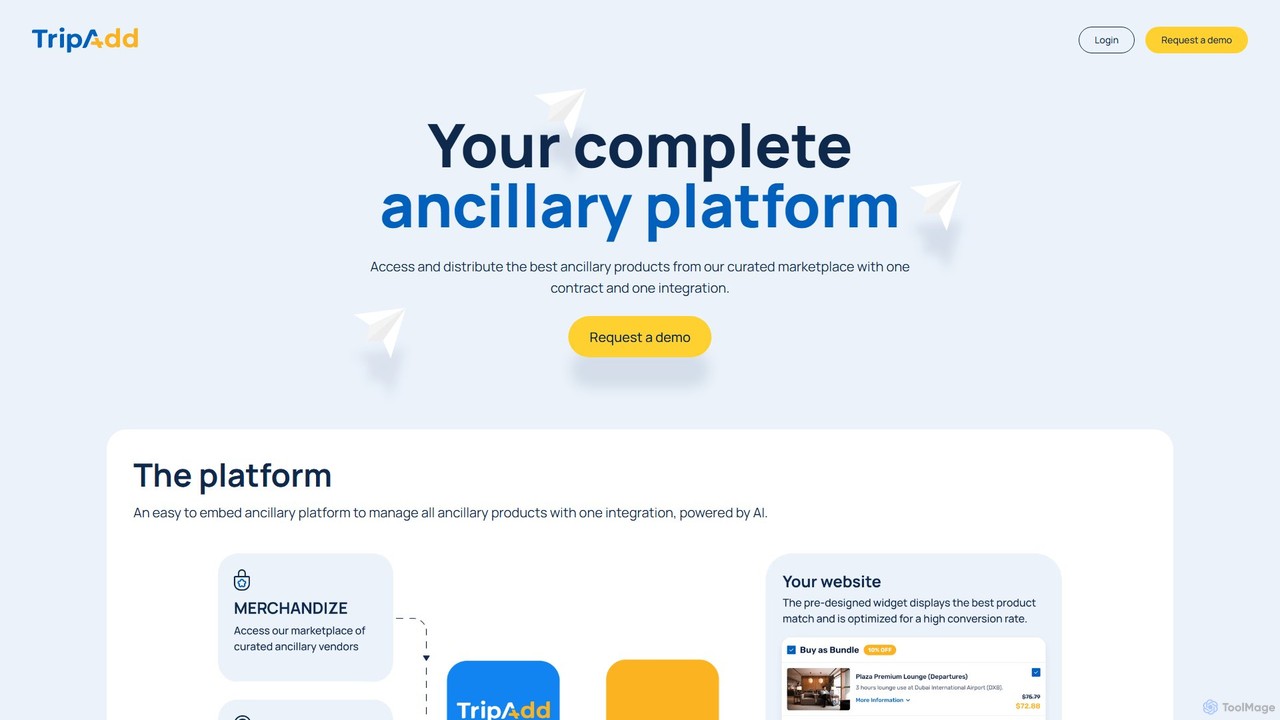
TripAdd is an AI-powered B2B platform for travel companies, providing a unified marketplace to integrate, manage, and optimize ancillary services. It helps businesses increase revenue by offering personalized travel add-ons like airport transfers, lounge access, and eSIMs through a single, easy-to-use integration.

Revenue Optimization
Visits 7.7KFavorites 147Likes 146

About Upselling

AI Upselling tools are a specialized category of ecommerce software that use machine learning to intelligently recommend higher-value products or premium versions to customers. These tools analyze user behavior, purchase history, and real-time browsing data to predict which upgrade a customer is most likely to accept. By presenting personalized and timely offers, they effectively increase Average Order Value (AOV) and enhance customer lifetime value, moving beyond simple, rule-based suggestions.

Core Features

  • Predictive Recommendations: Utilizes AI to analyze customer data and suggest the most relevant higher-priced alternative or add-on.
  • Personalized Offer Timing: Determines the optimal moment in the customer journey to present an upsell, such as on the product page, in the cart, or post-purchase.
  • Dynamic Bundling: Automatically creates and suggests attractive product bundles or service packages as an upgrade.
  • A/B Testing & Optimization: Continuously tests different upsell offers, placements, and messaging to identify the most effective strategies.
  • Performance Analytics: Provides detailed dashboards to track key metrics like conversion rates, revenue generated from upsells, and impact on AOV.

Applicable Scenarios

These tools are highly effective for B2C ecommerce platforms across various sectors like electronics, fashion, and beauty. They are also widely used in the SaaS industry to encourage plan upgrades, and in travel and hospitality for offering room upgrades, better seats, or premium packages. Any business with tiered products or services can leverage AI upselling to maximize revenue per customer.

How to Choose

When selecting an AI Upselling tool, first consider its integration capabilities with your existing ecommerce platform (e.g., Shopify, WooCommerce, Magento). Evaluate the sophistication of its AI algorithm and the level of personalization it offers. Also, assess the customization options for offer design and logic, and ensure it provides clear, actionable analytics to measure performance and ROI.

Upselling use cases

1

Intelligent SaaS Plan Upgrade Prompts

A SaaS company manager wants to convert more users from their 'Basic' plan to the 'Pro' plan. They use an AI Upselling tool integrated into their application. The AI analyzes a user's feature usage patterns. When a user on the 'Basic' plan attempts to access a 'Pro' feature, instead of just showing a generic paywall, the tool triggers a personalized pop-up. This pop-up highlights the specific benefits of the 'Pro' feature they were trying to use and may offer a small, one-time discount for upgrading immediately. This contextual approach significantly increases the conversion rate from free/basic to paid tiers.

2

Dynamic Product Upgrades on Ecommerce Pages

An online electronics retailer aims to increase the average order value. They implement an AI Upselling tool on their product pages. When a customer views a 13-inch laptop with 8GB of RAM, the AI analyzes this customer's profile against thousands of others. It might determine that this user segment often regrets not getting more memory. Consequently, it displays a subtle, non-intrusive banner suggesting the 16GB RAM model, clearly stating the performance benefits ('50% faster for multitasking') for a marginal price increase. This targeted suggestion is far more effective than a static list of 'related products'.

3

In-Cart Hotel Room Upgrade Offers

A hotel booking website uses an AI Upselling tool to increase revenue from reservations. When a user adds a 'Standard Queen Room' to their cart and proceeds to checkout, the AI engine activates. Based on the user's travel dates (e.g., a weekend or holiday), past booking behavior, and the hotel's current occupancy, it generates a personalized upgrade offer. For instance, it might offer an upgrade to a 'Deluxe Queen with Ocean View' for an additional $25/night, highlighting the value. This is presented as an exclusive, one-click option within the cart, making it an easy decision for the customer and boosting the booking value.

4

Post-Purchase Extended Warranty Upsell

A consumer electronics brand wants to increase sales of its premium extended warranty service. Instead of pushing the warranty aggressively at checkout, which can increase cart abandonment, they use an AI tool for post-purchase upselling. After a customer completes the purchase of a new drone, the AI system waits for an optimal time—for instance, 24 hours later. It then sends a personalized email explaining the benefits of the 'Pro-Care Warranty', referencing the specific drone model purchased. The AI might even tailor the message based on the customer's location, highlighting local repair centers. This targeted, low-pressure approach improves conversion rates for high-margin services.

5

Automated Meal Combo Upgrades in Food Delivery

A food delivery app operator wants to encourage customers to order combos instead of single items. They integrate an AI Upselling tool into their ordering flow. When a user adds a standalone burger to their cart, the AI instantly calculates the price difference to upgrade to a meal. It then displays a prompt like, 'Add fries and a drink for only $2.50 more and save 20%!' The AI can also personalize this based on past orders; if the user frequently orders diet soda, it will feature that specific drink in the combo suggestion. This makes the offer highly relevant and increases the likelihood of a successful upsell.

6

Personalized Subscription Box Upgrades

A company offering a monthly coffee subscription box uses an AI upselling platform to enhance customer experience and revenue. The AI tracks each subscriber's coffee ratings and preferences. Before the next month's shipment, the system identifies a subscriber who consistently rates dark roasts highly. It then sends a targeted email offering a one-time upgrade to an exclusive, premium single-origin dark roast for a small additional fee. The email highlights tasting notes that align with the user's known preferences. This personalized approach makes the subscriber feel understood and valued, leading to higher upgrade acceptance and better retention.

Upselling FAQ

What are AI Upselling tools?

AI Upselling tools are applications that use machine learning and data analysis to automatically suggest higher-priced products, premium versions, or relevant add-ons to customers. Unlike static recommendations, they analyze a customer's real-time behavior, purchase history, and similarities with other users to present the most relevant and timely upgrade offer. The primary goal is to increase the Average Order Value (AOV) and customer lifetime value by making offers that feel personalized and helpful rather than intrusive.

What's the difference between AI Upselling and Cross-selling tools?

The core difference lies in the recommendation's goal. Upselling aims to persuade a customer to purchase a more expensive, upgraded, or premium version of the same product they are currently viewing (e.g., a 512GB phone instead of a 256GB one). Cross-selling aims to recommend related or complementary products from different categories (e.g., suggesting a phone case and headphones to someone buying a new phone). While many AI recommendation engines can do both, specialized AI Upselling tools focus on the algorithms and user interface elements best suited for encouraging upgrades, such as feature comparison charts and value highlighting.

How do I choose the right AI Upselling tool for my business?

Choosing the right tool depends on several factors. Consider the following:

  • Integration: Ensure the tool seamlessly integrates with your ecommerce platform (e.g., Shopify, WooCommerce, BigCommerce) or application.
  • Customization: Check if you can customize the appearance, placement, and logic of the upsell offers to match your brand and user experience goals.
  • AI Sophistication: Evaluate the underlying AI. Does it offer true personalization based on individual behavior, or just segment-based rules?
  • Analytics: The tool should provide clear, actionable data on its performance, including conversion rates, revenue lift, and A/B test results.
  • Pricing Model: Compare pricing structures. Some charge a flat monthly fee, while others take a percentage of the revenue they help generate. Choose one that aligns with your business scale.
Can AI Upselling negatively impact user experience?

Yes, if implemented poorly. Aggressive, irrelevant, or poorly timed upsell pop-ups can frustrate users and increase cart abandonment. However, the purpose of using AI is to avoid this. A well-designed AI upselling tool enhances the user experience by acting as a helpful shopping assistant. It identifies genuine opportunities where a customer might benefit from a better product and presents the offer in a subtle, contextual, and valuable way. The key is relevance and timing, which AI is uniquely equipped to optimize, making the upsell feel like a helpful suggestion rather than a pushy sales tactic.

What kind of businesses benefit most from AI Upselling tools?

Businesses with tiered product or service offerings see the most significant benefit. This includes:

  • SaaS Companies: Upselling users from free/basic tiers to premium plans by highlighting feature value.
  • Ecommerce Stores: Especially in electronics, fashion, and cosmetics, where there are clear 'good, better, best' product versions.
  • Travel & Hospitality: Offering upgrades for flights (e.g., extra legroom), hotels (e.g., better rooms), and car rentals.
  • Subscription Services: Encouraging subscribers to move to a higher-tier box or add premium items.

Essentially, any business where a customer can be offered a more valuable version of their initial choice is a prime candidate for AI-powered upselling.