ToolMage
Sign in

Best 1 Video Marketing AI tools for Ecommerce

Popular Video Marketing AI tools in Ecommerce include Reelup, helping you work more efficiently.

Reelup
Freemium

Reelup

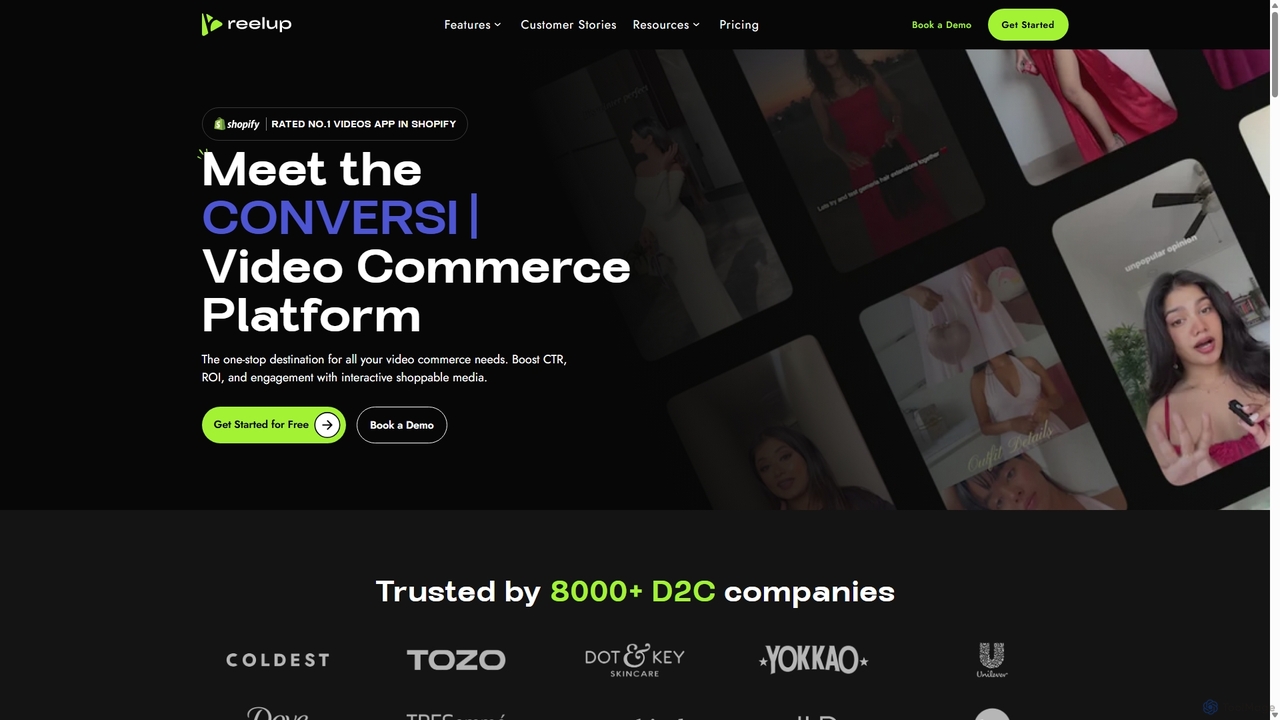
Reelup is an AI-powered video commerce platform designed for D2C brands, especially on Shopify. It transforms standard videos into interactive, shoppable experiences, allowing customers to purchase products directly from the video. By importing social media content and using AI for optimization, Reelup helps businesses boost engagement, conversion rates, and sales without slowing down their website.

Video Marketing
Visits 28.9KFavorites 149Likes 145

About Video Marketing

AI Video Marketing tools are a specialized category of software designed to automate and enhance the creation, personalization, and analysis of promotional videos, particularly for ecommerce. These tools leverage generative AI to produce scripts, transform product data into dynamic visuals, and apply intelligent editing to generate engaging content at scale. They are essential for online retailers aiming to create compelling product showcases, social media ads, and personalized customer communications without requiring extensive video production resources. Unlike general video editors, they often integrate directly with product catalogs and marketing platforms to streamline the entire campaign workflow.

Core Features

  • Product-to-Video Automation: Instantly converts product page information (images, descriptions, price) into ready-to-publish video ads.
  • AI Script Generation: Creates compelling video scripts and ad copy based on target audience, platform, and marketing goals.
  • Dynamic Personalization: Generates unique video variants for individual customers, incorporating data like their name or browsing history.
  • Template-Based Creation: Utilizes pre-designed, brandable templates to ensure consistent and professional-looking video output at scale.
  • Performance Analytics: Tracks key metrics such as view-through rates, click-through rates, and conversions to measure video effectiveness.

Use Cases

These tools are primarily used by ecommerce businesses, digital marketing agencies, and social media managers. Common applications include generating large volumes of video ads for platforms like TikTok and Instagram, creating personalized abandoned cart recovery videos, and producing product explainer videos for online storefronts to boost conversion rates.

How to Choose

When selecting an AI Video Marketing tool, consider its integration capabilities with your ecommerce platform (e.g., Shopify, WooCommerce) and marketing stack. Evaluate the quality and style of the AI-generated visuals to ensure they align with your brand identity. Assess the tool's scalability for batch processing and the level of customization available for templates and branding. Finally, review the pricing model to ensure it aligns with your production volume and budget.

Video Marketing use cases

1

Automate Product Showcase Video Generation

An ecommerce manager for a fashion brand needs to create engaging videos for hundreds of new apparel items each season. Using an AI video marketing tool, they simply input the product URLs from their Shopify store. The AI automatically pulls product images, descriptions, and prices, then generates short, dynamic videos optimized for product pages and Instagram Stories. This process reduces video creation time from hours per product to minutes, allowing the team to maintain a fresh and visually appealing online catalog without hiring a large video production team.

2

Create Scalable Social Media Ad Variations

A digital marketer running campaigns for an electronics store needs to A/B test multiple video ads on Facebook and TikTok. Instead of manually editing each variation, they use an AI tool to generate dozens of versions from a single master video. The AI automatically changes hooks, background music, calls-to-action, and on-screen text. This allows the marketer to quickly launch highly targeted campaigns for different audience segments, identify the best-performing creatives, and optimize ad spend for a higher return on investment (ROI) without significant creative effort.

3

Personalize Abandoned Cart Recovery Videos

A customer retention specialist at an online cosmetics store wants to reduce cart abandonment rates. They integrate an AI video tool with their marketing automation platform. When a customer abandons a cart, the system automatically generates and emails a short, personalized video. The video features the customer's name and showcases the exact products left in their cart, sometimes with a dynamic, limited-time discount code. This hyper-personalized approach grabs attention more effectively than a standard text-based email, leading to a significant increase in cart recovery and sales.

4

Generate How-To and Explainer Videos

A direct-to-consumer brand selling innovative kitchen gadgets needs to educate customers on how to use their products effectively. The marketing team uses an AI video tool to quickly create a series of explainer videos. They provide a simple text script outlining the steps. The AI then generates a complete video with stock footage, AI-generated voiceover, and animated text overlays. This allows them to build a comprehensive video library for their product pages and YouTube channel, improving customer onboarding and reducing support queries, all without the high cost and time commitment of traditional video shoots.

5

Localize Video Ads for Global Markets

An international ecommerce company wants to expand its reach in Europe and Asia. Their marketing team uses an AI video platform to localize their main promotional video. The tool automatically translates and generates voiceovers in multiple languages like German, French, and Japanese. It also allows them to easily swap out culturally specific visuals or update on-screen text to show local currencies and offers. This enables the company to launch tailored, market-specific video campaigns simultaneously across different regions, ensuring higher relevance and engagement without the logistical complexity of coordinating multiple international production agencies.

6

Create User-Generated Content (UGC) Style Ads

A social media manager for a skincare brand wants to leverage the authentic feel of User-Generated Content (UGC) in their ads. They use an AI video tool that specializes in creating UGC-style videos. The manager inputs customer reviews and product benefits as text prompts. The AI then generates videos featuring AI avatars or stock footage that mimics a genuine customer testimonial, complete with casual language, popular social media fonts, and trending audio. This allows the brand to produce a high volume of authentic-looking ads for TikTok and Instagram Reels, increasing trust and click-through rates without relying on finding and contracting real creators.

Video Marketing FAQ

What are AI Video Marketing tools?

AI Video Marketing tools are software applications that use artificial intelligence to automate and scale the creation of promotional videos, primarily for ecommerce and digital advertising. They go beyond traditional editing by automatically generating scripts, converting product data into video ads, personalizing content for individual viewers, and analyzing performance. Key features often include product-to-video conversion, AI scriptwriting, and template-based branding. These tools are designed for marketers who need to produce a high volume of effective video content quickly and without deep technical expertise.

How do AI Video Marketing tools differ from traditional video editors?

The main difference lies in automation and data integration. Traditional video editors like Adobe Premiere Pro require manual work for every aspect of creation—splicing clips, adding text, and rendering. AI Video Marketing tools automate these tasks. They are built for scale and efficiency, not granular creative control. Key differences include:

  • Data-Driven Creation: AI tools can connect to product feeds to automatically create videos, which traditional editors cannot.
  • Scalability: They can generate hundreds of video variations for A/B testing in minutes, a process that would take days manually.
  • Personalization: They can dynamically insert customer-specific data into videos at scale.
  • Ease of Use: They are designed for marketers, not video professionals, with template-driven workflows.
In short, traditional editors are for crafting a single, high-quality video, while AI tools are for producing many data-informed marketing videos efficiently.

How to choose the right AI Video Marketing tool for an ecommerce business?

Choosing the right tool depends on your specific needs. Consider these key factors:

  • Platform Integration: Does the tool seamlessly connect with your ecommerce platform (e.g., Shopify, BigCommerce) and marketing channels (e.g., Meta Ads, Klaviyo)? This is crucial for automating workflows like product-to-video and personalized campaigns.
  • Content Quality and Style: Review examples of videos generated by the tool. Do they match your brand's aesthetic? Look for customization options for fonts, colors, and templates.
  • Scalability and Speed: If you need to create hundreds of ads, assess the tool's batch processing capabilities and rendering speed.
  • Feature Set: Determine if you need advanced features like AI scriptwriting, multi-language voiceovers, or dynamic personalization, and choose a tool that offers them.
  • Pricing: Compare plans based on the number of videos you can create, video length, and access to premium features.

Can AI generate complete video ads from just a product link?

Yes, many advanced AI Video Marketing tools have this capability, which is a key feature for ecommerce businesses. When you provide a product URL, the AI scans the page to extract key information such as product images, title, description, price, and customer reviews. It then uses this data to automatically populate a pre-designed video template, select appropriate background music, and even generate a script for a voiceover. While the initial result is often a strong draft, most tools allow for further customization to ensure the final video aligns perfectly with your campaign goals and brand voice.

Who can benefit most from AI Video Marketing tools?

While many roles can benefit, these tools offer the most significant advantages to:

  • Ecommerce Store Owners: Small to medium-sized businesses can create professional-quality product videos and ads without the high cost of agencies or in-house teams.
  • Digital Marketing Agencies: Agencies can scale their video production services, creating numerous ad variations for multiple clients efficiently and improving campaign performance through rapid A/B testing.
  • Social Media Managers: They can quickly generate a steady stream of fresh, platform-specific video content for channels like TikTok, Instagram, and Facebook, keeping audiences engaged.
  • Performance Marketers: These professionals can leverage the tools to create highly personalized and data-driven video ads for retargeting and conversion campaigns, directly impacting ROI.