ToolMage
Sign in

Best 6 Critical Thinking AI tools for Education

Popular Critical Thinking AI tools in Education include NewsCord, DebateDevil, NewsBang, Outloud, Skeptic Reader, and Tilt, helping you work more efficiently.

Tilt
Free

Tilt

Tilt is an AI-powered platform designed to elevate public discourse by facilitating structured debates. It scores arguments for logic and clarity, helps users find common ground through real-time consensus tracking, and provides AI-powered summaries, all within a privacy-first environment.

Debate
Visits 5.4KFavorites 108Likes 122
Outloud
Freemium

Outloud

Outloud is an AI conversation partner designed for natural voice dialogue. It helps users with brainstorming, problem-solving, and decision-making through hands-free conversations. Featuring a special Critical Thinking Mode and over 68 realistic voices in 12 languages, it acts as a 24/7 thinking partner to challenge assumptions and explore ideas.

Decision Making
Visits 7.8KFavorites 129Likes 128
Skeptic Reader
Free

Skeptic Reader

Skeptic Reader is a free AI-powered browser extension for Chrome and Firefox that detects biases and logical fallacies in real-time. It analyzes web articles and YouTube transcripts, providing content scores, counter-arguments, and summaries to promote critical thinking and informed online reading.

Fact Checking
Visits 7.3KFavorites 154Likes 132
NewsCord
Free

NewsCord

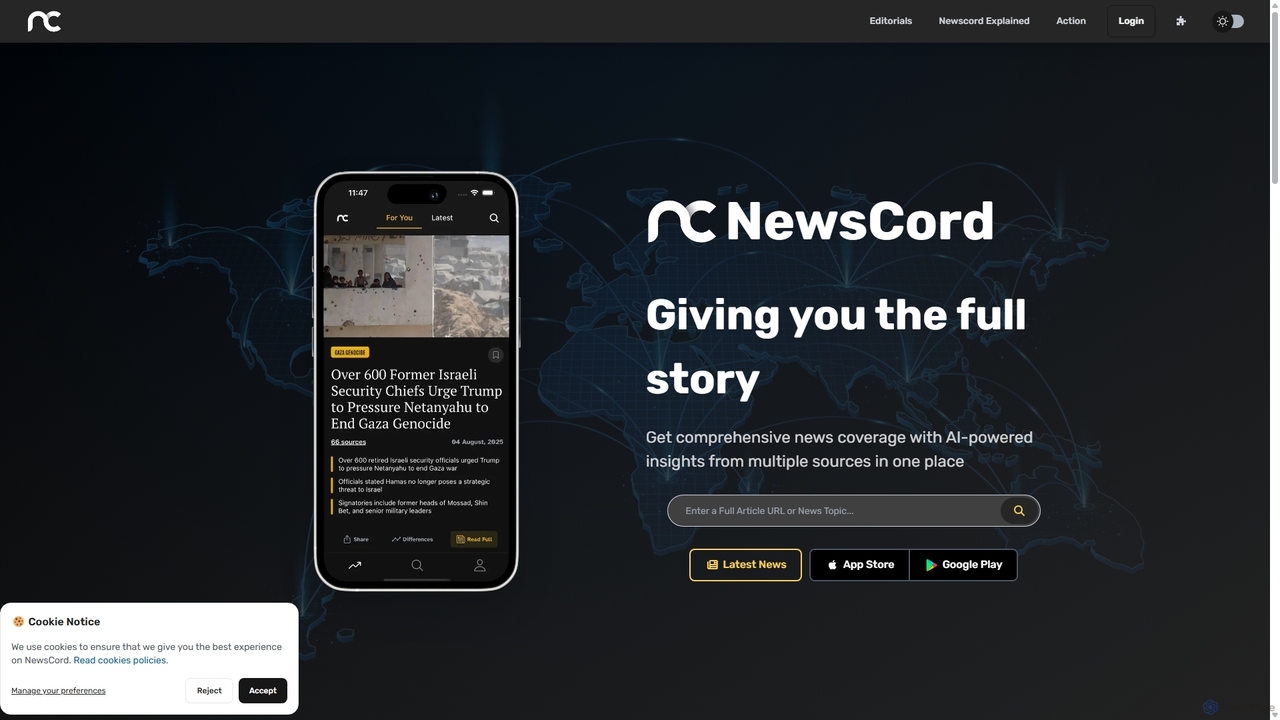
NewsCord is an AI-powered news analysis platform that reveals media bias by comparing articles from thousands of global sources. It generates concise summaries and highlights differences in coverage, framing, and tone, helping you understand the full story behind the headlines. Available as a website, mobile app, and browser extension for comprehensive news insights.

Critical Thinking
Visits 48.5KFavorites 143Likes 138
NewsBang
Freemium

NewsBang

NewsBang is an AI-powered news and insights platform designed to combat information overload. It moves beyond simple summaries by using a unique 'Questioning Model' to foster critical thinking. Users can enjoy bite-sized takeaways from verified sources, interactive AI-anchored podcasts, and daily briefings with sentiment analysis, transforming how we understand and engage with the news.

3D
Visits 9.3KFavorites 144Likes 135
DebateDevil
Freemium

DebateDevil

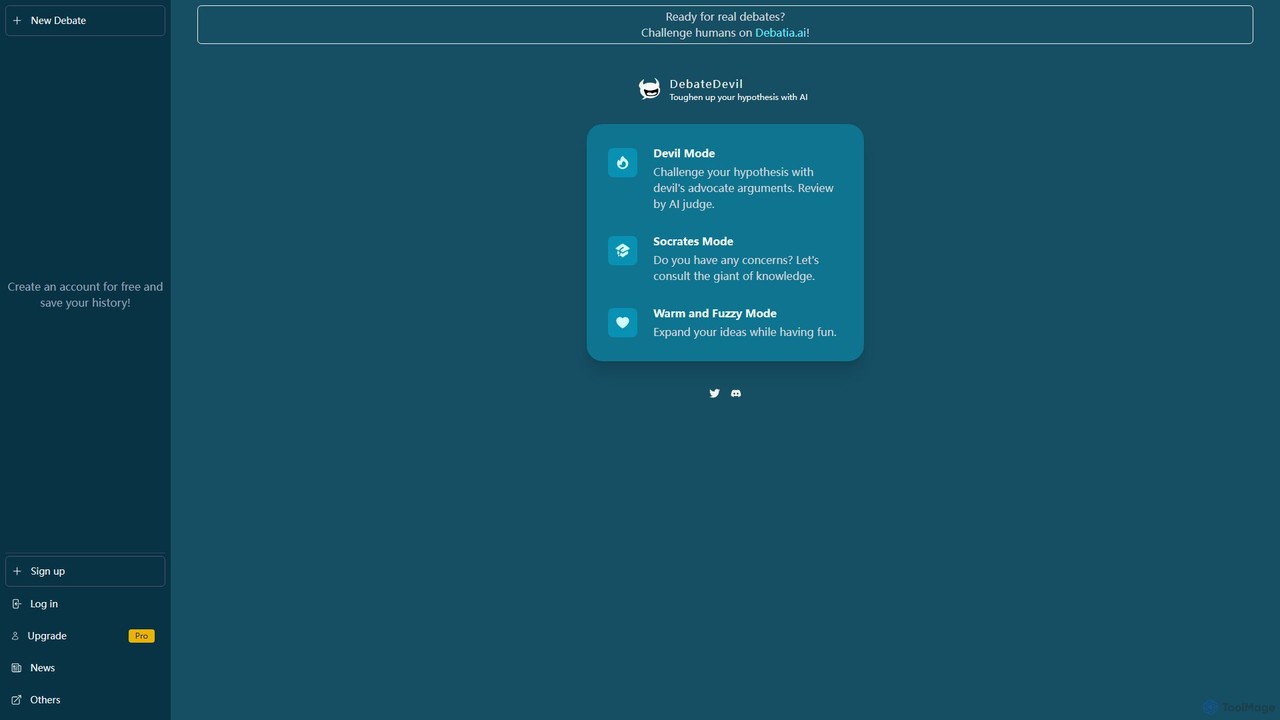
DebateDevil is an AI-powered platform designed to strengthen your arguments and refine your ideas. It acts as a virtual debate partner, using modes like 'Devil's Advocate' and 'Socrates' to challenge your hypotheses, identify logical fallacies, and help you build more robust and persuasive points. Ideal for students, researchers, and critical thinkers.

Critical Thinking
Visits 10.8KFavorites 124Likes 127

About Critical Thinking

AI Critical Thinking tools are a specialized class of educational software designed to help users analyze arguments, identify logical fallacies, and structure coherent reasoning. These tools leverage Natural Language Processing (NLP) to deconstruct text, map out logical structures, and evaluate the strength of evidence. They serve as powerful aids for students, researchers, and professionals aiming to sharpen their analytical skills and make more informed decisions. By providing objective feedback and guided analysis, these platforms help cultivate a more rigorous and evidence-based approach to thinking.

Core Features

  • Argument Mapping: Visually diagrams the structure of an argument, showing premises, co-premises, and conclusions.
  • Fallacy Detection: Automatically identifies common logical fallacies such as ad hominem, straw man, or false dilemma in a text.
  • Evidence Evaluation: Assesses the credibility and relevance of supporting claims and sources.
  • Bias Identification: Highlights potentially biased, subjective, or emotionally charged language.
  • Structured Reasoning Support: Guides users in constructing well-supported arguments from scratch.

Applicable Scenarios

These tools are particularly valuable in academic settings for students writing essays or dissertations, in legal professions for analyzing case law, and for journalists or fact-checkers verifying information. Business analysts can also use them to deconstruct reports and proposals to identify underlying assumptions and potential weaknesses in strategic plans.

Selection Criteria

When choosing an AI Critical Thinking tool, consider the depth of analysis required—some focus only on fallacy detection while others offer comprehensive argument mapping. Evaluate its integration capabilities with writing platforms like Google Docs or Word. Also, assess the user interface for clarity and ease of use, and consider whether the tool is designed for individual learning or collaborative team analysis.

Critical Thinking use cases

1

Enhancing Academic Essay Writing

A university student uses an AI Critical Thinking tool to analyze their draft essay on a complex topic. They upload the document, and the AI generates a visual map of their argument, showing how each paragraph supports the main thesis. The tool highlights a section with a weak premise and flags a potential 'straw man' fallacy in their counter-argument. Based on this feedback, the student strengthens their evidence and refines their reasoning, resulting in a more persuasive and logically sound paper that earns a higher grade.

2

Preparing for a Debate or Negotiation

A debate team member inputs their opponent's likely arguments into an AI tool. The system breaks down each argument into its core components and automatically scans for logical fallacies, such as 'hasty generalizations' or 'appeals to emotion'. This allows the debater to quickly identify weaknesses and prepare targeted, evidence-based rebuttals. For a business negotiation, this process helps an analyst anticipate the other party's talking points and develop stronger, more logical counter-offers.

3

Fact-Checking News Articles and Reports

A journalist or researcher uses a critical thinking tool to analyze a politically charged news article. The AI scans the text and flags sentences that use emotionally loaded language or present opinions as facts. It also identifies claims that are not supported by evidence within the article itself. This automated first-pass analysis helps the user focus their manual fact-checking efforts on the most critical and potentially misleading parts of the text, improving accuracy and efficiency.

4

Deconstructing Business Proposals

A business analyst is tasked with evaluating a vendor's proposal. They input the proposal text into an AI critical thinking tool. The software maps out the core value proposition and the supporting arguments, such as cost savings and efficiency gains. It highlights an unstated assumption that market conditions will remain stable. This prompts the analyst to conduct a risk assessment on market volatility, adding a crucial layer of due diligence that might have been overlooked, leading to a more robust evaluation.

5

Analyzing Legal Arguments and Case Law

A paralegal or law student inputs a judicial opinion into a critical thinking tool to better understand its logical structure. The AI maps the chain of reasoning from the presented facts to the final conclusion, identifying the key precedents cited. It can also highlight potential inconsistencies or logical leaps in the argument. This helps the user to quickly grasp the core logic of the case and identify potential points for appeal or further research, accelerating the legal analysis process.

6

Personal Skill Development in Logic

An individual wanting to improve their critical thinking skills uses an AI tool with a dedicated learning module. They engage in interactive exercises where they must identify fallacies in short text snippets or construct a valid argument based on a set of premises. The tool provides instant feedback, explaining why an answer is correct or incorrect. This gamified, self-paced learning approach allows the user to systematically practice and internalize logical principles, improving their reasoning abilities for everyday life and professional tasks.

Critical Thinking FAQ

What are AI Critical Thinking tools?

AI Critical Thinking tools are specialized software applications that use artificial intelligence, particularly Natural Language Processing (NLP), to help users analyze and improve their reasoning. Unlike general educational tools that deliver content, these tools focus on the structure of arguments. They help identify logical fallacies, map out reasoning, evaluate evidence, and detect bias in written text. Their primary goal is to act as a cognitive assistant to help users think more clearly and logically.

How do I choose the right AI Critical Thinking tool?

Choosing the right tool depends on your specific needs. Consider the following factors:

  • Primary Goal: Are you writing academic papers, preparing for debates, or fact-checking? Some tools are better for argument mapping, while others excel at fallacy detection.
  • Depth of Analysis: Do you need a simple bias check or a comprehensive breakdown of logical structures?
  • Integration: Check if the tool integrates with your existing workflow, such as word processors or research management software.
  • User Interface: Select a tool with an intuitive interface that makes complex analysis understandable and actionable.
What's the difference between a Critical Thinking tool and a grammar checker?

The primary difference lies in their focus. A grammar checker, like Grammarly or ProWritingAid, analyzes the surface level of writing: spelling, grammar, punctuation, style, and clarity. Its goal is to improve how an idea is expressed. In contrast, an AI Critical Thinking tool analyzes the deeper, logical level of the content. It evaluates the validity of arguments, the coherence of reasoning, and the evidence supporting claims. One perfects the language, while the other scrutinizes the logic behind the language.

Can AI tools replace human critical thinking?

No, AI critical thinking tools are designed to augment, not replace, human intellect. They function as powerful assistants, much like a calculator for a mathematician. The AI can quickly process large amounts of text and identify patterns, fallacies, or structural issues that a human might miss. However, the final judgment, contextual understanding, creativity, and ethical considerations remain firmly in the human domain. These tools provide data-driven insights, but the user is still responsible for interpreting those insights and making the final decision.

Who are the primary users of AI Critical Thinking tools?

These tools serve a diverse range of users who rely on strong analytical skills. Key user groups include:

  • Students and Academics: For writing stronger essays, research papers, and dissertations by ensuring logical coherence.
  • Legal Professionals: For analyzing legal briefs, judicial opinions, and contracts to find logical flaws or strengths.
  • Journalists and Researchers: For fact-checking sources, identifying bias in reporting, and evaluating the strength of evidence.
  • Business Analysts and Strategists: For deconstructing business plans, market reports, and proposals to uncover hidden assumptions and risks.
  • Anyone in a learning capacity: For individuals who want to systematically improve their own reasoning and decision-making skills.