
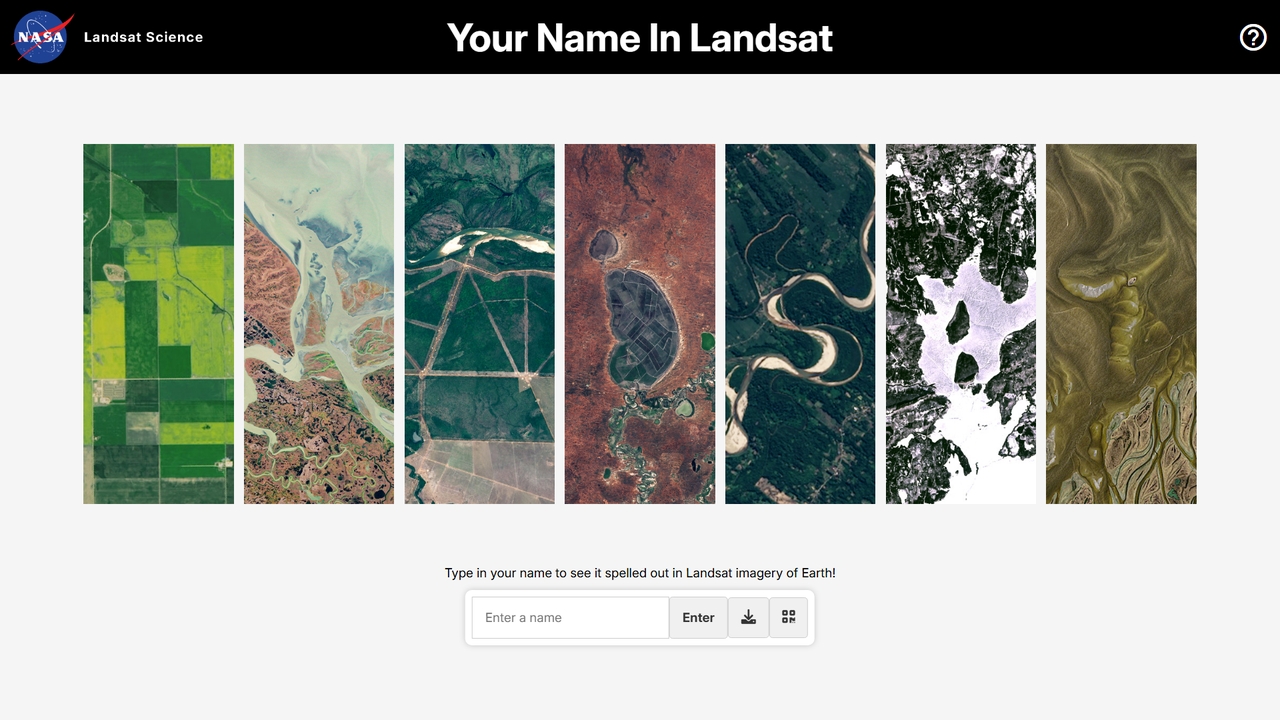
Free
Your Name in Landsat
Type your name to see it spelled out in NASA and USGS Landsat satellite imagery spanning over 50 years. A free, interactive Earth science tool.
ScienceVisits 7.9MFavorites 33Likes 41
Popular Science AI tools in Education include Your Name in Landsat, Pl@ntNet, satcat, Curl Calculator, and dymolab, helping you work more efficiently.
Type your name to see it spelled out in NASA and USGS Landsat satellite imagery spanning over 50 years. A free, interactive Earth science tool.
Science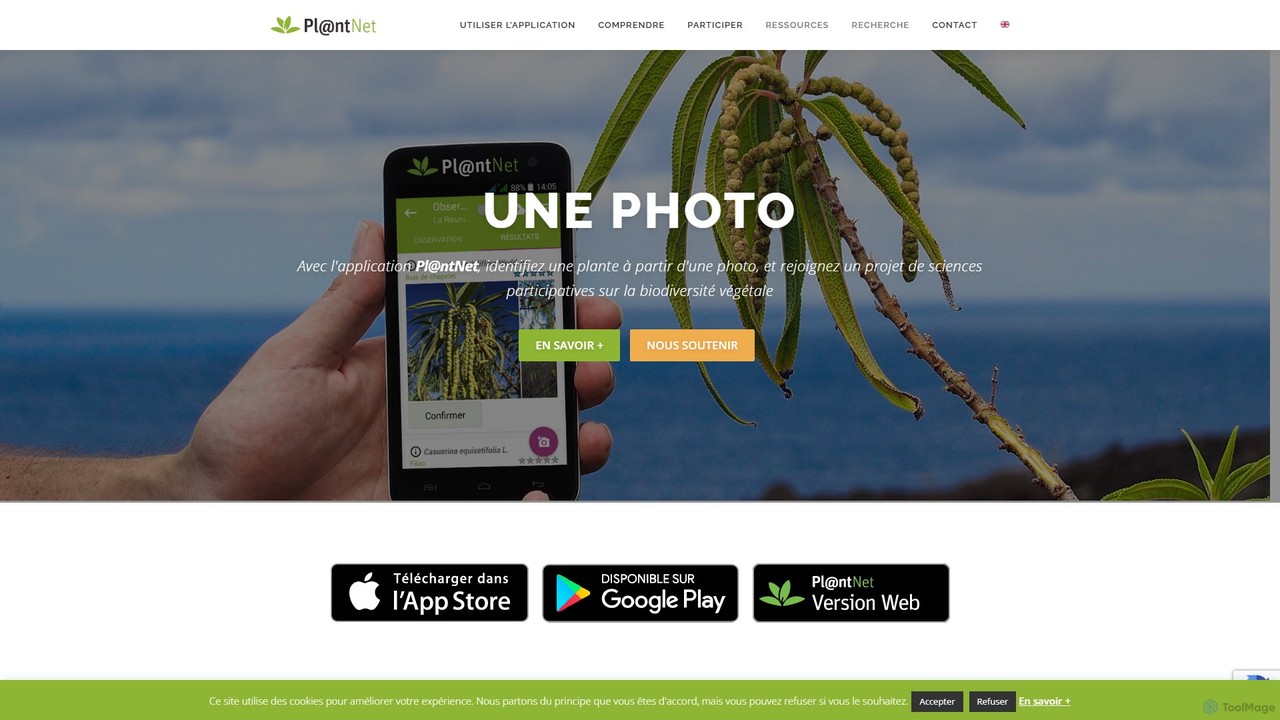
Pl@ntNet is an AI-powered application for plant identification using photos. It combines image recognition technology with a vast citizen science project, allowing users to identify over 51,000 plant species and contribute to global biodiversity research and conservation efforts.
Science
Satcat is a comprehensive spaceflight intelligence platform providing real-time data on satellites, space debris, and orbital events. It features advanced search, 3D visualization, and AI-powered queries, making it an essential tool for aerospace professionals, researchers, and space enthusiasts.
Analytics
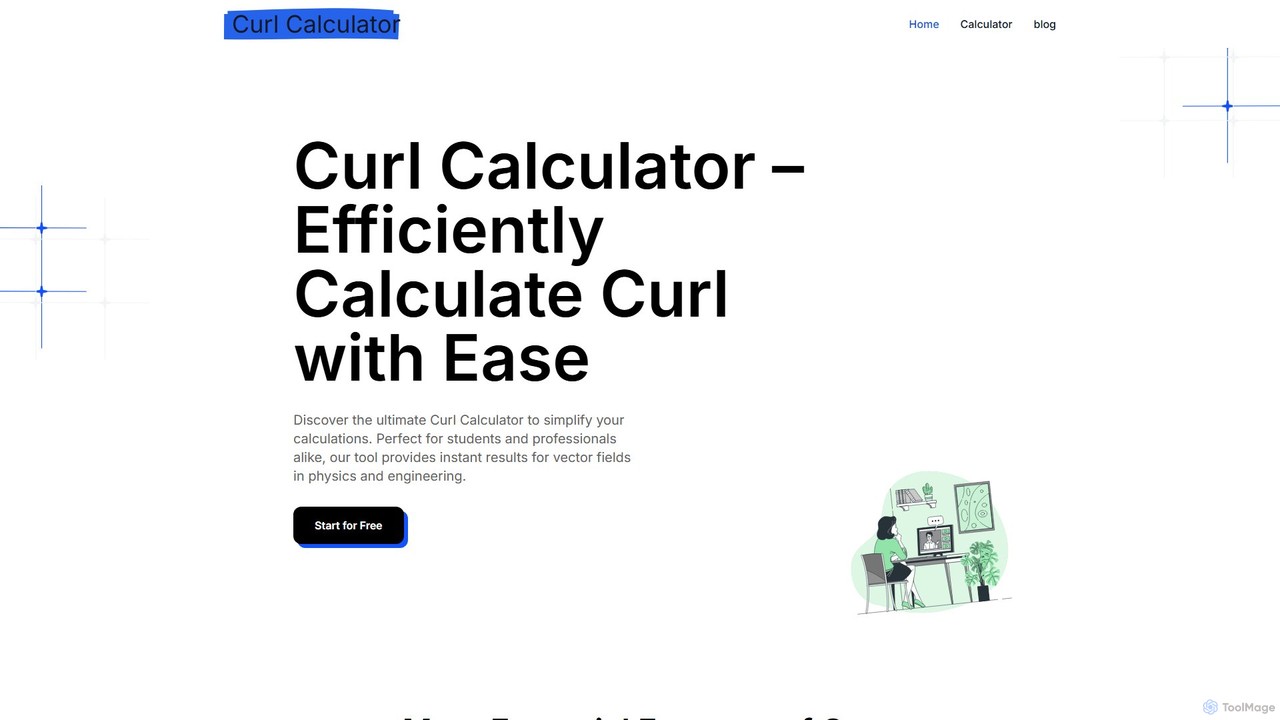
A free online tool for students and professionals to efficiently calculate the curl of vector fields. It provides instant, accurate results for applications in physics, engineering, fluid dynamics, and electromagnetism. The calculator simplifies complex vector calculus, helping users understand rotational properties of vector fields without manual computation.
SimulationAI Science tools are a specialized category of software designed to accelerate scientific research, analysis, and discovery. They employ machine learning and complex algorithms to process vast datasets, simulate intricate systems, and predict experimental outcomes. These tools empower researchers, students, and scientists to uncover novel insights, automate data-intensive tasks, and generate new hypotheses. Unlike general educational software, AI Science tools focus on the practical application of AI within specific domains like biology, chemistry, physics, and data science.
These tools are essential in academic research institutions, pharmaceutical R&D, biotechnology firms, and environmental science agencies. They are applied in fields like drug discovery, materials science, climate modeling, and genomic analysis, enabling breakthroughs that were previously computationally prohibitive.
When selecting an AI Science tool, consider its specialization for your scientific field (e.g., bioinformatics vs. computational physics). Evaluate its compatibility with your data formats (e.g., FASTA, PDB, NetCDF), the complexity of the models it supports, and whether it requires coding skills or offers a graphical user interface.
A computational biologist at a pharmaceutical company needs to understand the 3D structure of a target protein to design a new drug. Instead of spending months or years on experimental methods like X-ray crystallography, they input the protein's amino acid sequence into an AI tool. The AI, trained on a vast database of known protein structures, predicts a highly accurate 3D model within hours. This allows the research team to immediately begin designing and simulating drug candidates that can bind to the protein, drastically shortening the preclinical discovery phase and reducing costs.
A PhD student is starting a new research project and needs to conduct a comprehensive literature review, a process that could take weeks of manual searching and reading. Using an AI science tool, they input their core research questions and keywords. The tool scans millions of academic papers, identifies the most relevant studies, and generates a summarized report highlighting key findings, methodologies, and research gaps. It can even create a visual map of how different concepts and authors are connected. This reduces the review time by over 70%, ensuring the student builds their research on a solid and up-to-date foundation.
A team of climate scientists needs to predict the impact of various emission reduction policies on global sea levels over the next century. Running these complex simulations on traditional supercomputers is time-consuming and expensive. They utilize an AI-powered platform that uses machine learning to approximate the results of complex physical models. This allows them to run thousands of scenarios in the time it would take to run a few, testing a much wider range of policy variables. The AI provides high-resolution projections, helping policymakers make more informed decisions based on robust scientific modeling.
A bioinformatician is tasked with identifying genetic markers for a rare disease from the DNA sequences of thousands of patients. Manually analyzing this volume of data is impossible. They use an AI genomics platform to automate the workflow. The tool aligns the sequences, identifies single nucleotide polymorphisms (SNPs), and uses machine learning algorithms to find statistically significant correlations between specific genetic variations and the disease. The platform highlights the most promising candidate genes in a matter of days, enabling lab researchers to focus their efforts on validating these specific targets for further study.
A synthetic chemist in a materials science lab wants to create a novel compound with specific properties. There are countless potential reaction pathways, and finding the most efficient one through trial and error is slow and wasteful. They use an AI retrosynthesis tool, inputting the target molecule. The AI works backward, suggesting several viable synthesis routes, ranking them by predicted yield, cost of reagents, and number of steps. This allows the chemist to bypass unpromising routes and focus lab experiments on the most likely pathways to succeed, saving weeks of time and significant material costs.
A university professor teaching quantum physics struggles to help students visualize abstract concepts like wave-particle duality. They incorporate an AI-powered simulation tool into their curriculum. This tool provides an interactive virtual lab where students can design their own experiments, change variables like particle energy or slit width, and instantly see the results on a quantum level. The AI can also provide real-time feedback and suggest new experimental parameters to explore. This hands-on approach transforms a difficult subject into an engaging experience, leading to deeper understanding and improved retention of complex scientific principles.
AI Science tools are specialized software applications that use artificial intelligence, particularly machine learning and deep learning, to solve complex scientific problems. They are designed to analyze massive datasets, run sophisticated simulations, and predict outcomes in fields like biology, chemistry, physics, and materials science. Unlike general-purpose software, they are built to handle specific scientific data formats and models, ultimately accelerating the pace of research and discovery.
Choosing the right tool depends on several factors. First, consider your scientific domain; a tool for genomics will differ greatly from one for computational fluid dynamics. Second, evaluate data compatibility by ensuring the tool supports your specific file formats (e.g., PDB for proteins, FASTA for sequences). Third, assess the technical requirements: does it require coding skills (like Python), or does it have a user-friendly graphical interface? Finally, consider the model complexity and whether the tool's algorithms are suitable for the depth of analysis your research requires.
The key difference lies in specialization and capability. General data analysis software, like spreadsheets or statistical packages, is excellent for structured numerical or categorical data and standard statistical tests. AI Science tools, however, are built for highly specific, often unstructured, and massive scientific datasets (e.g., 3D molecular structures, genomic sequences, satellite imagery). They employ advanced machine learning models for tasks beyond traditional statistics, such as prediction, simulation, and pattern recognition in complex systems.
A wide range of professionals and students can benefit. This includes:
It depends on the tool. Some advanced platforms, especially in fields like bioinformatics or computational physics, are libraries or packages that require programming knowledge, typically in Python or R. However, there is a growing trend of developing AI science tools with no-code or low-code graphical user interfaces (GUIs). These platforms allow researchers to upload their data, select models, and run complex analyses through a user-friendly interface, making these powerful technologies accessible to a broader scientific audience without a background in programming.