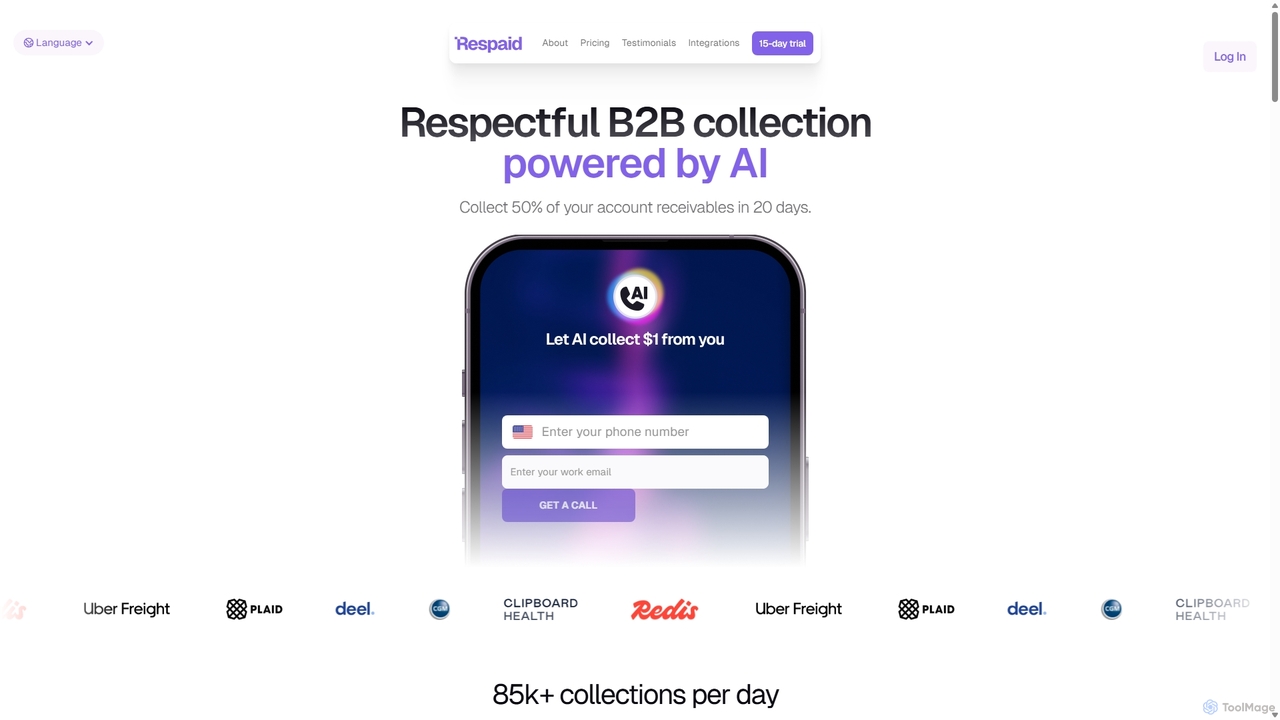
Respaid
Respaid is an AI-powered platform for respectful B2B debt collection. It combines artificial intelligence with the authority of …
Respaid is an AI-powered platform for respectful B2B debt collection. It combines artificial intelligence with the authority of legal professionals to recover unpaid invoices while protecting your brand's reputation. The system automates and personalizes communication to maximize recovery rates efficiently.
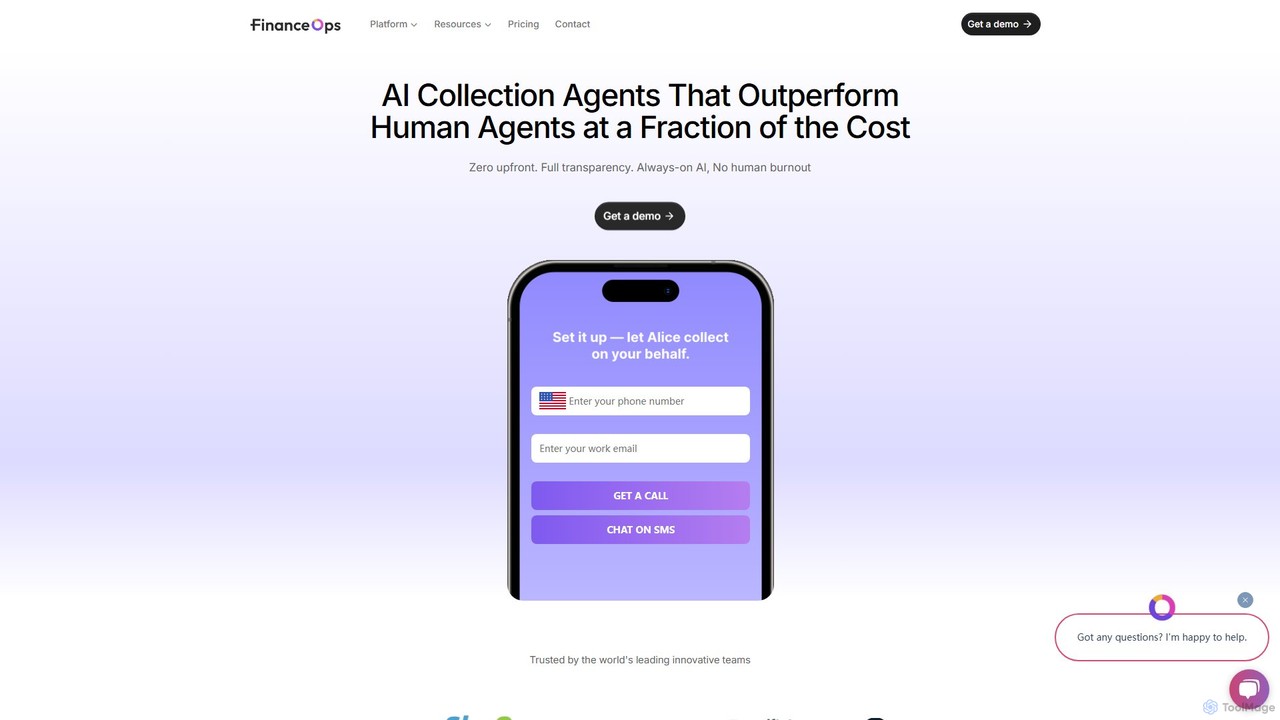
FinanceOps
FinanceOps is an AI-powered collections management platform that automates debt recovery using empathetic AI agents. It handles outreach …
FinanceOps is an AI-powered collections management platform that automates debt recovery using empathetic AI agents. It handles outreach via email, SMS, and voice 24/7 to increase recovery rates, improve cash flow, and reduce operational costs without damaging customer relationships. It offers both fully automated (Autopilot) and team-assist (Copilot) modes.
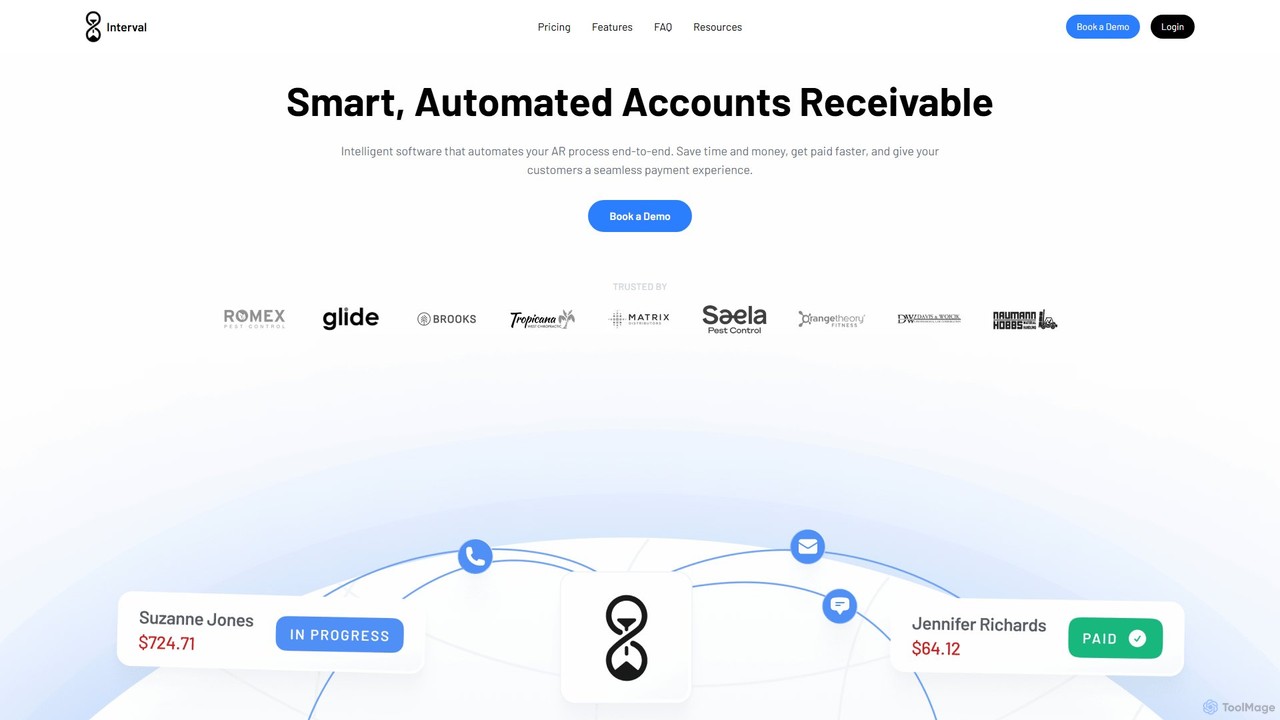
Interval AI
Interval AI is an intelligent, automated accounts receivable platform designed to streamline your collections process. Using AI-driven communication …
Interval AI is an intelligent, automated accounts receivable platform designed to streamline your collections process. Using AI-driven communication across calls, texts, and emails, it helps businesses save time, reduce costs, and get paid faster. The system optimizes outreach, negotiates payments, and maintains professional customer relationships, all on autopilot.
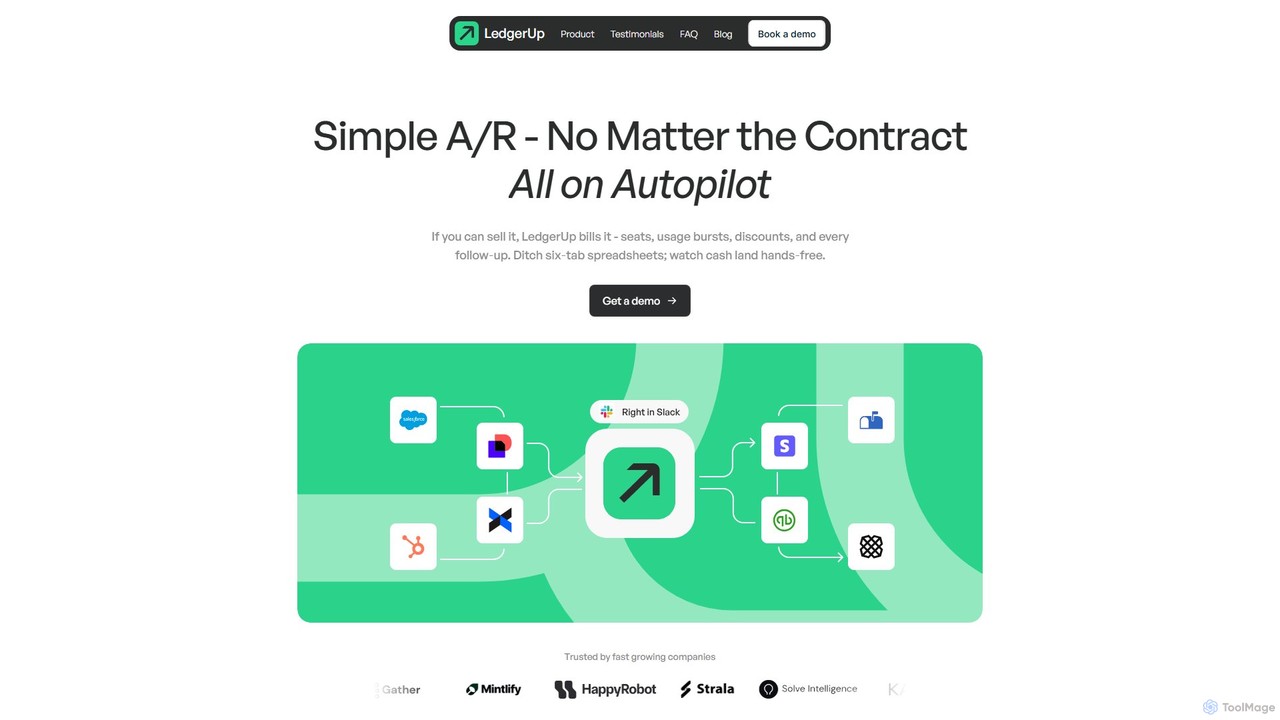
LedgerUp
LedgerUp is an AI-powered platform that automates the entire accounts receivable (A/R) and contract-to-cash workflow. Its AI agent, …
LedgerUp is an AI-powered platform that automates the entire accounts receivable (A/R) and contract-to-cash workflow. Its AI agent, Ari, operates directly within Slack to connect your CRM, contract, and payment systems. It handles complex billing, invoice generation, payment follow-ups, and reconciliation, saving operations teams significant time and eliminating revenue leakage.
Billabex
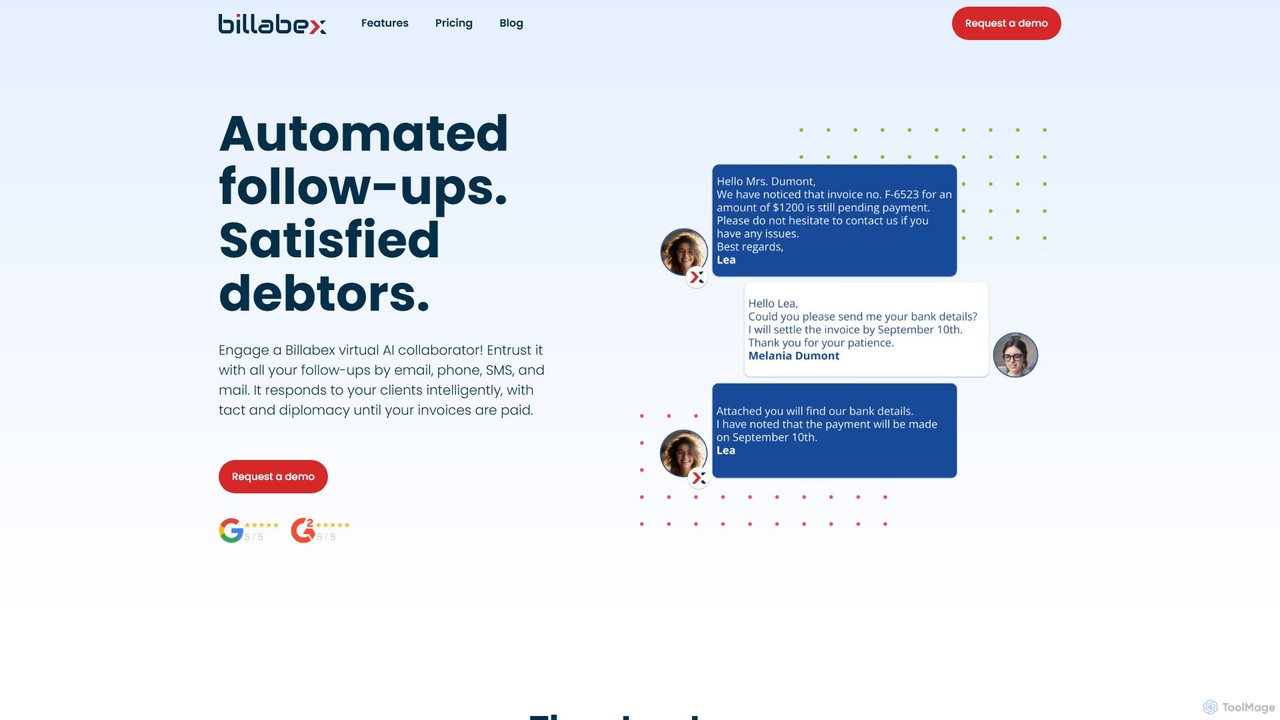
Billabex is an AI-powered platform that automates invoice collection and payment reminders. It deploys a virtual AI collaborator …
Billabex is an AI-powered platform that automates invoice collection and payment reminders. It deploys a virtual AI collaborator to handle follow-ups via email, SMS, phone, and mail. The AI agent communicates intelligently and diplomatically with debtors, personalizes follow-up plans, and adapts to responses, significantly reducing manual effort and improving cash flow.
About Accounts Receivable
AI Accounts Receivable tools are specialized financial software designed to automate and optimize the management of money owed to a business. These platforms use machine learning to predict payment behavior, automate communications, and streamline cash application processes. By analyzing historical data, they help businesses reduce Days Sales Outstanding (DSO), improve cash flow predictability, and minimize the risk of bad debt. This transforms the traditionally reactive collections process into a proactive, data-driven financial strategy.
Core Features
- Predictive Payment Analysis: Utilizes AI to forecast when an invoice is likely to be paid and identifies high-risk accounts.
- Automated Dunning & Reminders: Automatically sends personalized payment reminders and collection notices based on predefined rules and customer behavior.
- Intelligent Cash Application: Matches incoming payments to open invoices automatically, even with complex remittance data or partial payments.
- Dispute & Deduction Management: Identifies, categorizes, and routes customer disputes or short payments for faster resolution.
Use Cases
These tools are particularly valuable for B2B companies with high invoice volumes, subscription-based businesses managing recurring revenue, and enterprises seeking to centralize their collections process. They are used by finance departments, credit managers, and accounts receivable specialists to enhance efficiency and strategic decision-making.
How to Choose
When selecting an AI Accounts Receivable tool, consider its integration capabilities with your existing ERP or accounting system. Evaluate the sophistication of its AI-driven analytics and the level of customization available for communication workflows. Also, assess its reporting features for cash flow forecasting and team performance tracking, as well as its scalability to handle future growth.
Accounts ReceivableUse Cases
Automating Dunning for a SaaS Company
A mid-sized SaaS company dealing with thousands of monthly subscriptions uses an AI Accounts Receivable tool to automate its collections process. The system analyzes each customer's payment history and engagement level to create personalized dunning cadences. Low-risk customers receive gentle, automated email reminders, while high-risk accounts are flagged for personal follow-up by the AR team. This approach reduces manual effort, improves customer relationships by avoiding generic messages, and has decreased their average DSO by 15%.
Streamlining Cash Application for a Wholesaler
A large wholesale distributor receives hundreds of payments daily via ACH, wire transfers, and checks, often with incomplete remittance information. Their finance team previously spent hours manually matching payments to invoices. By implementing an AI cash application tool, the system now automatically captures remittance data from various sources (like email attachments and bank portals) and uses algorithms to match payments to open invoices with over 95% accuracy. This has freed up the AR team to focus on resolving exceptions and managing customer credit.
Predicting Late Payments for a Manufacturing Firm
A manufacturing company with long payment cycles (Net 60/90) uses an AI platform to predict which customers are likely to pay late. The AI model analyzes factors like past payment behavior, industry trends, and customer communication patterns. The collections team receives a prioritized list of at-risk accounts each week, allowing them to proactively contact these customers before the invoice becomes overdue. This predictive approach has helped reduce the percentage of invoices aged over 90 days by 25% and improved overall cash flow forecasting accuracy.
Managing Deductions for a CPG Company
A consumer packaged goods (CPG) company frequently deals with customer deductions for promotional allowances, damages, or shortages. Manually processing these was time-consuming and prone to errors. They adopted an AI tool that automatically scans remittance advice and customer communications to identify and categorize deductions. The system then routes each deduction to the appropriate department (e.g., sales for promotions, logistics for shortages) with all necessary documentation, significantly speeding up the validation and resolution process and reducing revenue leakage from invalid claims.
Improving Collections Prioritization for a Services Firm
A business consulting firm with a diverse client base struggled to prioritize collection efforts effectively. By using an AI Accounts Receivable tool, each outstanding invoice is now assigned a real-time collection-risk score based on dozens of variables. The AR team uses a dashboard to sort accounts by risk score, invoice age, and value. This allows them to focus their time on the accounts that are most critical to cash flow, rather than simply calling down an alphabetical list. This data-driven prioritization has led to a more efficient collections team and a measurable improvement in cash flow.
Generating Real-time Cash Flow Forecasts
The CFO of a growing enterprise needs accurate cash flow forecasts for strategic planning. Their AI Accounts Receivable system analyzes predicted payment dates for all outstanding invoices, alongside historical payment trends and seasonality. It generates dynamic, real-time cash flow projections that are far more accurate than static, spreadsheet-based models. This allows the finance leadership to make more informed decisions about investments, hiring, and managing working capital, directly linking AR performance to the company's strategic financial health.