ToolMage
Sign in

Best 6 Banking AI tools for Finance

Popular Banking AI tools in Finance include Bankjoy, Glia, Arc, Kasisto, FlowX.AI, and Onnix, helping you work more efficiently.

Glia
Paid

Glia

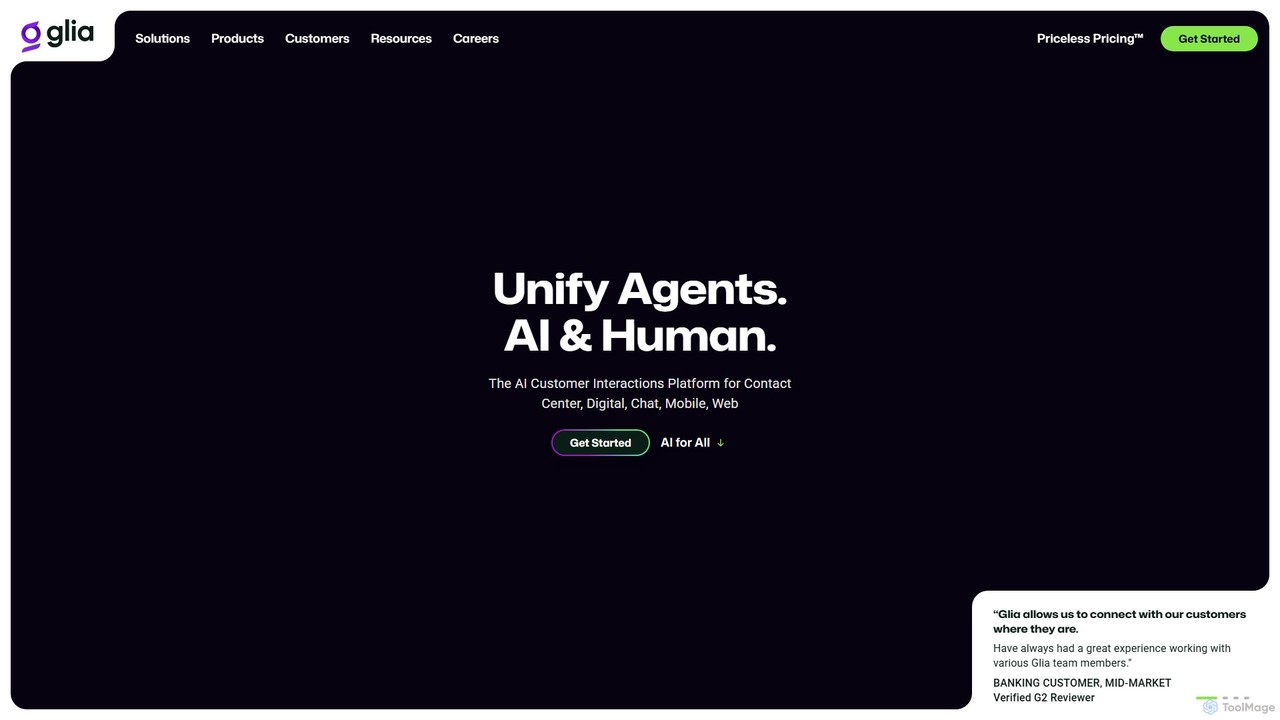
Glia is an AI-powered contact center platform that unifies AI and human agents across voice and digital channels. Its ChannelLess® architecture provides seamless customer interactions, while its "AI for All" suite enhances productivity for agents, managers, and executives. It's specifically designed for regulated industries like finance and insurance, offering predictable, usage-free pricing.

Contact Center
Visits 53KFavorites 88Likes 97
Onnix
Paid

Onnix

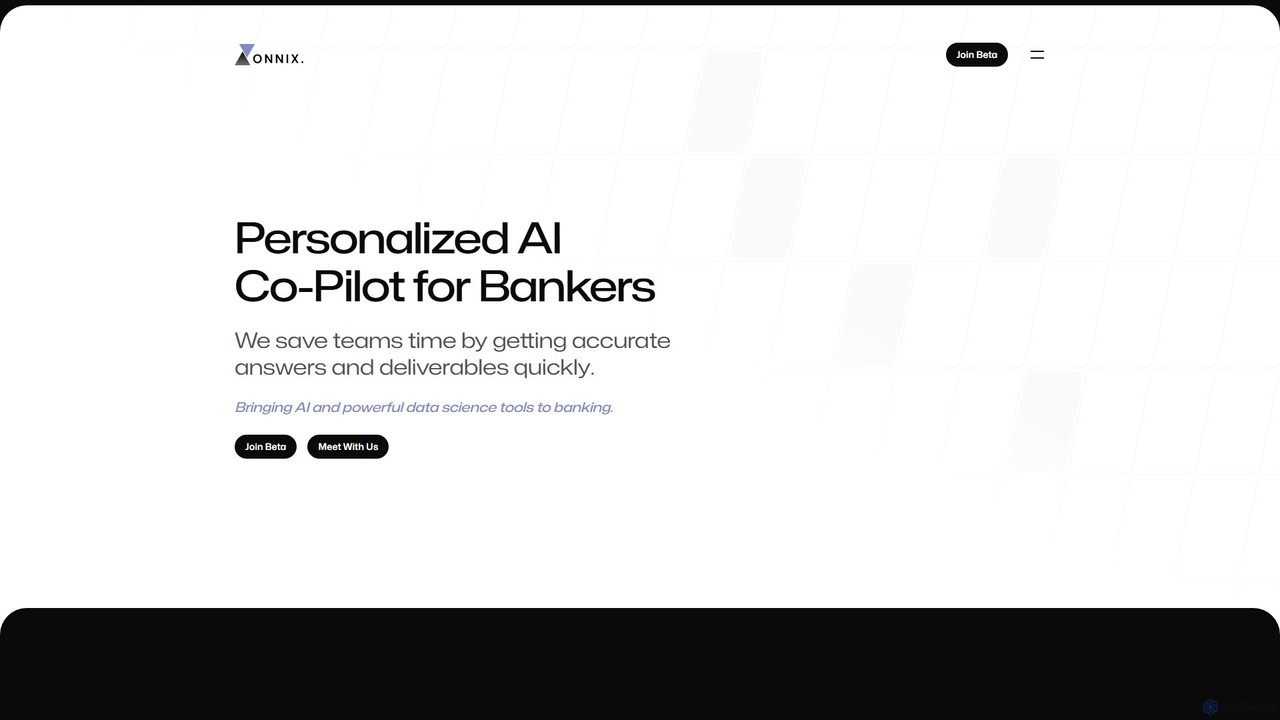
Onnix is a personalized AI co-pilot designed for bankers. It streamlines financial workflows by enabling users to create customized slide decks, perform complex data analysis in Excel, and query data sources like FactSet and CapIQ using simple text prompts. Built by bankers for bankers, this no-code platform significantly accelerates productivity, improves accuracy with auditable outputs, and makes advanced data science accessible to all team members.

Presentation
Visits 7.2KFavorites 132Likes 124
Kasisto

Kasisto

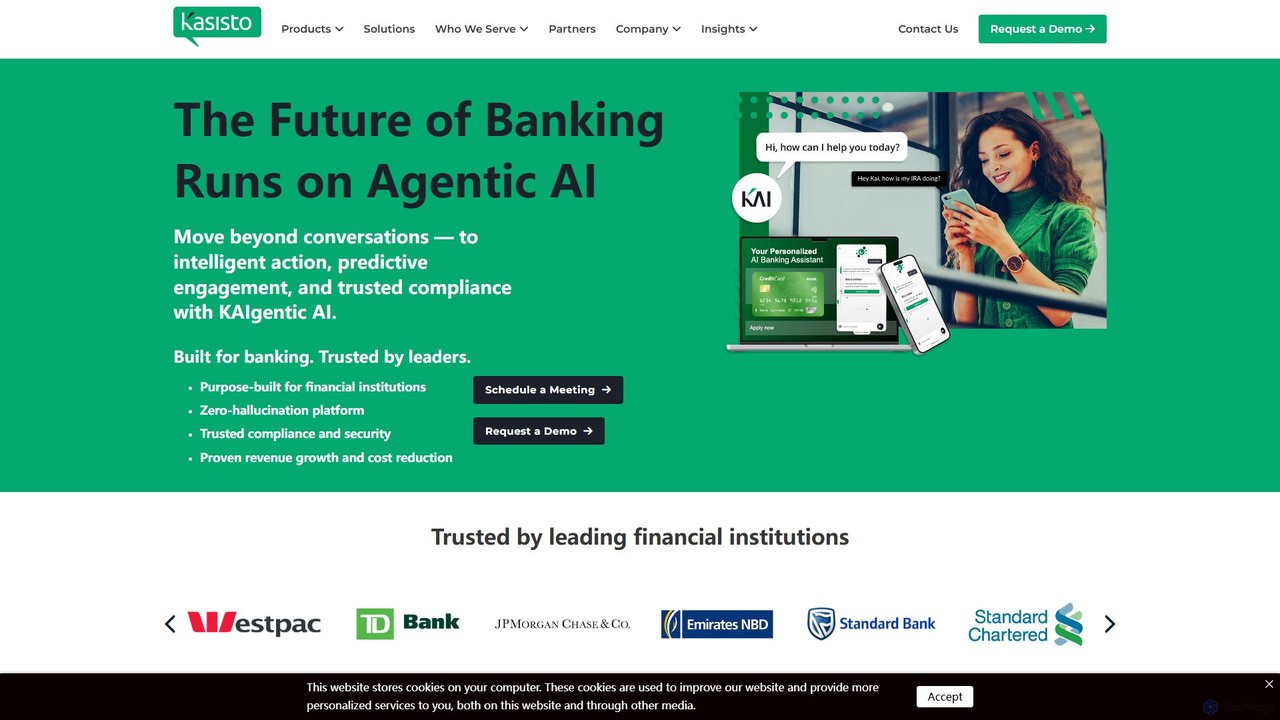
Kasisto is a trusted agentic AI platform specifically designed for the financial services industry. It moves beyond simple conversational AI to deliver intelligent action, predictive engagement, and compliant interactions. KAI, its core platform, empowers banks and credit unions to enhance customer experiences, improve employee productivity, and drive revenue growth through personalized, proactive, and secure AI solutions.

Chatbot
Visits 17.5KFavorites 112Likes 106
Bankjoy
Paid

Bankjoy

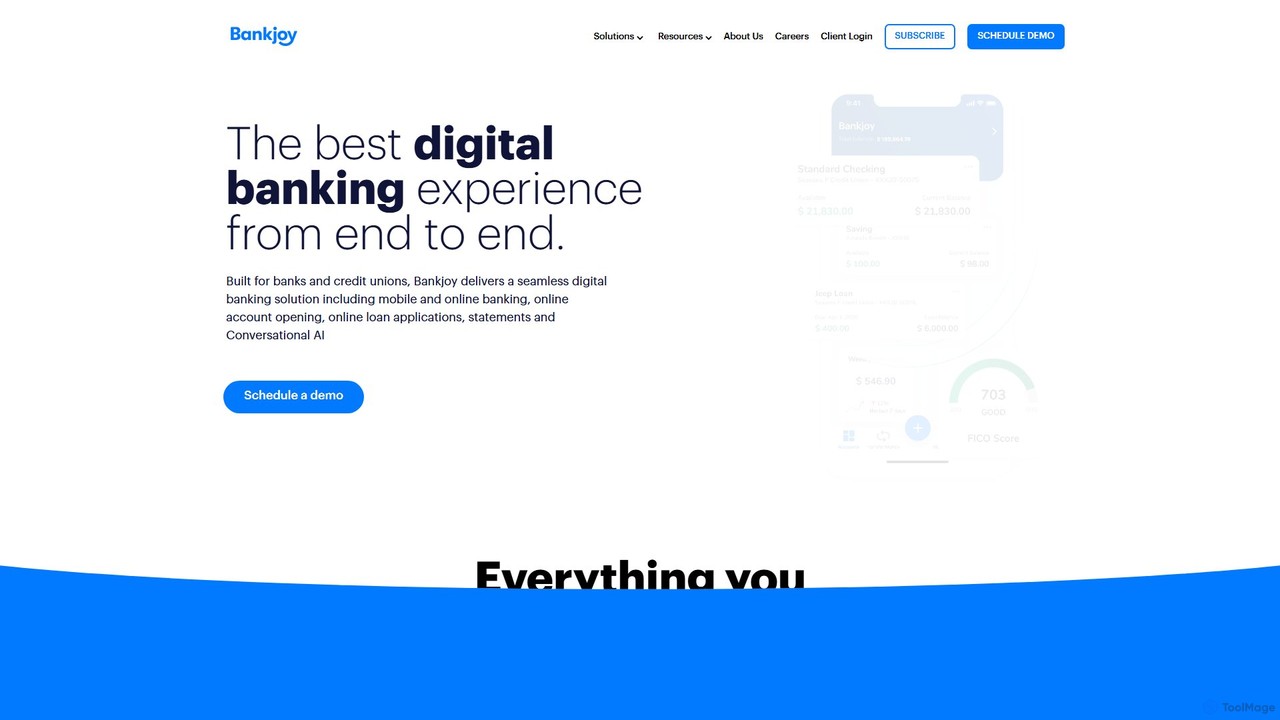
Bankjoy is an end-to-end digital banking platform for banks and credit unions. It provides a comprehensive suite of services including mobile and online banking, online account opening, loan applications, and a conversational AI chatbot named 'Joy' to modernize the customer experience and drive growth.

Chatbot
Visits 84.2KFavorites 97Likes 98
FlowX.AI
Paid

FlowX.AI

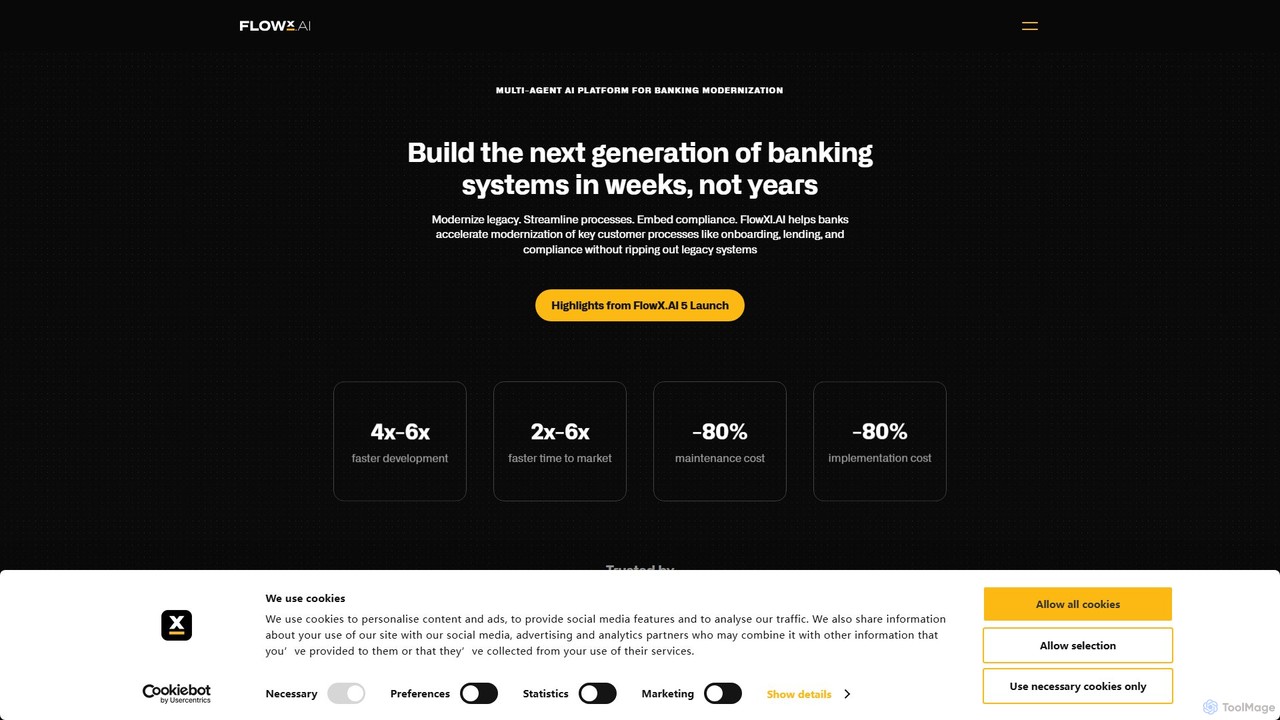
FlowX.AI is a multi-agent AI platform designed for banking modernization. It enables financial institutions to rapidly build and deploy complex, enterprise-grade applications on top of existing legacy systems. By leveraging AI agents and a low-code approach, it drastically reduces development time, cuts costs, and streamlines critical processes like customer onboarding, lending, and compliance.

Low Code No Code
Visits 7.8KFavorites 121Likes 107
Arc
Freemium

Arc

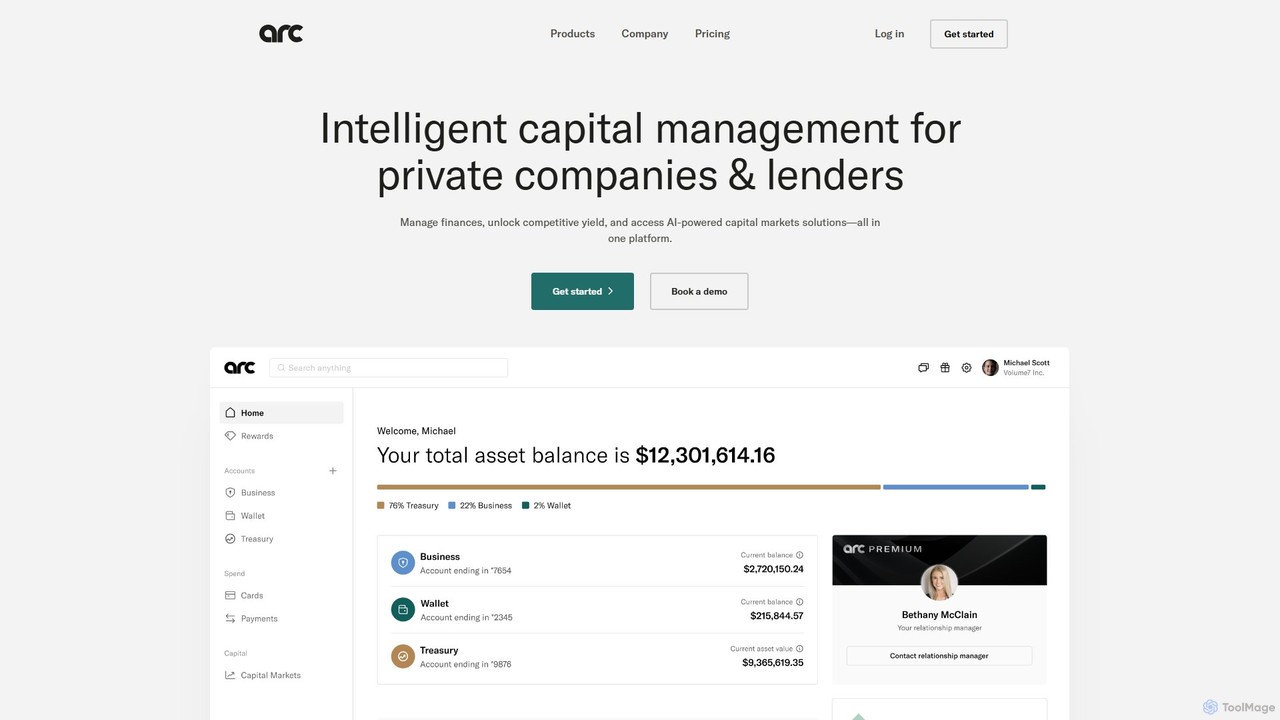
Arc is an AI-powered financial platform for startups and private companies, offering an all-in-one solution for intelligent capital management. It combines high-yield cash and treasury management with AI-driven access to non-dilutive capital markets. Manage finances, earn competitive yield on idle cash, and secure debt financing efficiently on a single, secure platform.

Banking
Visits 43.2KFavorites 99Likes 102

About Banking

Banking AI tools are specialized solutions leveraging artificial intelligence to transform financial services. These tools utilize machine learning, natural language processing, and advanced analytics to automate operations, enhance security, and personalize customer interactions. They provide significant value by improving efficiency, reducing costs, and enabling more informed decision-making across various banking functions. This integration helps financial institutions stay competitive and meet evolving customer demands.

Core Features

  • Fraud Detection & Prevention: Analyzes transaction patterns and behavioral data in real-time to identify and flag suspicious activities, minimizing financial losses.
  • Automated Customer Service: Employs AI chatbots and virtual assistants to handle routine inquiries, provide instant support, and guide customers through banking processes 24/7.
  • Personalized Financial Advice: Uses machine learning to analyze customer financial data and behavior, offering tailored product recommendations and investment insights.
  • Risk Assessment & Management: Evaluates creditworthiness, market risks, and operational risks with high accuracy, supporting better lending decisions and regulatory compliance.
  • Process Automation: Automates repetitive back-office tasks like data entry, reconciliation, and document processing, freeing up human resources for more complex work.

Applicable Scenarios

Financial institutions, from large commercial banks to smaller credit unions, utilize Banking AI tools to modernize their operations. Retail banking leverages AI for customer service and personalized offerings, while corporate banking applies it for complex risk analysis and compliance. Fintech startups also integrate these tools to build innovative, agile financial products and services, enhancing their competitive edge in a rapidly evolving market.

How to Choose

When selecting Banking AI tools, consider the specific banking function you aim to enhance, such as fraud detection or customer service. Evaluate the tool's integration capabilities with existing core banking systems, its compliance with financial regulations (e.g., GDPR, AML), and the robustness of its security features. Scalability, vendor support, and the clarity of its AI models for explainability are also crucial factors for long-term success.

Featured tool rankings

Banking use cases

1

Automating Fraud Detection in Real-time

A bank's fraud department uses AI-powered tools to monitor millions of transactions simultaneously. The AI analyzes historical data, behavioral patterns, and anomalies to instantly flag suspicious activities, such as unusual spending locations or large transfers, before they are fully processed. This proactive approach significantly reduces financial losses and protects customer accounts from unauthorized access.

2

Enhancing Customer Support with AI Chatbots

Retail banking customers interact with AI chatbots on the bank's website or mobile app for common inquiries like checking account balances, transaction history, or applying for a new credit card. The AI understands natural language, provides instant, accurate responses, and can escalate complex issues to human agents, improving customer satisfaction and reducing call center wait times.

3

Personalizing Investment Recommendations

Wealth management advisors leverage AI tools to analyze individual client portfolios, risk tolerance, financial goals, and market trends. The AI generates personalized investment recommendations, suggesting suitable funds, stocks, or bonds, and provides insights into potential returns and risks, helping clients make informed decisions tailored to their unique financial situation.

4

Streamlining Loan Application Processing

Loan officers utilize AI to automate the initial stages of loan application processing. The AI quickly verifies applicant information, assesses creditworthiness by analyzing various data points, and flags any discrepancies or potential risks. This accelerates the approval process, reduces manual errors, and allows officers to focus on more complex cases requiring human judgment.

5

Optimizing Regulatory Compliance Reporting

A bank's compliance department employs AI to continuously monitor regulatory changes and automatically generate compliance reports. The AI scans vast amounts of internal data and external regulations, ensuring all transactions and operations adhere to the latest anti-money laundering (AML) and know-your-customer (KYC) requirements, thereby minimizing the risk of penalties and fines.

6

Predicting Credit Risk for Small Businesses

Commercial lending teams use AI models to predict the credit risk of small business applicants more accurately. By analyzing a broader range of data, including cash flow, industry trends, and social media sentiment, beyond traditional credit scores, the AI provides a more holistic risk assessment. This enables the bank to make more confident lending decisions and expand its reach to underserved businesses.

Banking FAQ

What are AI Banking Tools?

AI Banking Tools are software solutions that apply artificial intelligence, such as machine learning and natural language processing, to automate and enhance various banking operations. They are designed to improve efficiency, security, and customer experience within financial institutions. Key applications include fraud detection, personalized financial advice, and automated customer service.

How do AI tools enhance security in banking?

AI tools significantly enhance banking security by employing advanced algorithms to detect and prevent fraud in real-time. They analyze vast datasets of transaction patterns, user behavior, and network activities to identify anomalies that might indicate fraudulent attempts or cyber threats. This proactive monitoring helps financial institutions protect customer assets and maintain data integrity more effectively than traditional methods.

What is the difference between AI in Banking and general FinTech AI?

While both leverage AI in finance, AI in Banking specifically focuses on core banking operations within regulated financial institutions, such as retail banking, corporate banking, and wealth management. It addresses challenges like fraud detection, risk management, and compliance. General FinTech AI, on the other hand, encompasses a broader range of financial technologies, including payment apps, investment platforms, and blockchain solutions, which may or may not be directly tied to traditional banking structures.

Who benefits most from implementing AI in banking?

Both financial institutions and their customers benefit significantly from AI implementation in banking. Banks gain from increased operational efficiency, reduced costs, enhanced security against fraud, and improved regulatory compliance. Customers benefit from more personalized services, faster transaction processing, 24/7 support through AI chatbots, and more secure banking experiences.

What are the key considerations when adopting AI solutions in banking?

When adopting AI solutions in banking, key considerations include ensuring data privacy and security, complying with stringent financial regulations (e.g., GDPR, AML, KYC), and addressing the explainability of AI models for auditing purposes. Additionally, institutions must evaluate integration capabilities with existing legacy systems, the scalability of the solution, and the ethical implications of AI decision-making to build trust.