ToolMage
Sign in

Best 12 Fintech AI tools for Finance

Popular Fintech AI tools in Finance include HEROZ, Gigs, AiPrise, digitap, greip, Floatbot.AI, Cognito, crayondata, Sleek, and PathPilot, helping you work more efficiently.

HEROZ

HEROZ

HEROZ is a leading Japanese AI technology company that provides advanced B2B solutions across various industries. Leveraging core technologies developed from its world-champion Shogi (Japanese chess) AI, HEROZ offers custom AI development, data analysis, and generative AI platforms to drive business transformation in finance, construction, entertainment, and more.

Ai Solutions
Visits 1.9MFavorites 121Likes 131
Sleek

Sleek

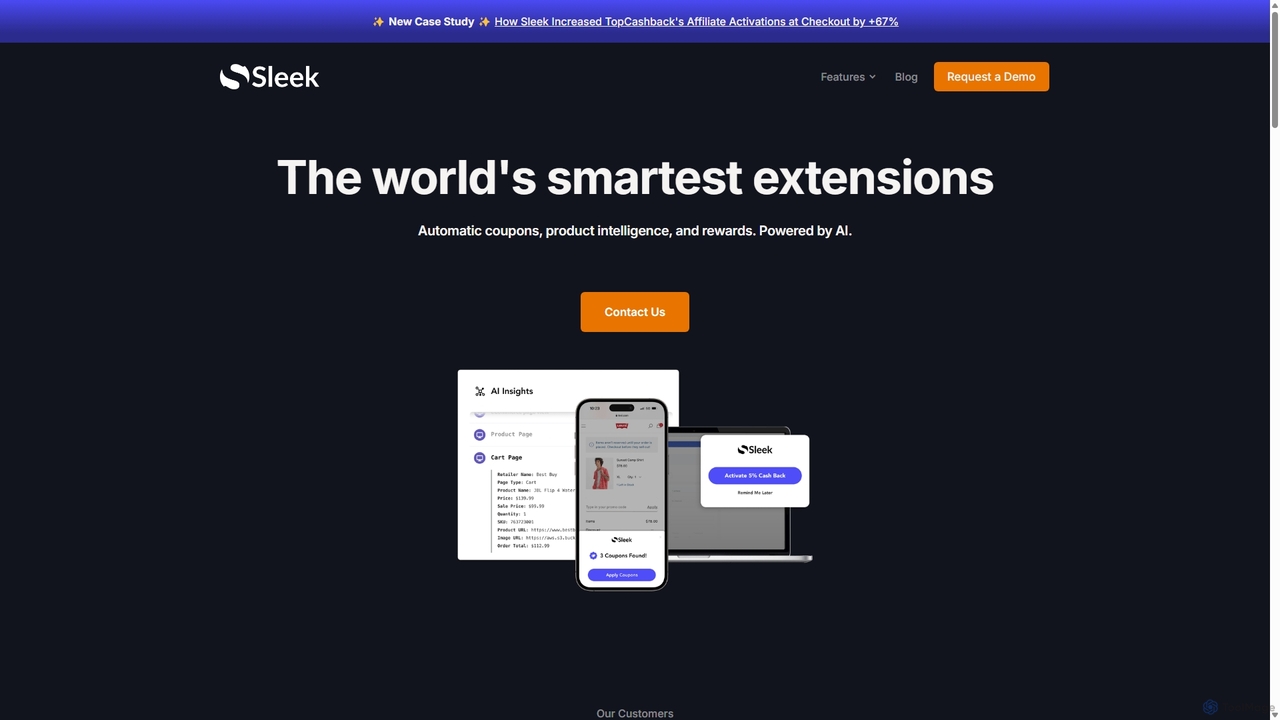
Sleek is an AI-powered platform for businesses to enhance the e-commerce experience. It enables the integration of automatic coupons, cashback rewards, and seamless one-click checkout into browser extensions, websites, and apps. Its AI agents interact with web pages like a human, automating savings and boosting conversion rates without manual maintenance.

Api
Visits 8.4KFavorites 133Likes 146
greip
Freemium

greip

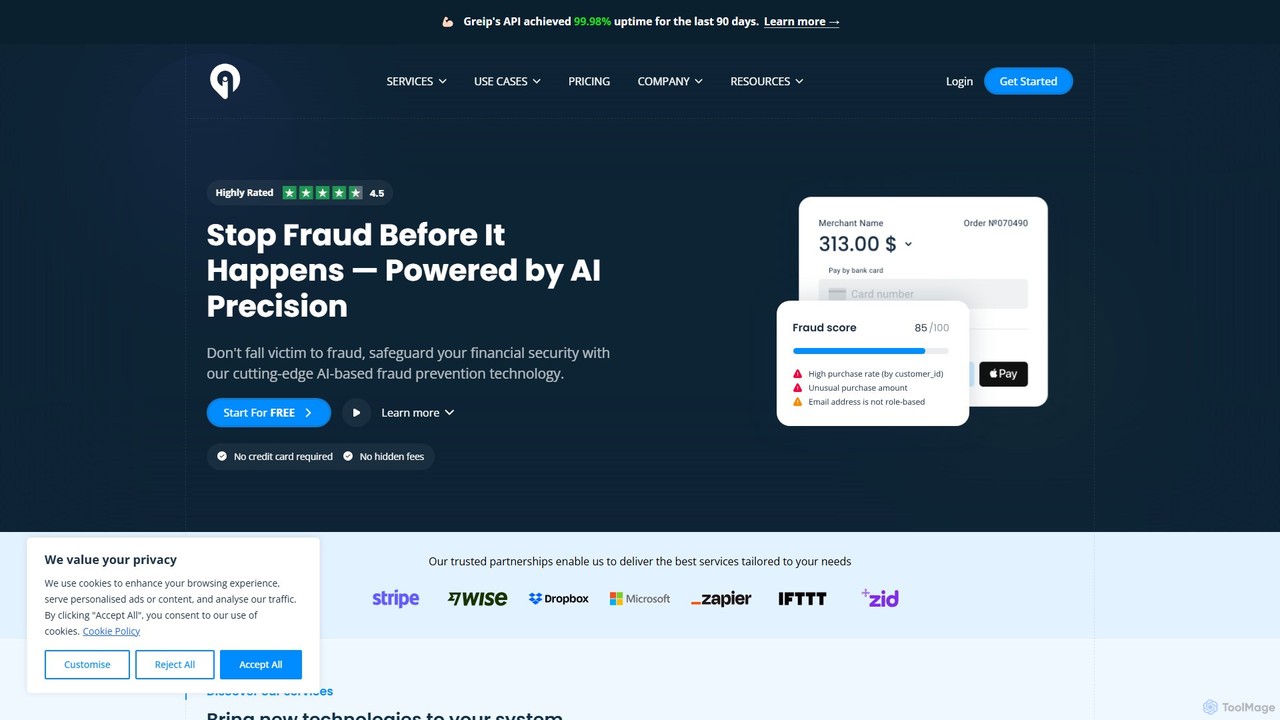
Greip is an AI-powered fraud prevention platform that helps online businesses detect and block fraudulent activities in real-time. It utilizes advanced techniques like device fingerprinting, behavioral analysis, and IP intelligence to provide comprehensive security, reduce chargebacks, and protect user accounts.

Analytics
Visits 35.7KFavorites 117Likes 134
HEROZ
Paid

HEROZ

HEROZ is a Japanese AI technology company that leverages its deep learning expertise, originally developed for Shogi (Japanese chess) AI, to provide advanced enterprise AI solutions. It offers the 'HEROZ Kishin' AI brand for custom problem-solving and the 'HEROZ ASK' secure generative AI platform for various industries, including finance, construction, and entertainment.

Ai Solutions
Visits 22.4KFavorites 116Likes 139
AiPrise
Paid

AiPrise

AiPrise is an AI-powered global verification platform that automates Know Your Customer (KYC) and Know Your Business (KYB) processes. It helps businesses mitigate risk, prevent fraud, and ensure compliance through a single, customizable API. The platform offers comprehensive identity verification, fraud scoring, and a compliance co-pilot to streamline onboarding and scale operations globally.

Fintech
Visits 91.8KFavorites 134Likes 138
Floatbot.AI
Paid

Floatbot.AI

Floatbot.AI is an advanced conversational AI platform for building and deploying generative AI-powered chat and voice agents. It helps businesses automate customer interactions, enhance service efficiency, and ensure compliance across multiple channels like web, voice, and messaging apps.

Chatbot
Visits 25KFavorites 133Likes 130
Cognito
Paid

Cognito

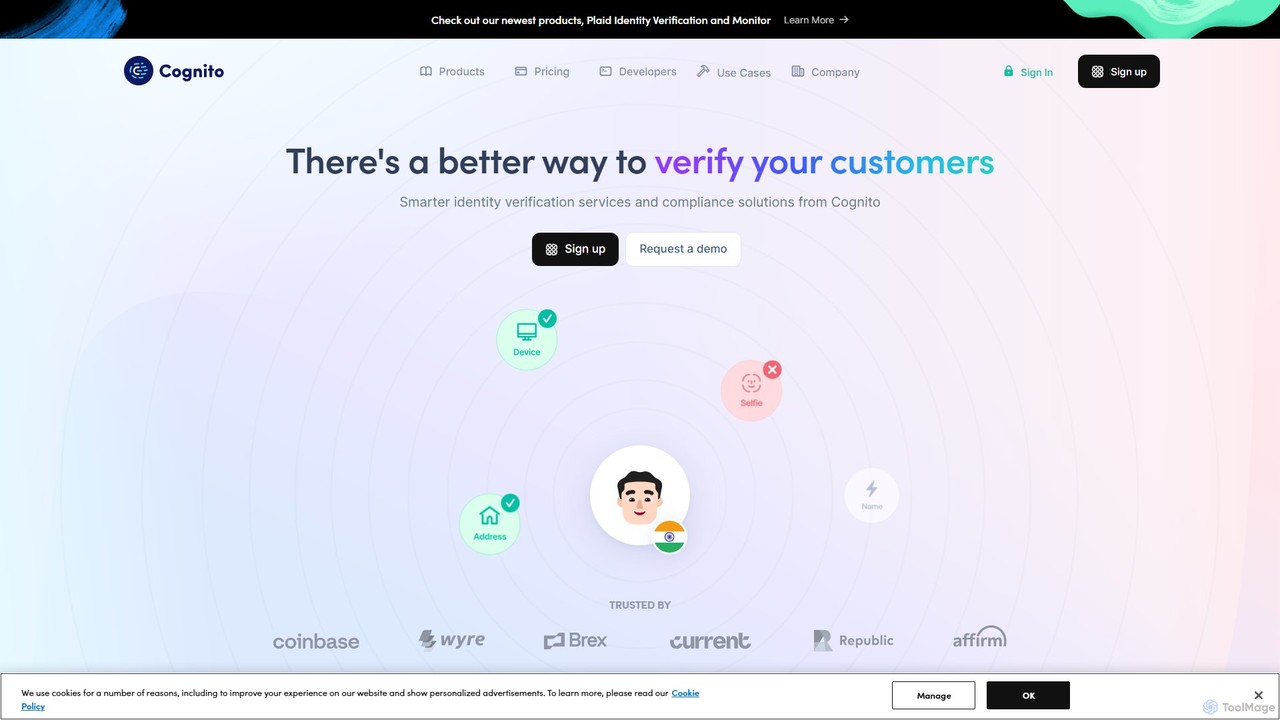
Cognito provides AI-powered identity verification (IDV) and KYC/AML compliance solutions. It helps businesses securely onboard customers, prevent fraud, and meet regulatory requirements through a developer-friendly API, biometric checks, and global watchlist screening.

Compliance
Visits 12.4KFavorites 142Likes 147
Jinnee
Paid

Jinnee

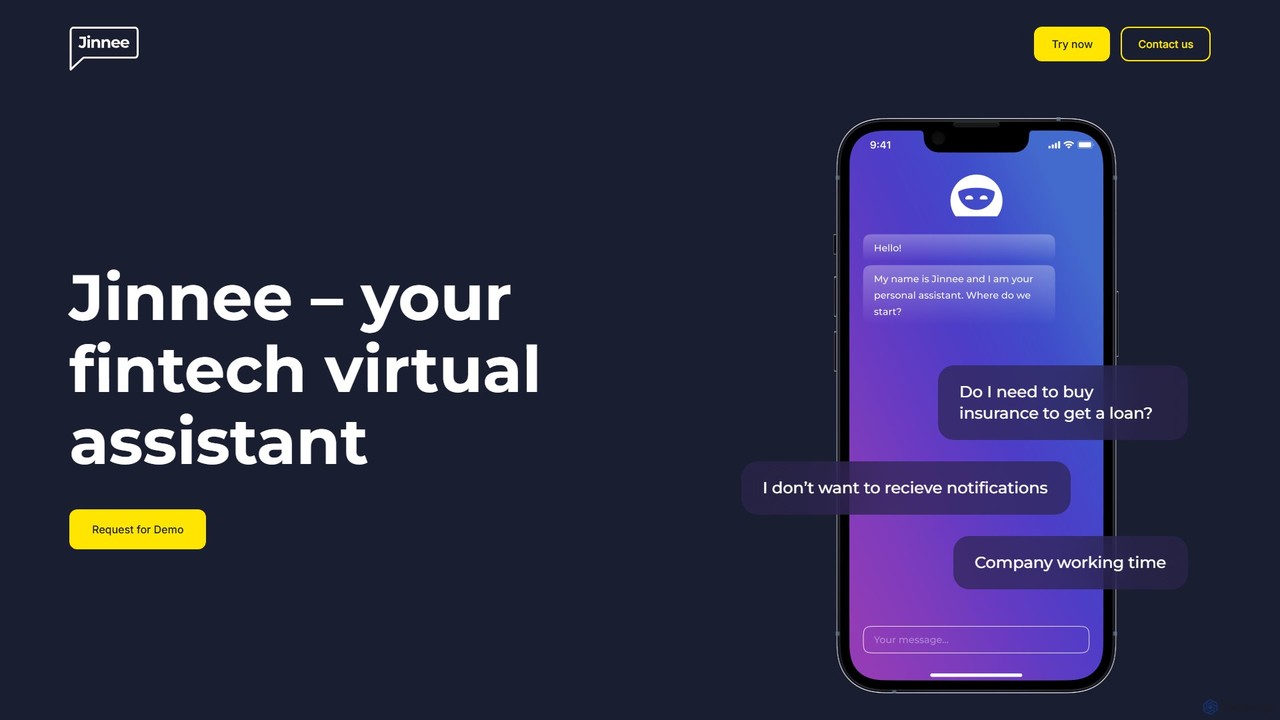
Jinnee is an AI-powered virtual assistant specifically designed for the fintech industry. It automates customer support, provides personalized banking services, and delivers valuable marketing insights by analyzing user interactions. It helps financial institutions enhance efficiency and improve customer satisfaction.

Chatbot
Visits 5.5KFavorites 123Likes 129
digitap
Paid

digitap

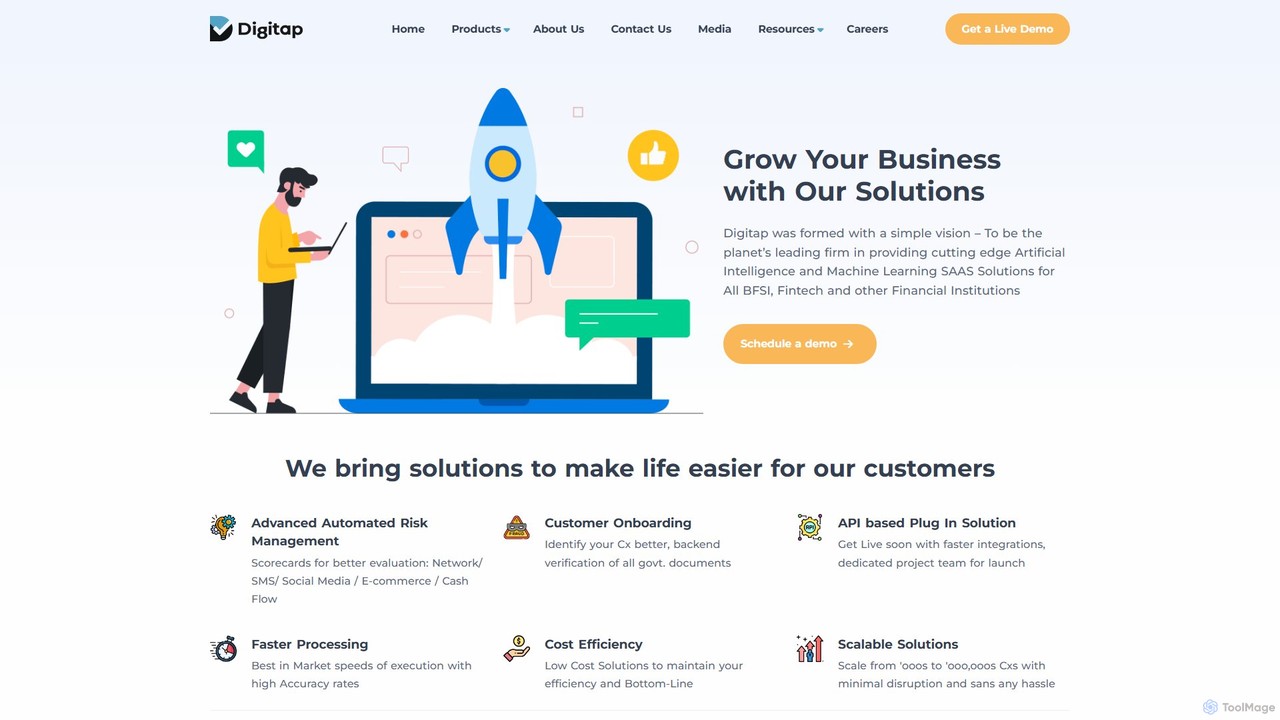
An AI-powered, end-to-end API platform for the banking and FinTech sectors, offering solutions for digital customer onboarding, credit risk assessment using alternative data, and financial data aggregation.

Risk Management
Visits 62KFavorites 122Likes 124
Gigs
Paid

Gigs

Gigs is an operating system for mobile services, enabling any tech company to launch its own branded mobile plans. It provides a vertically integrated platform with an API, dashboard, and AI-powered support to handle connectivity, billing, taxes, and compliance. This allows businesses in sectors like fintech, HR, and travel to seamlessly embed phone plans and eSIMs into their products, creating new revenue streams and enhancing customer loyalty without the complexities of traditional telecom.

Telecommunications
Visits 173.6KFavorites 122Likes 122
PathPilot
Paid

PathPilot

PathPilot is an AI platform specifically designed for Fintech companies. It provides intelligent AI agents that automate critical workflows such as customer onboarding, support, and compliance, integrating seamlessly with tools like Zendesk and Salesforce to resolve issues, not just respond to them.

Automation
Visits 7.6KFavorites 115Likes 116
crayondata
Paid

crayondata

Crayon Data is a B2B AI solutions provider for enterprises, helping them transition from GenAI pilots to full-scale production. Through its composable GenAI platform, tangram.ai, and its flagship platform, maya.ai, it offers personalized, industry-specific solutions. Crayon Data focuses on enhancing customer engagement, accelerating revenue growth, and optimizing operational efficiency for sectors like banking, travel, and digital payments by leveraging agentic AI workflows and data-driven insights.

Enterprise Solutions
Visits 9.2KFavorites 118Likes 112

About Fintech

Fintech (Financial Technology) tools are AI-powered solutions designed to innovate and automate financial services. These tools leverage advanced data analytics, machine learning, and automation to optimize traditional financial operations. They encompass a wide range of applications, from intelligent investment advisory and risk management to payment processing and fraud detection, aiming to enhance the efficiency, accessibility, and security of financial services.

Core Features

  • Intelligent Investment Advisory: Provides personalized investment recommendations and automated asset allocation based on user profiles and market data.
  • Risk Assessment & Fraud Detection: Utilizes AI models to identify anomalous transactions and potential financial risks in real-time.
  • Automated Trading & Quantitative Analysis: Executes high-speed trading strategies and analyzes market trends using complex algorithms.
  • Customer Service & Compliance: Offers AI-driven chatbots for support and ensures adherence to regulatory requirements through automated checks.
  • Payment & Settlement Optimization: Enhances the speed, security, and efficiency of transaction processing and settlement.

Applicable Scenarios

Fintech tools are widely adopted by financial institutions like banks and brokerage firms to streamline internal processes and improve customer experience. Individual investors use them for personalized wealth management, while businesses leverage them for automated financial control and risk mitigation. They are crucial for modernizing financial operations across various sectors.

How to Choose

When selecting Fintech tools, consider the breadth of their functionality to ensure they meet your specific financial needs, such as investment, risk control, or payment. Evaluate their data security and compliance features, which are paramount in the highly regulated financial industry. Assess their integration capabilities with existing financial systems and the accuracy and transparency of their underlying AI models for reliable decision-making.

Featured tool rankings

Fintech use cases

1

Personalized Investment Portfolio Management

Individual investors utilize AI-powered Fintech platforms to receive customized investment portfolio recommendations based on their risk tolerance and financial goals. These tools can automatically rebalance portfolios, allowing users to manage their wealth effectively without requiring extensive financial expertise, democratizing access to sophisticated investment strategies.

2

Real-time Fraud Detection for Banks

Banks deploy AI systems within their Fintech infrastructure to analyze vast amounts of transaction data in real-time. These systems identify unusual patterns and potential fraudulent activities, automatically flagging or blocking suspicious transactions. This significantly reduces financial crime losses and enhances the security of customer accounts, protecting both the institution and its clients.

3

Algorithmic Trading Strategy Execution for Brokerages

Quantitative fund managers and institutional traders leverage AI-driven Fintech platforms to automatically execute high-frequency trading strategies. Based on predefined algorithms and real-time market data analysis, these tools can capitalize on minute market fluctuations, optimizing investment returns and providing a competitive edge in fast-paced financial markets.

4

Corporate Financial Risk Prediction & Management

Corporate finance departments use Fintech tools to integrate internal financial data with external market information. These platforms predict cash flow risks, credit risks, and provide early warnings with suggested mitigation strategies. This enhances the quality of financial decision-making, allowing businesses to proactively manage potential financial vulnerabilities and ensure stability.

5

Intelligent Underwriting & Claims Automation for Insurance

Insurance companies employ AI within Fintech solutions to analyze customer health data and historical claims records. This enables rapid and accurate intelligent underwriting, streamlining policy issuance. Additionally, simple claims applications can be processed automatically, significantly improving customer satisfaction and operational efficiency by reducing manual intervention.

6

SME Credit Risk Assessment for Lenders

Financial institutions utilize AI models in Fintech to assess the credit risk of small and medium-sized enterprises (SMEs) by analyzing non-traditional data sources, such as social media activity and e-commerce transaction histories. This provides a more comprehensive credit evaluation, enabling lenders to offer financing opportunities to businesses traditionally underserved by conventional banking criteria.

Fintech FAQ

What is Fintech (Financial Technology)?

Fintech, or Financial Technology, refers to the integration of technology, particularly AI, big data, and blockchain, to improve and automate financial services. It encompasses innovations like intelligent investment advisory, mobile payments, peer-to-peer lending, and blockchain-based finance. The primary goal of Fintech is to enhance efficiency, reduce costs, and improve the user experience across various financial operations.

What are the core applications of AI in Fintech?

AI has extensive applications in Fintech. It powers intelligent investment advisors that offer personalized financial guidance; it's crucial for machine learning-driven risk assessment and real-time fraud detection; natural language processing (NLP) optimizes customer service through chatbots; and AI is fundamental in executing complex strategies in algorithmic trading. AI is a central driver of innovation across the Fintech landscape.

How do I choose the right Fintech tool for my needs?

When selecting a Fintech tool, consider its functional scope to ensure it aligns with your specific financial requirements, whether for investment, payments, or risk management. Prioritize data security and regulatory compliance, which are paramount in the financial sector. Evaluate its integration capabilities with your existing systems and assess the accuracy and transparency of its underlying AI models for reliable decision-making. User-friendliness and customer support are also important.

How does Fintech differ from traditional financial services?

Fintech primarily differs from traditional financial services through its reliance on technology and emphasis on efficiency. Fintech leverages AI, big data, and other digital innovations to offer more personalized, automated, and often lower-cost services, such as mobile banking and intelligent investment platforms. Traditional finance typically relies on physical branches, human interaction, and standardized products with more manual processes. Fintech aims to disrupt or optimize these traditional models.

How do Fintech tools ensure data security and privacy?

Fintech tools typically employ multi-layered security measures to safeguard data and privacy. These include end-to-end encryption, multi-factor authentication, stringent access controls, and regular security audits. Compliance with data protection regulations like GDPR and CCPA is also standard. Many Fintech companies also utilize AI for real-time security monitoring and anomaly detection to prevent cyberattacks and data breaches, ensuring robust protection for sensitive financial information.