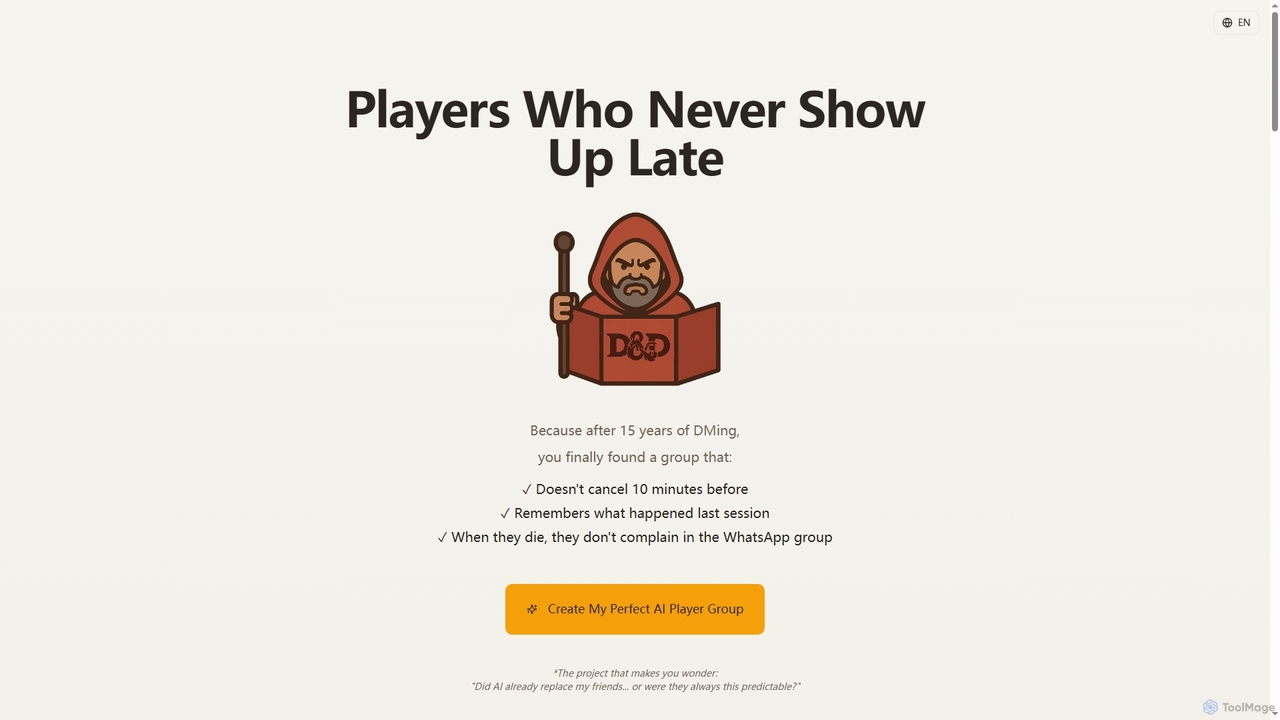
Tabletop RPG tools are AI-powered platforms specifically designed to enhance the creation, management, and gameplay of traditional tabletop role-playing games. Leveraging advanced AI, these tools assist game masters (GMs) and players with world-building, character development, narrative generation, and dynamic content creation. They streamline the often time-consuming preparation process, enrich storytelling possibilities, and provide intelligent assistance to make every session more immersive and engaging within the broader Gaming category.
Core Features
- AI-powered Worldbuilding: Generate detailed lore, locations, cultures, and histories for unique campaign settings.
- Dynamic Character & NPC Creation: Develop intricate player characters and non-player characters with backstories, personalities, and stats.
- Narrative & Plot Generation: Suggest plot hooks, quest lines, encounters, and story arcs to inspire and guide campaigns.
- Game Master (GM) Assistant: Provide real-time support for rule lookups, improvisation, combat tracking, and session management.
- Content Generation: Create maps, item descriptions, monster stats, and puzzles on demand to enrich gameplay.
Applicable Scenarios
Game masters utilize these tools to drastically reduce campaign preparation time, from crafting entire worlds to generating specific encounters. Players can leverage them for deeper character development, exploring backstory ideas or managing complex character sheets. Writers and storytellers also find value in using these tools to brainstorm fantasy concepts, develop intricate plots, and create compelling narratives for their own creative projects.
How to Choose
When selecting an AI Tabletop RPG tool, consider its AI generation depth and flexibility for world-building and narrative creation. Evaluate the customization options for characters and settings, ensuring it aligns with your preferred game system. Look for intuitive interfaces that simplify GM tasks and player interactions, and assess its ability to integrate with other virtual tabletop platforms or existing rule sets. Finally, consider the community support and ongoing development for new features.