ToolMage
Sign in

Best 1 Training AI tools for Gaming

Popular Training AI tools in Gaming include Aimlabs, helping you work more efficiently.

Aimlabs
Freemium

Aimlabs

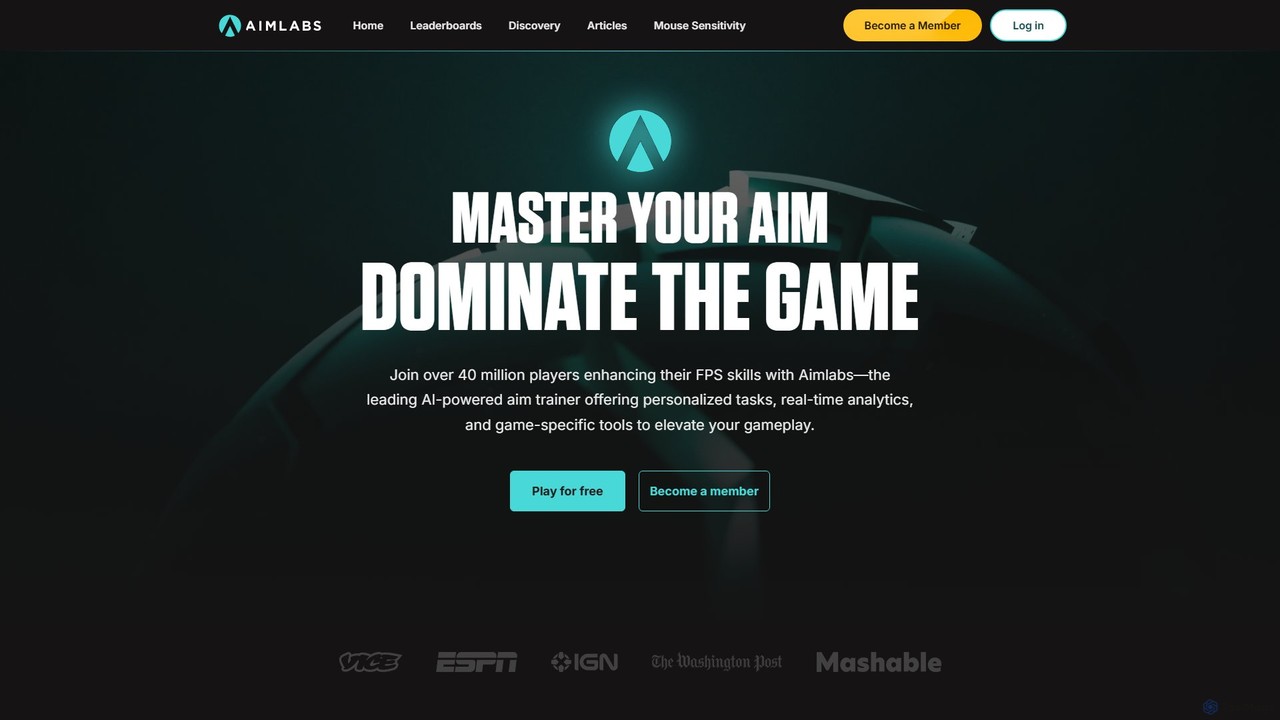
Aimlabs is the #1 AI-powered aim trainer, trusted by over 40 million gamers to enhance FPS skills. It offers personalized training, real-time analytics, and game-specific scenarios to improve accuracy, reflexes, and muscle memory. With features like an AI coach and courses from pros, Aimlabs helps players of all levels dominate their favorite games.

Coaching
Visits 517KFavorites 111Likes 99

About Training

AI Training tools for gaming are specialized applications that use artificial intelligence to analyze gameplay and provide personalized coaching. These tools process game data or video replays to identify player habits, mistakes, and areas for improvement. They offer actionable insights that help players refine their strategies, improve mechanical skills, and understand complex game mechanics more deeply. This data-driven approach provides a structured path to skill enhancement, moving beyond simple intuition.

Core Features

  • Gameplay Analysis: Automatically reviews match replays to pinpoint errors in positioning, decision-making, and resource management.
  • Performance Metrics: Tracks and visualizes key performance indicators (KPIs) like accuracy, APM (Actions Per Minute), and economic efficiency over time.
  • Personalized Drills: Generates custom training scenarios and exercises based on a player's identified weaknesses.
  • Opponent Pattern Recognition: Analyzes opponents' tendencies and strategies to help players develop effective counter-plays.
  • Real-time Feedback: Offers live in-game suggestions or alerts for certain supported games to correct mistakes as they happen.

Use Cases

These tools are primarily used by competitive gamers, esports athletes, and dedicated players seeking to climb ranked ladders in games like FPS, MOBA, and RTS. Coaches and esports teams also use them to analyze team performance, scout opponents, and develop data-informed strategies for tournaments.

How to Choose

When selecting an AI Training tool, consider its compatibility with your primary game. Evaluate the depth and accuracy of its analysis; some tools excel at macro-strategy while others focus on micro-mechanics. Also, assess the quality of the feedback—is it generic or truly personalized? Finally, consider the user interface and whether it offers a free trial to test its effectiveness.

Featured tool rankings

Training use cases

1

Post-Match Analysis for FPS Players

A competitive FPS player uploads a replay of their recent ranked match. The AI tool analyzes every engagement, highlighting moments of poor crosshair placement, inefficient utility usage, and suboptimal positioning. It generates a visual report with video clips, showing exactly where a different decision could have led to a better outcome. The player uses this feedback to focus their next practice session on correcting these specific mistakes, leading to more consistent performance.

2

Improving Farming Efficiency in MOBAs

A MOBA player struggling to keep up in gold and experience uses an AI coach. The tool tracks their creep score (CS) patterns throughout the early game. It identifies that the player frequently misses last hits under their tower and is inefficient in clearing jungle camps between lane waves. Based on this, the tool provides a custom drill in a practice mode to improve last-hitting under pressure and suggests optimal jungle routes, helping the player increase their gold per minute by an average of 15%.

3

Esports Team Strategy Refinement

An esports coach uploads replays from their team's recent scrims. The AI tool aggregates data from all five players, creating heatmaps that show common warding spots, frequent rotation paths, and areas where team fights are most often lost. The analysis reveals a systemic weakness in controlling vision around key objectives. The coach uses these data visualizations during the team's review session to clearly demonstrate the pattern and develop new, more effective warding strategies for their upcoming tournament.

4

Personalized Aim Training Regimen

A player wants to improve their aim in a fast-paced shooter. They use an AI-powered aim trainer that analyzes their in-game performance. The AI identifies a specific weakness in tracking fast-moving horizontal targets but strong performance in flick shots. Instead of a generic training routine, the tool creates a personalized daily playlist of drills that heavily focuses on horizontal tracking scenarios with varying speeds and distances, while only including a few flick shot drills for maintenance. This targeted practice helps the player improve their weakness efficiently.

5

Mastering Build Orders in RTS Games

A Real-Time Strategy (RTS) player aims to perfect their opening strategy. They use an AI training tool that compares their in-game actions against professionally established 'build orders'. During a match, the tool provides real-time audio or visual cues if the player is late on constructing a key building or training a unit. After the game, it provides a timeline comparison, showing exactly where they deviated from the optimal strategy and how many resources were lost due to the inefficiency. This constant feedback loop helps them memorize and execute complex build orders flawlessly.

6

Learning from Professional Player Patterns

A new player wants to understand high-level decision-making. They use an AI tool that has analyzed thousands of hours of professional gameplay. When the player reviews their own match, the tool highlights key moments, such as a rotation or an item purchase. It then shows what a high-percentage of pro players did in a similar game state and provides a brief explanation of the strategic reasoning. This comparative insight accelerates the learning curve, teaching not just 'what' to do, but 'why' it's the optimal choice.

Training FAQ

What are AI gaming training tools?

AI gaming training tools are software applications that use artificial intelligence to analyze your gameplay and act as a personal digital coach. Unlike simple stat trackers, they interpret complex data from your matches to provide specific, actionable feedback on your strategy, mechanics, and decision-making. Their goal is to help you identify and correct weaknesses more efficiently than through self-analysis alone.

How to choose the right AI training tool for my game?

Choosing the right tool depends on several factors. First, ensure it officially supports the game you play. Second, evaluate the type of analysis it provides—does it focus on macro-strategy (e.g., rotations, objectives) or micro-mechanics (e.g., aim, combos)? Third, look for user reviews and see if the feedback it gives is considered high-quality and helpful by the community. Finally, consider your budget and whether the tool offers a free trial to test its features before committing.

What's the difference between an AI training tool and a standard game replay viewer?

A standard replay viewer simply allows you to watch a past game from different perspectives. An AI training tool does much more. It actively analyzes the data within that replay to provide insights you might miss. For example, it can calculate your accuracy in specific fights, map your movements to find inefficient paths, or compare your decisions to a database of optimal plays. In short, a replay viewer is a VCR; an AI training tool is the sports analyst who breaks down the tape with you.

Can using AI training tools get me banned from a game?

Reputable AI training tools are designed to be safe and compliant with game developers' terms of service. They typically work by analyzing replay files or using screen capture, and they do not inject code, modify game files, or provide real-time advantages that would be considered cheating. They function as external analysis platforms, similar to a coach reviewing a recording. However, it is always wise to check the specific policies of your game and the reputation of the tool you intend to use.

Who can benefit most from AI gaming training tools?

While any player can benefit, these tools are most impactful for dedicated players who have hit a performance plateau. This includes:

  • Competitive Players: Individuals trying to climb ranked ladders who need to find and fix subtle, recurring mistakes.
  • Aspiring Professionals: Players aiming for an esports career who require deep, data-driven analysis to gain a competitive edge.
  • Team Coaches: Coaches who need objective data to analyze team-wide strategies and individual player performance.
Casual players can also use them to learn game fundamentals faster and understand complex mechanics.