ToolMage
Sign in

Best 1 Public Administration AI tools for Government

Popular Public Administration AI tools in Government include iFlyDocs, helping you work more efficiently.

iFlyDocs
Freemium

iFlyDocs

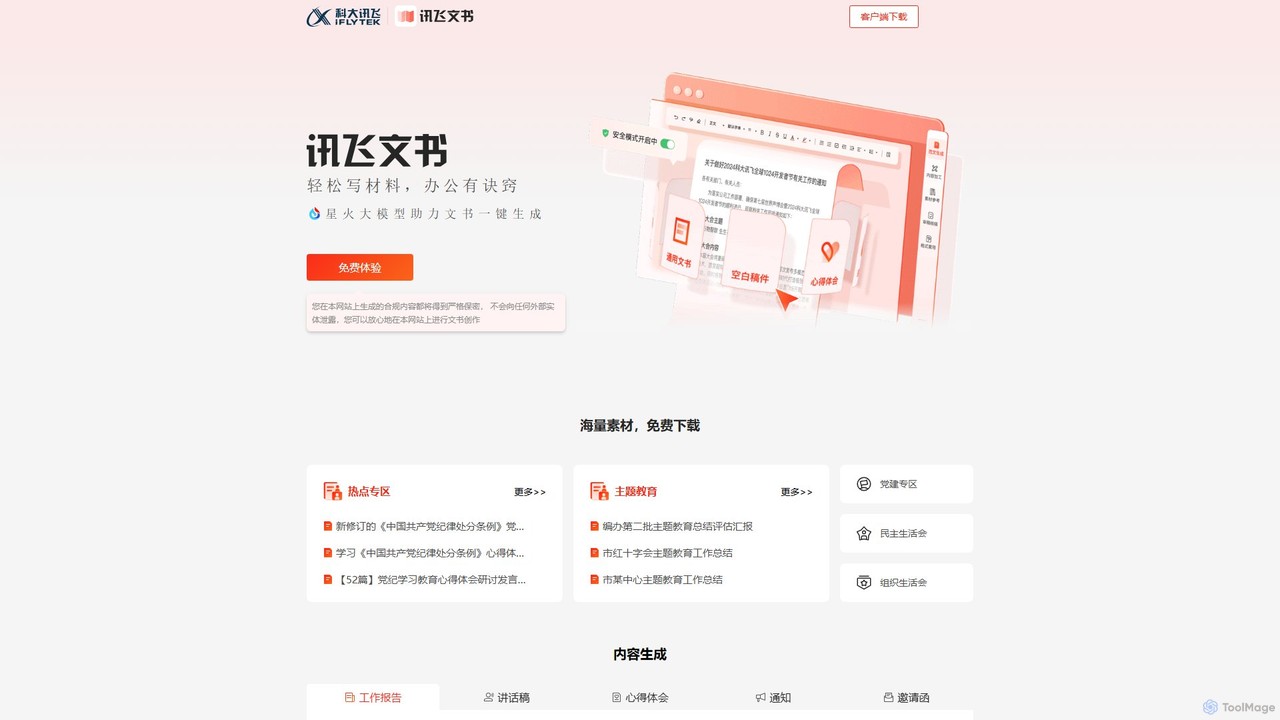
iFlyDocs is an AI-powered writing assistant by iFlytek, designed for the rapid generation and refinement of official and business documents. Leveraging the Spark large language model, it helps users create professional reports, speeches, summaries, and more with ease, offering a vast library of templates and advanced editing tools.

Document Generation
Visits 16.9KFavorites 131Likes 117

About Public Administration

AI tools for Public Administration are specialized solutions designed to optimize government operations, enhance public service delivery, and support policy implementation. These tools leverage machine learning, data analytics, and automation to process large volumes of information, streamline bureaucratic workflows, and improve decision-making. By automating routine tasks and providing data-driven insights, they help government agencies become more efficient, transparent, and responsive to citizen needs. This focus on operational execution distinguishes them within the broader Government category.

Core Features

  • Workflow Automation: Automates administrative processes such as permit applications, case management, and public records requests.
  • Citizen Service Chatbots: Provides 24/7 automated support for common citizen inquiries via websites and messaging apps.
  • Predictive Analytics: Uses historical data to forecast demand for public services, allocate resources effectively, and anticipate infrastructure needs.
  • Regulatory Compliance Monitoring: Automatically tracks and reports on adherence to government regulations and internal policies.
  • Data-Driven Policy Analysis: Analyzes large datasets to assess the impact of existing policies and model outcomes for proposed changes.

Applicable Scenarios

These tools are primarily used by government agencies at the municipal, state, and federal levels. Roles such as city managers, public service officers, policy analysts, and compliance managers utilize them to manage daily operations. Common applications include optimizing public transportation schedules, managing social benefit distribution, streamlining tax collection processes, and improving emergency response coordination.

How to Choose

When selecting an AI tool for public administration, prioritize data security and compliance with government standards (like FedRAMP or GDPR). Assess its ability to integrate with existing legacy systems and databases. The tool's scalability to handle large populations and complex services is crucial. Finally, consider the importance of transparency and explainability (XAI) to ensure that AI-driven decisions are auditable and justifiable to the public.

Public Administration use cases

1

Automating Permit and License Processing

A municipal planning department employee is tasked with processing hundreds of building permit applications weekly. This manual process is slow and prone to errors. By implementing an AI-powered public administration tool, the department can automate the initial screening. The AI scans applications for completeness, uses NLP to extract key information, and flags applications that require special review. This reduces the average processing time by over 60% and allows staff to focus on complex cases, improving service quality for citizens and contractors.

2

Optimizing Public Transportation Routes

An urban planner for a major city needs to improve public bus schedules to reduce wait times and overcrowding. Using an AI analytics tool, they analyze real-time GPS data from buses, passenger count sensors, and traffic patterns. The AI model identifies bottlenecks, predicts future demand based on time of day and special events, and suggests optimized routes and schedules. This data-driven approach leads to a 15% reduction in passenger wait times and more efficient fuel consumption for the city's fleet.

3

Enhancing Citizen Services with AI Chatbots

A state's department of motor vehicles (DMV) is overwhelmed with phone calls and emails about common questions like registration renewals and license requirements. They deploy an AI chatbot on their website. The chatbot is trained on a vast knowledge base of DMV regulations and procedures. It can instantly answer thousands of common queries 24/7, provide links to forms, and guide users through processes. This frees up human agents to handle more complex, personalized cases, reducing call wait times and improving overall citizen satisfaction.

4

Predictive Maintenance for Public Infrastructure

A public works manager is responsible for maintaining the city's aging water pipe network. Instead of reacting to costly pipe bursts, they use an AI system that analyzes sensor data, historical repair records, and environmental factors. The model predicts which sections of the network are at the highest risk of failure in the near future. This allows the department to proactively schedule maintenance, replacing vulnerable pipes before they break. This predictive approach saves the city millions in emergency repair costs and prevents service disruptions for residents.

5

Streamlining Grant Application Reviews

A federal agency administrator manages a program that receives thousands of grant applications annually. Manually reviewing each one for basic eligibility is time-consuming. The agency adopts an AI tool that automates this initial screening. The system checks applications against predefined criteria such as budget limits, organizational status, and required documentation. It flags incomplete or ineligible submissions and scores the eligible ones based on relevance. This allows human reviewers to focus their expertise on evaluating the merit of the most promising proposals, making the process faster and more equitable.

6

Monitoring Public Sentiment for Policy Feedback

A city council wants to understand public opinion on a new recycling program. A policy analyst uses an AI tool to monitor social media, news articles, and public forums for discussions related to the program. The tool performs sentiment analysis to gauge whether public reaction is positive, negative, or neutral. It also identifies key themes and concerns, such as confusion about pickup schedules or praise for environmental impact. This real-time feedback allows the council to quickly address issues and communicate more effectively with residents, improving policy adoption and success.

Public Administration FAQ

What are AI tools for Public Administration?

AI tools for Public Administration are software solutions that use artificial intelligence to improve the operational efficiency and service delivery of government agencies. They focus on the implementation of government policy rather than its creation. Key functions include automating administrative workflows, analyzing data for resource allocation, providing 24/7 citizen support through chatbots, and monitoring regulatory compliance. Their primary goal is to make government operations more data-driven, responsive, and efficient.

How to choose an AI tool for a government agency?

Choosing the right AI tool for a government agency requires careful consideration of several factors. Prioritize tools with robust security protocols and proven compliance with government data standards (e.g., FedRAMP, GDPR). Other key points include:

  • Integration: Ensure the tool can integrate with your existing legacy systems and databases to avoid data silos.
  • Scalability: The solution must be able to scale to serve a large population and handle complex administrative tasks.
  • Explainability (XAI): Select tools whose decision-making processes are transparent and auditable to maintain public trust.
  • Vendor Support: Look for a vendor with experience in the public sector and a strong support system for implementation and maintenance.
What's the difference between AI for Public Administration and general Government AI?

The primary difference lies in their focus. AI for Public Administration is specifically concerned with the operational side of government—the day-to-day execution of policies and delivery of public services. Examples include workflow automation for permit processing and citizen service chatbots. General Government AI is a broader category that can include tools for policy creation, legislative analysis, national security, defense intelligence, and election monitoring. In short, Public Administration AI is about *how* government runs, while broader Government AI can also cover *what* government decides and protects.

What are the main benefits of using AI in public administration?

Using AI in public administration offers several significant benefits. The most prominent include:

  • Increased Efficiency: Automating repetitive, manual tasks frees up public employees to focus on more complex, high-value work.
  • Cost Savings: Optimized resource allocation, predictive maintenance, and reduced manual labor lead to significant budget savings.
  • Improved Service Delivery: 24/7 access to information via chatbots and faster processing times for applications enhance the citizen experience.
  • Data-Driven Decisions: AI-powered analytics provide deep insights into public needs and policy effectiveness, leading to better governance.
  • Enhanced Transparency: By analyzing and visualizing public data, AI can help make government operations more understandable and accountable to citizens.
Who typically uses AI tools for Public Administration?

These tools are used by a wide range of public sector employees responsible for operational tasks. Key users include:

  • City Managers and Administrators: For overseeing resource allocation, service delivery, and overall operational efficiency.
  • Public Service Officers: In departments like motor vehicles or social services to streamline case management and citizen interactions.
  • Policy Analysts: To analyze data on policy outcomes and gather public sentiment for feedback.
  • Public Works and Urban Planners: For managing infrastructure maintenance and optimizing public services like transportation.
  • Compliance Officers: To automate the monitoring and reporting of adherence to regulations.