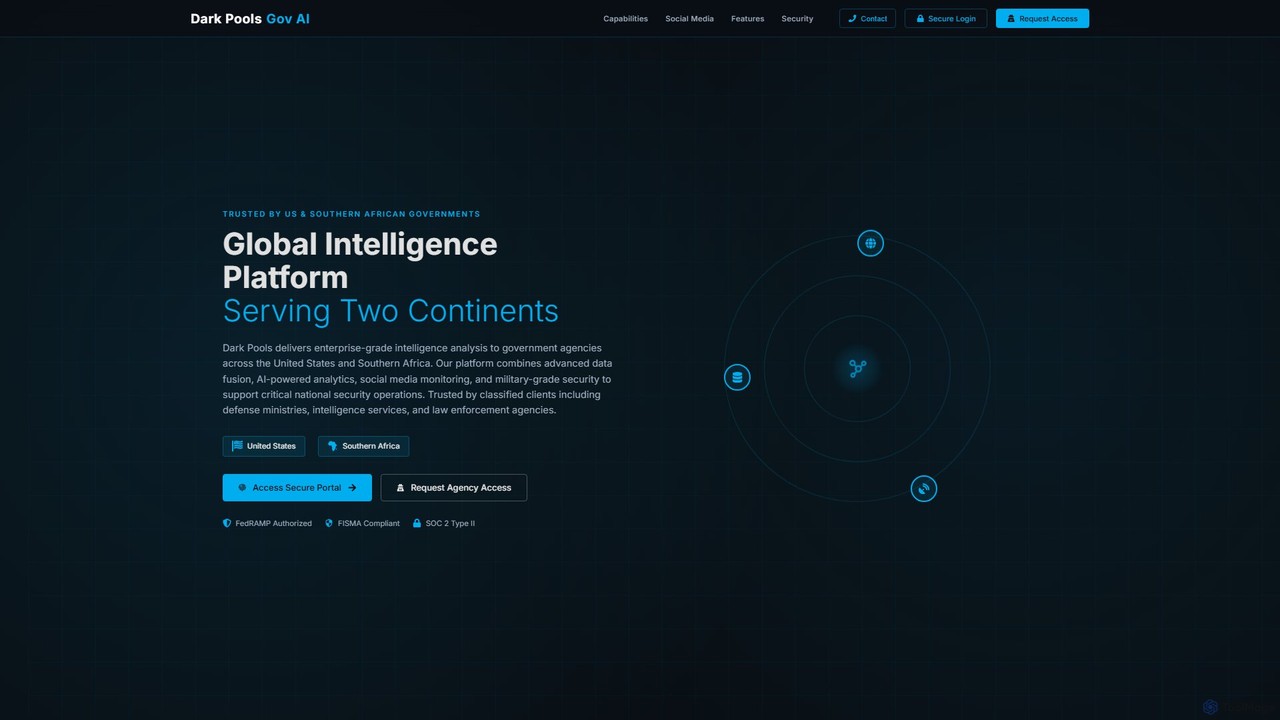
Dark Pools Gov AI
Dark Pools Gov AI is an enterprise-grade intelligence analysis platform for government agencies in the US and Southern …
Dark Pools Gov AI is an enterprise-grade intelligence analysis platform for government agencies in the US and Southern Africa. It combines AI-powered analytics, multi-source data fusion, and social media monitoring to support critical national security, law enforcement, and defense operations with military-grade security and compliance.
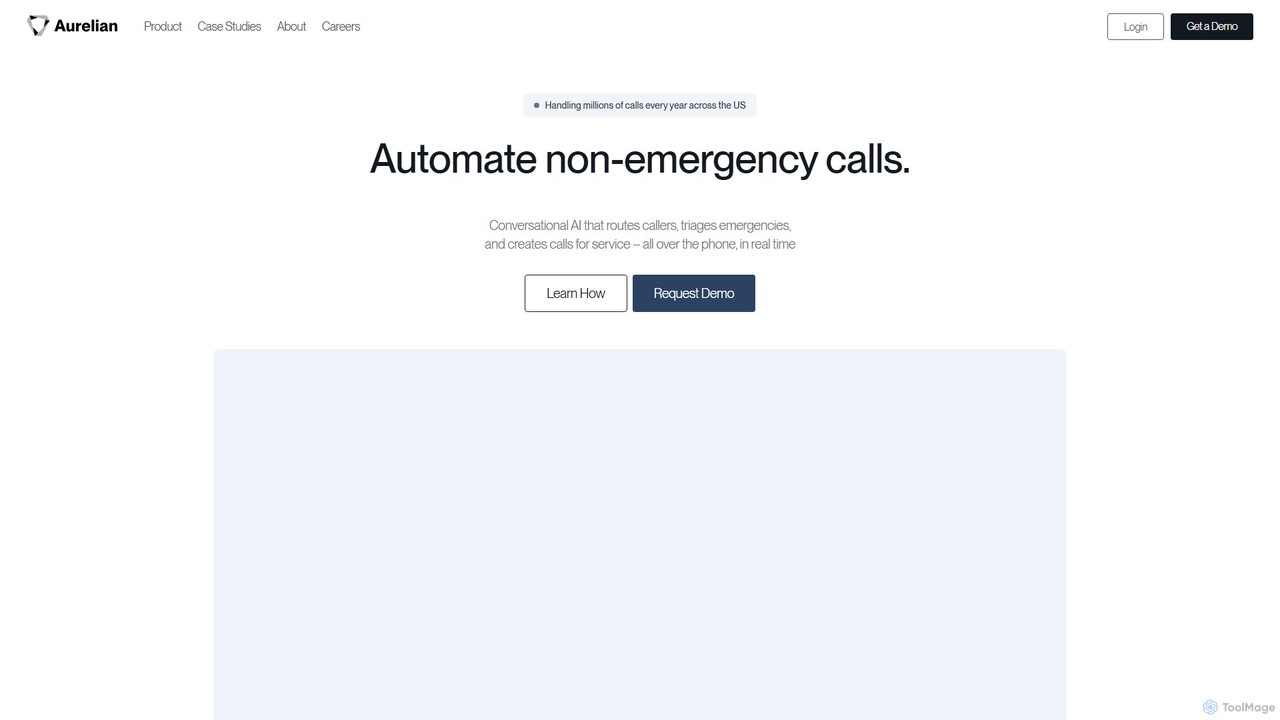
Aurelian
Aurelian is a conversational AI platform designed for public safety agencies to automate non-emergency calls. It intelligently routes …
Aurelian is a conversational AI platform designed for public safety agencies to automate non-emergency calls. It intelligently routes callers, triages situations, and creates service call summaries in real-time. This allows dispatchers to focus on critical emergencies, reducing workload, eliminating hold times, and improving overall operational efficiency for 911 centers.
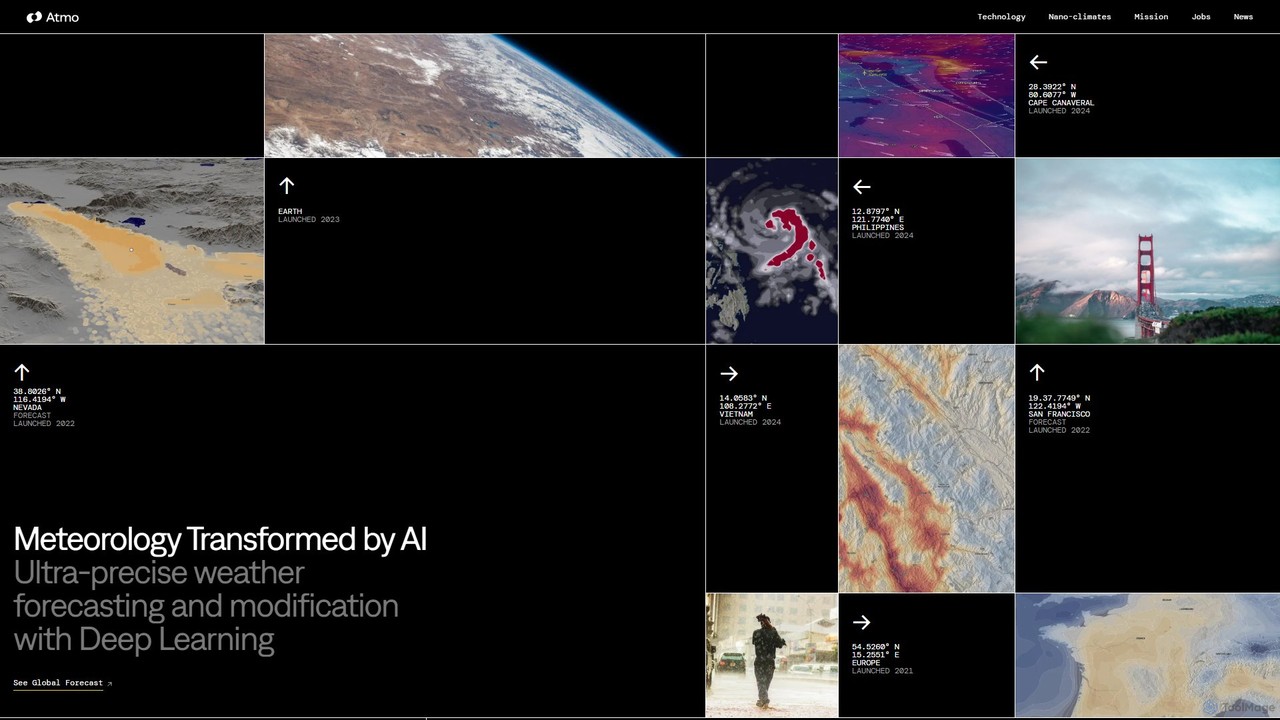
Atmo
Atmo is an ultra-precise AI weather forecasting platform powered by deep learning. It delivers forecasts up to 40,000 …
Atmo is an ultra-precise AI weather forecasting platform powered by deep learning. It delivers forecasts up to 40,000 times faster and 50% more accurately than traditional models, with resolutions as fine as 1km. Trusted by governments, militaries, and industries, Atmo provides critical insights for disaster management, mission planning, and climate change adaptation.
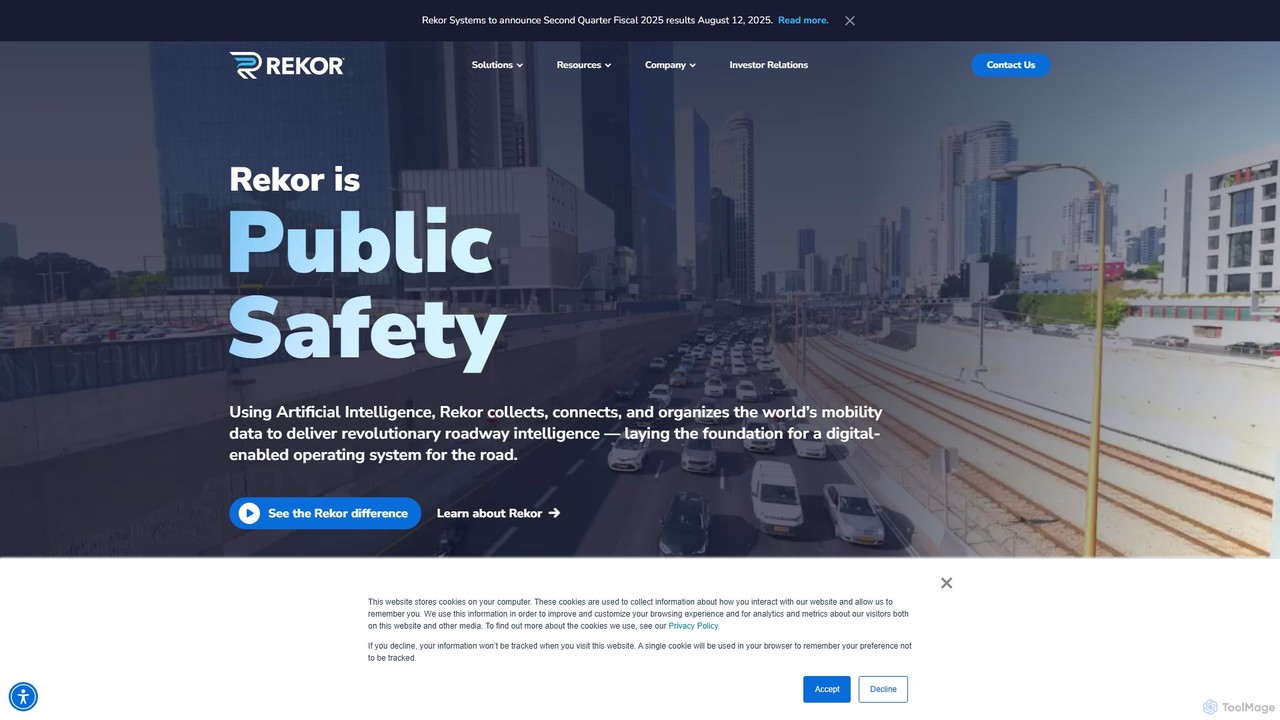
Rekor
Rekor is an AI-powered roadway intelligence platform that collects, connects, and organizes global mobility data. It provides actionable …
Rekor is an AI-powered roadway intelligence platform that collects, connects, and organizes global mobility data. It provides actionable insights for transportation, government, law enforcement, and commercial sectors to enhance safety, efficiency, and urban planning through advanced computer vision and machine learning.
About Public Safety
AI tools for Public Safety are specialized applications that leverage artificial intelligence to enhance security, emergency response, and crime prevention efforts. These tools utilize advanced data analytics, predictive modeling, computer vision, and natural language processing to process vast amounts of information. They empower government agencies and emergency services to improve situational awareness, optimize resource allocation, and accelerate response times, contributing significantly to the well-being and security of communities.
Core Features
- Predictive Analysis: Forecast potential crime hotspots or emergency incidents based on historical data and real-time inputs.
- Intelligent Surveillance: Automate the monitoring of public spaces and critical infrastructure for anomalies or suspicious activities.
- Emergency Response Optimization: Streamline dispatch operations, route planning, and resource deployment during crises.
- Disaster Management: Aid in predicting, monitoring, and responding to natural disasters, including resource coordination.
- Public Sentiment Monitoring: Analyze social media and public discourse to gauge community concerns and potential threats.
Applicable Scenarios
These tools are crucial for urban security planning, where AI analyzes traffic patterns and incident data to inform policing strategies. They also optimize emergency dispatch centers by quickly identifying caller needs and allocating the nearest, most appropriate resources. Furthermore, AI assists in border security by detecting unusual patterns or unauthorized crossings, enhancing national defense capabilities.
How to Choose
When selecting Public Safety AI tools, prioritize data accuracy and the ability to integrate seamlessly with existing infrastructure. Evaluate the tool's compliance with privacy regulations and ethical guidelines, especially concerning data collection and usage. Consider scalability to accommodate future growth and the robustness of its real-time processing capabilities for critical situations.
Public SafetyUse Cases
Predictive Crime Analysis for Urban Areas
Law enforcement agencies use AI to analyze historical crime data, weather patterns, social events, and demographic information to predict potential crime hotspots. This allows for proactive deployment of police resources to high-risk areas, deterring criminal activity and improving public safety outcomes by optimizing patrol routes and intervention strategies.
Optimizing Emergency Service Dispatch
Emergency call centers leverage AI to quickly process incoming calls, prioritize incidents, and dispatch the most appropriate emergency services (police, fire, ambulance). AI algorithms analyze location, incident type, and resource availability in real-time, significantly reducing response times and improving the efficiency of critical life-saving operations.
Intelligent Surveillance for Critical Infrastructure
Security teams deploy AI-powered surveillance systems to monitor critical infrastructure like airports, power plants, and government buildings. These systems use computer vision to detect unusual behavior, unauthorized access, or unattended objects, alerting personnel to potential threats faster than human monitoring alone and enhancing security protocols.
Disaster Response and Resource Allocation
Government disaster management agencies utilize AI to model potential disaster impacts, track affected populations, and optimize the allocation of relief resources. AI can analyze real-time data from sensors, social media, and satellite imagery to guide evacuation routes, identify safe zones, and ensure aid reaches those most in need efficiently.
Public Event Security Management
Event organizers and security personnel employ AI tools to manage security at large public gatherings such as concerts or sporting events. AI-powered crowd analytics can monitor crowd density, detect potential stampedes or altercations, and identify suspicious individuals, allowing for timely intervention and ensuring the safety of attendees.
Automated Anomaly Detection in Public Spaces
Urban planners and security forces use AI to continuously monitor public spaces for anomalies that might indicate a security threat or public disturbance. This includes detecting abandoned packages, unusual vehicle movements, or aggressive behavior patterns, enabling rapid response to potential dangers and maintaining order.