ToolMage
Sign in

Best 2 Defense AI tools for Government

Popular Defense AI tools in Government include Helsing and Comand AI, helping you work more efficiently.

Helsing

Helsing

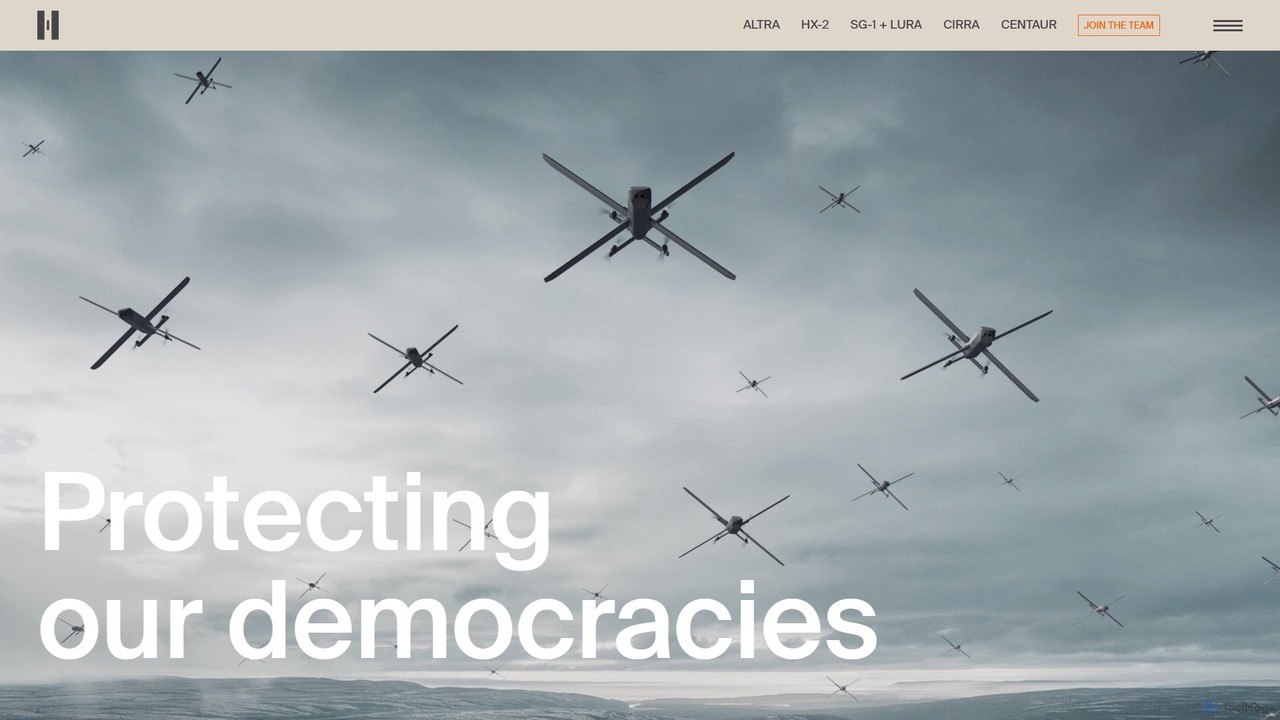
Helsing is a European defence technology company that develops advanced artificial intelligence and software to enhance the defence capabilities of democratic nations. It focuses on providing autonomous and precision mass capabilities for land, air, and sea domains to ensure national security and technological sovereignty.

Defense
Visits 215KFavorites 149Likes 163
Comand AI
Paid

Comand AI

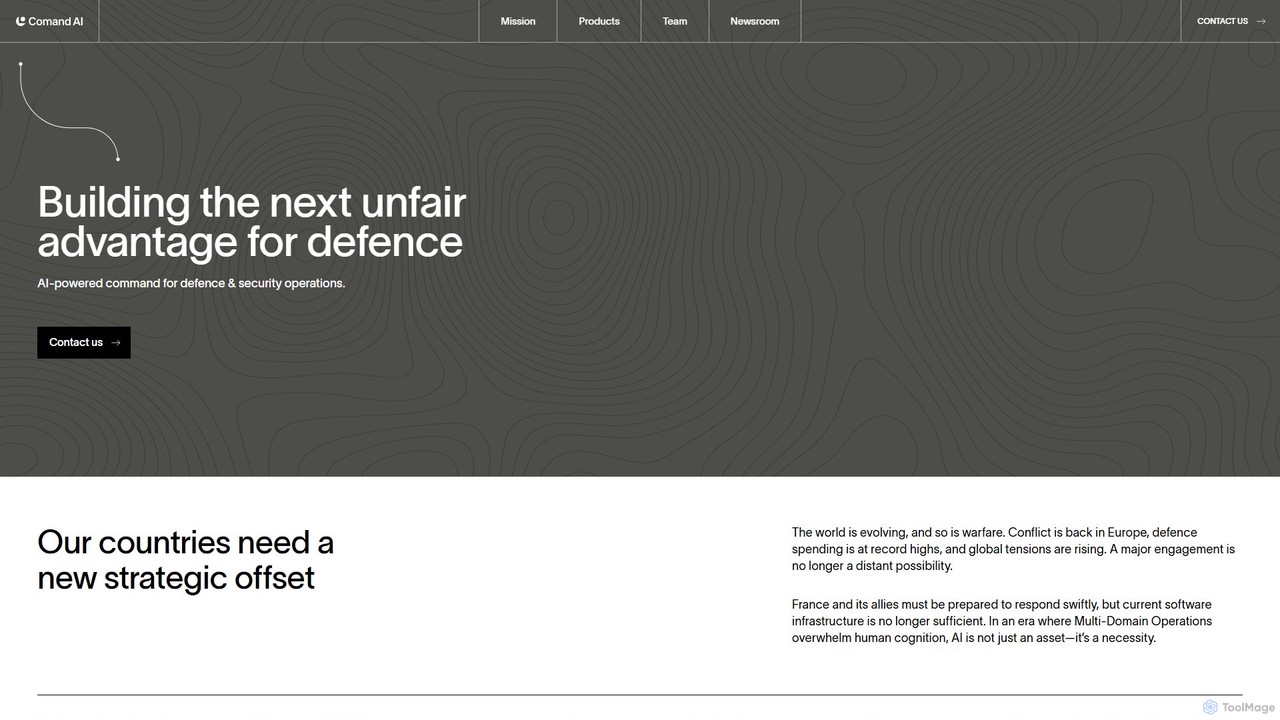
Comand AI is a cutting-edge AI-powered command and control platform designed for defense and security operations. It provides a decisive tactical advantage by accelerating mission planning, generating intelligent maneuvers through reinforcement learning, and transforming operational data into actionable insights for modern warfare.

Decision Intelligence
Visits 11.5KFavorites 148Likes 133

About Defense

AI Defense tools are a specialized category of artificial intelligence systems designed for national security and military operations. These tools leverage machine learning, data analysis, and autonomous systems to enhance situational awareness, threat detection, and strategic decision-making. Their primary value lies in processing vast amounts of intelligence data at speeds far exceeding human capabilities, enabling proactive threat response and optimizing resource allocation in complex environments. They are critical components within the broader government technology landscape, focusing specifically on mission-critical defense applications.

Core Features

  • Predictive Threat Analysis: Utilizes historical data and real-time intelligence to forecast potential conflicts, attacks, or system failures.
  • Autonomous Systems Control: Manages and coordinates unmanned vehicles (UAVs, UGVs) for reconnaissance, surveillance, or logistical support.
  • Intelligence Data Fusion: Integrates and analyzes data from multiple sources (e.g., satellite imagery, signals intelligence, human intelligence) to create a unified operational picture.
  • Cybersecurity Threat Hunting: Proactively identifies and neutralizes advanced persistent threats (APTs) within secure government and military networks.
  • Target Recognition: Automatically identifies and classifies objects of interest, such as vehicles or structures, from imagery or sensor data.

Use Cases

AI Defense tools are primarily used by military branches, intelligence agencies, and defense contractors. Applications include automating the analysis of surveillance footage, optimizing supply chains in contested areas, running complex wargame simulations for strategic planning, and enhancing the cybersecurity posture of critical national infrastructure.

How to Choose

Selecting an AI Defense tool requires rigorous evaluation. Key criteria include the system's data security and compliance with government standards (e.g., ITAR, CMMC), the accuracy and explainability of its AI models (Explainable AI), its ability to integrate with legacy military hardware and software, and its resilience and performance in challenging or disconnected operational environments.

Defense use cases

1

Automated Target Recognition from Imagery

An intelligence analyst for a defense agency is tasked with monitoring vast areas of terrain for hostile activity using satellite and drone imagery. Manually reviewing thousands of high-resolution images is time-consuming and prone to human error. By using an AI Defense tool with automated target recognition (ATR), the analyst can process imagery feeds in near real-time. The AI automatically flags potential threats, such as military vehicles, new constructions, or troop movements, based on pre-trained models. This allows the analyst to focus their attention on verified targets, reducing analysis time by over 90% and significantly increasing the accuracy and speed of intelligence reporting.

2

Predictive Maintenance for Military Fleets

A logistics officer is responsible for maintaining the operational readiness of a fleet of armored vehicles. Unscheduled downtime due to component failure can compromise mission success. By implementing an AI-powered predictive maintenance system, sensor data from each vehicle (e.g., engine temperature, vibration, fuel consumption) is continuously analyzed. The AI model identifies subtle patterns that precede failures and alerts the maintenance crew about which specific components are at risk. This shifts the maintenance strategy from reactive repairs to proactive replacements, increasing fleet availability, reducing long-term costs, and ensuring vehicles are mission-ready when needed.

3

Optimizing Military Logistics and Supply Chains

A military planner needs to design a supply route to deliver critical resources to a forward operating base in a volatile region. The route must account for terrain, weather, and potential enemy threats. Using an AI optimization tool, the planner inputs all relevant variables, including known threat locations, road conditions, and convoy capabilities. The AI runs thousands of simulations to identify the safest and most efficient routes, calculating fuel requirements and travel times. It can also adapt in real-time to new intelligence, suggesting alternative routes if a planned path becomes compromised. This process replaces weeks of manual planning with a data-driven solution that enhances safety and ensures timely delivery of supplies.

4

Cyber Threat Hunting in National Security Networks

A cybersecurity analyst at a national defense agency is tasked with protecting critical networks from state-sponsored attacks. Traditional security tools often fail to detect novel or highly sophisticated threats (APTs). The agency deploys an AI-driven threat hunting platform that analyzes network traffic patterns, user behavior, and endpoint data at a massive scale. The AI establishes a baseline of normal activity and flags anomalous behaviors that could indicate a breach, such as unusual data transfers or access patterns. This allows the analyst to proactively investigate and neutralize threats before they can cause significant damage, moving from a reactive defense posture to a proactive one.

5

Strategic Wargaming and Simulation

A team of military strategists needs to evaluate potential outcomes of a complex geopolitical scenario. Traditional wargaming can be slow and limited by human assumptions. They use an AI-powered simulation platform to model the scenario with thousands of variables, including military strengths, economic factors, and political alliances. The AI can play the role of an adversary, exploring unconventional strategies that human players might not consider. It runs millions of simulations rapidly, providing strategists with a probabilistic analysis of different outcomes based on their decisions. This enhances strategic planning by revealing unforeseen risks and opportunities, allowing for the development of more robust and adaptive defense policies.

6

Real-time Intelligence Data Fusion

A command center operator needs a clear, unified view of a dynamic battlefield. They receive data streams from diverse sources: live drone video feeds (ISR), signals intelligence (SIGINT), satellite imagery, and field reports from troops (HUMINT). Manually collating this information is impossible in real-time. An AI data fusion platform automatically ingests, processes, and correlates all these data streams. It identifies the same entity (e.g., a specific tank) across different sensors, tracks its movement, and updates its status on a common operational picture. This provides commanders with superior situational awareness, enabling faster and more informed decisions during critical operations.

Defense FAQ

What are AI Defense tools?

AI Defense tools are specialized artificial intelligence systems designed to enhance military and national security capabilities. They use technologies like machine learning and data analysis to process vast amounts of information for tasks such as threat detection, autonomous navigation, and strategic planning. Unlike general AI, these tools are built to operate in high-stakes, often hostile environments and must meet stringent security and reliability standards. Their primary goal is to provide decision superiority and operational advantage to defense personnel.

How to choose the right AI Defense tool?

Choosing an AI Defense tool requires careful consideration of several factors. First, assess its compliance with stringent government and military security standards (e.g., CMMC, ITAR). Second, evaluate the model's accuracy, reliability, and importantly, its explainability (XAI), so operators can understand its reasoning. Third, consider its integration capabilities with existing legacy systems, both hardware and software. Finally, assess its performance and resilience in the intended operational environment, which may have limited connectivity or extreme conditions. Prioritize solutions from vendors with a proven track record in the defense sector.

What's the difference between AI Defense and commercial AI security tools?

The primary difference lies in their application scope and operational requirements. Commercial AI security tools focus on protecting corporate data, networks, and assets from cyber threats like malware and phishing. AI Defense tools have a much broader scope, encompassing not only cybersecurity for national infrastructure but also physical domains like battlefield analysis, autonomous vehicle control, and intelligence gathering. Defense tools must operate under extreme conditions, adhere to military-grade security protocols, and often integrate with specialized hardware, which is not a typical requirement for commercial solutions.

What are the primary functions of AI in defense?

AI serves several critical functions in the defense sector. The main categories include:

  • Intelligence, Surveillance, and Reconnaissance (ISR): Automating the analysis of massive datasets from sensors, drones, and satellites to identify threats and patterns.
  • Autonomous Systems: Powering unmanned vehicles (air, ground, and sea) for tasks like logistics, patrol, and reconnaissance, reducing risk to human personnel.
  • Command and Control (C2): Fusing data from multiple sources to provide commanders with a clear, real-time operational picture to support decision-making.
  • Cybersecurity: Proactively detecting and responding to sophisticated cyberattacks on military networks and critical infrastructure.
  • Logistics and Maintenance: Optimizing supply chains and predicting equipment failures to ensure high operational readiness.

Who are the typical users of AI Defense systems?

The users of AI Defense systems are highly specialized professionals within the government and military ecosystem. This includes:

  • Intelligence Analysts: Who use AI to process and analyze vast amounts of data from various sources to produce actionable intelligence.
  • Military Commanders and Strategists: Who use AI-powered simulation and decision-support tools for strategic planning and operational command.
  • Unmanned Vehicle Operators: Who manage fleets of drones or autonomous ground vehicles for surveillance or logistics missions.
  • Cybersecurity Officers: Who use AI to monitor networks and defend against advanced cyber threats.
  • Maintenance and Logistics Personnel: Who rely on AI for predictive maintenance and supply chain optimization.