APEER
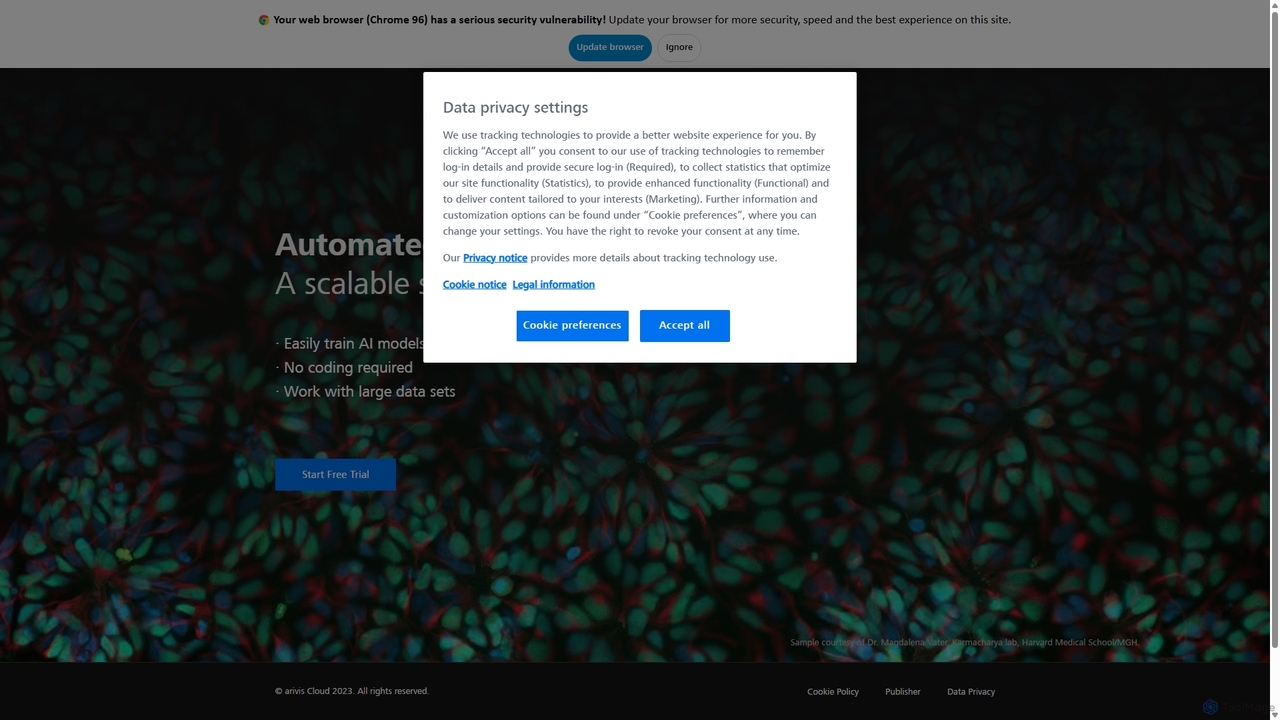
APEER (now part of arivis Cloud) is an AI-powered, cloud-based platform for automated scientific image analysis. It empowers …
APEER (now part of arivis Cloud) is an AI-powered, cloud-based platform for automated scientific image analysis. It empowers researchers in biology and biotech to leverage deep learning for complex tasks like image segmentation and object detection without coding. It streamlines workflows, increases throughput, and ensures reproducible results for microscopy and cell analysis.
InsightAI
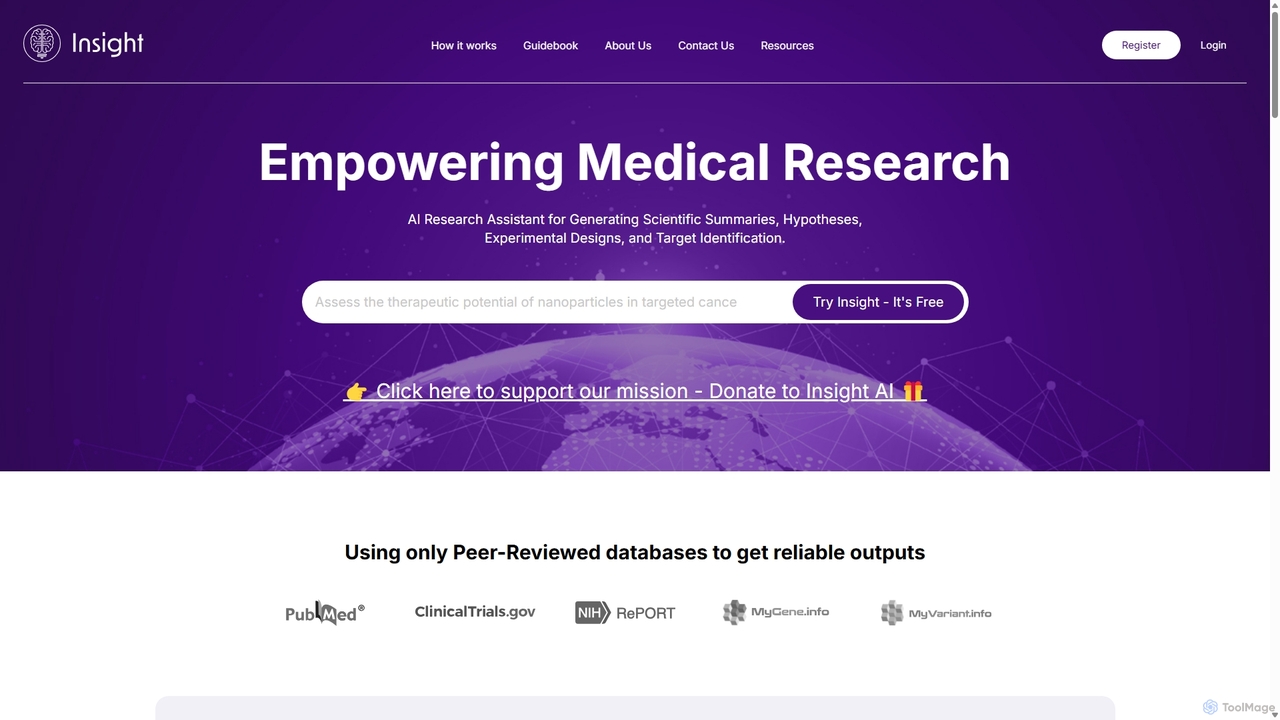
InsightAI is an AI-powered research assistant designed for the medical and life sciences fields. It streamlines the research …
InsightAI is an AI-powered research assistant designed for the medical and life sciences fields. It streamlines the research process by generating scientific summaries, formulating hypotheses, creating experimental designs, and identifying potential drug targets. By integrating with peer-reviewed databases like PubMed, NIH Clinical Trials, and MyGene, InsightAI provides reliable, data-driven insights, saving researchers significant time on literature reviews and data analysis, thereby accelerating scientific discovery.
JADBio
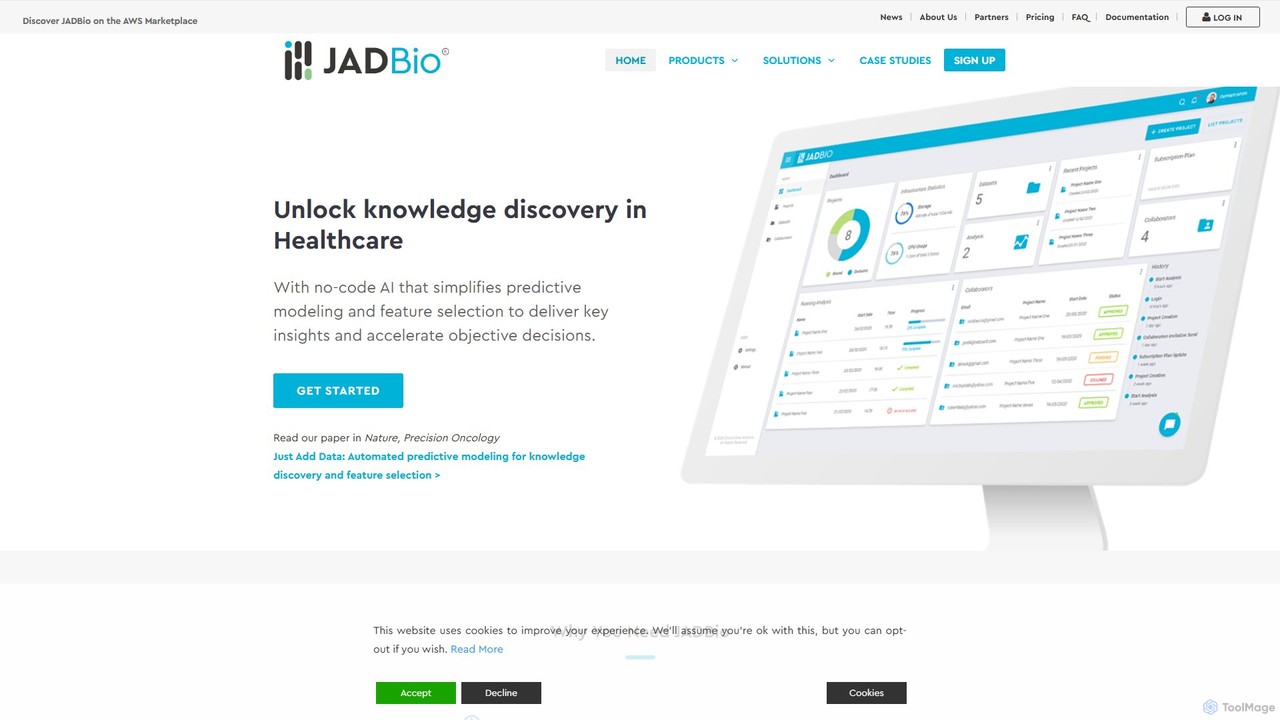
JADBio is a no-code Automated Machine Learning (AutoML) platform designed for life sciences and biotechnology. It specializes in …
JADBio is a no-code Automated Machine Learning (AutoML) platform designed for life sciences and biotechnology. It specializes in analyzing complex, high-dimensional biological data (omics) to accelerate biomarker discovery, identify predictive biosignatures, and build accurate predictive models for precision medicine and translational research.
ascenscia
Ascenscia is a specialized AI voice assistant designed for scientific laboratories. It enables hands-free interaction with lab data, …
Ascenscia is a specialized AI voice assistant designed for scientific laboratories. It enables hands-free interaction with lab data, automates data capture, and integrates with existing ELN and LIMS systems. This tool helps optimize workflows, reduce errors, and accelerate R&D cycles with 97% accuracy in understanding complex scientific terminology.
Huma.ai
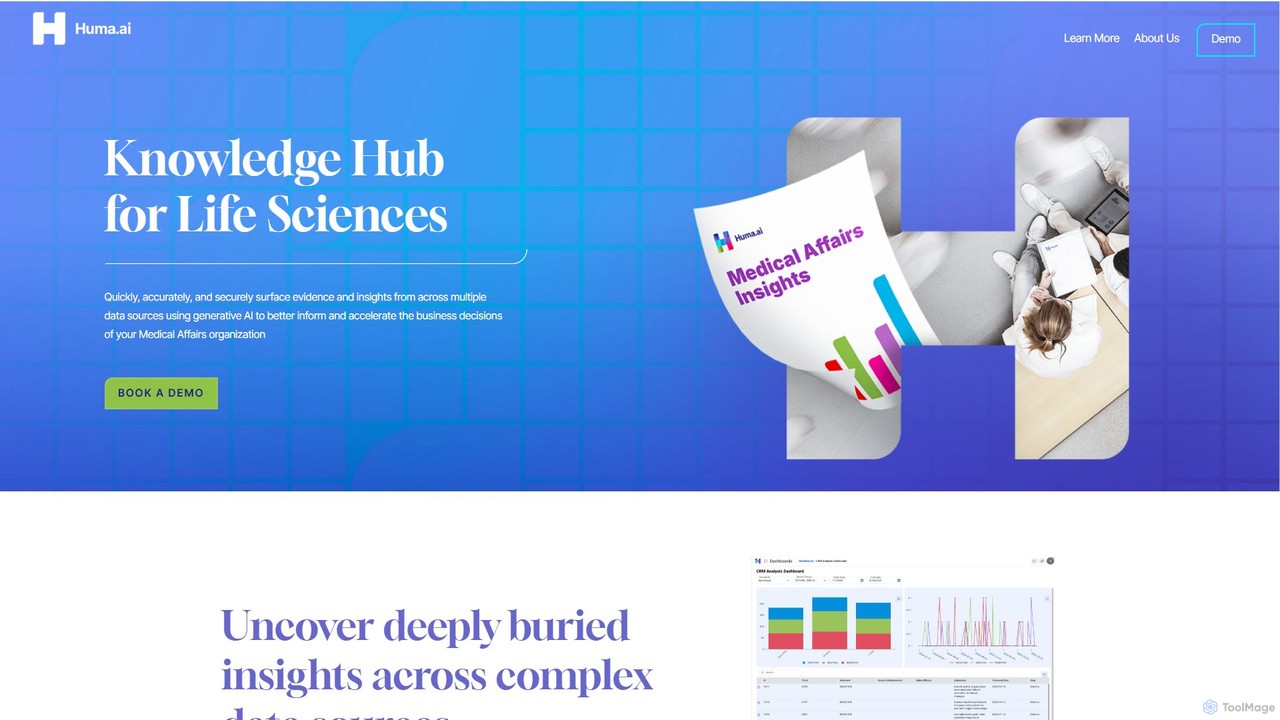
Huma.ai is an AI-powered knowledge hub specifically designed for the life sciences industry. It uses generative AI to …
Huma.ai is an AI-powered knowledge hub specifically designed for the life sciences industry. It uses generative AI to securely analyze vast amounts of public and private data, helping medical affairs and healthcare teams to quickly surface evidence, uncover insights, and accelerate data-driven decision-making. The platform automates literature reviews, generates custom reports, and provides real-time analysis.
cynapto
Cynapto is an AI-powered insights platform specifically designed for the life sciences industry. It leverages Natural Language Processing …
Cynapto is an AI-powered insights platform specifically designed for the life sciences industry. It leverages Natural Language Processing (NLP) and machine learning to analyze vast amounts of unstructured and structured data, providing actionable intelligence for pharmaceutical, biotech, and medical device companies to accelerate decision-making.
floatz
floatz is an AI-powered platform for the biotech and pharmaceutical industries, specializing in target validation and prioritization. It …
floatz is an AI-powered platform for the biotech and pharmaceutical industries, specializing in target validation and prioritization. It provides a "Foundational Evidence Audit" to de-risk R&D pipelines, using computational due diligence to assess the biological relevance and commercial viability of therapeutic targets, helping companies secure funding and make confident investment decisions.
About Biotechnology
AI Biotechnology tools are specialized applications that use machine learning to analyze complex biological data at a molecular and cellular level. These tools process vast datasets from genomics, proteomics, and cellular imaging to uncover patterns, predict outcomes, and accelerate research. Their primary value lies in significantly speeding up drug discovery, enabling personalized medicine, and advancing genetic engineering. By automating data interpretation and modeling biological systems, they empower scientists to tackle previously intractable problems in healthcare and life sciences.
Core Features
- Genomic Sequence Analysis: Automates the processing and interpretation of DNA and RNA sequencing data to identify genes, mutations, and regulatory elements.
- Protein Structure Prediction: Generates accurate 3D models of protein structures from amino acid sequences, crucial for understanding function and drug design.
- Predictive Modeling: Creates computational models to simulate disease progression, predict drug efficacy, or forecast a compound's toxicity.
- High-Content Image Analysis: Utilizes computer vision to automatically analyze and quantify features in large sets of microscopy or cellular images.
- Molecular Docking & Screening: Virtually screens millions of chemical compounds to identify potential drug candidates that can bind to a specific biological target.
Use Cases
These tools are primarily used in pharmaceutical R&D, academic research institutions, bioinformatics labs, and clinical genetics. For instance, a pharmaceutical company might use an AI tool to identify novel drug targets, while a hospital's genetics lab could use one to pinpoint disease-causing mutations from a patient's genome.
How to Choose
When selecting an AI Biotechnology tool, consider the specific data types it supports (e.g., FASTQ, VCF, PDB files). Evaluate the accuracy and validation of its underlying models. Assess the computational requirements—whether it's a cloud-based platform or requires local high-performance computing. Finally, for clinical applications, ensure it complies with relevant regulatory standards like HIPAA or GDPR.
BiotechnologyUse Cases
Accelerate Drug Candidate Identification
A computational chemist at a pharmaceutical company is tasked with finding novel inhibitors for a newly identified cancer protein target. Instead of months of traditional lab screening, they use an AI biotechnology platform. They input the 3D structure of the target protein, and the AI performs a virtual screening of a library containing millions of small molecules. Within 48 hours, the tool provides a ranked list of the top 100 compounds with the highest predicted binding affinity and lowest off-target effects. This allows the research team to focus their physical lab experiments on a small, highly promising set of candidates, reducing discovery time by over 90%.
Predicting Protein Structures for Research
A structural biologist at a university is studying a newly discovered bacterial protein with an unknown function. To understand how it works, they need its 3D structure, but experimental methods like X-ray crystallography are slow and costly. They use an AI protein folding tool, inputting the protein's amino acid sequence. In under an hour, the AI generates a highly accurate 3D model of the protein's folded state. This model allows the biologist to identify potential active sites and formulate hypotheses about its function, guiding their future experiments and saving months of lab work.
Automating Genetic Variant Analysis for Diagnostics
A clinical geneticist receives whole-genome sequencing data from a patient with a suspected rare genetic disorder. Manually sifting through millions of genetic variants to find the causative mutation is a monumental task. They upload the patient's data (in VCF format) to an AI-powered variant interpretation platform. The AI automatically filters common, benign variants and prioritizes rare variants located in disease-associated genes. It cross-references findings with clinical databases and scientific literature, highlighting the top 3-5 most likely pathogenic mutations for review. This reduces the analysis time from weeks to a few hours, enabling faster diagnosis and patient care.
High-Throughput Microscopy Image Analysis
A cell biologist is testing the effect of several drug compounds on cancer cell morphology. Their experiment generates thousands of microscopy images per day, and manually counting and classifying cells is tedious and prone to bias. They use an AI-powered image analysis tool. After training the model on a small set of labeled images, the tool automatically segments each image, identifies individual cells, and quantifies key features like cell size, shape, and fluorescence intensity. The system processes the entire dataset overnight, providing quantitative results that are more consistent and reliable than manual analysis, accelerating the research cycle.
Designing Novel Gene Circuits for Synthetic Biology
A synthetic biologist aims to engineer a bacterium that produces a valuable biofuel. This requires designing a complex gene circuit that controls the metabolic pathway. Instead of manual trial-and-error design, they use an AI platform for genetic circuit design. They specify the desired inputs (e.g., presence of a sugar) and the target output (e.g., high-level production of the biofuel enzyme). The AI explores a vast design space of genetic parts (promoters, RBSs) and proposes several optimized circuit designs predicted to be stable and efficient. This in-silico design process significantly reduces the number of physical constructs that need to be built and tested in the lab.
Personalized Cancer Therapy Recommendation
An oncologist is treating a patient with a complex form of lung cancer. To determine the best treatment, they use an AI-driven clinical decision support tool specialized in oncology. The platform integrates the patient's genomic data (tumor mutations), pathology reports, and clinical history. It then compares this comprehensive profile against a vast database of clinical trial results, treatment guidelines, and real-world evidence. The AI provides a ranked list of potential therapies, including targeted drugs and immunotherapies, along with the supporting evidence for each recommendation. This helps the oncologist make a more informed, data-driven decision tailored to the patient's unique biological makeup.