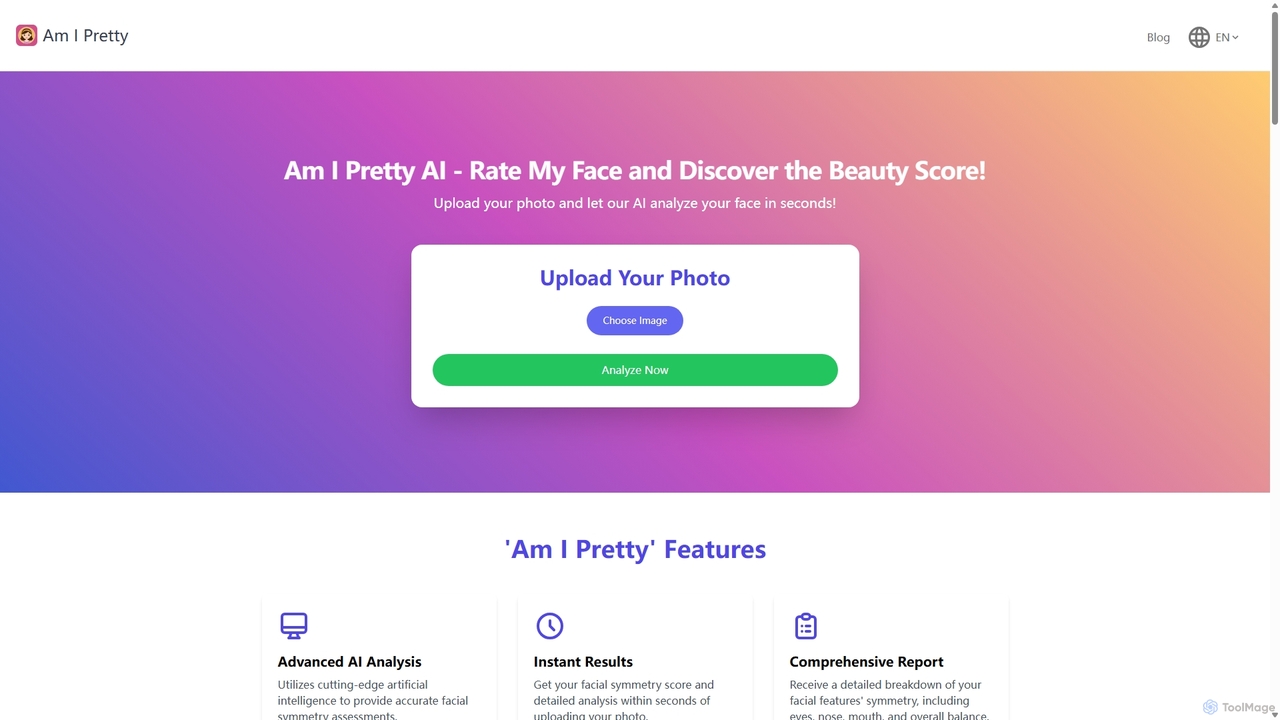
AI Image Analysis tools are a category of AI-powered solutions designed to extract meaningful insights, features, and information directly from visual data. These tools leverage advanced computer vision, machine learning, and deep learning algorithms to interpret and understand the content within images and videos. Their primary value lies in automating complex visual inspection, classification, and recognition tasks, transforming raw pixels into actionable intelligence for various applications.
Core Features
- Object Detection & Recognition: Automatically identify, locate, and classify specific objects or entities within an image.
- Image Classification & Tagging: Categorize images based on their content and apply relevant metadata tags for organization and search.
- Facial & Emotion Analysis: Detect faces, identify individuals, and infer emotional states or demographic information from visual cues.
- Anomaly & Defect Detection: Pinpoint unusual patterns, defects, or deviations from expected norms in industrial or medical imagery.
- Scene Understanding & Segmentation: Analyze the overall context of an image, segmenting it into different regions or components.
Applicable Scenarios
These tools are indispensable across sectors requiring automated visual interpretation. In manufacturing, they power automated quality control systems, detecting product defects with high precision. Retailers utilize them for shelf analytics, monitoring stock levels and product placement. Security and surveillance operations deploy them for real-time threat detection and access control, identifying suspicious activities or unauthorized individuals from video feeds.
How to Choose
Selecting an AI Image Analysis tool requires evaluating its accuracy and robustness for your specific visual data and tasks. Consider the range of analysis capabilities offered, such as specific object types it can recognize or the granularity of defect detection. Assess its integration capabilities with your existing data pipelines and systems, along with its scalability to handle varying volumes of images. Finally, prioritize solutions that offer strong data privacy and ethical AI practices, especially when dealing with sensitive visual information.