ToolMage
Sign in

Best 1 Avatar And Face Generation AI tools for Image

Popular Avatar And Face Generation AI tools in Image include Musavir, helping you work more efficiently.

Musavir
Freemium

Musavir

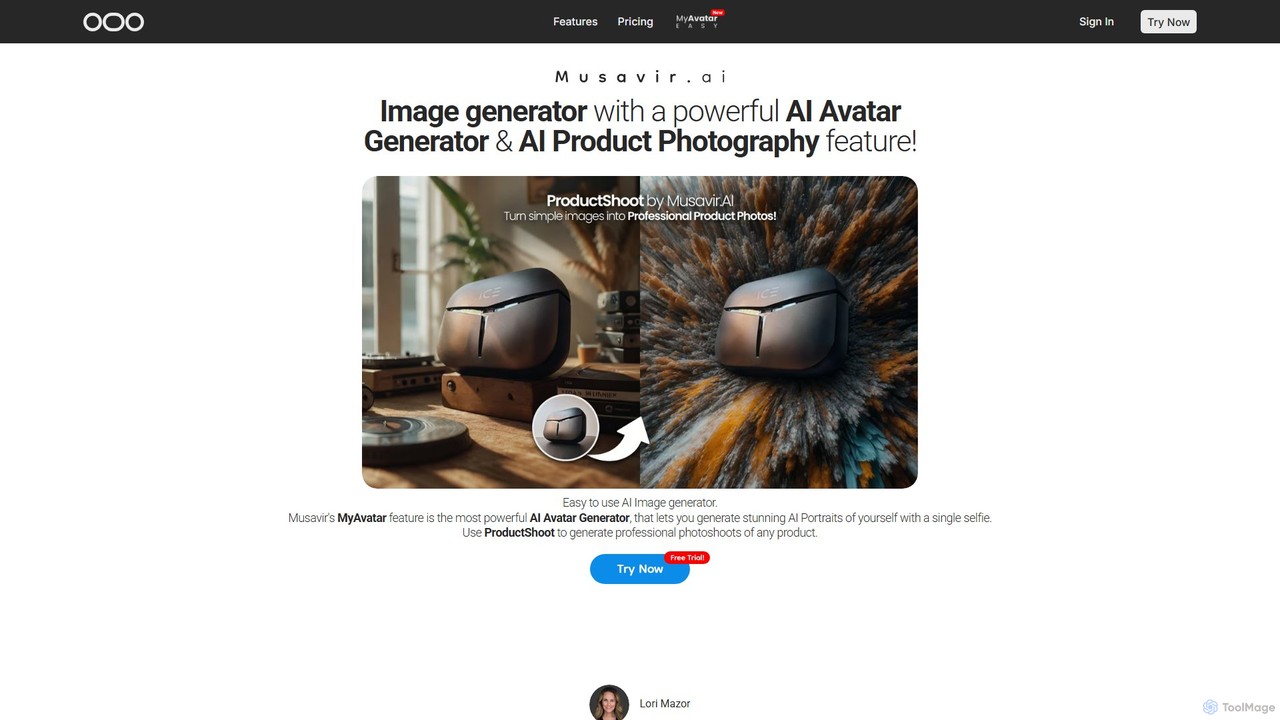
Musavir is a versatile AI image generation platform specializing in creating high-quality visuals. It features a powerful text-to-image generator, a "MyAvatar" tool for creating consistent AI portraits from a single selfie, and "ProductShoot" for professional e-commerce product photography. With support for multilingual prompts, hyper-localization, and 4K exports, Musavir empowers users to create stunning, culturally relevant art and commercial images with ease.

Avatar And Face Generation
Visits 5.6KFavorites 113Likes 113

About Avatar And Face Generation

Avatar and Face Generation tools are AI-powered platforms designed to create realistic or stylized digital representations of human faces and full-body avatars. Leveraging advanced generative adversarial networks (GANs) and diffusion models, these tools can produce unique facial features, expressions, and diverse character designs from text prompts, images, or parameters. They offer immense value for personalizing digital identities, enhancing creative content, and streamlining character development across various industries, serving as a specialized segment within the broader AI image generation landscape.

Core Features

  • Realistic Face Synthesis: Generate highly lifelike human faces with customizable age, gender, ethnicity, and emotional expressions.
  • Stylized Avatar Creation: Produce unique, artistic, or cartoon-style avatars for gaming, social media, and virtual worlds.
  • Parameter-Based Customization: Adjust specific facial features, hair, clothing, and accessories through intuitive controls.
  • Expression and Pose Control: Manipulate facial expressions and body poses to convey specific emotions or actions.
  • Image-to-Avatar Conversion: Transform existing photos into stylized avatars or generate new faces based on input images.

Use Cases

These tools are essential for content creators, game developers, and marketers seeking to populate virtual environments or personalize user experiences. They enable rapid prototyping of character designs, creation of diverse digital personas for storytelling, and generation of unique profile pictures for social platforms. Businesses also utilize them for virtual try-on experiences and developing consistent brand mascots.

How to Choose

When selecting an Avatar and Face Generation tool, consider the desired level of realism versus stylization, the range of customization options available (e.g., facial features, clothing, accessories), and the ease of use for your technical skill level. Evaluate the output quality, integration capabilities with existing workflows, and the pricing model, including any usage limits or licensing restrictions for generated content.

Avatar And Face Generation use cases

1

Personalized Social Media Profiles

Social media users and influencers can generate unique, stylized avatars or realistic digital portraits for their profile pictures and online presence. By inputting a few preferences or an existing photo, they can create a consistent and distinctive visual identity across platforms, enhancing personal branding and engagement without revealing their actual face if preferred.

2

Game Character Design and Customization

Game developers and players utilize these tools to rapidly design and customize non-player characters (NPCs) or player avatars. Artists can generate diverse facial structures, hairstyles, and expressions for a wide cast of characters, significantly accelerating the concept art phase and offering players extensive personalization options within the game world.

3

Virtual Influencer and Brand Ambassador Creation

Marketing agencies and brands can create lifelike virtual influencers or brand ambassadors with specific aesthetics and personalities. These AI-generated faces and avatars can be used in digital campaigns, advertisements, and social media content, providing a controllable and consistent brand representation that resonates with target audiences.

4

Metaverse and VR Digital Identity

Individuals and companies building virtual worlds leverage avatar generation to allow users to create highly personalized digital identities for the metaverse or virtual reality environments. Users can design avatars that truly represent them or explore entirely new personas, fostering deeper immersion and social interaction in digital spaces.

5

Content Creation for Storytelling and Animation

Filmmakers, animators, and storytellers use face and avatar generation to populate their narratives with diverse and expressive characters. They can quickly generate multiple character variations, experiment with different looks and emotions, and maintain visual consistency across various scenes or episodes, streamlining the pre-production and animation processes.

6

E-commerce Virtual Try-on Experiences

Retailers, particularly in fashion and beauty, integrate face generation technology to offer virtual try-on experiences. Customers can upload their photo or generate a face that resembles theirs, then virtually try on clothing, accessories, or makeup products, enhancing the online shopping experience and potentially reducing return rates.

Avatar And Face Generation FAQ

What are Avatar and Face Generation tools?

Avatar and Face Generation tools are AI-powered software or platforms that create digital representations of human faces or full-body characters. They use advanced machine learning models like GANs and diffusion models to synthesize unique, realistic, or stylized images based on user inputs such as text descriptions, reference images, or adjustable parameters. These tools are a specialized subset of AI image generation, focusing specifically on human-like forms.

How do Avatar and Face Generation tools work?

These tools typically work by training deep learning models on vast datasets of human faces and body types. When a user provides input (e.g., "a smiling old man," "a fantasy elf avatar," or adjusts sliders for age/gender), the AI model generates a new image that matches these specifications. Generative Adversarial Networks (GANs) involve a generator creating images and a discriminator evaluating them, while diffusion models iteratively refine noise into coherent images, both aiming for high realism or specific styles.

What are the main applications of Avatar and Face Generation tools?

The main applications include creating personalized profile pictures for social media, designing diverse characters for video games and animation, developing virtual influencers for marketing campaigns, and enabling digital identities in metaverse and VR platforms. They are also used in e-commerce for virtual try-on and in various creative industries for rapid prototyping and content production.

How do Avatar and Face Generation tools differ from general AI Image Generators?

While both fall under AI image generation, Avatar and Face Generation tools are highly specialized. General AI image generators can create any type of image (landscapes, objects, abstract art) from text prompts. In contrast, avatar and face generators are specifically optimized and trained to produce human or human-like faces and characters, often with finer control over features like expressions, age, and specific stylistic attributes, making them more precise for character-focused tasks.

What should I consider when choosing an Avatar and Face Generation tool?

When choosing a tool, evaluate its output quality (realism, style consistency), the breadth and depth of customization options (e.g., facial features, hair, clothing, accessories, expressions), and its ease of use. Consider the intended application (e.g., gaming, social media, marketing) and ensure the tool's capabilities align. Also, check the licensing terms for generated content, pricing structure, and integration possibilities with your existing creative software or platforms.