
ToolMage
Sign in

Best 332 Image Editing AI tools for Image

Popular Image Editing AI tools in Image include Photoroom, Pixelcut, OpenArt, Pixlr, aifaceswap, PicWish, Topaz Labs, Upscale.media, Remaker AI, and Pixelbin, helping you work more efficiently.

toriitranslate
Freemium

toriitranslate

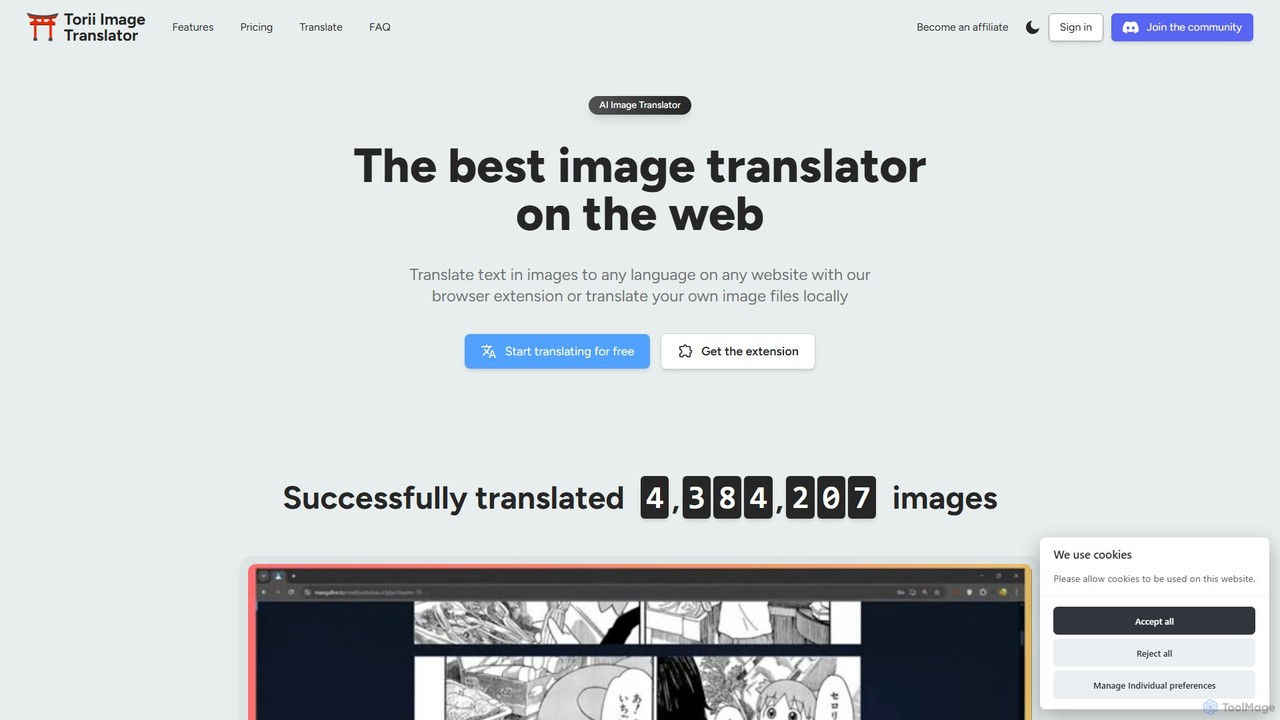
toriitranslate is an AI-powered image translator, designed as a browser extension and web tool. It excels at instantly translating text within images, making it ideal for reading manga, comics, and webtoons in any language. With features like in-place translation, editable text, AI-powered cleanup tools, and support for various AI models (GPT-4o, Gemini), it offers a seamless and customizable reading experience. It supports over 120 languages and works on desktop and mobile browsers.

Chrome Extensions
Visits 173.9KFavorites 154Likes 156

About Image Editing

AI Image Editing tools are a category of AI-powered software designed to modify, enhance, and transform existing images with automated precision. These tools leverage advanced machine learning algorithms, including deep learning and computer vision, to perform complex edits that traditionally required manual effort. They significantly streamline visual content creation workflows, enabling users to achieve professional-grade results faster and more efficiently across various applications.

Core Features

  • Background Removal & Replacement: Automatically detects and isolates subjects, allowing for seamless background removal or replacement.
  • Object Removal & Retouching: Intelligently removes unwanted objects, blemishes, or imperfections while seamlessly filling in the background.
  • Image Upscaling & Enhancement: Increases image resolution and detail without pixelation, improving overall clarity and quality.
  • Style Transfer & Filters: Applies artistic styles from one image to another or enhances photos with AI-generated filters.
  • Color Correction & Grading: Automatically adjusts colors, exposure, and contrast to achieve optimal visual balance and mood.

Use Cases

AI Image Editing tools are indispensable for professionals and enthusiasts alike. E-commerce businesses use them to standardize product photos, removing backgrounds and enhancing details for consistent online catalogs. Content creators leverage these tools for quick social media post preparation, applying filters and making rapid adjustments. Professional photographers utilize AI for efficient batch retouching and subtle enhancements, saving hours of manual work.

How to Choose

When selecting an AI Image Editing tool, consider its core functionality to ensure it meets your specific needs, such as background removal or advanced retouching. Evaluate the output quality, looking for natural-looking results without artifacts. Assess ease of use and integration capabilities with your existing workflows or other design software. Finally, compare pricing models and subscription tiers to find a solution that offers the best value for your budget and usage frequency.

Featured tool rankings

Image Editing use cases

1

Automated Product Photo Background Removal

E-commerce sellers and marketing teams can efficiently process hundreds of product images. By using AI image editing tools, they can automatically detect and remove backgrounds, replacing them with a clean white or transparent backdrop. This ensures visual consistency across all product listings, saving significant manual editing time and improving the professional appearance of online stores.

2

Enhancing Social Media Visuals for Engagement

Content creators and social media managers can quickly transform ordinary photos into eye-catching posts. AI image editing tools allow them to apply trending filters, adjust lighting, correct colors, and even add stylistic elements with minimal effort. This helps in creating visually appealing content that captures audience attention and drives higher engagement rates across platforms.

3

Professional Portrait Retouching and Enhancement

Professional photographers and graphic designers can streamline their post-production workflow for portraits. AI image editing tools can automatically smooth skin, remove blemishes, whiten teeth, and even adjust facial features subtly while maintaining a natural look. This significantly reduces the time spent on manual retouching, allowing them to deliver high-quality, polished images to clients faster.

4

Restoring and Colorizing Old Photographs

Individuals and archivists can breathe new life into old, faded, or damaged photographs. AI image editing tools can automatically repair cracks, remove dust and scratches, enhance faded colors, and even colorize black-and-white images with remarkable accuracy. This preserves precious memories and makes historical images more accessible and engaging for modern audiences.

5

Batch Processing for Large Image Libraries

Businesses and agencies managing extensive image libraries can significantly accelerate their workflow. AI image editing tools offer batch processing capabilities to apply consistent edits, such as resizing, watermarking, or color adjustments, to hundreds or thousands of images simultaneously. This ensures uniformity across large datasets and drastically reduces the time and resources required for image preparation.

6

Object Removal and Scene Reconstruction

Photographers and designers can effortlessly clean up images by removing unwanted elements. AI image editing tools can intelligently identify and erase distracting objects, people, or text from a scene, then seamlessly reconstruct the background as if the object was never there. This is invaluable for creating pristine product shots, uncluttered travel photos, or focused marketing visuals.

Image Editing FAQ

What are AI Image Editing tools?

AI Image Editing tools are software applications that use artificial intelligence to automate and enhance the process of modifying existing images. They leverage machine learning algorithms to perform tasks like background removal, object retouching, and color correction with high precision. These tools aim to simplify complex editing workflows, making professional-grade image manipulation accessible to a wider range of users, from casual creators to seasoned professionals.

How do AI Image Editing tools differ from traditional photo editors?

The primary difference lies in automation and intelligence. Traditional photo editors rely heavily on manual input and skill for precise selections and adjustments. AI image editing tools, conversely, use machine learning to understand image content, automate complex tasks like background removal or object selection, and even suggest enhancements. This significantly reduces the learning curve and time required for achieving professional results, especially for repetitive or intricate edits.

What are the key features to look for in an AI Image Editor?

When choosing an AI image editor, prioritize features that align with your main tasks. Essential capabilities include robust background removal, intelligent object removal/retouching, and high-quality image upscaling. Look for tools offering advanced color correction, style transfer options, and batch processing for efficiency. Integration with other design software and a user-friendly interface are also crucial for a seamless workflow. Consider the output quality and the level of control it provides over AI-generated edits.

Who can benefit most from using AI Image Editing tools?

A wide range of users can benefit significantly. E-commerce businesses and marketers can quickly prepare product images and marketing visuals. Content creators and social media managers can enhance their posts with minimal effort. Professional photographers and graphic designers can streamline repetitive tasks like retouching and background removal, freeing up time for more creative work. Even casual users looking to improve personal photos without extensive technical skills will find these tools invaluable for quick, high-quality edits.

Are AI Image Editing tools easy for beginners to use?

Yes, many AI Image Editing tools are specifically designed with user-friendliness in mind, making them highly accessible for beginners. Their AI-powered automation handles complex tasks with simple clicks or prompts, eliminating the need for extensive technical knowledge or manual precision. While professional-grade tools might offer more advanced controls, a wide array of intuitive options exist that allow even novices to achieve impressive results quickly, often with guided workflows and clear interfaces.