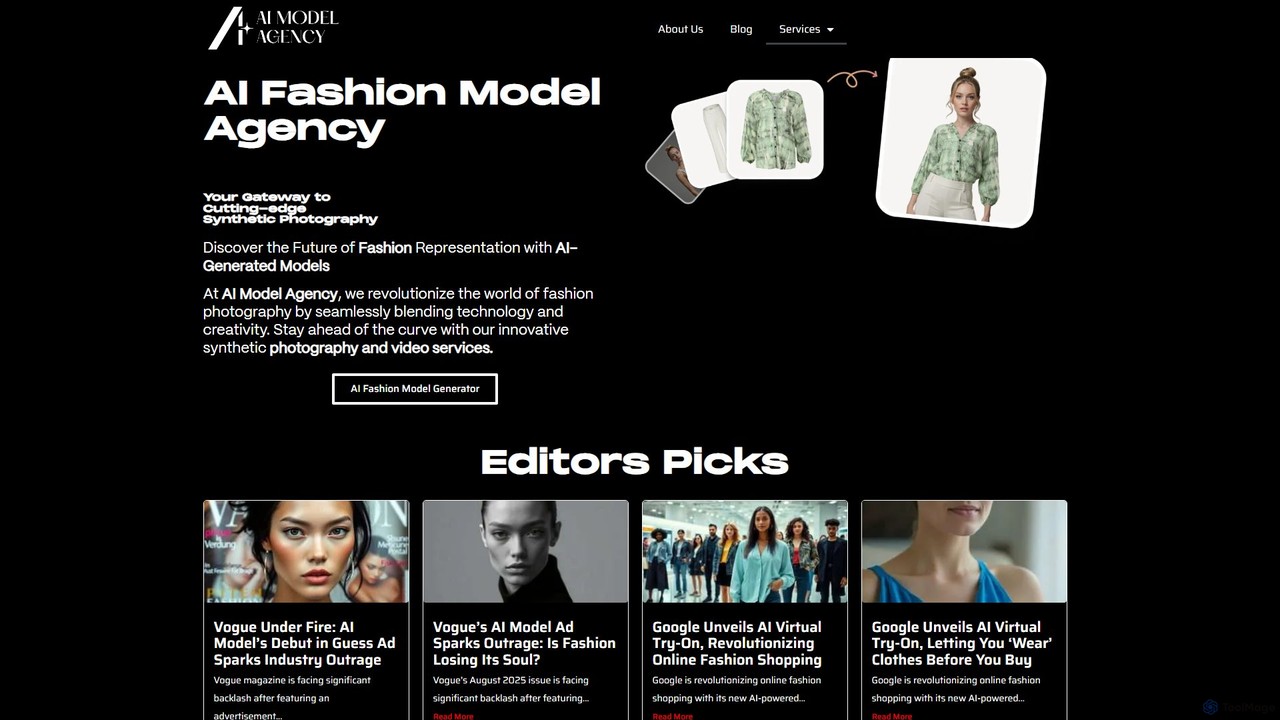
Model Generation tools are AI-powered platforms that automatically create new visual models, often in 3D, from various inputs. Leveraging advanced AI algorithms like generative adversarial networks (GANs) and diffusion models, these tools transform text descriptions, 2D images, or sketches into detailed 3D assets, character models, or even specialized AI models (e.g., LoRAs) for image generation. They significantly accelerate content creation workflows, enabling designers, developers, and artists to rapidly prototype and produce complex visual elements for diverse applications within the broader field of image creation, offering a powerful bridge between conceptualization and tangible digital assets, thereby democratizing access to advanced 3D content production.
Core Features
- Text-to-3D/Model: Generates intricate 3D objects, characters, or entire scenes directly from descriptive textual prompts, streamlining initial design phases and enabling rapid ideation.
- 2D-to-3D Conversion: Transforms flat 2D images, concept art, or photographs into fully three-dimensional models, greatly simplifying asset creation from existing visuals and legacy content.
- Custom AI Model Training: Enables users to create specialized AI models (like LoRAs or custom checkpoints) tailored for specific artistic styles, characters, or objects, ensuring consistent output and brand identity in subsequent image generation tasks.
- Automatic Texturing & Rigging: Applies realistic textures, materials, and prepares generated models with skeletal structures for animation or seamless integration into game engines, rendering software, and virtual environments.
- Style Transfer & Variation: Allows for the application of different artistic styles to generated models or the creation of multiple variations from a single input, fostering creative exploration and diverse design outcomes.
Use Cases
These tools are invaluable across industries for accelerating visual content production and fostering innovation. In game development, they are widely adopted for rapidly creating unique characters, props, and environmental assets, significantly reducing manual modeling time and enabling faster iteration cycles. For product design, they facilitate quick prototyping and realistic visualization of new concepts, allowing designers to present high-fidelity models for marketing and stakeholder review without extensive manual effort. Furthermore, they are crucial in virtual and augmented reality for populating immersive digital experiences with diverse and detailed 3D objects and environments. Artists and content creators also leverage these tools to train personalized AI models for consistent stylistic output in their creative projects, pushing the boundaries of digital art and personalized content generation.
How to Choose
When selecting a Model Generation tool, consider its input flexibility, assessing whether it robustly supports text, 2D images, or even 3D scans as source material, which impacts versatility. Evaluate the quality and level of detail of its output models, ensuring they meet your project's fidelity requirements, from low-poly game assets to high-resolution renders. Compatibility with your existing workflows is paramount, so check for support of standard export formats like OBJ, FBX, GLB, and USDZ, as well as potential integrations with popular design software. Additionally, assess the ease of customization for generated assets, the cost structure, and the availability of pre-trained models or a strong community support for specific needs, ensuring a scalable, efficient, and future-proof solution for your content creation pipeline.