Jentic
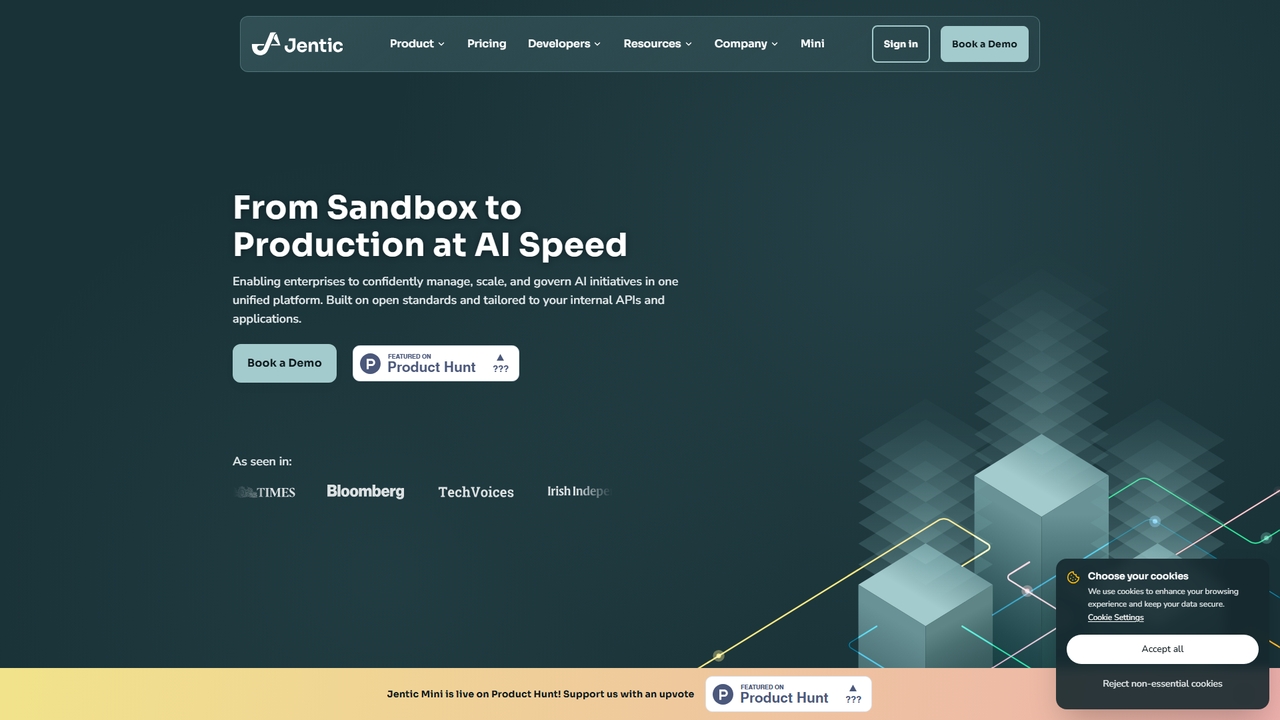
Jentic is an enterprise AI automation platform that provides the secure execution layer between AI agents and internal …
Jentic is an enterprise AI automation platform that provides the secure execution layer between AI agents and internal APIs. It enables organizations to safely manage, scale, and govern AI initiatives by unifying API integration, workflow orchestration, and centralized governance within a single, vendor-neutral platform built on open standards like OpenAPI and Arazzo.
Cloud1
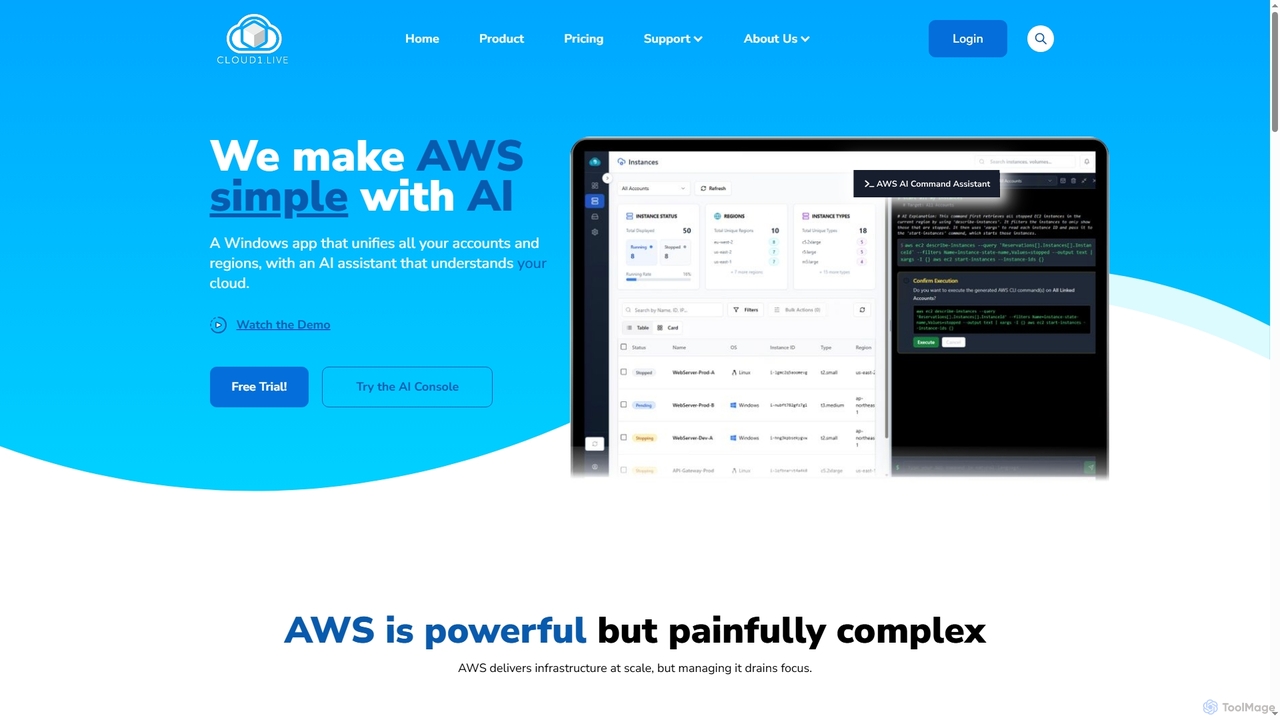
Cloud1 is an AI-powered Windows desktop application designed to simplify AWS EC2 management across multiple accounts and regions. …
Cloud1 is an AI-powered Windows desktop application designed to simplify AWS EC2 management across multiple accounts and regions. It unifies instances, enables natural language commands via an AI assistant, and offers powerful bulk actions and cost optimization insights.
Patchifi
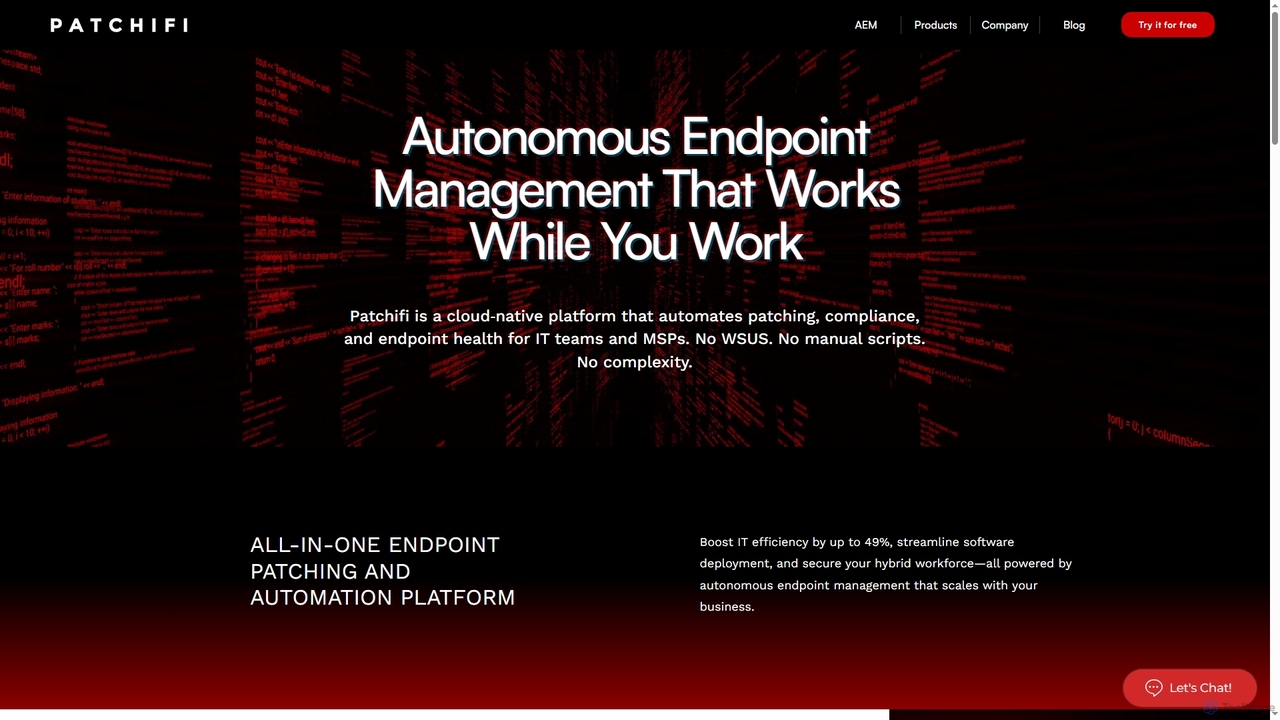
Patchifi is a cloud-native platform that automates endpoint management, patching, and compliance for IT teams and Managed Service …
Patchifi is a cloud-native platform that automates endpoint management, patching, and compliance for IT teams and Managed Service Providers (MSPs). It streamlines software deployment, enhances security, and boosts IT efficiency by up to 49% through intelligent automation, eliminating manual scripts and complexity.
Ozgar
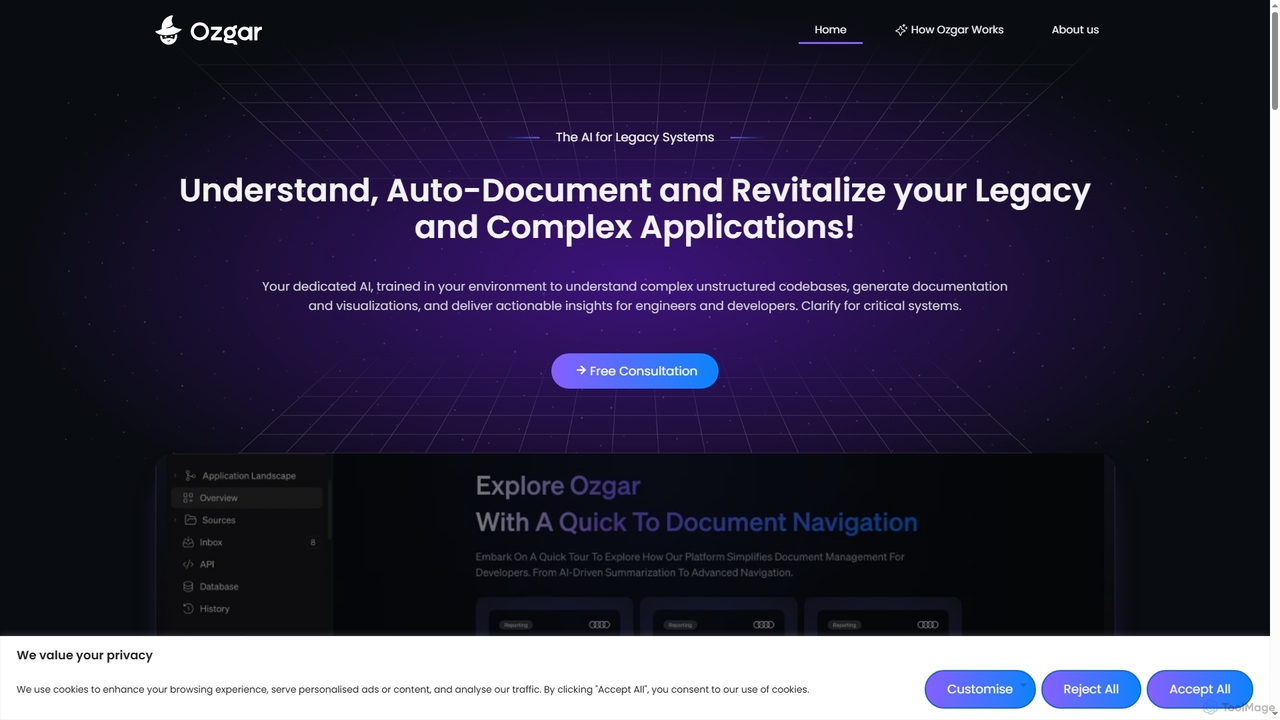
Ozgar is an enterprise code intelligence platform designed to understand, auto-document, and revitalize legacy and complex software systems. …
Ozgar is an enterprise code intelligence platform designed to understand, auto-document, and revitalize legacy and complex software systems. It leverages advanced AI to transform unstructured codebases into a smart, searchable knowledge hub, providing developers and teams with instant insights, automated documentation, and enhanced code navigation. Ozgar aims to reduce technical debt, accelerate onboarding, and streamline maintenance without disrupting existing operations.
Lumlax
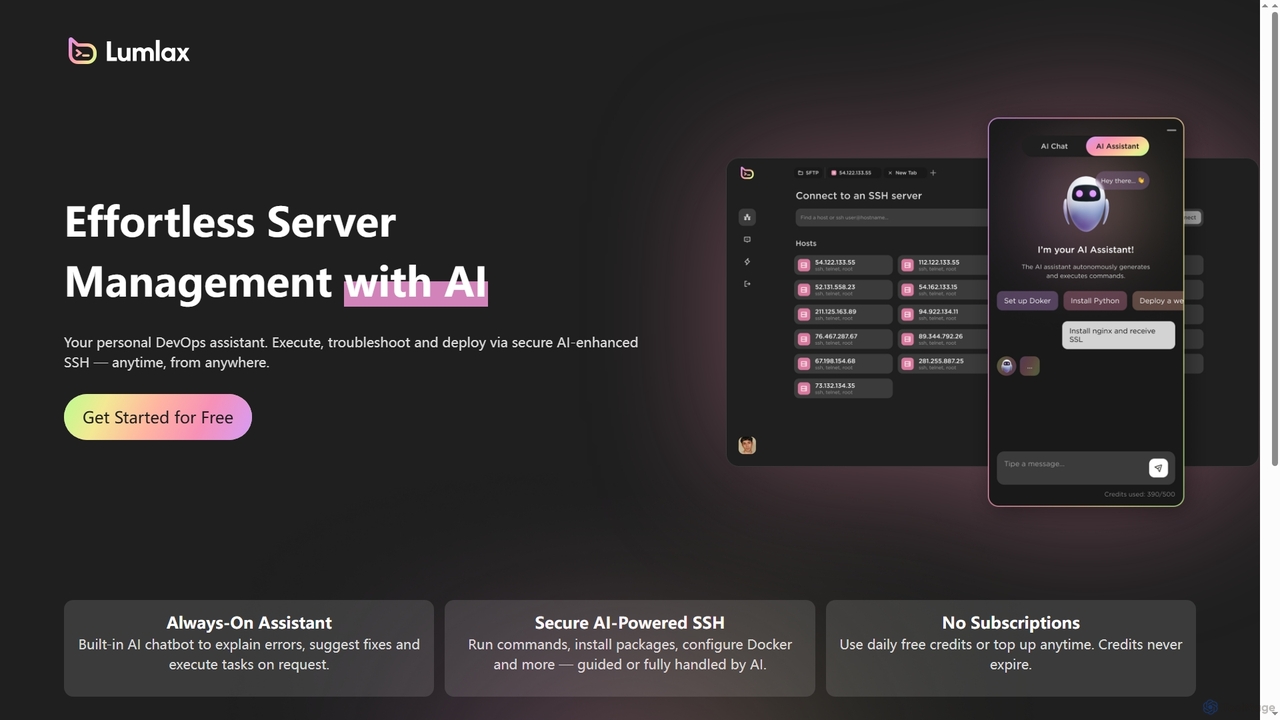
Lumlax is an AI-enhanced SSH application designed for effortless server management. It acts as a personal DevOps assistant, …
Lumlax is an AI-enhanced SSH application designed for effortless server management. It acts as a personal DevOps assistant, enabling developers to execute commands, troubleshoot issues, and deploy applications securely from anywhere. With its built-in AI chatbot, Lumlax explains errors, suggests fixes, and automates tasks, streamlining operations and boosting productivity.
Plural
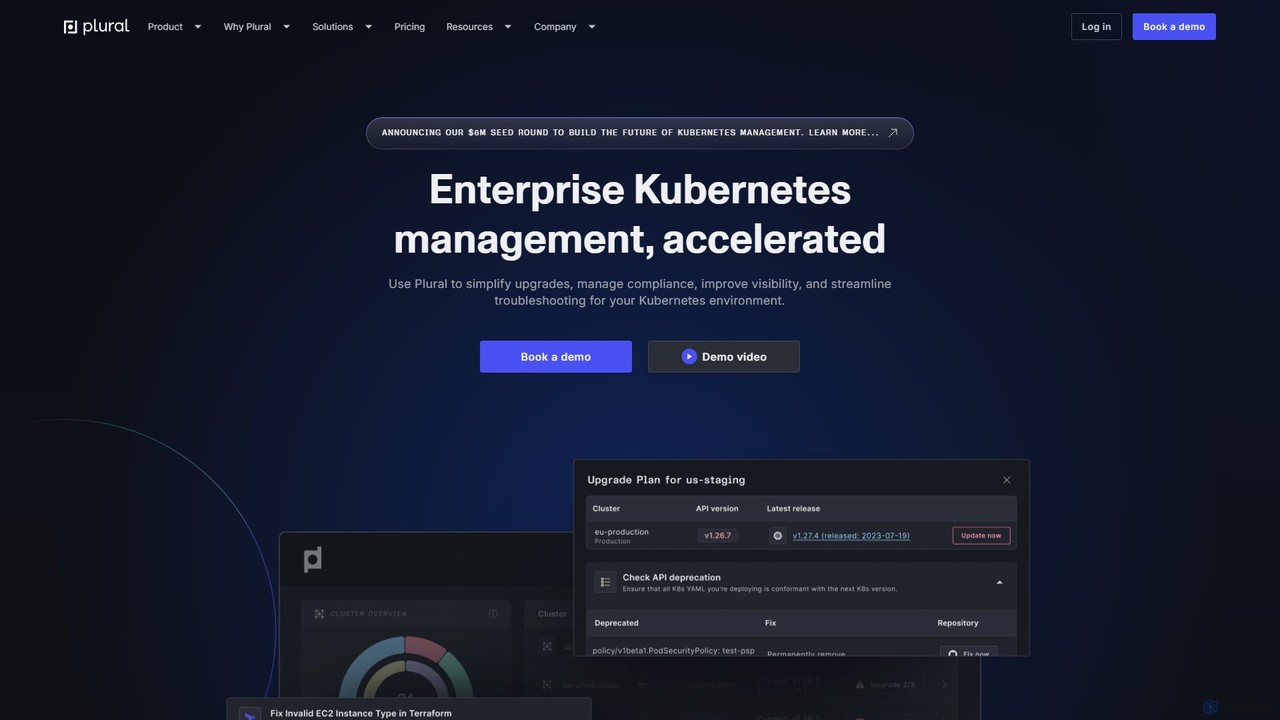
Plural is an AI-powered enterprise Kubernetes management platform designed to accelerate and simplify operations. It provides multi-cloud visibility, …
Plural is an AI-powered enterprise Kubernetes management platform designed to accelerate and simplify operations. It provides multi-cloud visibility, automates complex upgrades, offers AI-driven troubleshooting, and ensures robust security and compliance. Ideal for DevOps and platform engineering teams, Plural reduces operational costs and enhances developer velocity.
About It Operations
AI for IT Operations (AIOps) tools are platforms that leverage artificial intelligence to automate and enhance the management of complex IT infrastructures. These tools ingest and analyze vast amounts of data—including logs, metrics, and traces—from disparate IT systems in real-time. By applying machine learning algorithms, they can proactively detect anomalies, predict potential system failures, and accelerate root cause analysis. This enables IT teams to shift from a reactive to a proactive operational model, significantly improving system reliability and performance, especially in dynamic cloud-native environments.
Core Features
- Anomaly Detection: Automatically identifies unusual patterns and deviations from normal performance baselines in metrics and logs.
- Event Correlation & Analysis: Groups related alerts from multiple sources into single incidents to reduce noise and pinpoint the primary issue.
- Predictive Analytics: Uses historical data to forecast future trends, such as resource consumption or potential performance degradation.
- Automated Root Cause Analysis (RCA): Traces dependencies across services and infrastructure to quickly identify the source of a problem.
- Automated Remediation: Triggers predefined workflows or scripts to resolve common issues automatically without human intervention.
Use Cases
AIOps tools are essential for Site Reliability Engineers (SREs), DevOps teams, and IT administrators managing large-scale, distributed systems. They are commonly applied in monitoring microservices architectures, ensuring the uptime of e-commerce platforms during traffic spikes, and maintaining the health of hybrid cloud environments to prevent service disruptions before they impact users.
How to Choose
When selecting an AIOps tool, evaluate its integration capabilities with your existing monitoring and ticketing systems. Assess the sophistication and transparency of its machine learning models for tasks like pattern recognition. Consider the level of automation it provides, from intelligent alerting to fully automated remediation, and ensure it can scale to handle your organization's data volume and infrastructure complexity.
It OperationsUse Cases
Proactive Outage Prevention for E-commerce
An SRE team at a large online retailer prepares for a major sales event. Instead of relying on static thresholds, they use an AIOps platform to analyze historical performance data. The tool predicts that a specific database service will experience critical latency issues two hours into the sale due to an unusual traffic pattern. Based on this forecast, the team preemptively scales up the database replicas and optimizes query caches. As a result, the platform handles the record traffic smoothly without any performance degradation or downtime, protecting revenue and customer experience.
Automated Root Cause Analysis in Microservices
A DevOps engineer receives an alert for a failing payment service in a complex microservices application. Manually tracing the issue could take hours. The AIOps platform automatically ingests logs, metrics, and traces from hundreds of services. Within minutes, it correlates a spike in API errors with a recent code deployment in an adjacent authentication service and a corresponding increase in database load. It presents a visual dependency map highlighting the authentication service as the root cause. This allows the engineer to immediately roll back the faulty deployment, restoring service 90% faster than with traditional methods.
Intelligent Alert Consolidation and Noise Reduction
An IT operations team for a global SaaS company is constantly overwhelmed by thousands of alerts from their monitoring systems, leading to alert fatigue. After implementing an AIOps tool, the platform begins to analyze incoming events. During a network slowdown, instead of 500 individual alerts from different servers and applications, the tool correlates them based on time, topology, and context. It creates a single, high-level incident titled "Network Latency Impacting EU-West-1 Region," identifies the likely faulty router, and suppresses the redundant alerts. This reduces alert noise by over 95%, allowing the team to focus on the actual problem.
Predictive Capacity Planning for Cloud Resources
A cloud administrator for a fast-growing tech startup needs to manage their cloud budget effectively. They use an AIOps tool to analyze historical and current resource utilization across their Kubernetes clusters. The platform's machine learning models forecast that, based on the current growth trajectory, they will exhaust their CPU capacity in the `us-east-1` cluster in 45 days. It also identifies several underutilized virtual machines that can be decommissioned. This predictive insight allows the administrator to proactively purchase reserved instances at a discount and right-size their infrastructure, saving an estimated 20% on their monthly cloud bill.
Automating Network Incident Remediation
A network operations center (NOC) engineer is responsible for a large corporate network. An AIOps tool, integrated with their network monitoring system, detects intermittent packet loss on a critical switch. Instead of just sending an alert, the tool's automation engine triggers a pre-approved workflow. It first runs diagnostic commands to confirm a hardware fault, then automatically reroutes traffic to a redundant switch, and finally creates a high-priority ticket in the service desk system with all diagnostic data attached for hardware replacement. The entire process is completed in under a minute, preventing a potential outage before the engineer even begins manual investigation.
Enhancing Security with Anomaly Detection
A Security Operations (SecOps) team uses an AIOps platform to augment their threat detection capabilities. The tool establishes a baseline of normal network traffic and user activity. It then detects a significant anomaly: a developer's account, which normally only accesses code repositories, begins attempting to access sensitive financial databases outside of business hours. This behavior doesn't match any known attack signature, so traditional security tools might miss it. The AIOps platform flags this as a high-risk deviation, allowing the SecOps team to immediately investigate and discover a compromised account, preventing a potential data breach.