
Logistics Best in category 1 results Air Cargo AI Tool

Popular AI tools in the Air Cargo field of Logistics include olintek, etc., helping you quickly improve efficiency.

olintek

olintek

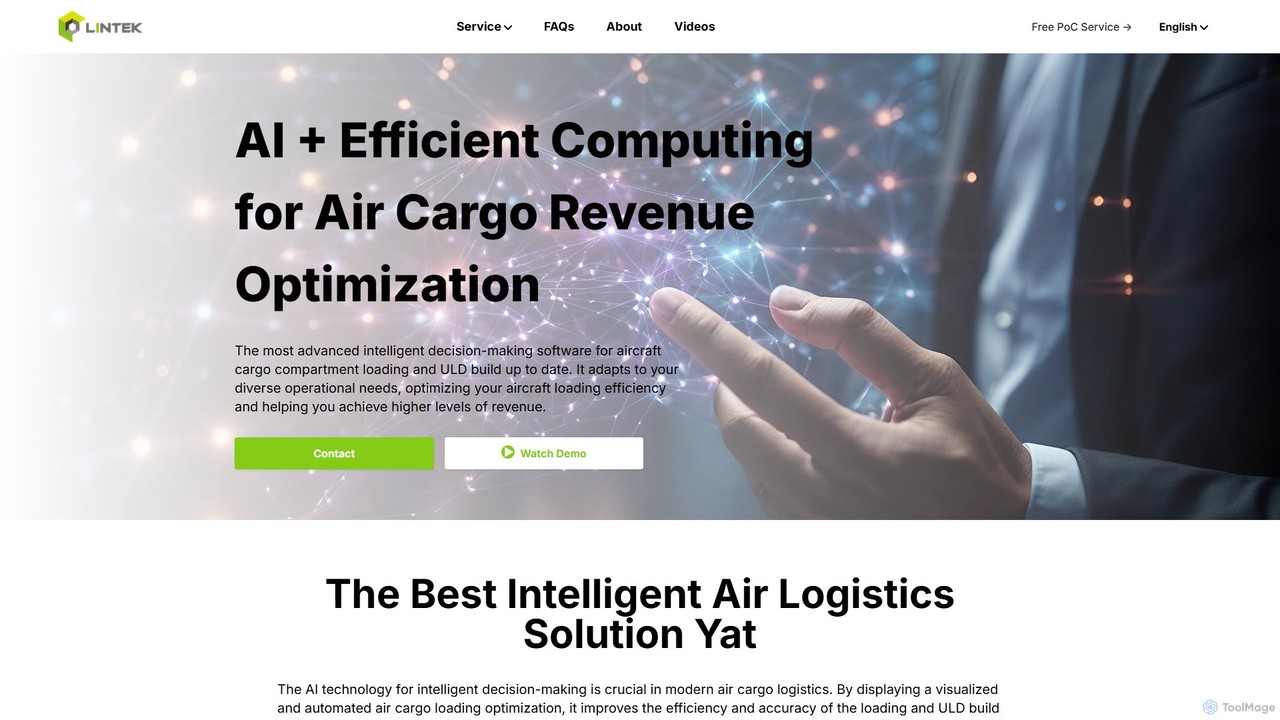
olintek is an AI-powered software platform specializing in air cargo logistics. It provides intelligent decision-making tools for aircraft …

4.7K

About Air Cargo

AI Air Cargo tools are specialized software solutions that leverage artificial intelligence to optimize and automate air freight operations. These platforms use machine learning algorithms and predictive analytics to manage everything from pricing and booking to tracking and compliance. They provide enhanced visibility and control over the entire air cargo lifecycle, transforming a traditionally manual process into a data-driven, efficient system. This enables logistics providers to increase speed, reduce operational costs, and mitigate risks associated with time-sensitive shipments.

Core Features

  • Dynamic Pricing Engine: Instantly generates competitive freight quotes based on real-time market demand, capacity, and historical data.
  • Route & Capacity Optimization: Determines the most efficient flight paths and optimal ULD (Unit Load Device) packing configurations to maximize space.
  • Predictive ETA & Disruption Alerts: Forecasts precise arrival times and proactively warns of potential delays due to weather, customs, or carrier issues.
  • Automated Document Processing: Uses AI to extract data from and validate air waybills and customs declarations, reducing manual errors.
  • Real-Time Shipment Visibility: Provides end-to-end tracking with live updates on cargo location, status, and condition like temperature.

Use Cases

These tools are essential for freight forwarders, airline cargo divisions, and large enterprises that rely on air freight for high-value or time-critical goods. They are applied in scenarios like managing perishable logistics, coordinating just-in-time manufacturing supply chains, and ensuring compliance for pharmaceutical shipments.

How to Choose

When selecting an AI Air Cargo tool, consider its integration capabilities with your existing TMS or ERP systems. Evaluate the accuracy of its predictive models and the scope of its data sources. Also, assess its specific optimization modules (e.g., pricing, routing, load planning) and ensure it supports the compliance requirements for your key trade lanes.

Air CargoUse Cases

1

Automated Real-Time Freight Quoting

A sales manager at a freight forwarding company needs to respond to dozens of quote requests daily. Using an AI Air Cargo tool, they can input shipment details and receive an optimized, market-competitive quote in seconds. The AI analyzes current airline capacity, fuel surcharges, historical pricing data, and demand fluctuations to generate the price. This eliminates manual research, reduces response time from hours to minutes, and increases the quote-to-booking conversion rate.

2

Optimizing ULD Load Planning

An airline's cargo operations planner is tasked with maximizing the revenue for each flight. By using an AI-powered load planning module, they can simulate various cargo configurations within a Unit Load Device (ULD). The system considers cargo weight, dimensions, density, and aircraft balance constraints to create the most space-efficient packing plan. This allows the airline to fit more cargo onto each flight, directly increasing profitability and reducing the cost per kilogram shipped.

3

Proactive Disruption Management for Sensitive Shipments

A logistics coordinator for a semiconductor manufacturer ships high-value components globally. An AI Air Cargo platform continuously monitors flight status, weather patterns, and airport congestion. When the system predicts a high probability of a delay at a connecting hub, it automatically alerts the coordinator and suggests pre-vetted alternative flights. This proactive approach allows them to reroute the shipment before it gets stuck, ensuring it meets tight production deadlines.

4

AI-Powered Customs Document Verification

A customs brokerage firm processes thousands of air waybills and commercial invoices each week. An AI tool with Optical Character Recognition (OCR) and Natural Language Processing (NLP) can automatically extract data from these documents. The system cross-references the information against customs regulations to flag inconsistencies or missing fields. This automates a tedious task, accelerating customs clearance and minimizing the risk of fines due to incorrect paperwork.

5

Demand Forecasting for Peak Season Planning

An airline's cargo division needs to predict demand for specific routes during holidays to adjust capacity and pricing strategies. An AI tool analyzes historical booking data, market trends, global economic indicators, and even competitor pricing. Based on this, it generates a highly accurate demand forecast, allowing the airline to allocate more aircraft or charter additional flights on high-demand routes, maximizing revenue during critical periods.

6

Ensuring Cold Chain Integrity for Pharmaceuticals

A pharmaceutical company ships temperature-sensitive vaccines that must be kept within a strict 2-8°C range. Their AI-enabled tracking solution uses IoT sensors placed with the cargo. The platform provides real-time data on temperature, humidity, and shock events. If the temperature deviates, the system sends an immediate alert to the logistics team, allowing them to intervene with the carrier to prevent product loss and ensure regulatory compliance.

Air CargoFrequently Asked Questions