Logistics Best in category 2 results Freight Management AI Tool

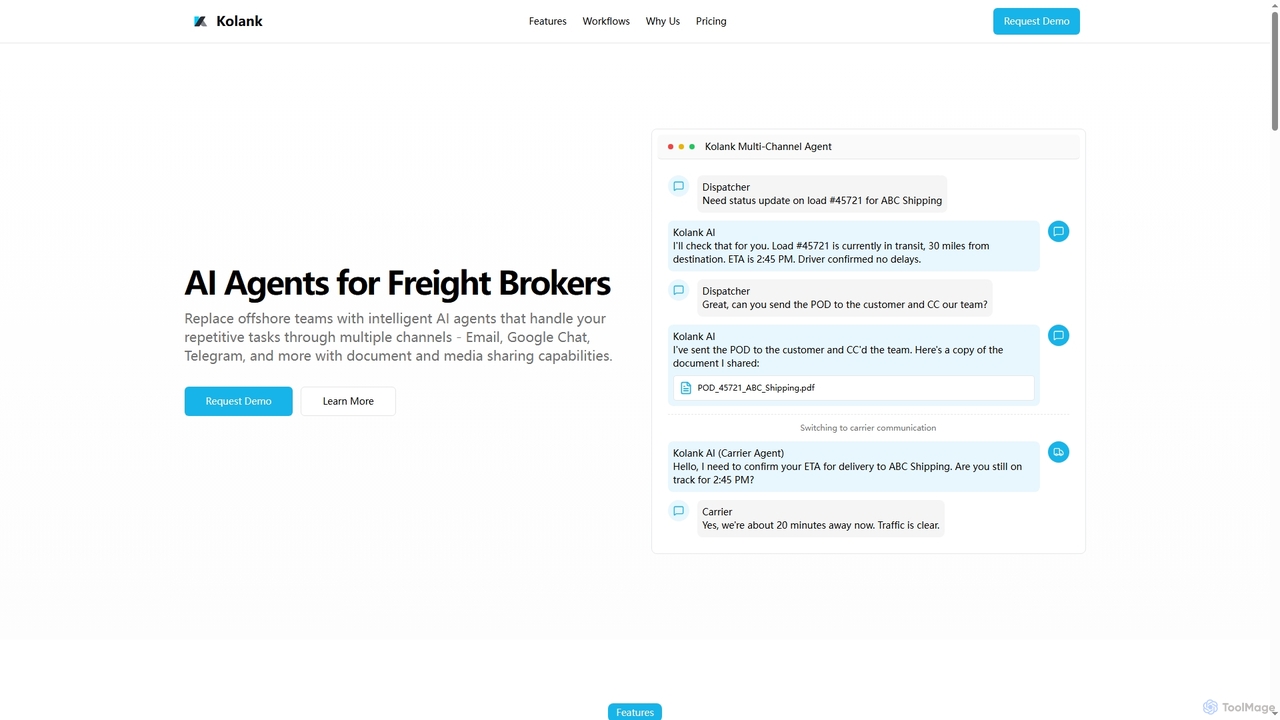
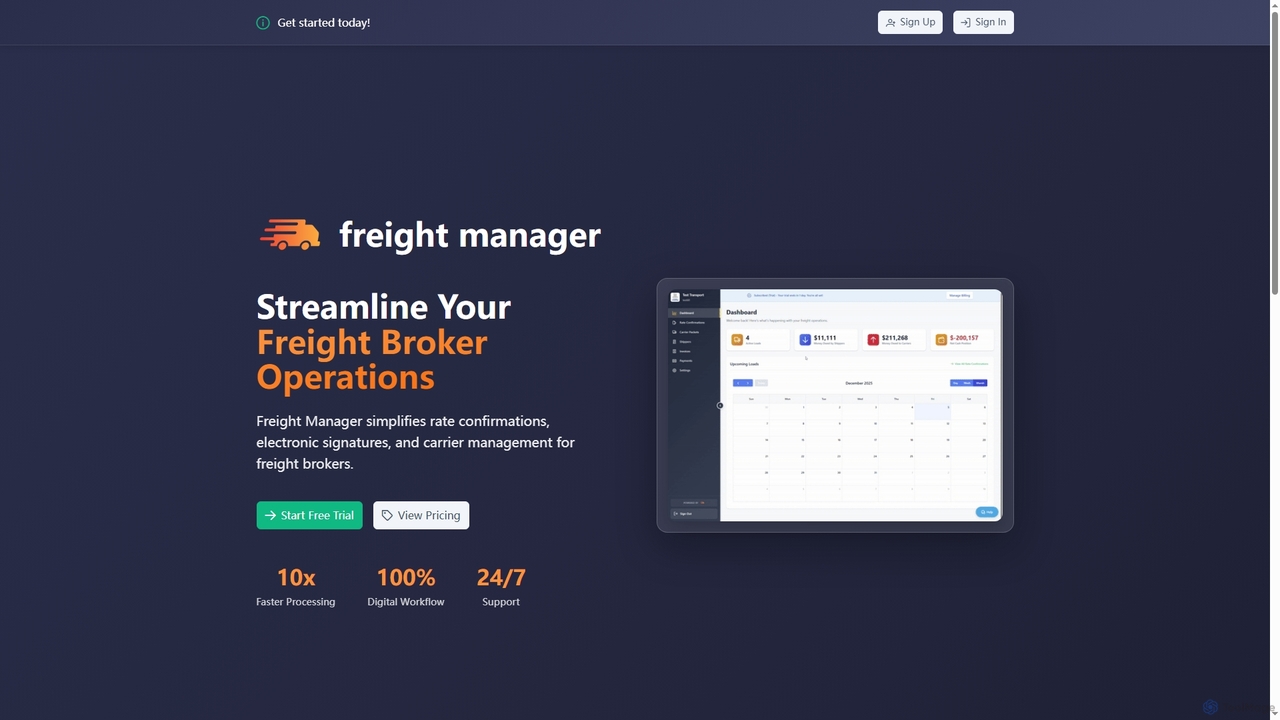
Popular AI tools in the Freight Management field of Logistics include Kolank、Freight Manager, etc., helping you quickly improve efficiency.

Freight Manager

Freight Manager

Freight Manager streamlines freight broker operations by digitizing rate confirmations, electronic signatures, and carrier management. It enhances efficiency …

2.9K
Kolank

Kolank

Kolank provides AI agents specifically designed for freight brokers to automate repetitive tasks across multiple communication channels, including …

3.5K

About Freight Management

Freight Management tools leverage AI to optimize and automate the complex processes involved in planning, executing, and tracking the transportation of goods. These solutions utilize machine learning and data analytics to enhance efficiency, reduce operational costs, and provide real-time visibility across the entire shipping lifecycle. By streamlining logistics operations, AI-powered freight management helps businesses make more informed decisions and improve service delivery.

Core Features

  • Route Optimization: Analyzes various factors like traffic, weather, and delivery windows to generate the most efficient transportation routes.
  • Real-time Tracking & Visibility: Provides continuous updates on cargo location and status, enhancing transparency for all stakeholders.
  • Demand & Capacity Forecasting: Predicts future shipping needs and available transport capacity using historical data and market trends.
  • Automated Carrier Selection: Matches shipments with suitable carriers based on cost, service level, and performance metrics.
  • Digital Documentation: Automates the generation and management of shipping manifests, bills of lading, and customs declarations.

Applicable Scenarios

Freight Management AI tools are crucial for logistics managers, supply chain professionals, and shippers aiming to enhance operational efficiency. They are widely adopted in industries such as manufacturing, retail, e-commerce, and third-party logistics (3PL) providers. These tools help streamline complex global shipping operations, manage diverse fleets, and ensure timely, cost-effective delivery of goods.

How to Choose

When selecting an AI freight management solution, consider its integration capabilities with existing ERP or TMS systems, the breadth and depth of its optimization algorithms, and its real-time data processing power. Evaluate the user interface for ease of use, the scalability of the platform to meet growing demands, and the level of customer support. Also, assess the tool's ability to handle specific freight types and regulatory compliance requirements relevant to your operations.

Freight ManagementUse Cases

1

Optimizing Delivery Routes for Fleet Efficiency

Logistics managers in a retail chain utilize AI freight management tools to analyze real-time traffic, weather conditions, and delivery schedules for hundreds of daily shipments. The AI generates the most fuel-efficient and time-saving routes, automatically adjusting for unexpected delays. This results in a 15% reduction in fuel costs and ensures 98% on-time deliveries, significantly improving operational efficiency and customer satisfaction.

2

Automating Carrier Selection and Booking

A manufacturing company's shipping department uses AI freight management to automate the process of selecting and booking carriers for their outbound shipments. The AI platform instantly compares rates, transit times, and service quality from multiple carriers based on predefined criteria and historical performance. This automation reduces manual effort by 70%, minimizes human error in booking, and consistently secures the most cost-effective and reliable transport options, ensuring timely delivery of goods to clients.

3

Real-time Tracking and Proactive Issue Resolution

A third-party logistics (3PL) provider employs AI freight management to offer enhanced visibility to its clients. The system provides real-time GPS tracking of all shipments, integrating data from various carriers and IoT sensors. When potential delays or deviations from the planned route are detected, the AI automatically alerts the operations team, allowing them to proactively communicate with clients and implement contingency plans. This reduces customer inquiries by 40% and improves overall service reliability.

4

Predictive Maintenance for Transport Fleets

A large trucking company leverages AI freight management to implement predictive maintenance for its extensive fleet. The AI analyzes telematics data, engine performance, and historical maintenance records to predict potential equipment failures before they occur. This allows the company to schedule proactive maintenance, minimizing unexpected breakdowns by 25% and reducing costly downtime. The result is a more reliable fleet, improved delivery schedules, and significant savings on emergency repairs.

5

Optimizing Warehouse Operations with Inbound Freight Data

An e-commerce fulfillment center integrates AI freight management with its warehouse management system. The AI provides highly accurate predictions of inbound freight arrival times, allowing the warehouse team to optimize staffing levels, allocate dock space efficiently, and prepare for receiving goods. This proactive approach reduces truck waiting times by 30%, minimizes congestion at loading docks, and streamlines the entire receiving process, leading to faster inventory turnover and reduced operational costs.

6

Enhancing Compliance and Risk Management

International shippers use AI freight management to navigate complex global trade regulations and mitigate risks. The AI system automatically screens shipments against compliance databases, identifies potential customs issues, and generates necessary documentation, ensuring adherence to international trade laws. It also analyzes historical data to identify high-risk routes or carriers, providing alerts and alternative suggestions. This proactive risk management reduces fines by 20% and prevents costly delays at borders, ensuring smoother cross-border operations.

Freight ManagementFrequently Asked Questions