ToolMage
Sign in

Best 3 Lyric Analysis AI tools for Music

Popular Lyric Analysis AI tools in Music include songmeaning, WhatTheBeat, and Songtell, helping you work more efficiently.

Songtell
Freemium

Songtell

Songtell is an AI-powered platform that deciphers the meaning behind song lyrics. It offers a vast database of song interpretations, helping music lovers, writers, and researchers understand the stories, emotions, and context of their favorite tracks.

Musicology
Visits 6.3KFavorites 138Likes 137
songmeaning
Free

songmeaning

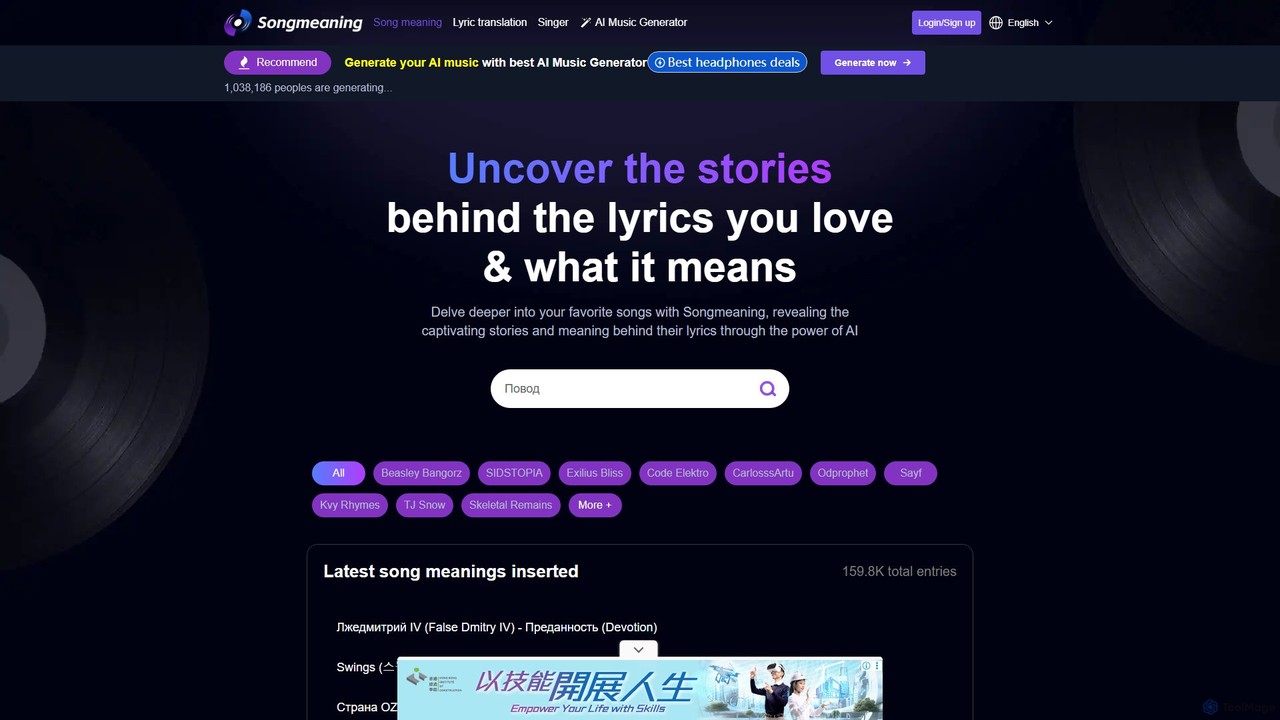
An AI-powered platform that delves into the deeper meaning and stories behind song lyrics. It offers detailed analysis and interpretations for a vast library of songs across various genres and languages, helping music lovers connect more profoundly with their favorite tracks. It also provides lyric translations.

Music Theory
Visits 76KFavorites 147Likes 135
WhatTheBeat
Free

WhatTheBeat

An AI-powered platform that delves into the meaning of song lyrics, offering both insightful and humorous interpretations. Discover the hidden stories and messages in your favorite music, request analyses, and build a personal collection of song meanings.

Music Theory
Visits 12.9KFavorites 132Likes 142

About Lyric Analysis

Lyric Analysis tools are AI-powered platforms designed to deconstruct and interpret song lyrics. Utilizing advanced natural language processing (NLP) and machine learning, these tools go beyond simple keyword extraction to uncover deeper meanings, emotional tones, and literary devices within musical texts. They provide invaluable insights for understanding lyrical content, aiding in research, creative writing, and critical analysis across various genres and cultural contexts.

Core Features

  • Theme Identification: Automatically detects recurring themes, motifs, and narrative structures within lyrics.
  • Sentiment Analysis: Gauges the emotional tone and mood expressed in songs, identifying positive, negative, or neutral sentiments.
  • Literary Device Detection: Identifies poetic elements such as metaphors, similes, rhymes, alliteration, and assonance.
  • Keyword and Concept Extraction: Extracts key terms, phrases, and underlying concepts to summarize lyrical content.
  • Cultural Contextualization: Links lyrical elements to relevant historical, social, or cultural references for deeper understanding.

Use Cases

These tools are essential for musicologists studying lyrical evolution, songwriters seeking inspiration or refining their craft, and content creators analyzing popular songs for reviews. They also support educators in demonstrating literary analysis and marketers in understanding cultural narratives reflected in music.

How to Choose

When selecting a Lyric Analysis tool, consider the accuracy and sophistication of its NLP models, the range of analytical dimensions it offers (e.g., sentiment, themes, literary devices), and its support for multiple languages. Evaluate the clarity of its output visualizations and its ability to integrate with other creative or research platforms to ensure it meets your specific analytical needs.

Lyric Analysis use cases

1

Songwriting Inspiration & Refinement

Songwriters can use lyric analysis tools to explore lyrical patterns, common themes, and effective literary devices in successful songs. By analyzing their own drafts, they can identify repetitive phrasing, refine emotional arcs, and discover new ways to express ideas, enhancing the depth and impact of their compositions.

2

Musicology & Academic Research

Musicologists and researchers leverage these tools to conduct large-scale studies on lyrical trends across different genres, eras, or geographical regions. They can identify shifts in societal values, political commentary, or cultural narratives reflected in song lyrics, providing quantitative data for academic papers and historical analyses.

3

Content Creation for Music Reviews

Music critics, bloggers, and YouTubers utilize lyric analysis to quickly grasp the core messages, emotional undertones, and artistic intentions behind new releases. This allows them to craft more insightful and data-backed reviews, discussions, and commentary, enriching their content and engaging their audience with deeper perspectives.

4

Educational & Literary Studies

Educators can employ lyric analysis tools to teach literary concepts like metaphor, symbolism, and narrative structure using contemporary song lyrics. This makes abstract literary analysis more accessible and engaging for students, helping them apply critical thinking skills to familiar cultural texts and understand poetic devices in a modern context.

5

Marketing & Brand Strategy

Marketing professionals and brand strategists can analyze popular song lyrics to identify prevailing cultural sentiments, emerging trends, and emotional landscapes. This insight helps them tailor marketing messages, develop resonant brand narratives, and create campaigns that align with current public mood and cultural relevance, connecting more authentically with target audiences.

6

Fan Engagement & Community Analysis

Fan communities and artists can use these tools to delve deeper into complex or ambiguous lyrics, uncovering hidden meanings and fostering rich discussions. This enhances fan engagement by providing new avenues for interpretation, allowing communities to collectively explore the artistic depth of their favorite songs and build stronger connections around shared interests.

Lyric Analysis FAQ

What are AI Lyric Analysis tools?

AI Lyric Analysis tools are specialized software applications that use artificial intelligence, primarily natural language processing (NLP) and machine learning, to automatically examine and interpret the content of song lyrics. They go beyond simple text search to identify themes, sentiments, literary devices, and cultural references, providing a comprehensive understanding of lyrical meaning and structure.

How do AI Lyric Analysis tools work?

These tools typically work by ingesting lyrical text and processing it through various NLP models. They break down the text into words, phrases, and sentences, then apply algorithms to identify patterns, emotional cues (sentiment analysis), stylistic elements (e.g., rhyme schemes, alliteration), and thematic clusters. Some advanced tools also leverage large language models to provide contextual interpretations.

Who can benefit from using Lyric Analysis tools?

A wide range of users can benefit, including songwriters looking for inspiration or feedback, musicologists conducting academic research, music critics and content creators needing quick insights for reviews, educators teaching literary analysis, and marketing professionals seeking cultural trend insights. Essentially, anyone interested in a deeper, data-driven understanding of song lyrics will find these tools valuable.

What kind of insights can I get from Lyric Analysis?

Lyric analysis tools can provide insights into the dominant themes and topics within a song, its overall emotional tone (e.g., joyful, melancholic, angry), the presence and type of literary devices used (e.g., metaphors, similes), and the frequency of specific keywords or concepts. Some tools can also offer insights into narrative structure, character development, and cultural relevance.

How do Lyric Analysis tools differ from general text analysis tools?

While both use NLP, lyric analysis tools are specifically optimized for the unique structure and artistic nuances of song lyrics. They often account for elements like rhyme, rhythm, poetic license, and musical context, which general text analysis tools might overlook. They are designed to extract insights relevant to musical composition and interpretation, rather than just factual or informational content.