Music Best in category 1 results Playlist Tools AI Tool

Popular AI tools in the Playlist Tools field of Music include PlaylistRandomizer, etc., helping you quickly improve efficiency.

Free
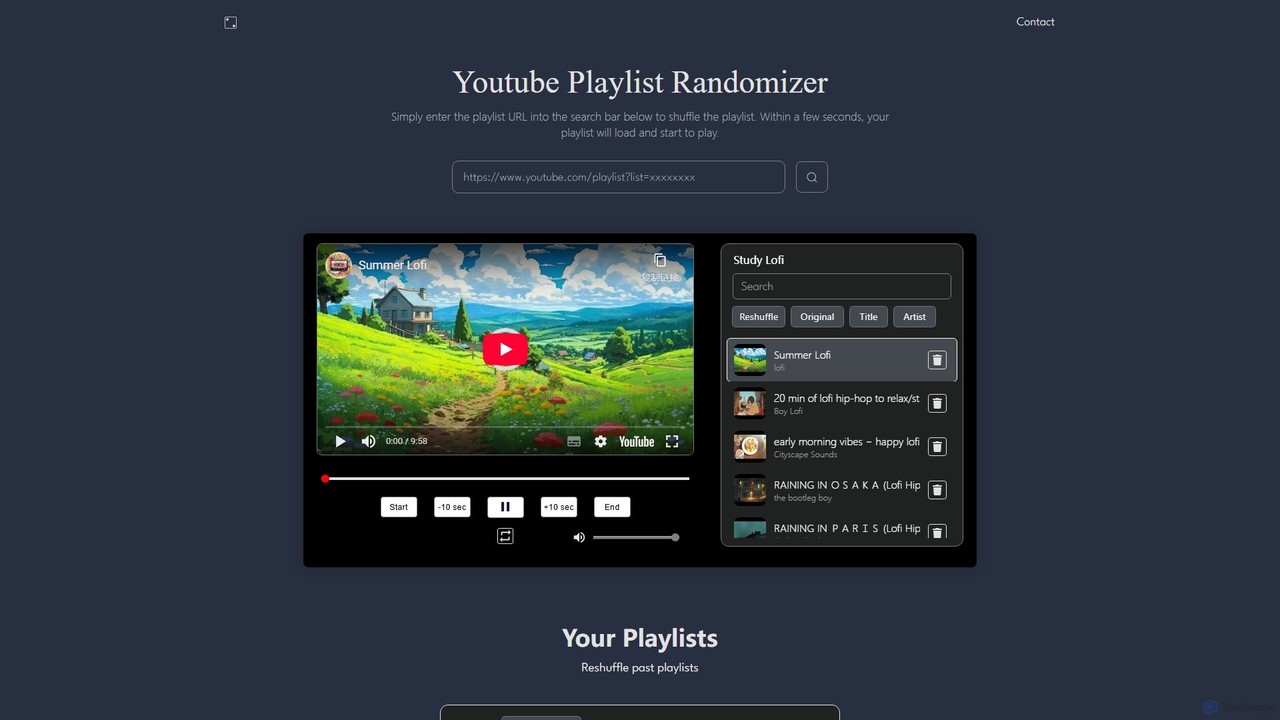
PlaylistRandomizer

PlaylistRandomizer

A powerful web tool that truly shuffles YouTube playlists of up to 20,000 videos. Users can search for …

21.2K

About Playlist Tools

Playlist Tools are AI-powered applications designed to automatically generate, curate, and optimize music or video playlists. They analyze user preferences, listening habits, and media metadata to create personalized and context-aware collections. These tools are valuable for individuals seeking new discoveries, businesses aiming to enhance customer experiences, and creators looking to build engaging content streams. By leveraging machine learning, they can understand complex requests, such as mood, activity, or genre combinations, far beyond simple keyword matching.

Core Features

  • AI-Powered Generation: Creates playlists from natural language prompts, seed songs, artists, or specific moods and genres.
  • Personalized Curation: Learns from user feedback like skips, likes, and listening history to refine future suggestions.
  • Playlist Optimization: Analyzes existing playlists to improve flow, remove duplicates, suggest additions, and sort tracks by attributes like tempo or energy.
  • Cross-Platform Sync: Imports, exports, and synchronizes playlists across different streaming services like Spotify, Apple Music, and YouTube Music.
  • Contextual Analysis: Generates playlists suitable for specific activities, such as workouts, focus sessions, parties, or road trips.

Use Cases

These tools are ideal for music enthusiasts, professional DJs, content creators, and businesses. For example, cafes, gyms, and retail stores use them to create a consistent brand ambiance without manual effort. Content creators use them to quickly find background music for videos or podcasts, while DJs use them to speed up track discovery for sets.

How to Choose

When selecting a Playlist Tool, consider its compatibility with your preferred streaming services. Evaluate the depth of its generation capabilities—does it support text prompts, mood analysis, or both? Assess the quality of its personalization algorithms and its user interface. For advanced users, features like cross-platform transfer and detailed playlist analytics are important factors.

Playlist ToolsUse Cases

1

Crafting Personalized Workout Soundtracks

A fitness enthusiast uses an AI playlist tool to generate high-energy music for their workout sessions. By inputting criteria like '90-minute high-intensity interval training' with genres like 'EDM and Rock' and a target BPM of 140-160, the AI instantly creates a dynamic playlist. The tool intelligently sequences tracks to match workout phases—a gradual build-up for warm-ups, peak energy for intense intervals, and slower tracks for cool-downs. This saves hours of manual searching and ensures every workout is perfectly scored.

2

Setting the Perfect Ambiance for a Business

A coffee shop owner uses an AI playlist tool to maintain a consistent atmosphere. They create different playlists for various times of the day, such as 'Morning Chill Acoustic' and 'Afternoon Upbeat Indie'. The AI generates hours of music that fits these moods, automatically filters explicit content, and ensures there are no jarring transitions between songs. This automates the task of music curation, allowing the staff to focus on customers while providing a professional and welcoming soundscape that enhances the brand's identity.

3

Discovering New Music Based on Niche Tastes

A music aficionado with very specific tastes, such as '70s Japanese funk mixed with modern psychedelic rock', uses an AI tool to expand their library. Standard recommendation algorithms often fail with such niche requests. By providing a few seed tracks and a descriptive prompt, the AI scours vast music databases to find hidden gems that match the sonic and thematic characteristics. This creates a highly personalized discovery experience, introducing the user to new artists and songs they would likely never have found otherwise.

4

Curating Themed Playlists for Content Creators

A podcaster needs background music for an episode about space exploration. Instead of manually searching through stock music libraries, they use an AI playlist tool with the prompt 'instrumental, atmospheric, and slightly mysterious sci-fi music'. The AI generates a curated list of royalty-free tracks that fit the theme perfectly. It can also ensure the playlist has a consistent volume level and mood, saving the creator significant editing time and helping them produce a more professional-sounding episode quickly.

5

Migrating Music Libraries Between Streaming Services

A user switching from Spotify to Apple Music wants to transfer hundreds of their curated playlists. Manually recreating them would be extremely time-consuming. They use an AI playlist tool that specializes in cross-platform transfers. The tool automatically scans the source playlists, finds matching tracks on the destination service, and handles any unavailable songs by suggesting suitable alternatives. The entire library, representing years of curation, is migrated accurately in minutes, preserving the user's valuable collection.

6

Optimizing Existing Playlists for Better Flow

A user has a large, messy playlist with duplicate songs and an inconsistent flow. They use an AI tool's optimization feature to clean it up. The AI scans the playlist, identifies and removes duplicate tracks, and then reorders the songs based on attributes like tempo, energy, and key to create a smoother listening experience. It might also suggest adding a few new tracks that would fit well within the reordered sequence, transforming a chaotic collection into a polished, professional-sounding mix.

Playlist ToolsFrequently Asked Questions