ToolMage
Sign in

Best 1 Release Management AI tools for Music

Popular Release Management AI tools in Music include DropKit, helping you work more efficiently.

DropKit
Freemium

DropKit

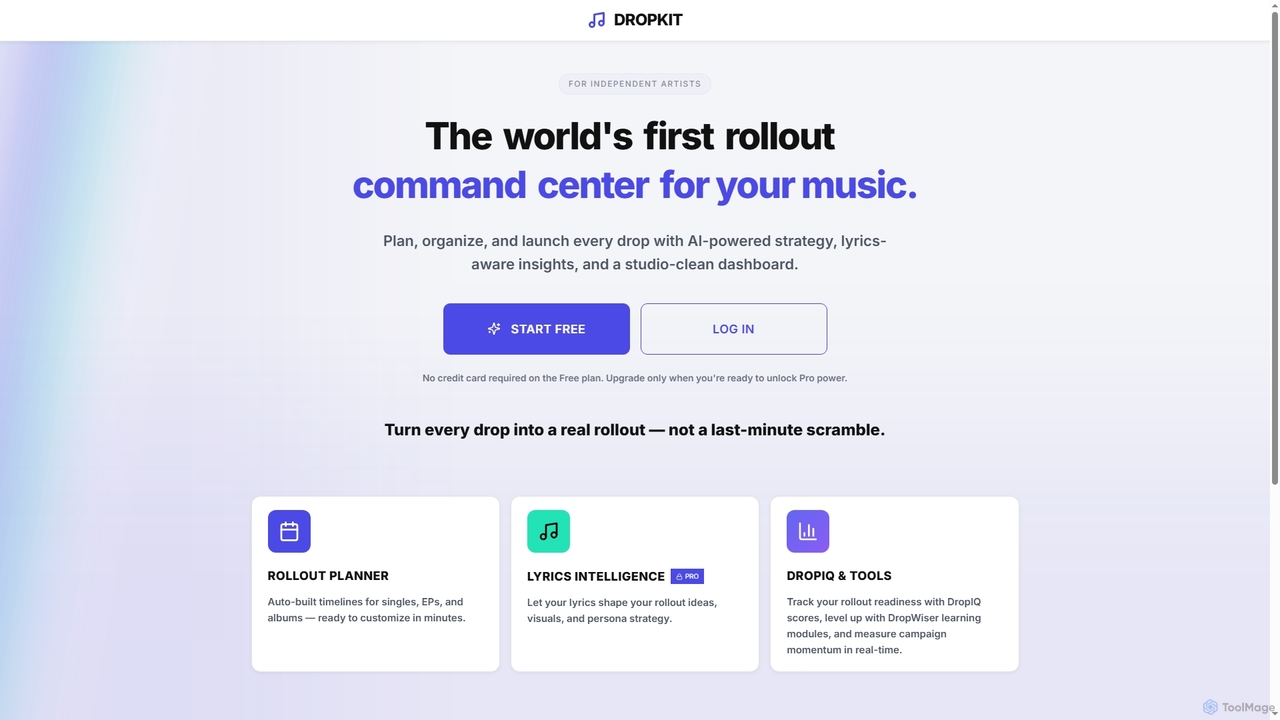
DropKit is the world's first AI-powered command center designed for independent artists to plan, organize, and launch their music releases. It offers strategic timelines, lyrics-aware insights, and real-time tracking to transform music drops into professional rollouts.

Music Production
Visits 6KFavorites 142Likes 138

About Release Management

Release Management tools in the music industry are AI-powered platforms designed to streamline and automate the complex process of distributing musical works to digital streaming platforms and managing their lifecycle. These tools leverage artificial intelligence to optimize metadata, track royalties, and ensure efficient global reach for artists and labels. They provide a comprehensive solution for artists, producers, and labels to effectively launch, monitor, and monetize their music, ensuring proper rights management and maximizing exposure.

Core Features

  • Automated Digital Distribution: Seamlessly upload and distribute music to major streaming services and online stores worldwide.
  • Metadata & Rights Management: Accurately manage track metadata (ISRC, UPC, credits) and ensure proper rights registration.
  • Royalty Tracking & Reporting: Monitor earnings, analyze performance data, and generate detailed royalty reports across platforms.
  • Release Scheduling & Promotion: Plan release dates, coordinate pre-save campaigns, and integrate promotional activities.
  • Audience Insights & Analytics: Utilize AI to gain insights into listener demographics and geographic performance for strategic planning.

Applicable Scenarios

These tools are indispensable for independent artists seeking to self-release their music globally, small to medium-sized record labels managing a roster of artists, and music producers ensuring proper attribution and monetization for their collaborative works. They also benefit artist managers who need to oversee distribution, royalties, and promotional timelines efficiently.

How to Choose

When selecting an AI music release management tool, consider its distribution network breadth, the transparency and fairness of its royalty collection and payout structure, and the level of control it offers over metadata and rights. Evaluate its analytics capabilities for performance insights, integration with marketing tools, and the quality of customer support, alongside its pricing model.

Release Management use cases

1

Global Distribution for Independent Artists

An independent musician uses an AI release management platform to upload their new single, ensuring it reaches Spotify, Apple Music, Amazon Music, and other global platforms simultaneously. The tool automates metadata tagging, ISRC assignment, and copyright registration, allowing the artist to focus on creation and promotion while guaranteeing worldwide availability and proper credit.

2

Streamlining Label Release Schedules

A small record label with multiple artists leverages AI release management to coordinate staggered album and single releases throughout the year. The platform provides a centralized dashboard to manage different release dates, track promotional assets, and monitor distribution status for each artist, significantly reducing administrative overhead and preventing scheduling conflicts.

3

Accurate Metadata for Collaborative Tracks

A music producer collaborating with various artists utilizes the tool to meticulously manage metadata for each track. This ensures all contributors (songwriters, featured artists, engineers) are correctly credited, ISRC codes are accurately assigned, and publishing splits are properly recorded, preventing future disputes and ensuring fair royalty distribution.

4

Real-time Royalty Tracking for Managers

An artist manager employs AI-powered release management to gain real-time insights into their artists' royalty earnings across all digital platforms. The tool aggregates data, provides detailed performance analytics by region and platform, and generates comprehensive reports, enabling the manager to make informed decisions about marketing spend and future releases.

5

Efficient Licensing for Content Creators

A video content creator who frequently uses background music for their productions uses the platform to manage licenses for their original compositions or tracks they have rights to. This ensures compliance with platform policies, simplifies the process of granting usage rights to others, and protects their intellectual property, avoiding copyright strikes.

6

Coordinated Pre-Save & Promotional Campaigns

A marketing team for an upcoming artist uses the release management system to set up pre-save links for a new album across all major streaming services. The tool integrates with social media scheduling and email marketing platforms, allowing for a synchronized promotional push leading up to the release date, maximizing early engagement and listenership.

Release Management FAQ

What are AI music release management tools?

AI music release management tools are platforms that use artificial intelligence to automate and optimize the process of distributing music, managing metadata, tracking royalties, and promoting releases. They streamline the journey from creation to global availability, ensuring artists and labels efficiently reach their audience and monetize their work. Key features often include automated distribution to DSPs, detailed analytics, and robust rights management capabilities.

How do I choose the best AI music release management platform?

To choose the best platform, consider its distribution network (which DSPs it covers), royalty split and payout transparency, and the level of control it provides over your music's metadata and rights. Evaluate its analytics for performance insights, ease of use, customer support quality, and pricing structure. Look for features like pre-save link generation and promotional integrations if marketing is a priority.

What are the main benefits of using AI for music release management?

The main benefits include significant time savings through automation of distribution and metadata tagging, wider global reach by simplifying access to numerous platforms, and enhanced monetization via accurate royalty tracking and reporting. AI also provides valuable insights into audience behavior and performance data, enabling more strategic decision-making for future releases and marketing efforts. It ensures proper rights management, reducing potential disputes.

How do AI music release tools differ from traditional music distributors?

AI music release tools offer greater automation, data-driven insights, and often more transparent royalty splits compared to traditional distributors. While traditional distributors might offer more personalized A&R or marketing services, AI platforms empower artists and labels with direct control, real-time analytics, and often lower upfront costs. They leverage algorithms for metadata optimization and efficient global reach, making the process more accessible and scalable.

What specific tasks can AI music release management tools automate?

AI music release management tools can automate various tasks, including uploading and distributing tracks to hundreds of digital streaming platforms simultaneously, generating and assigning ISRC and UPC codes, and ensuring accurate metadata tagging. They can also automate royalty collection and detailed reporting, schedule release dates, create pre-save campaigns, and provide automated analytics on listener demographics and geographic performance. This frees up artists and labels to focus on creative work.