ToolMage
Sign in

Best 4 Song Generation AI tools for Music

Popular Song Generation AI tools in Music include GiftSong, LoveTunesAI, Birthdai, and Musixy.ai, helping you work more efficiently.

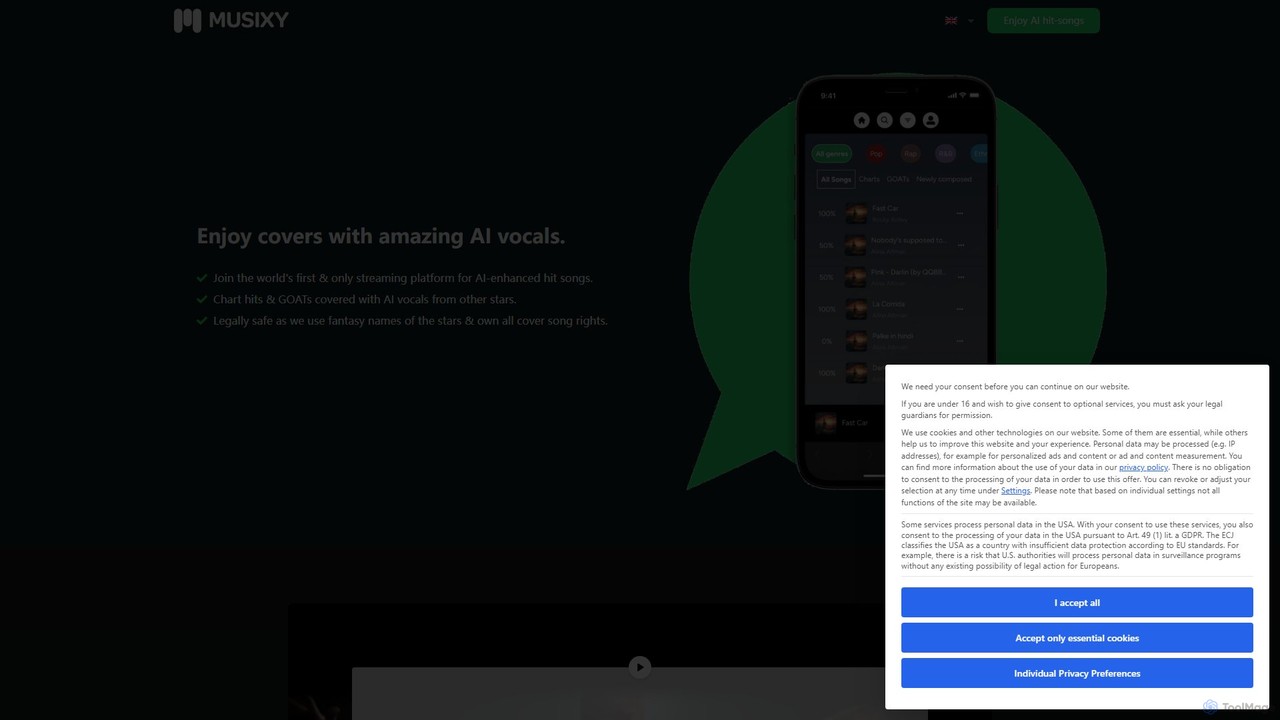
Musixy.ai
Freemium

Musixy.ai

Musixy.ai is an innovative AI-powered music platform that enables users to generate original, hit-quality songs effortlessly. By interacting with AI, users can create unique music in various genres and styles, making it an ideal tool for musicians, content creators, and hobbyists.

Music Production
Visits 5.6KFavorites 166Likes 159
LoveTunesAI
Paid

LoveTunesAI

LoveTunesAI is an AI-powered platform for creating personalized, studio-quality songs for loved ones. Turn your stories and feelings into unique lyrics and music in over 500 styles. It's a fast, affordable, and heartfelt way to create a unique gift for any occasion, supporting languages like English, Hindi, and Punjabi. Please note: The service is currently closed for new signups, but existing users can still access their accounts.

Generative Art
Visits 13.5KFavorites 126Likes 140
Birthdai
Paid

Birthdai

Birthdai is an AI-powered tool that creates unique, personalized birthday songs. Simply provide details about the birthday person, choose a musical style and language, and the AI generates a studio-quality song with custom lyrics in minutes. It's a memorable and touching digital gift, delivered as a high-quality MP3 file.

Gifts
Visits 5.7KFavorites 152Likes 174
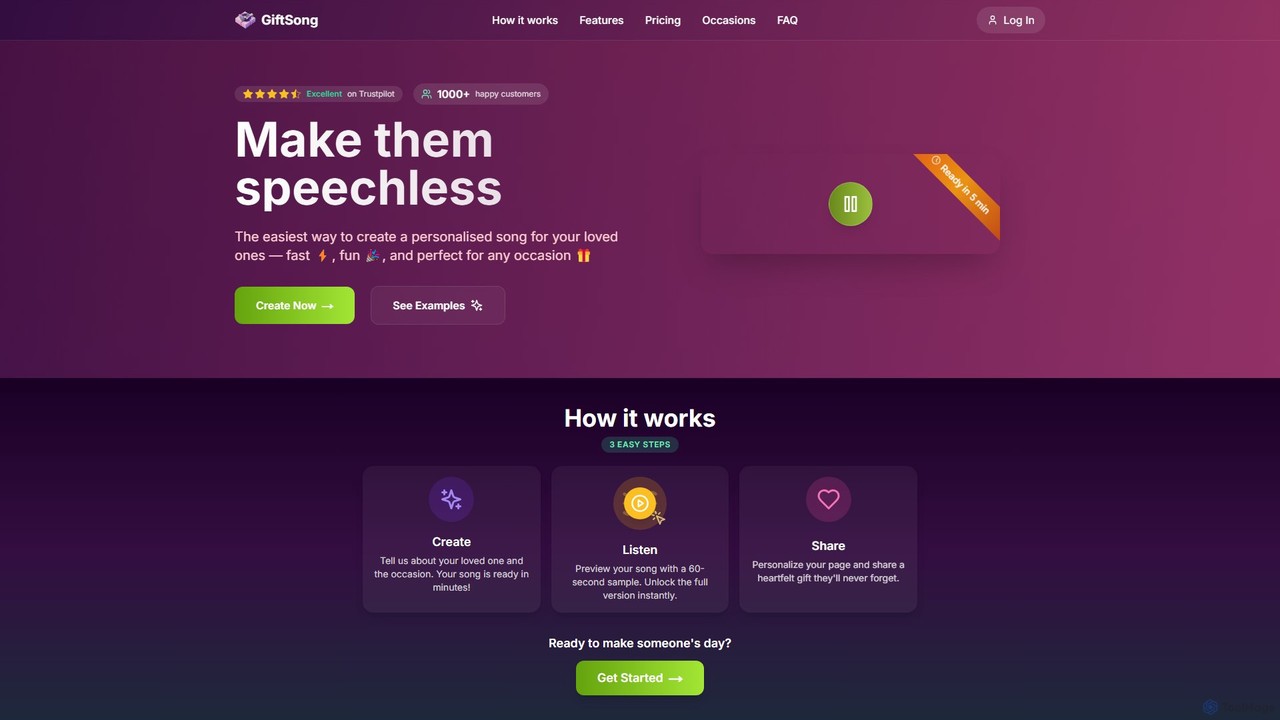
GiftSong
Freemium

GiftSong

GiftSong is an AI-powered platform that creates personalized songs for any occasion. Simply provide details about your loved one, and in minutes, receive a unique, studio-quality song with custom lyrics. It's a fast, fun, and heartfelt way to make someone feel special and create a lasting memory.

Gifts
Visits 135.2KFavorites 123Likes 127

About Song Generation

Song Generation tools are AI-powered platforms designed to create original musical compositions, including melodies, harmonies, rhythms, and sometimes lyrics. These tools leverage advanced machine learning models, such as generative adversarial networks (GANs) and transformers, to learn from vast datasets of existing music. They empower users to produce unique musical pieces, serving as a powerful assistant for composers, content creators, and anyone looking to explore music creation without extensive musical training.

Core Features

  • Melody & Harmony Generation: Automatically creates original melodic lines and chord progressions based on user input or predefined styles.
  • Rhythm & Beat Creation: Generates diverse drum patterns and rhythmic structures to complement musical ideas.
  • Lyric Writing Assistance: Offers AI-driven suggestions or full lyric generation to accompany generated melodies.
  • Style & Genre Transfer: Enables users to generate music in specific genres (e.g., pop, classical, electronic) or adapt existing musical themes.
  • Instrumental Arrangement: Suggests or creates full instrumental arrangements, assigning different parts to virtual instruments.

Applicable Scenarios

Independent musicians use these tools to overcome creative blocks and generate fresh ideas for new songs. Content creators, such as YouTubers and podcasters, leverage them to produce unique, royalty-free background music for their videos and audio content. Game developers also utilize song generation AI to create dynamic and adaptive soundtracks that respond to in-game events, enhancing player immersion.

How to Choose

When selecting an AI song generation tool, consider the quality and diversity of its musical output, ensuring it aligns with your desired genres and styles. Evaluate its customization options, such as control over tempo, key, mood, and instrumentation. Look for tools with an intuitive user interface that is accessible regardless of your musical background. Finally, check for export capabilities (e.g., MIDI, WAV) and potential integration with digital audio workstations (DAWs) for further refinement.

Song Generation use cases

1

Generate Musical Ideas for Songwriters

Independent songwriters and composers often face creative blocks or need fresh inspiration. By inputting a mood, a few notes, or a chord progression into an AI song generation tool, they can quickly receive multiple melodic variations, harmonic structures, or rhythmic patterns. This process helps to kickstart new compositions, explore different musical directions, and accelerate the initial ideation phase, saving valuable time and fostering creativity.

2

Create Royalty-Free Background Music for Content Creators

Video creators, podcasters, and social media influencers constantly need unique background music that is free from copyright issues. AI song generation tools allow them to specify desired moods, tempos, and instrumentations to generate custom tracks. This eliminates the need to search for licensed music or worry about copyright strikes, enabling creators to produce high-quality content more efficiently and maintain a consistent audio brand without incurring additional licensing costs.

3

Develop Dynamic Soundtracks for Games and Apps

Game developers and app designers can utilize AI song generation to create adaptive and dynamic soundtracks that respond to user actions or in-game events. Instead of static background music, AI can generate variations of themes, transition between moods, or even compose new segments on the fly. This enhances player immersion and provides a unique auditory experience, making the game or application feel more responsive and alive without requiring extensive manual composition for every scenario.

4

Produce Jingles and Brand Music for Marketing Campaigns

Marketing professionals and advertising agencies can leverage AI song generation to quickly create unique jingles, background music, or sonic logos for their campaigns. By providing keywords related to brand identity, target audience, and desired emotional tone, AI can generate multiple musical options. This streamlines the creative process for audio branding, allowing for rapid iteration and customization to ensure the music perfectly aligns with the campaign's message and resonates with consumers.

5

Aid Music Education and Theory Exploration

Music students and educators can use AI song generation tools as an innovative learning aid. Students can experiment with different scales, harmonies, or rhythmic patterns to generate examples, helping them understand music theory concepts in a practical way. Educators can create custom exercises or demonstrate complex musical structures. This hands-on approach to music creation fosters deeper engagement and comprehension, making abstract theoretical concepts more tangible and accessible for learners at all levels.

6

Rapid Prototyping and Demo Production for Producers

Music producers and composers can significantly accelerate their workflow by using AI song generation for rapid prototyping and demo production. Instead of spending hours manually arranging instruments or programming drums, they can input a core melody or chord progression and have the AI quickly generate a full instrumental backing track or even a complete song structure. This allows for quick iteration on ideas, presenting clients with professional-sounding demos much faster, and freeing up time for more detailed creative work.

Song Generation FAQ

What are AI Song Generation tools?

AI Song Generation tools are software applications that use artificial intelligence, particularly machine learning and deep learning algorithms, to create original musical compositions. These tools can generate various elements of a song, such as melodies, harmonies, rhythms, and sometimes even lyrics, based on user inputs like mood, genre, or specific musical parameters. Their primary purpose is to assist in music creation, provide inspiration, or produce unique, royalty-free audio content.

How do I choose the right AI song generation tool?

To choose the right AI song generation tool, consider several key factors. First, evaluate the quality and diversity of its musical output across different genres and styles. Second, check the customization options it offers, such as control over tempo, key, instrumentation, and mood. Third, assess its ease of use and the intuitiveness of its interface, especially if you have limited musical background. Finally, look into its export capabilities (e.g., MIDI, WAV) and whether it integrates well with other music production software (DAWs) for further editing and refinement.

What types of music can AI song generators create?

AI song generators are becoming increasingly versatile and can create a wide range of musical styles and genres. This includes popular genres like pop, electronic, hip-hop, and ambient music, as well as classical, jazz, and experimental compositions. Many tools allow users to specify the desired mood (e.g., happy, melancholic, energetic), instrumentation (e.g., piano, strings, drums), and even vocal styles. While some excel at instrumental pieces, others can also generate or assist with lyrics, making them capable of producing full song structures across diverse musical landscapes.

What's the difference between AI song generation and AI music mastering?

AI song generation and AI music mastering serve distinct purposes within the music production workflow. AI song generation focuses on the creative process of producing new musical content from scratch, including melodies, harmonies, rhythms, and sometimes lyrics. It's about creating the raw musical ideas and structures. In contrast, AI music mastering is a post-production process that refines and optimizes an already completed audio track for distribution. It involves adjusting volume levels, equalization, compression, and stereo imaging to ensure the music sounds polished, balanced, and consistent across various playback systems. One creates, the other enhances.

Can AI song generators replace human composers?

No, AI song generators are not designed to replace human composers but rather to augment their creative process. While AI can produce technically sound and even aesthetically pleasing musical pieces, it currently lacks the nuanced emotional depth, personal storytelling, and intentional artistic vision that human composers bring to their work. AI tools serve as powerful assistants for inspiration, rapid prototyping, and automating repetitive tasks, allowing human artists to focus on the more complex and uniquely human aspects of musical expression and innovation. They are collaborators, not replacements.