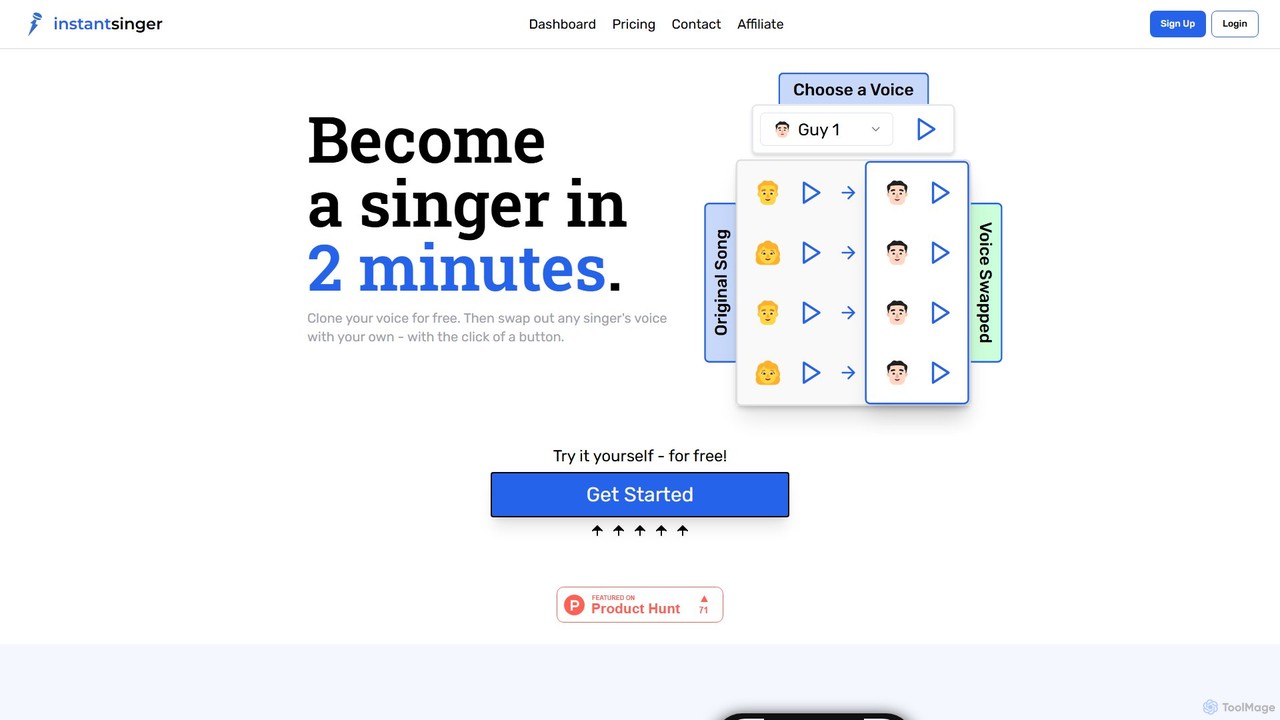
Voice Cloning tools are a type of AI software that creates a synthetic, digital replica of a specific human voice. These tools use deep learning models to analyze audio samples, capturing unique characteristics like pitch, tone, and cadence. The primary value lies in generating new, highly realistic speech from text using the cloned voice, enabling scalable and personalized audio content creation. This technology is a specialized application within the broader field of AI music and audio generation, focusing specifically on replicating individual vocal identities.
Core Features
- High-Fidelity Voice Replication: Captures and reproduces the unique nuances of a specific voice with a high degree of realism.
- Text-to-Speech (TTS) with Cloned Voice: Generates new spoken audio from any text input using the synthesized voice model.
- Cross-Lingual Voice Synthesis: Enables the cloned voice to speak in multiple languages while retaining its core vocal characteristics.
- Emotion and Style Control: Allows users to adjust the emotional tone (e.g., happy, sad) and speaking style (e.g., narration, conversational) of the generated audio.
- API Access for Integration: Provides developers with APIs to integrate custom voice generation into applications, products, and services.
Use Cases
Voice Cloning is widely used by content creators for audiobooks and podcasts, ensuring a consistent vocal presence. In accessibility, it provides a personalized communication method for individuals who have lost their voice. It's also applied in entertainment for dubbing films and localizing video game characters, as well as in corporate settings for creating unique brand voices for virtual assistants and marketing materials.
How to Choose
When selecting a Voice Cloning tool, evaluate the realism and naturalness of the output. Consider the amount and quality of audio data required for cloning—some need minutes, others only seconds. Assess the range of supported languages and accents. Crucially, review the provider's ethical guidelines and security measures to prevent misuse, and compare pricing models, which may be based on usage, characters, or subscription.