ToolMage
Sign in

Best 1 Information Gathering AI tools for News

Popular Information Gathering AI tools in News include Sumlyze, helping you work more efficiently.

Sumlyze
Paid

Sumlyze

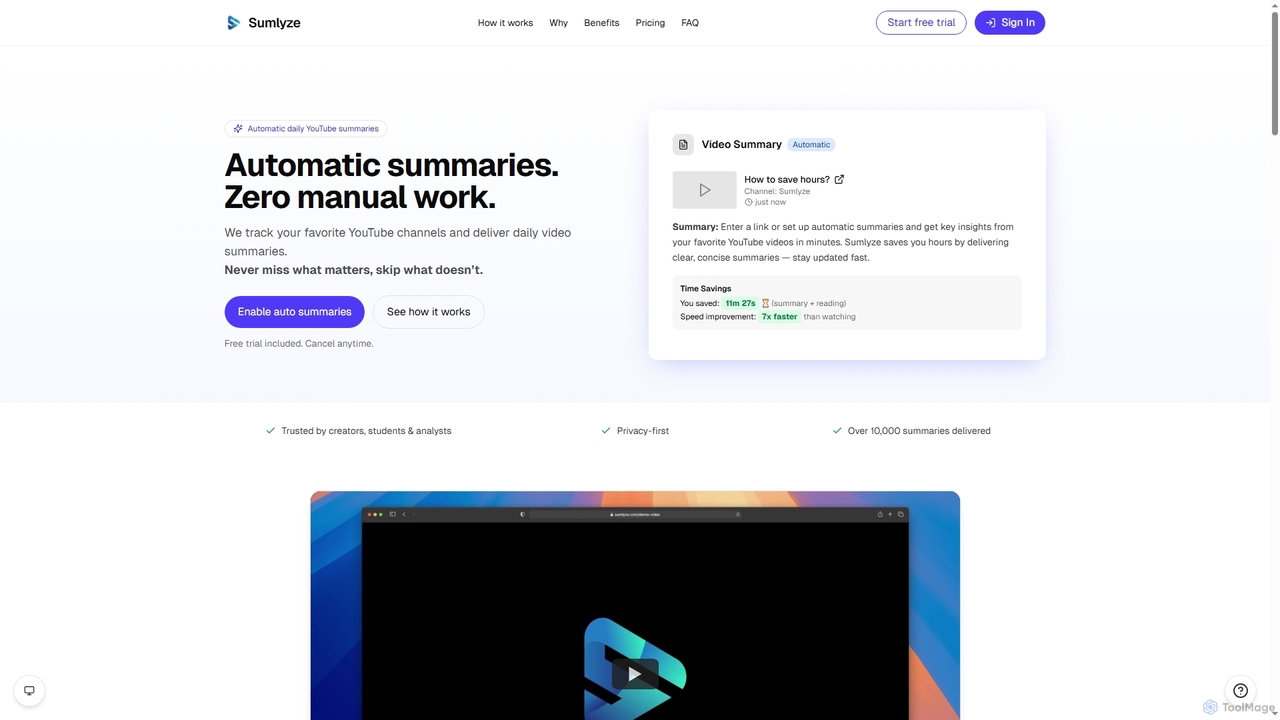
Sumlyze is an AI-powered tool that automatically generates daily summaries of YouTube videos from your favorite channels, saving you significant time. It offers both automated channel tracking and manual video link summarization, supporting 16 output languages and Notion integration for enhanced productivity.

Research
Visits 5.8KFavorites 145Likes 157

About Information Gathering

Information Gathering tools are AI-powered solutions designed to automate the collection, aggregation, and initial analysis of data from diverse sources. These tools leverage advanced natural language processing, machine learning, and web scraping techniques to efficiently extract relevant information. They enable users to streamline research, monitor specific topics, identify emerging trends, and inform strategic decision-making. By processing vast amounts of unstructured data, they provide timely and actionable insights.

Core Features

  • Automated Data Extraction: Systematically pulls specific data points from websites, documents, and databases.
  • Content Aggregation: Consolidates information from diverse online sources into a unified, organized view.
  • Topic Monitoring & Alerts: Tracks specified keywords or subjects and provides real-time notifications on new developments.
  • Sentiment Analysis: Evaluates the emotional tone and public perception within collected text data.
  • Trend Identification: Detects patterns, shifts, and emerging topics within large volumes of gathered information.

Applicable Scenarios

These tools are invaluable for market researchers seeking to track industry trends and consumer sentiment across various platforms. Competitive intelligence analysts utilize them to monitor competitor activities, product launches, and market positioning. Journalists and media professionals leverage them for rapid background information gathering, fact-checking, and identifying breaking news stories from diverse sources.

How to Choose

When selecting Information Gathering tools, consider the breadth of data sources it can cover, such as web, social media, and news outlets. Evaluate its data extraction accuracy, customization options for specific data points, and advanced analysis capabilities like sentiment or trend detection. Also, assess its integration potential with your existing CRM, analytics, or reporting workflows.

Information Gathering use cases

1

Monitor Competitor Activities and Market Trends

Marketing teams use AI information gathering tools to continuously track competitor news, product updates, pricing changes, and social media mentions. By automating data collection from various public sources, they gain real-time insights into market positioning, identify strategic shifts, and react swiftly to competitive threats. This ensures a proactive approach to market strategy and business development.

2

Identify Emerging Market Trends and Consumer Insights

Market research analysts deploy these tools to scan vast amounts of online data, including forums, social media, and news articles, for emerging trends, consumer preferences, and unmet needs. The AI identifies patterns and sentiment shifts, providing actionable insights that guide product development, marketing campaigns, and strategic planning. This helps businesses stay ahead of market dynamics.

3

Track Industry News and Brand Mentions

Public relations professionals and media analysts utilize AI information gathering for comprehensive news and media monitoring. They track mentions of their brand, key executives, and industry-specific topics across global news outlets, blogs, and social platforms. Real-time alerts enable quick responses to PR crises, identification of media opportunities, and measurement of brand perception.

4

Accelerate Academic Research and Literature Review

Researchers and academics use AI tools to rapidly collect and synthesize relevant scientific papers, journals, and publications from vast digital libraries. The AI can identify key themes, summarize findings, and highlight connections between different studies, significantly reducing the time spent on literature reviews and helping to pinpoint critical information for new research directions.

5

Discover New Leads and Sales Opportunities

Sales and business development teams leverage information gathering AI to identify potential leads by tracking company news, funding rounds, executive changes, or industry-specific project announcements. These tools provide valuable sales intelligence, helping representatives understand prospect needs and tailor their outreach, leading to more effective engagement and higher conversion rates.

6

Monitor Regulatory Changes and Potential Risks

Compliance officers and risk management teams use AI information gathering to continuously monitor regulatory updates, legal changes, and potential reputational risks across various public and private data sources. The AI flags relevant changes or negative mentions, ensuring the organization remains compliant and can proactively address potential threats, safeguarding its operations and reputation.

Information Gathering FAQ

What are AI Information Gathering tools?

AI Information Gathering tools are software solutions that use artificial intelligence to automatically collect, process, and analyze data from various online and offline sources. They go beyond simple web scraping by employing natural language processing and machine learning to understand context, extract specific entities, and identify patterns, providing structured insights from unstructured data. Their primary goal is to streamline the research and monitoring process for users.

How do AI Information Gathering tools differ from traditional web scraping?

While both collect data from the web, AI Information Gathering tools are more advanced. Traditional web scraping primarily extracts data based on predefined rules and structures. AI tools, however, use NLP and machine learning to understand content context, perform sentiment analysis, identify trends, and extract specific entities even from unstructured text. This allows for more intelligent, flexible, and deeper insights beyond mere data extraction.

What types of data can these tools collect?

AI Information Gathering tools can collect a wide array of data, including news articles, social media posts, forum discussions, blog content, academic papers, financial reports, product reviews, and public databases. They are designed to process both structured and unstructured text, images, and sometimes even video content, depending on the tool's specific capabilities and integration options.

Who benefits most from using AI Information Gathering tools?

A diverse range of professionals benefits, including market researchers, competitive intelligence analysts, journalists, public relations specialists, sales teams, academics, and risk management personnel. Anyone who needs to stay informed about specific topics, monitor trends, track competitors, or gather extensive data for analysis and decision-making can significantly enhance their efficiency and insight with these tools.

What should I consider when choosing an AI Information Gathering tool?

Key considerations include the breadth and depth of data sources the tool can access, its accuracy in data extraction and analysis (e.g., sentiment, trend detection), and the customization options for specific data points. Also, evaluate its integration capabilities with your existing systems, the user-friendliness of its interface, scalability for your data volume needs, and the pricing model.