QuickReadAI
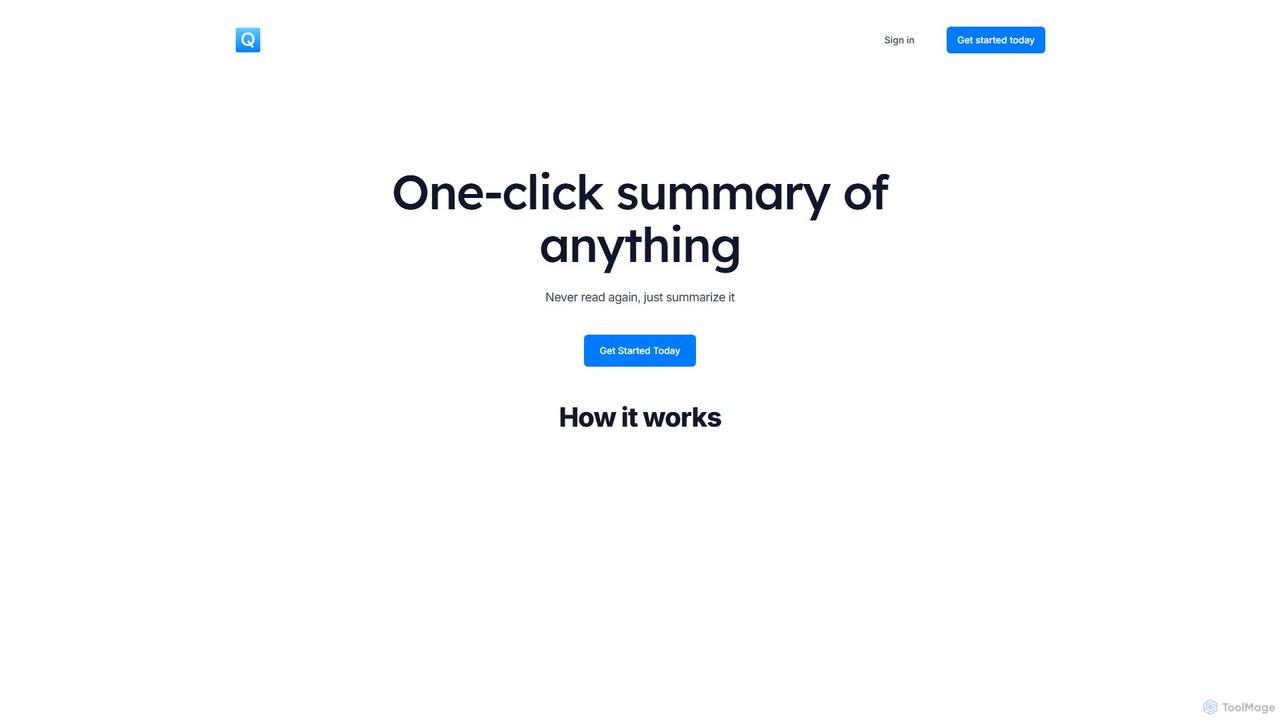
QuickReadAI is an AI-powered tool that provides one-click summaries of any online content, including articles, web pages, and …
QuickReadAI is an AI-powered tool that provides one-click summaries of any online content, including articles, web pages, and social media posts from platforms like Reddit, LinkedIn, and Twitter. It's designed to save you time and boost productivity by delivering concise, easy-to-digest summaries instantly.
About Reading Assistant
Reading Assistant tools are AI-powered applications designed to enhance how users interact with and comprehend textual content, particularly within the vast domain of news and information. These tools leverage advanced natural language processing (NLP) to analyze, summarize, and extract key insights from articles, reports, and documents. Their primary value lies in significantly improving reading efficiency, enabling users to quickly grasp complex information, identify crucial details, and overcome language barriers, making them indispensable for researchers, students, and professionals alike.
Core Features
- AI Summarization: Automatically condenses long texts into concise summaries, highlighting main ideas and key takeaways.
- Key Point Extraction: Identifies and extracts the most critical sentences, phrases, or data points from a document for quick review.
- Readability Analysis: Evaluates text complexity and suggests improvements for easier comprehension, often with grade-level scores.
- Text-to-Speech (TTS): Converts written content into natural-sounding audio, allowing for auditory learning or multitasking.
- Interactive Q&A: Enables users to ask questions about the text and receive AI-generated answers based directly on the content.
Use Cases
Reading Assistant tools are widely adopted by individuals and professionals who need to process large volumes of information efficiently. They are particularly useful in academic research for reviewing literature, in journalism for quickly understanding breaking news, and in business for analyzing market reports or legal documents, streamlining information intake across various fields.
How to Choose
When selecting a Reading Assistant, consider the accuracy and quality of its summarization and extraction features, the range of supported document formats (e.g., PDF, web pages, plain text), and the availability of advanced functionalities like interactive Q&A or multi-language support. Evaluate its integration capabilities with existing workflows and its pricing model to ensure it aligns with your specific needs and budget for efficient information processing.

Reading AssistantUse Cases
Efficient News Consumption
Journalists and busy professionals use Reading Assistants to quickly digest daily news feeds. By summarizing multiple articles, they can grasp key headlines and developments across various sources without needing to read each in full, saving significant time and ensuring they stay informed on current events.
Academic Research Review
Students and researchers employ these tools to rapidly review academic papers and literature. By extracting core arguments, methodologies, and findings from lengthy texts, they can efficiently identify relevant studies, synthesize information, and build a strong foundation for their own research projects.
Legal Document Analysis
Legal professionals utilize Reading Assistants to summarize complex contracts, case briefs, or regulatory documents. This allows them to pinpoint critical clauses, obligations, and precedents quickly, saving significant manual review time and enhancing accuracy in legal analysis and decision-making.
Content Creation & Curation
Content creators leverage AI reading tools to quickly understand source material, extract key facts, and generate concise summaries. This aids in the efficient creation of new articles, blog posts, social media content, or educational materials, ensuring accuracy and relevance while streamlining the research phase.
Language Learning & Comprehension
Language learners use Reading Assistants with translation and text-to-speech features to understand foreign language texts. This helps them improve vocabulary, pronunciation, and overall comprehension of complex sentences and cultural nuances, making the learning process more accessible and engaging.
Accessibility for Visually Impaired
Individuals with visual impairments or reading difficulties benefit significantly from text-to-speech functionalities offered by Reading Assistants. These tools convert articles, books, and digital content into natural-sounding audio, enhancing their access to information and promoting independent learning and engagement.