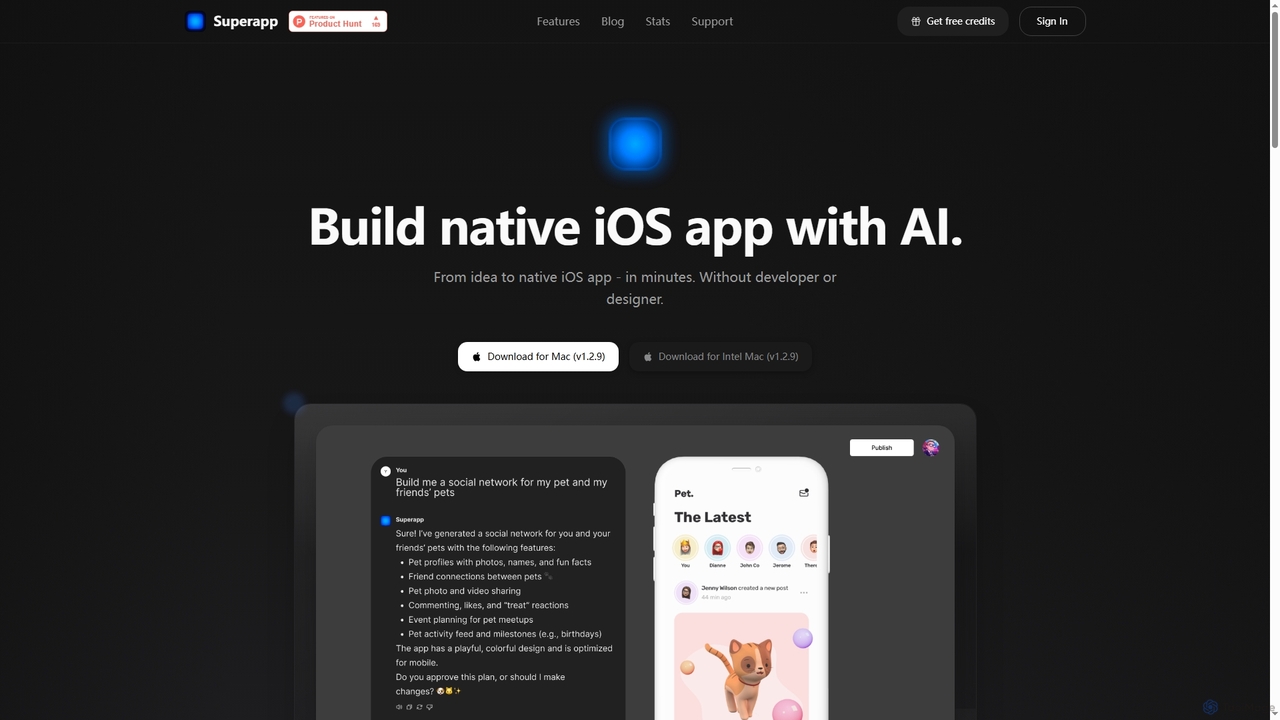
AI App Builders are a specialized category of no-code platforms that enable users to create fully functional web and mobile applications through a visual interface. These tools leverage drag-and-drop components, pre-built templates, and AI-assisted logic builders to translate ideas into interactive software without writing traditional code. They empower entrepreneurs, business users, and designers to build, test, and launch applications like internal tools, customer portals, or Minimum Viable Products (MVPs) with significant speed and reduced cost. Many modern app builders incorporate AI to generate UI from text prompts, suggest database schemas, or automate workflow creation.
Core Features
- Visual Drag-and-Drop Editor: Assemble your application's interface by dragging and dropping pre-made elements like buttons, forms, and lists.
- Database and Data Management: Visually create and manage databases, define data relationships, and control user permissions without writing SQL.
- Workflow and Logic Automation: Define application behavior and business logic using visual flowcharts to automate processes when users interact with the app.
- API & Third-Party Integrations: Connect your application to external services like payment gateways, CRMs, or social media platforms to extend its functionality.
- One-Click Deployment: Publish your web or mobile application to the public or for internal use with a single click, handling hosting and server management automatically.
Use Cases
AI App Builders are widely used by startups to rapidly develop and iterate on MVPs to validate business ideas with minimal investment. Businesses of all sizes use them to create custom internal tools, such as inventory management systems, employee directories, or project approval dashboards, replacing inefficient spreadsheets. Agencies and freelancers also leverage these platforms to build client applications, like customer portals or booking systems, much faster than with traditional development.
How to Choose
When selecting an AI App Builder, first consider the target platform: do you need a responsive web app, a native iOS/Android app, or a Progressive Web App (PWA)? Evaluate the platform's scalability to ensure it can handle your expected user growth and data volume. Assess its integration capabilities to confirm it can connect with your existing software stack. Finally, examine the level of design customization and the pricing model to ensure it aligns with your brand requirements and budget.