Baltex
Baltex is a leading cross-chain terminal for instant, secure, and private cryptocurrency swaps. It integrates CEX and DEX …
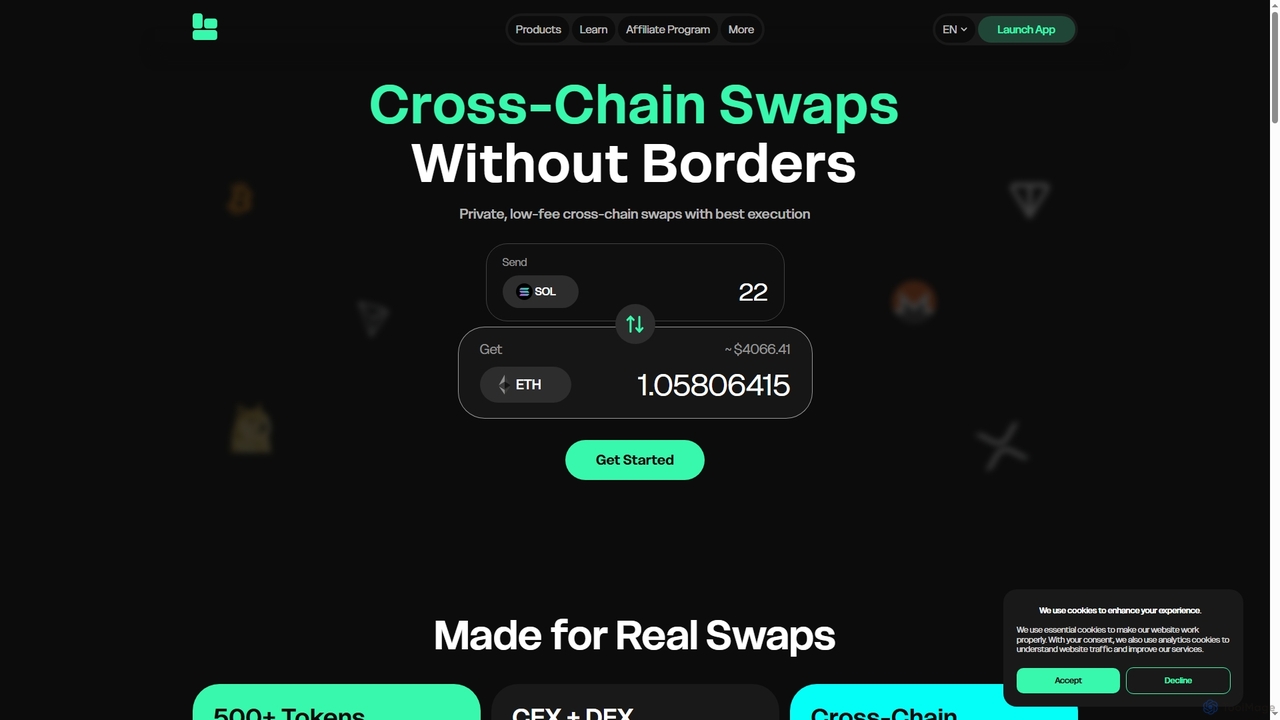
Baltex is a leading cross-chain terminal for instant, secure, and private cryptocurrency swaps. It integrates CEX and DEX routes, supporting over 500 tokens across 20+ networks, including fiat-to-crypto conversions without KYC for decentralized trades.
About Blockchain
AI Blockchain tools are a class of applications that integrate artificial intelligence with blockchain technology to create secure, transparent, and intelligent decentralized systems. These tools leverage AI for advanced analytics and automation, while using the blockchain's immutable ledger to ensure data integrity and traceability. This combination enables trustworthy AI operations, automated smart contracts, and verifiable data provenance, which is crucial for privacy and security. They offer a robust framework for building applications where trust and data immutability are paramount.
Core Features
- Decentralized Intelligence: Enables the execution of AI models across a distributed network, reducing reliance on central servers and enhancing security.
- AI-Powered Smart Contracts: Automates and verifies complex contractual agreements using AI to analyze real-world data inputs.
- Immutable Audit Trails: Records every AI-driven transaction and decision on an unchangeable blockchain ledger for full transparency and auditability.
- Secure Data Provenance: Tracks the origin and lifecycle of data used for AI training, ensuring its integrity and preventing tampering.
- Tokenized AI Services: Facilitates the creation of marketplaces where AI models and data can be accessed or monetized via cryptographic tokens.
Use Cases
These tools are particularly valuable in industries requiring high levels of trust and transparency. In supply chain management, they provide end-to-end traceability of goods. In finance, they power decentralized finance (DeFi) platforms with automated and secure transactions. Healthcare applications use them for secure sharing of patient data for research while preserving privacy.
How to Choose
When selecting an AI Blockchain tool, consider the underlying blockchain protocol (e.g., Ethereum, Hyperledger) and its scalability. Evaluate the sophistication of the AI capabilities offered, such as machine learning models or natural language processing. Assess the security features, including encryption standards and smart contract audit history. Finally, consider the ease of integration with your existing systems and the developer support available.

BlockchainUse Cases
AI-Powered Supply Chain Auditing
A logistics manager for a global food distributor needs to ensure the authenticity and quality of organic products from farm to shelf. They use an AI Blockchain platform that connects IoT sensors on shipping containers to an immutable ledger. The AI model continuously analyzes temperature, humidity, and location data, flagging any deviations from the required standards in real-time. Each data point is cryptographically sealed on the blockchain, creating a verifiable audit trail that prevents fraud. This allows the manager to guarantee product integrity to retailers and consumers, reducing spoilage and building brand trust.
Decentralized AI Model Marketplace
A data scientist develops a highly accurate predictive model for financial markets but is hesitant to sell it outright due to intellectual property concerns. Instead, they list the model on a decentralized AI marketplace powered by blockchain. Other users can pay in cryptocurrency via a smart contract to run queries against the model without ever accessing the underlying code. The smart contract automatically handles payments and usage rights, ensuring the data scientist is compensated for every use. This creates a secure and transparent environment for monetizing AI assets while retaining ownership and control.
Secure Medical Data Sharing for Research
A medical research institute needs access to large-scale patient data to train an AI model for disease prediction, without compromising patient privacy. They utilize a blockchain-based platform where patients can grant encrypted, tokenized access to their health records. Researchers can then run their AI algorithms on this decentralized data pool. The blockchain ensures that data access is logged, auditable, and strictly adheres to patient consent. This approach accelerates medical research by providing access to vital data while upholding the highest standards of privacy and security, as no central entity ever holds all the raw data.
Automated Insurance Claims Processing
An insurance company aims to reduce fraud and processing times for travel insurance claims. They implement a system using AI and smart contracts on a blockchain. When a policyholder's flight is delayed, a trusted third-party data source (an oracle) reports this information to the blockchain. An AI model verifies the claim's validity against the policy terms. If all conditions are met, the smart contract automatically triggers a payout to the policyholder's digital wallet. This process is transparent, tamper-proof, and significantly faster than manual processing, improving customer satisfaction and operational efficiency.
Verifying Authenticity of AI-Generated Art
A digital artist uses AI to create unique generative art pieces. To protect their work from unauthorized duplication and prove ownership, they use an AI Blockchain tool. After the AI generates an artwork, the tool creates a unique cryptographic hash of the piece and mints it as a Non-Fungible Token (NFT) on a public blockchain. This NFT serves as a permanent, verifiable certificate of authenticity and provenance. When a collector purchases the art, the ownership transfer is recorded on the blockchain, providing a clear and immutable history for the artwork's entire lifecycle.
AI-Driven DAO Governance Analysis
A member of a large Decentralized Autonomous Organization (DAO) needs to make informed decisions on complex governance proposals. They use an AI tool integrated with the DAO's blockchain. The tool analyzes historical voting data, simulates potential outcomes of proposals using predictive models, and assesses community sentiment from discussion forums. The results and analyses are published as a transaction on the blockchain for transparency. This empowers DAO members to vote with a deeper understanding of the potential impacts, leading to more effective and data-driven decentralized governance.