Voicechanger.im
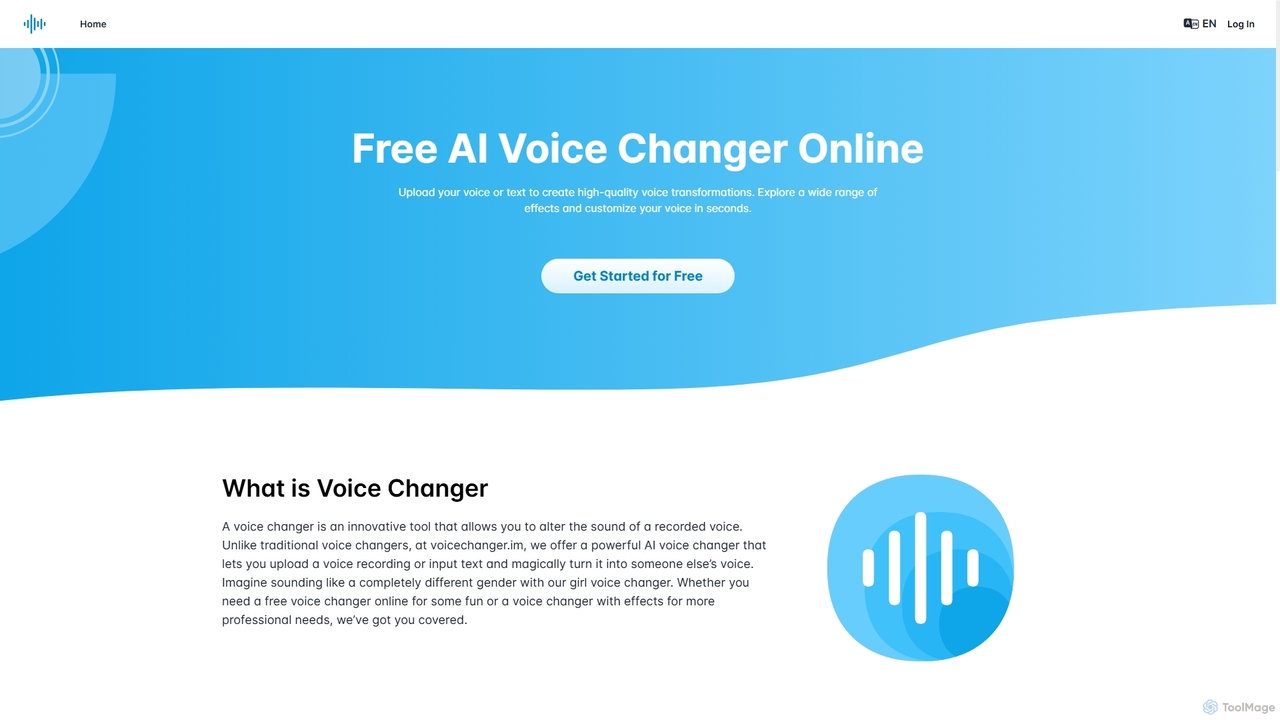
A free, AI-powered online tool that transforms voices and generates speech from text. Upload audio or type text …
A free, AI-powered online tool that transforms voices and generates speech from text. Upload audio or type text to create high-quality voiceovers with a wide range of effects, including gender conversion and various character voices. Ideal for content creators, gamers, and privacy-conscious users.
DeepLiveCam
DeepLiveCam is a real-time AI avatar application that generates an animated avatar from a single image. It enables …
DeepLiveCam is a real-time AI avatar application that generates an animated avatar from a single image. It enables users to stream, video chat, or record with a dynamic digital persona, offering features like face swapping, performance optimization, and an on-the-fly face generator for enhanced privacy and entertainment.
Pseudoface
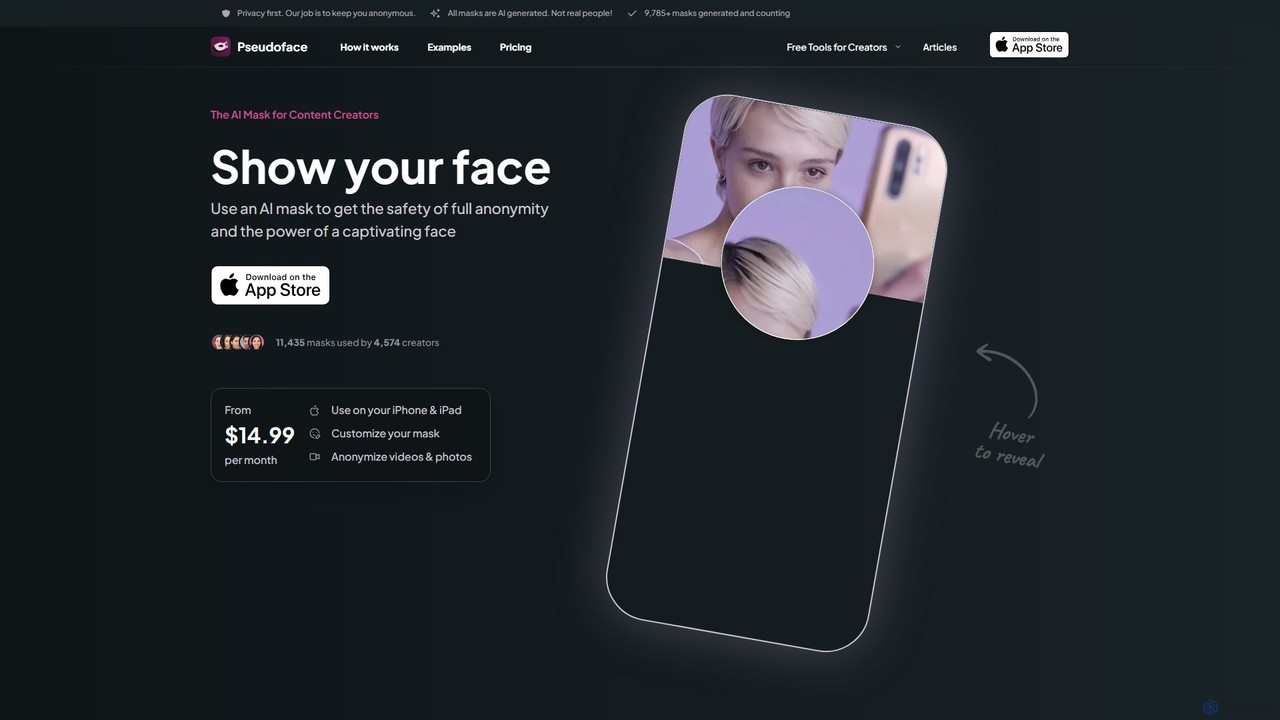
Pseudoface is an AI-powered tool for content creators that replaces their real face with a customizable, photorealistic AI …
Pseudoface is an AI-powered tool for content creators that replaces their real face with a customizable, photorealistic AI mask. It enables creators to maintain complete anonymity while building a personal connection with their audience, boosting engagement and income without compromising privacy.
Duck.ai
Duck.ai is a free, private AI chat service from DuckDuckGo. It provides anonymous access to leading AI models …
Duck.ai is a free, private AI chat service from DuckDuckGo. It provides anonymous access to leading AI models like GPT, Claude, Llama, and Mistral without saving your conversations on servers or using them for training. Your privacy is protected through IP anonymization and local-only chat history.
About Anonymity
Anonymity tools are AI-powered solutions designed to automatically identify and remove or obfuscate personally identifiable information (PII) from datasets. These tools leverage machine learning models, particularly Natural Language Processing (NLP) for text and computer vision for images, to detect sensitive data like names, addresses, and faces. Their primary value lies in enabling data analysis, sharing, and model training while protecting individual privacy and ensuring compliance with regulations like GDPR and HIPAA. This process goes beyond simple encryption by fundamentally de-linking the data from an individual's identity.
Core Features
- PII Redaction: Automatically finds and removes or masks sensitive text such as names, social security numbers, and contact details.
- Image & Video Anonymization: Detects and blurs or replaces faces, license plates, and other identifiers in visual media.
- Data Masking & Obfuscation: Replaces real data with realistic but fictitious information, preserving the dataset's format and utility.
- Synthetic Data Generation: Creates artificial datasets that mimic the statistical properties of the original data without containing any real personal information.
- Voice Anonymization: Alters vocal characteristics in audio recordings to conceal the speaker's identity while retaining the spoken content.
Use Cases
These tools are crucial in sectors handling sensitive information. In healthcare, they allow researchers to analyze patient data without compromising confidentiality. For software development, they generate safe, realistic test data. Financial institutions use them to analyze transaction patterns for fraud detection while complying with privacy laws, and marketing teams analyze customer behavior on anonymized datasets.
How to Choose
When selecting an Anonymity tool, first consider the types of data you handle (text, images, structured data). Evaluate the strength and techniques of anonymization offered, such as k-anonymity or differential privacy. Assess its integration capabilities via API with your existing workflows and databases. Finally, ensure the tool helps meet specific compliance requirements relevant to your industry, like HIPAA for healthcare or GDPR for customer data.
AnonymityUse Cases
Anonymizing Patient Data for Medical Research
A medical research institute needs to analyze thousands of electronic health records (EHRs) to identify trends in disease progression. To comply with HIPAA regulations, all PII must be removed. Researchers use an AI Anonymity tool to process the records. The tool automatically redacts patient names, addresses, and record numbers, and applies data masking to dates of birth. This creates a fully anonymized but structurally intact dataset, allowing data scientists to build predictive models without ever accessing sensitive patient information, accelerating research while ensuring total confidentiality.
Creating GDPR-Compliant Datasets for Marketing Analytics
A marketing team wants to analyze customer purchase history to personalize campaigns but must adhere to GDPR. They use an AI Anonymity tool to process their customer database. The tool replaces real names with pseudonyms, masks email addresses, and generalizes location data to the city level. The resulting dataset allows analysts to identify purchasing patterns, segment customers based on behavior, and measure campaign effectiveness without processing any personal data, ensuring full compliance and reducing the risk of data breaches.
Generating Synthetic Data for Software Testing
A software development team is building a new financial application and needs a large, realistic dataset for performance and security testing. Using real customer data is not an option due to privacy risks. They employ an AI Anonymity tool with synthetic data generation capabilities. The tool analyzes the schema and statistical properties of the production database and generates a new, artificial dataset of the same size and complexity. This allows QA engineers to conduct rigorous testing under real-world conditions without exposing a single piece of actual customer information.
Redacting Faces and License Plates in Public Video
A municipal government is analyzing traffic flow using footage from public cameras. To protect citizen privacy, all faces and vehicle license plates must be anonymized. They deploy an AI-powered video anonymization tool that processes the video streams in real-time. The tool's computer vision model automatically detects and applies a blur filter to all faces and license plates. This allows traffic analysts to study vehicle and pedestrian movement patterns to optimize city planning, while ensuring the identity of individuals remains completely protected.
Protecting Sources in Investigative Journalism
An investigative journalist receives a large cache of leaked documents containing sensitive information and whistleblower identities. To publish a story without endangering sources, the journalist uses an AI Anonymity tool to scan all documents. The tool's NLP model identifies and redacts all names, locations, and other potential identifiers mentioned in the text. This automated process is significantly faster and more thorough than manual redaction, allowing the journalist to safely analyze and report on the contents while upholding their ethical obligation to protect their sources.
Anonymizing Audio Recordings from Call Centers
A company analyzes call center recordings for quality assurance and training. These recordings contain sensitive customer information, such as names, account numbers, and addresses. They implement an AI Anonymity tool that processes audio files. The tool uses speech-to-text to transcribe the calls, redacts PII from the transcription, and then applies voice modulation to the original audio to mask the identities of both the customer and the agent. This dual approach allows managers to review call content and agent performance safely, without storing or sharing any personal data.