Privacy Best in category 2 results Anonymization AI Tool

Popular AI tools in the Anonymization field of Privacy include hey_photo、PiktID, etc., helping you quickly improve efficiency.

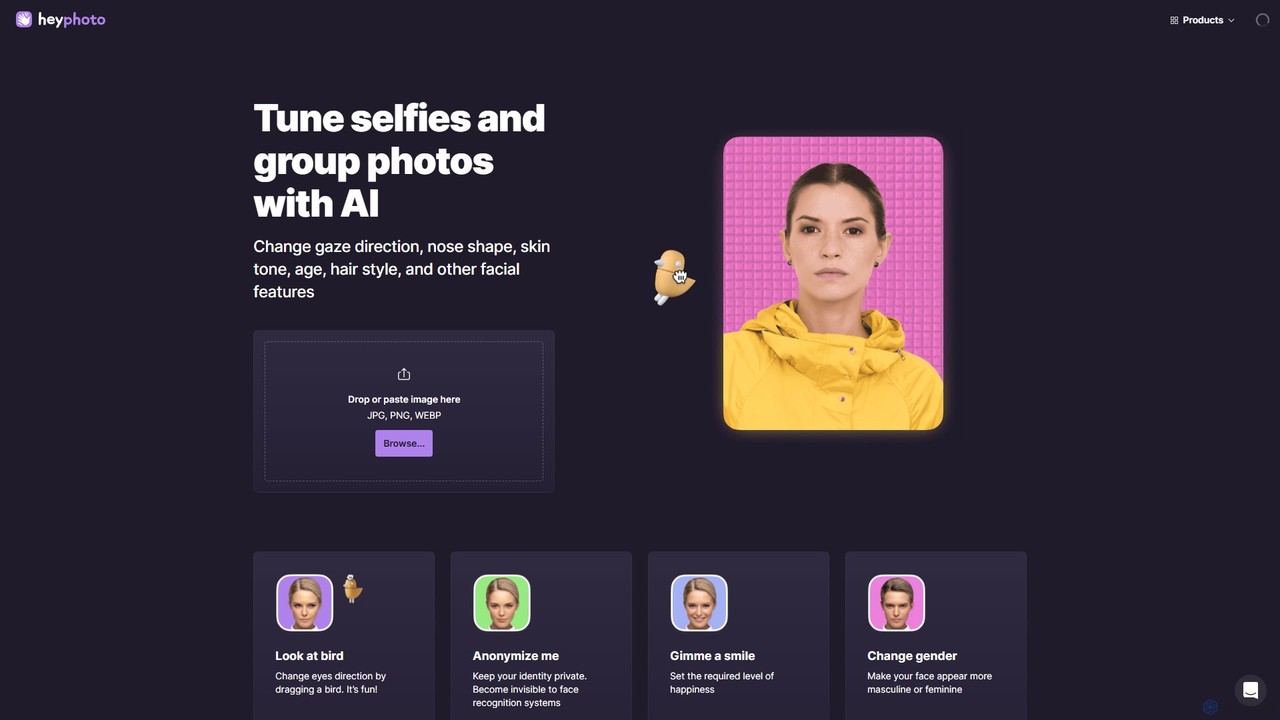
hey_photo

hey_photo

hey_photo is an online AI photo editor designed for effortless facial feature manipulation. It allows users to easily …

98.9K
PiktID

PiktID

PiktID is a comprehensive AI-powered image editing suite for professionals. It specializes in GDPR-compliant face anonymization, high-resolution face …

95.9K

About Anonymization

Anonymization tools are a class of AI-powered software designed to remove or obscure personally identifiable information (PII) from datasets. These tools employ advanced techniques like data masking, generalization, and pseudonymization to transform sensitive data, making it difficult to link back to specific individuals. Their primary value lies in enabling data analysis, sharing, and model training while complying with privacy regulations like GDPR and CCPA. This process is a critical component of data privacy, focusing specifically on rendering data non-personal for safe use.

Core Features

  • PII Detection: Automatically scans datasets to identify and classify sensitive information such as names, addresses, and social security numbers.
  • Data Masking & Obfuscation: Replaces sensitive data with realistic but fictitious information, preserving data format and usability for testing or analysis.
  • Pseudonymization: Substitutes direct identifiers with consistent but non-identifiable tokens (pseudonyms), allowing for data linkage without revealing identity.
  • Generalization & Suppression: Reduces the precision of data (e.g., converting an exact age to an age range) or removes certain records to prevent re-identification through unique combinations.

Use Cases

Anonymization tools are essential in sectors handling sensitive information. In healthcare, they enable clinical research using patient data without compromising confidentiality. Financial institutions use them for fraud pattern analysis on transaction data. Tech companies apply them to create safe, realistic datasets for software development and testing.

How to Choose

When selecting a tool, evaluate the anonymization techniques it supports (e.g., k-anonymity, differential privacy). Consider its ability to handle diverse data types (structured, unstructured, images) and its integration capabilities with your existing data pipelines. Also, verify its compliance certifications for regulations relevant to your industry.

AnonymizationUse Cases

1

Secure Medical Data for Clinical Research

Medical researchers and data scientists often need access to large-scale patient datasets to identify trends, test hypotheses, and develop new treatments. However, using raw patient data poses significant privacy risks and violates regulations like HIPAA. Anonymization tools solve this by systematically removing or masking PII such as names, patient IDs, and exact addresses, while preserving the medically relevant information like diagnoses, treatments, and outcomes. This allows researchers to work with rich, realistic data, accelerating medical breakthroughs without compromising patient confidentiality.

2

Create Safe Datasets for Software Testing

Software developers and QA engineers need realistic data to test applications effectively, especially when dealing with features that handle user information. Using live production data is risky and often illegal. Anonymization tools create safe, compliant test datasets by taking a copy of production data and applying techniques like data masking and shuffling. This ensures that the test data retains the complexity and statistical properties of real data—improving test accuracy—but contains no actual sensitive customer information, allowing for thorough testing across development, staging, and third-party environments.

3

Enable Privacy-Compliant AI Model Training

Machine learning engineers require vast amounts of data to train robust AI models. If this data contains PII, it can lead to models that inadvertently memorize and expose sensitive information, creating significant privacy and security vulnerabilities. Anonymization tools are used to pre-process training data, removing or transforming PII before it ever reaches the model. This is especially critical for models in finance, healthcare, and customer service. By training on anonymized data, organizations can build powerful and accurate AI systems without risking data leakage or violating data protection laws.

4

Analyze Customer Behavior Without Violating Privacy

Marketing and business intelligence teams analyze customer data to understand trends, segment audiences, and personalize experiences. However, regulations like GDPR and CCPA impose strict rules on how personal data can be used for analytics. Anonymization tools allow these teams to create a 'privacy-safe' version of their customer database. By replacing direct identifiers with pseudonyms and generalizing sensitive attributes like location, analysts can perform powerful aggregate analysis and identify broad behavioral patterns without accessing the personal data of any individual, ensuring both insightful analytics and legal compliance.

5

Share Data with Partners and Third Parties Securely

Businesses often need to share data with external partners for collaborative projects, research, or service integration. Sharing raw data is a major security liability. Anonymization tools act as a secure gateway for data sharing. Before transferring data to a third party, an organization can apply anonymization policies to strip out all PII. This provides the partner with the necessary data to perform their function (e.g., analyzing market trends) while ensuring that no sensitive customer information ever leaves the organization's control, mitigating the risk of data breaches from third-party vendors.

6

Publish Open Data for Public and Academic Use

Government agencies, NGOs, and academic institutions often publish datasets for public transparency and research, such as census data, public health statistics, or social survey results. To do this responsibly, all personal identifiers must be removed to protect the privacy of citizens. Anonymization tools are crucial for this process. They apply rigorous techniques like generalization and differential privacy to ensure that even when data is released publicly, individuals cannot be re-identified from the dataset, even when combined with other available information. This fosters open data initiatives while upholding ethical and legal privacy standards.

AnonymizationFrequently Asked Questions