Requisor
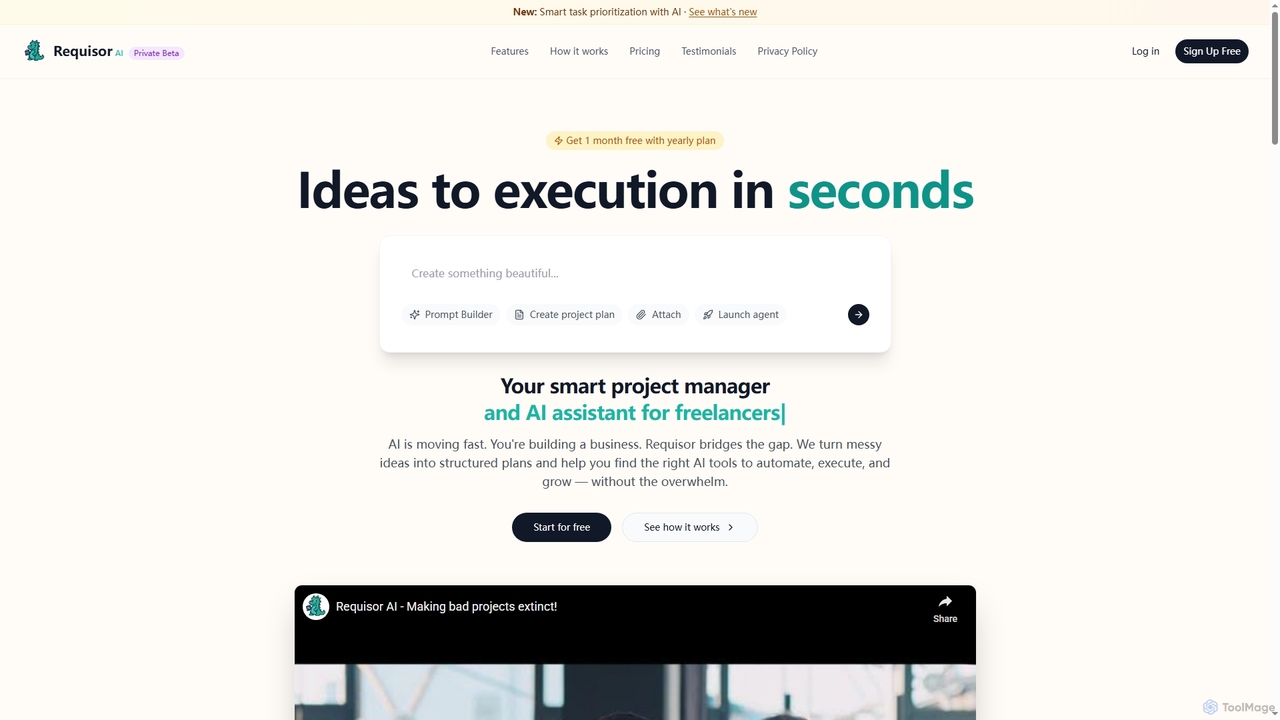
Requisor is an intelligent AI project management tool designed for solopreneurs, freelancers, and small teams. It transforms messy …
Requisor is an intelligent AI project management tool designed for solopreneurs, freelancers, and small teams. It transforms messy ideas into structured plans, automates tasks, and helps prioritize high-impact work to accelerate project completion and optimize resource allocation. With AI-powered insights, Requisor aims to reduce manual task management and enhance productivity.
WiseMap
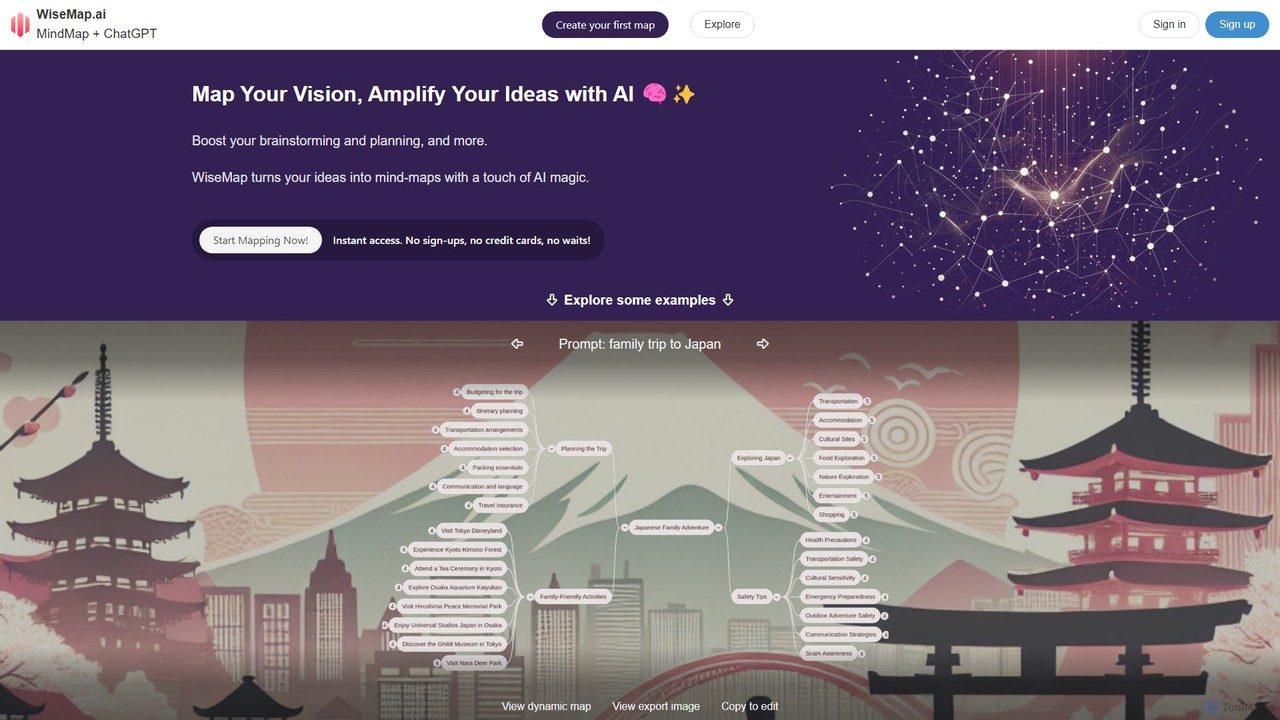
WiseMap is an AI-powered mind mapping tool that transforms your text prompts into structured, visual diagrams. Leveraging AI …
WiseMap is an AI-powered mind mapping tool that transforms your text prompts into structured, visual diagrams. Leveraging AI like ChatGPT, it helps you brainstorm, plan projects, and organize ideas effortlessly. Start with a simple idea and let the AI expand it into a comprehensive map, which you can then manually edit, customize, and share.
goalfocus
An AI-powered goal management and productivity platform. It helps individuals and teams set clear objectives, break them down …
An AI-powered goal management and productivity platform. It helps individuals and teams set clear objectives, break them down into actionable tasks, and maintain focus. The AI provides intelligent suggestions, prioritizes tasks, and offers insights to optimize performance and accelerate goal achievement.
About Planning
AI Planning tools are a specialized category within project management that use artificial intelligence to automate and optimize the creation of project roadmaps and schedules. These tools leverage machine learning models and historical data to break down complex goals into actionable tasks, forecast timelines, and allocate resources efficiently. They transform the planning process from a manual, often biased activity into a data-driven, predictive discipline, resulting in more realistic and adaptable project plans. This enables teams to anticipate bottlenecks, assess risks proactively, and build strategies that are resilient to change.
Core Features
- Automated Work Breakdown: Automatically deconstructs high-level objectives into detailed tasks, sub-tasks, and dependencies, creating a comprehensive work breakdown structure (WBS).
- Predictive Timeline Forecasting: Analyzes historical data and task complexity to generate realistic project timelines and predict completion dates with a degree of confidence.
- Intelligent Resource Allocation: Recommends the optimal assignment of team members to tasks based on their skills, availability, and current workload to prevent burnout and maximize efficiency.
- AI-Powered Risk Assessment: Identifies potential risks and conflicts within the plan, such as resource overloads or dependency clashes, and suggests mitigation strategies.
- Dynamic Re-planning: Continuously monitors project progress and external changes, automatically adjusting timelines and resource assignments to keep the project on track.
Applicable Scenarios
These tools are invaluable for project managers, product owners, and team leads across various industries. In software development, they are used for sprint planning and roadmap creation. Marketing teams use them to orchestrate complex campaign launches, while construction and engineering firms rely on them for detailed project phasing and resource scheduling.
Selection Criteria
When choosing an AI Planning tool, evaluate the quality of its predictive models and the accuracy of its forecasts. Consider its integration capabilities with existing project management software like Jira or Asana. Also, assess the tool's scalability for handling complex projects with numerous dependencies and the level of customization it offers for different planning methodologies (e.g., Agile, Waterfall).
PlanningUse Cases
Automated Sprint Planning for Software Development
A Product Manager for a SaaS company needs to plan the next development sprint for a new feature. Instead of manually creating tickets and estimating story points, they input the high-level feature epic into an AI Planning tool. The AI analyzes the epic, breaks it down into 15-20 granular user stories and technical tasks, and references historical velocity data to provide effort estimates for each item. It then suggests an optimal sprint backlog that fits the team's capacity, highlighting potential dependency risks between tasks. This process reduces planning time from a full day to under two hours and improves the accuracy of sprint forecasting.
Crafting a Go-to-Market Plan for a Product Launch
A marketing manager is tasked with creating a comprehensive go-to-market (GTM) strategy for a new product launching in three months. They use an AI Planning tool and input the objective: "Launch Product X in Q3." The tool generates a detailed plan spanning multiple departments, including content marketing (blog posts, whitepapers), social media campaigns, PR outreach, and sales enablement material creation. It automatically sets dependencies, such as requiring final branding assets before social media graphics can be created. The AI also allocates tasks to team members based on their roles and current workloads, providing a clear, actionable roadmap that ensures all teams are aligned and aware of deadlines.
Optimizing a Construction Project Schedule
A project manager for a commercial construction firm needs to create a schedule for a new building project. The project involves hundreds of tasks with complex dependencies, from laying the foundation to electrical wiring and interior finishing. Using an AI Planning tool, the manager inputs the project scope, constraints, and available resources. The AI generates an optimized critical path schedule, sequencing tasks to minimize total project duration. It also performs a risk analysis, flagging tasks that are likely to be delayed (e.g., due to weather-dependent activities) and suggesting buffer times. When a supplier reports a delay, the manager inputs the new information, and the tool dynamically re-plans the rest of the schedule in minutes to mitigate the impact.
Strategic Roadmap Planning for a Startup
The founder of a tech startup needs to create a 12-month strategic roadmap to present to investors. They have a vision but need to translate it into concrete milestones and resource needs. Using an AI Planning tool, the founder inputs their key business goals, target market, and budget constraints. The AI helps structure the vision into major product releases, marketing initiatives, and hiring plans. It generates a high-level timeline, suggests a logical sequence for feature development, and even forecasts potential cash flow issues based on the proposed hiring and spending plan. This provides the founder with a data-backed, coherent roadmap that demonstrates strategic thinking and operational readiness to potential investors.
Organizing a Multi-Track International Conference
An event planner is organizing a 3-day international conference with 5 parallel tracks and over 100 speakers. Manually scheduling sessions to avoid speaker conflicts, balance track popularity, and manage room capacity is a monumental task. The planner uses an AI Planning tool, inputting all speaker availabilities, session topics, room capacities, and expected attendance per topic. The AI generates an optimized conference schedule in hours, a task that would take weeks manually. It ensures no speaker is double-booked, popular tracks are in larger rooms, and sessions with related topics are not scheduled at the same time. The tool also allows for quick adjustments when a speaker cancels, re-optimizing the schedule instantly.
Resource Allocation for a Creative Agency
A resource manager at a busy creative agency needs to staff dozens of concurrent projects, from web design to video production. Manually tracking each employee's skills, availability, and workload is prone to errors, leading to either overworked staff or underutilized talent. The manager adopts an AI Planning tool for resource management. The tool maintains a profile for each employee, including skills, proficiency levels, and project history. When a new project comes in, the manager inputs the required roles (e.g., 'Senior UX Designer', 'Junior Copywriter'). The AI instantly suggests the best-fit available employees, providing a data-driven basis for staffing decisions and ensuring a balanced workload across the entire team.