ToolMage
Sign in

Best 2 Software Development AI tools for Project Management

Popular Software Development AI tools in Project Management include Rp1 and ReqIt AI, helping you work more efficiently.

Rp1

Rp1

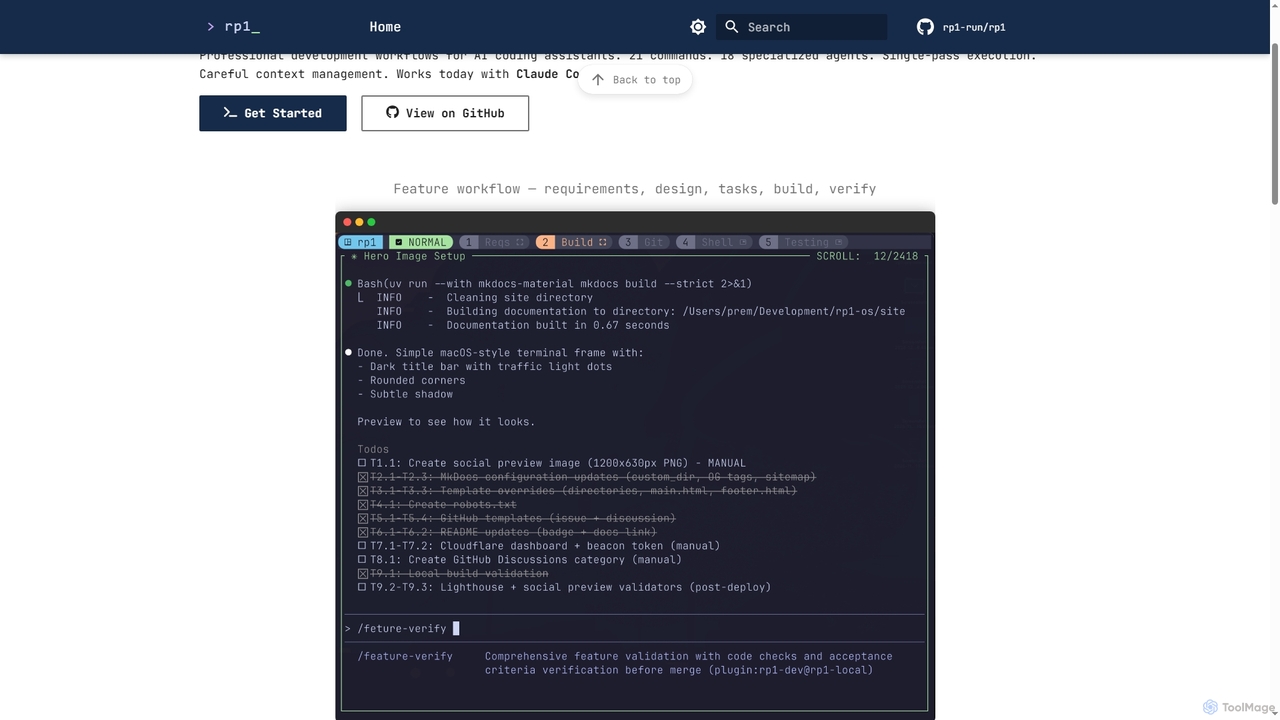
Rp1 is a professional development workflow tool for AI coding assistants, designed to streamline software creation from requirements to deployment. It offers 21 commands and 18 specialized agents for efficient, single-pass execution of complex coding tasks, ensuring structured outputs and deep codebase awareness.

Ai Assistant
Visits 3.5KFavorites 49Likes 38
ReqIt AI
Paid

ReqIt AI

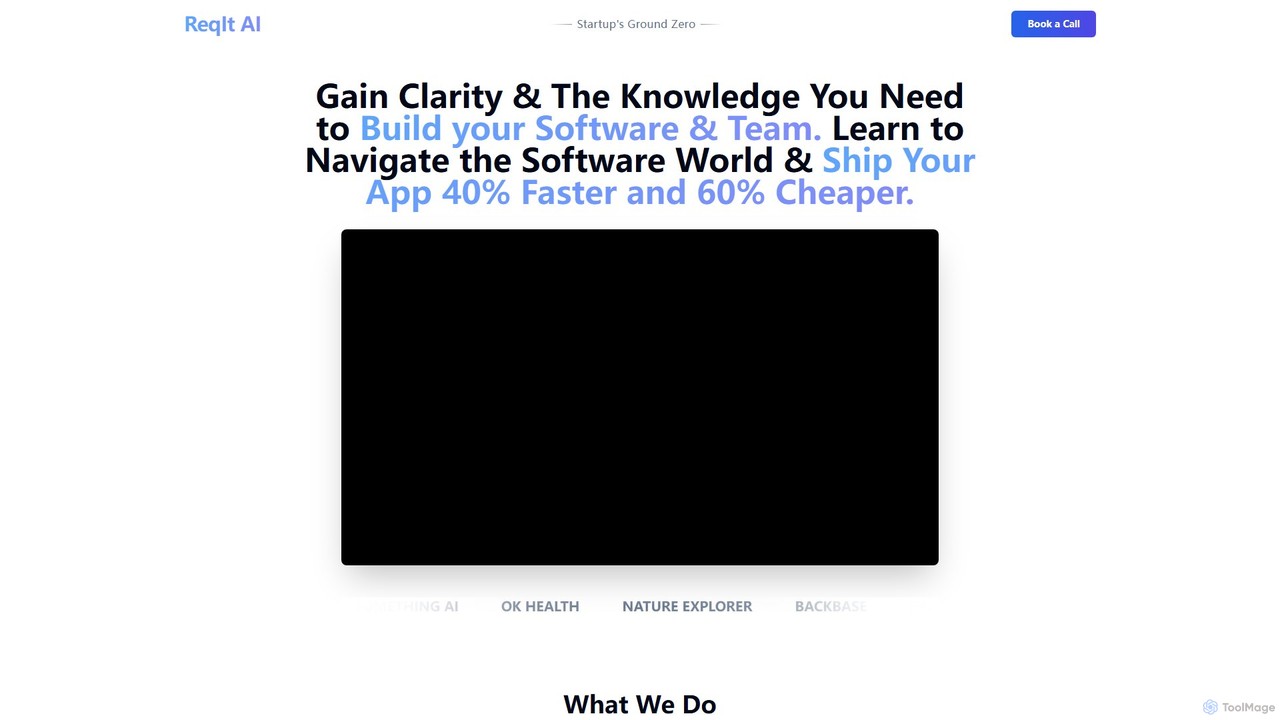
ReqIt AI is a technology consulting service that helps businesses, particularly startups, plan, build, and launch software applications. It offers expert guidance and project management to ship products 40% faster and 60% cheaper, providing clarity and a strategic roadmap for development.

Consulting
Visits 3.4KFavorites 145Likes 144

About Software Development

AI-powered Software Development tools are designed to augment and automate various stages of the software lifecycle, from coding to deployment. These tools leverage machine learning to generate code, identify bugs, optimize performance, and assist with documentation, significantly enhancing developer productivity and code quality within project management frameworks. They streamline complex tasks, allowing development teams to focus on innovation and strategic problem-solving.

Core Features

  • Code Generation: Automatically writes boilerplate code, functions, or entire modules based on prompts.
  • Automated Testing: Generates test cases, executes tests, and identifies potential issues in the codebase.
  • Intelligent Debugging: Pinpoints errors, suggests fixes, and helps understand complex code logic.
  • Code Refactoring: Analyzes code for improvements in structure, readability, and performance.
  • Documentation Assistance: Automatically creates or updates technical documentation from source code.

Applicable Scenarios

Software Development AI tools are invaluable for startups accelerating MVP creation, large enterprises maintaining complex legacy systems, and agile teams aiming for faster iteration cycles. They assist individual developers in daily coding tasks and empower engineering managers to oversee project health and code quality more efficiently.

How to Choose

When selecting an AI Software Development tool, consider its compatibility with your existing tech stack and programming languages. Evaluate the accuracy and relevance of its AI models for your specific use cases, its integration capabilities with IDEs and CI/CD pipelines, and the level of customization offered. Also, assess its security features and the vendor's support for enterprise environments.

Featured tool rankings

Software Development use cases

1

Automated Code Generation for Boilerplate

A software developer needs to set up a new microservice with standard CRUD operations. Instead of manually writing repetitive code for models, controllers, and routes, they use an AI development tool. By providing a simple prompt describing the entity, the AI generates the necessary boilerplate code, saving hours of manual coding and ensuring consistent architectural patterns across the project.

2

Proactive Bug Detection and Fix Suggestions

A QA engineer is reviewing a large codebase for potential issues before a major release. An AI-powered debugging tool scans the code, identifies subtle logical errors, potential race conditions, or security vulnerabilities that might be missed by human review or traditional static analysis. It then suggests precise code modifications, significantly reducing the time spent on bug fixing and improving overall software reliability.

3

Automated Test Case Generation for New Features

A development team is implementing a complex new feature. Manually writing comprehensive unit and integration tests can be time-consuming. An AI tool analyzes the new code and its dependencies, then automatically generates a suite of relevant test cases, including edge cases and negative scenarios. This ensures thorough test coverage, accelerates the testing phase, and reduces the likelihood of regressions in future updates.

4

Intelligent Code Refactoring and Optimization

A senior developer is tasked with improving the performance and maintainability of an existing module. An AI refactoring tool analyzes the code for inefficiencies, redundant logic, and suboptimal patterns. It then suggests specific, context-aware improvements, such as simplifying complex conditional statements, optimizing database queries, or restructuring functions for better readability, leading to a cleaner, faster, and more robust application.

5

Automated API Documentation Generation

A team is developing a new API and needs to provide comprehensive, up-to-date documentation for external and internal consumers. An AI documentation tool integrates with the codebase, automatically parsing code comments, function signatures, and data models. It then generates clear, consistent, and interactive API documentation in various formats, significantly reducing the manual effort of technical writers and ensuring documentation accuracy as the API evolves.

6

Security Vulnerability Scanning and Remediation

Before deploying a new application, a security engineer needs to ensure it's free from common vulnerabilities. An AI security scanning tool integrates into the CI/CD pipeline, automatically analyzing the codebase for known exploits, insecure configurations, and potential data leaks. It provides prioritized reports with actionable remediation steps, allowing the team to address critical security flaws early in the development cycle, enhancing the application's overall security posture.

Software Development FAQ

What are AI Software Development tools?

AI Software Development tools are applications that use artificial intelligence and machine learning to assist and automate various tasks throughout the software development lifecycle. They aim to enhance developer productivity, improve code quality, and accelerate project delivery. Key functions include code generation, automated testing, intelligent debugging, and documentation assistance, making development processes more efficient and less error-prone.

How do AI tools assist in code generation?

AI tools assist in code generation by leveraging large language models (LLMs) trained on vast amounts of existing code. Developers can provide natural language prompts or partial code snippets, and the AI suggests or generates complete functions, classes, or even entire modules. This significantly reduces the need for manual boilerplate coding, helps maintain coding standards, and allows developers to focus on more complex logic and architectural design, accelerating the initial development phase.

What's the difference between AI-powered testing and traditional testing?

Traditional testing relies heavily on predefined scripts, manual execution, and human-designed test cases. AI-powered testing, on the other hand, uses machine learning to dynamically generate test cases, identify patterns in code behavior, predict potential failure points, and even self-heal broken tests. This allows for broader test coverage, more efficient bug detection, and the ability to adapt to code changes without constant manual updates, making the testing process more intelligent and scalable.

How to choose the right AI Software Development tool?

Choosing the right AI Software Development tool involves several considerations. First, assess its compatibility with your existing tech stack, programming languages, and development environment (IDE, CI/CD). Second, evaluate the accuracy and relevance of its AI models for your specific use cases, such as code generation style or bug detection capabilities. Third, consider its integration capabilities, customization options, and the level of security features it offers. Finally, look into vendor support, community resources, and pricing models to ensure it aligns with your team's needs and budget.

Can AI tools fully replace human developers?

No, AI tools are not designed to fully replace human developers. Instead, they serve as powerful assistants that augment human capabilities. AI excels at automating repetitive, mundane, or complex analytical tasks, freeing up developers to focus on higher-level problem-solving, creative design, architectural decisions, and strategic thinking. The synergy between human creativity and AI efficiency leads to faster development cycles, higher quality code, and more innovative solutions, rather than a complete replacement of the human element.

How do AI Software Development tools fit into Project Management?

AI Software Development tools enhance project management by streamlining development tasks, improving code quality, and accelerating delivery timelines. Within a project management framework, these tools help teams meet deadlines by automating coding, testing, and debugging, reducing manual errors, and providing insights into code health. This allows project managers to better allocate resources, monitor progress with more accurate data, and mitigate risks associated with development bottlenecks, ultimately contributing to more predictable and successful project outcomes.