
Freemium
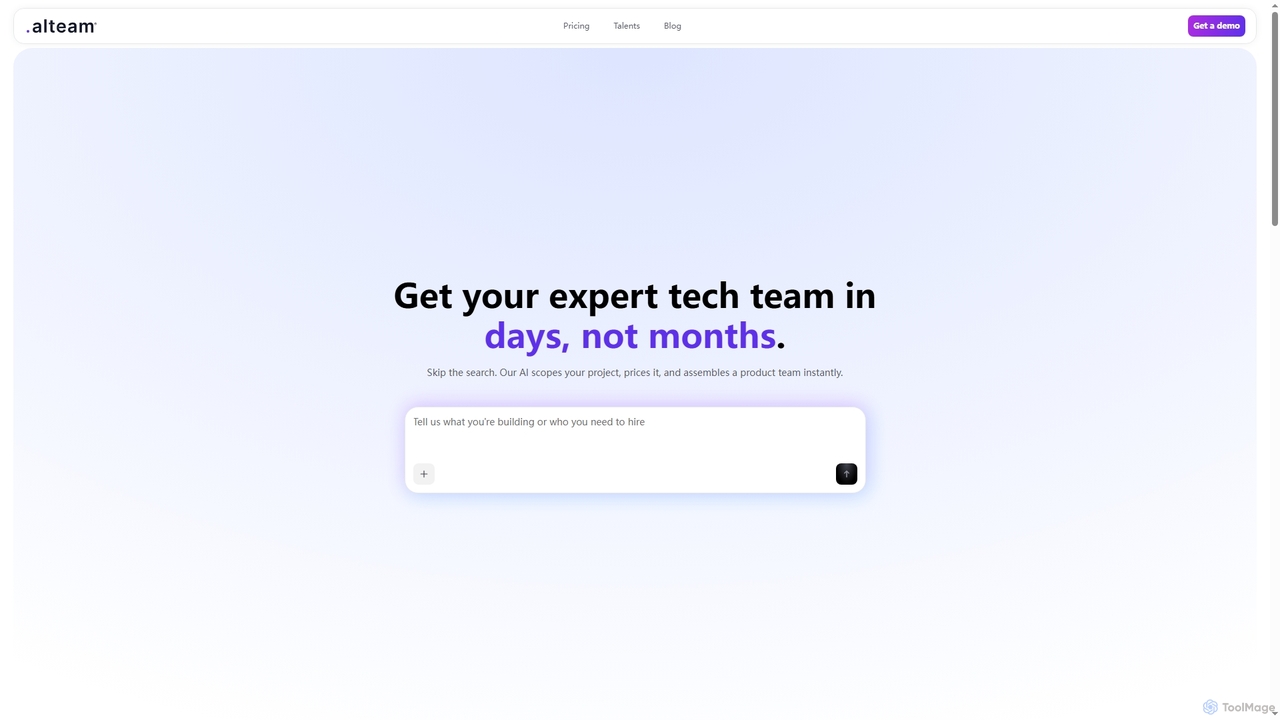
Popular Staffing AI tools in Project Management include Alteam, helping you work more efficiently.
AI Staffing tools are advanced solutions designed to optimize human resource allocation and management within projects and organizations. These tools leverage machine learning and data analytics to analyze individual skills, availability, project requirements, and performance metrics. Their primary goal is to enhance project efficiency, ensure optimal team composition, and proactively prevent resource bottlenecks, making them a critical component within the broader Project Management domain.
These tools are invaluable for organizations managing complex projects or large talent pools. They are widely used in IT consulting firms for large-scale project planning, software development companies for agile team assembly, and creative agencies for efficiently managing freelance or gig workers.
When selecting an AI Staffing tool, consider its integration capabilities with existing project management and HR systems, the level of customization for skill profiles and project types, its scalability to accommodate growing teams and project complexities, and the robustness of its reporting and analytics features for data-driven insights.
Project managers in a consulting firm use AI staffing tools to quickly form high-performing teams for new client engagements. By inputting project requirements and desired skill sets, the AI identifies available consultants with the optimal mix of expertise, experience, and collaboration history, reducing manual selection time by 70% and improving project kickoff speed.
An operations manager at a marketing agency utilizes AI to monitor and rebalance employee workloads dynamically. The tool analyzes current task assignments, individual capacities, and upcoming deadlines, suggesting reallocations to prevent burnout in overloaded teams and ensure even distribution of work, leading to a 25% reduction in project delays.
A strategic planner in a growing tech company employs AI staffing to anticipate future talent requirements. By analyzing the sales pipeline, projected project starts, and current employee skill sets, the AI predicts potential skill gaps and recommends proactive hiring or training initiatives, ensuring the company is prepared for future growth without last-minute scrambling.
A creative director at a design studio manages a large pool of freelance artists and writers. The AI staffing tool automatically matches incoming project briefs with the most suitable freelancers based on their portfolio, availability, rates, and past performance, streamlining the assignment process and ensuring quality matches for every client project.
An L&D specialist uses the AI tool to identify company-wide skill deficiencies. By comparing employee skill profiles against industry trends and future project demands, the AI highlights critical areas where training programs are needed, allowing for targeted upskilling initiatives that directly support business objectives and employee development.
A team lead leverages AI to assign tasks that align with individual team members' strengths and career aspirations. The tool considers employee preferences and development goals alongside project needs, suggesting assignments that not only contribute to project success but also foster professional growth and job satisfaction, leading to higher retention rates.
AI Staffing tools are software solutions that use artificial intelligence, particularly machine learning, to automate and optimize the process of allocating human resources to projects and tasks. They analyze vast amounts of data, including employee skills, availability, project requirements, and historical performance, to make data-driven recommendations for team formation, workload distribution, and resource forecasting. Their core purpose is to enhance efficiency and effectiveness in managing an organization's most valuable asset: its people.
The primary difference lies in their intelligence and automation capabilities. Traditional resource management software relies heavily on manual input and static planning, often requiring human intervention for adjustments. AI Staffing tools, however, leverage predictive analytics and machine learning to dynamically match skills, forecast needs, and suggest optimal allocations autonomously. They can learn from data, adapt to changing project demands, and proactively identify potential issues like resource conflicts or skill gaps, offering a more agile and data-driven approach.
Utilizing AI for staffing brings several significant benefits. It dramatically improves project success rates by ensuring the right people are on the right tasks, reduces resource conflicts and bottlenecks through intelligent allocation, and enhances employee satisfaction by balancing workloads and aligning tasks with individual strengths. Furthermore, AI provides data-driven insights for strategic workforce planning, identifies skill gaps for targeted training, and ultimately leads to greater operational efficiency and cost savings.
When evaluating AI Staffing solutions, prioritize tools with robust integration capabilities with your existing HR, CRM, and project management systems. Look for extensive customization options for skill profiles, project types, and organizational structures. Scalability is crucial for growing teams, as are advanced analytics and reporting features for actionable insights. Finally, consider user-friendliness, ethical AI considerations (to minimize bias in recommendations), and strong data security protocols.
Absolutely. AI Staffing tools are particularly beneficial for managing remote and distributed teams. They can effectively facilitate skill matching across different geographical locations and time zones, helping to form cohesive virtual teams. By providing clear visibility into remote team members' availability, workload, and utilization, these tools help prevent over- or under-utilization, ensure equitable task distribution, and optimize collaboration, making remote project management more efficient and transparent.