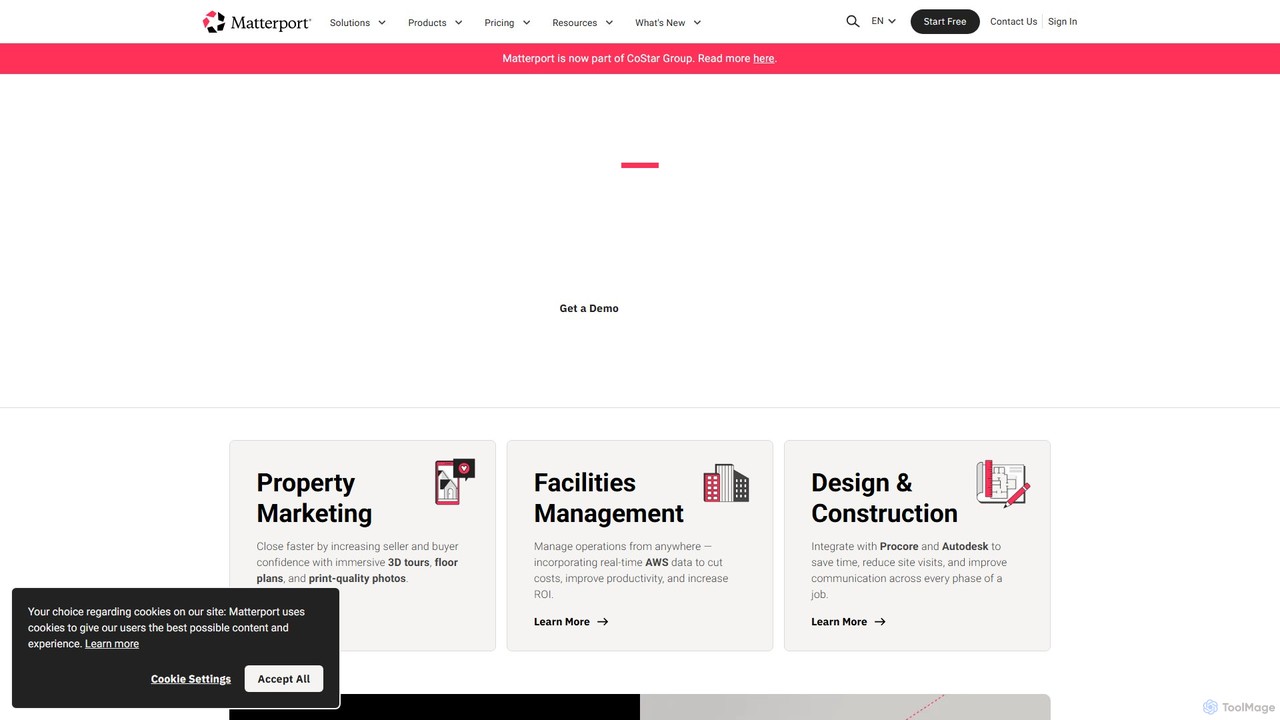
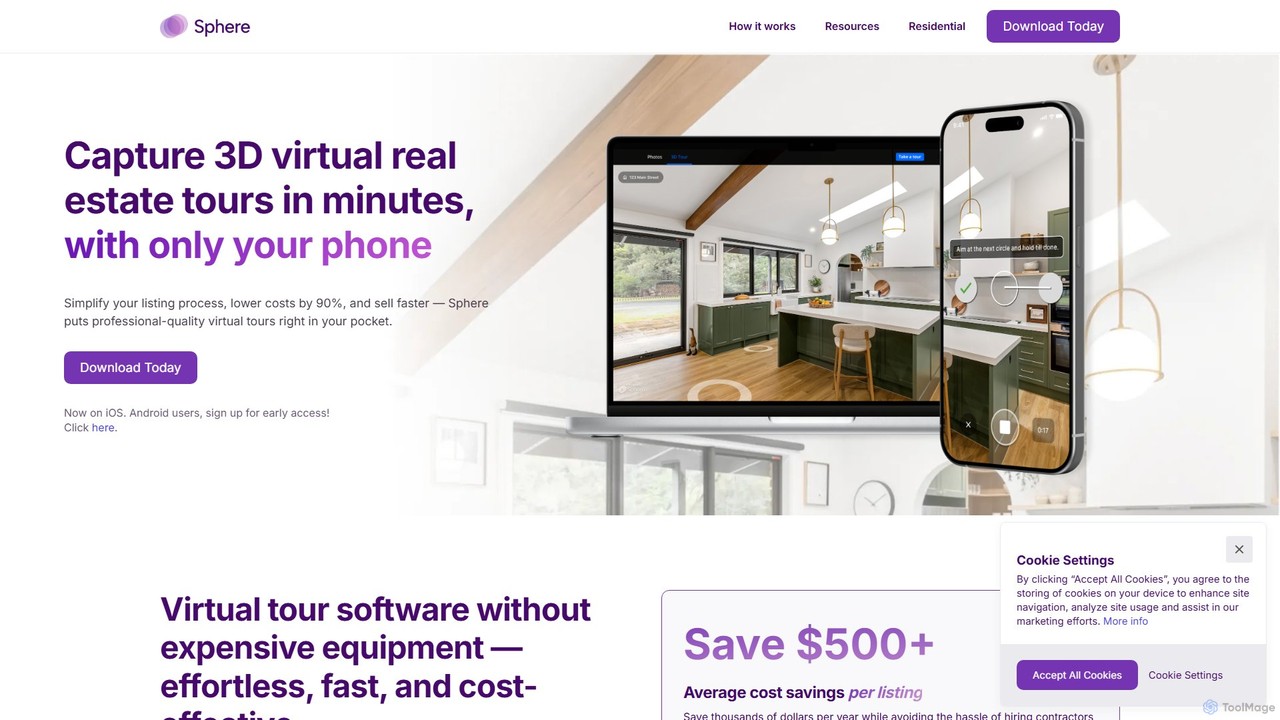
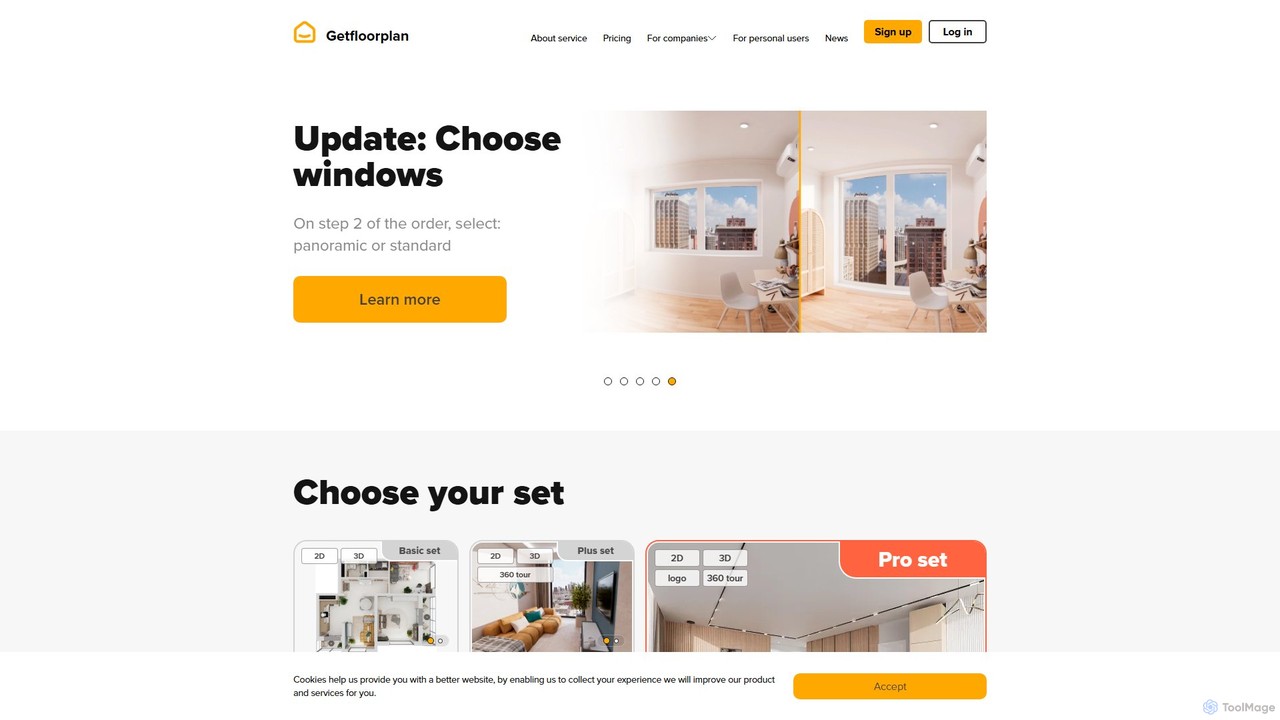
Virtual Tour tools are AI-powered platforms used to create immersive, interactive 360-degree digital walkthroughs of physical spaces, primarily within the real estate sector. These tools leverage technologies like photogrammetry and AI-driven stitching to transform panoramic images or 3D scan data into a cohesive, navigable model. They enable potential buyers, renters, or clients to explore a property remotely from any device, offering a true sense of presence and spatial understanding. Unlike static photos or linear videos, AI Virtual Tours provide user-controlled navigation, interactive elements, and data-rich insights into a property's layout and features.
Core Features
- AI-Powered 360° Stitching: Automatically combines multiple images from various angles into a seamless, high-resolution panoramic experience.
- Interactive Hotspots: Allows creators to embed clickable points within the tour that reveal text, images, videos, or links for more information.
- 3D Dollhouse & Floor Plan View: Generates an interactive 3D model (dollhouse) and a top-down 2D floor plan, providing crucial spatial context.
- Virtual Staging: Uses AI to digitally furnish empty rooms with realistic furniture and decor to help visualize the space's potential.
- In-Tour Measurement Tools: Enables users to accurately measure dimensions of rooms, walls, and objects directly within the virtual environment.
Use Cases
These tools are essential for real estate agents marketing properties to a global audience, allowing 24/7 open houses without physical visits. They are also used by property managers for rental unit showcases, architects for project visualization, and hospitality businesses like hotels and event venues to offer immersive previews of their facilities, helping to secure bookings more effectively.
How to Choose
When selecting a Virtual Tour tool, consider its compatibility with your capture device (e.g., 360° camera, smartphone). Evaluate the depth of its interactive features, such as custom hotspots and virtual staging capabilities. Assess the platform's hosting options, embedding flexibility, and branding customization. Finally, review the pricing model—whether it's a per-tour fee or a subscription—and the availability of analytics to track viewer engagement.