TuringTest
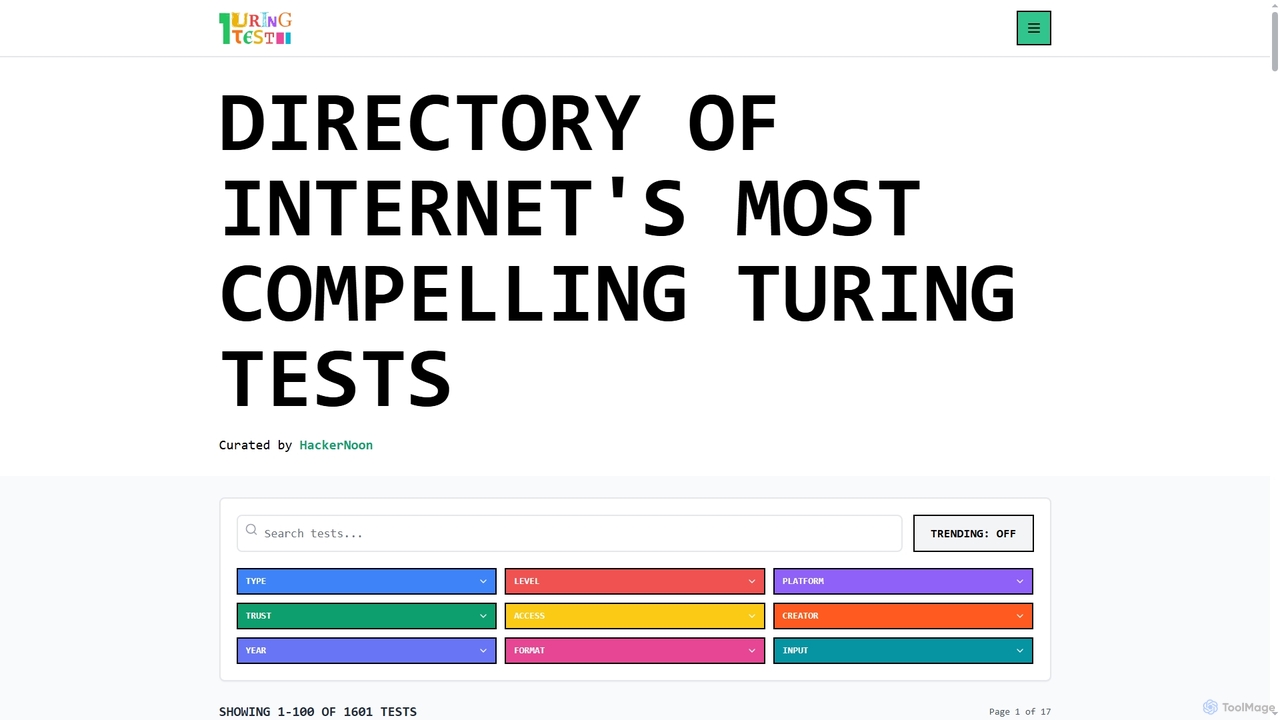
TuringTest is a comprehensive, curated directory by HackerNoon, showcasing the internet's most compelling Turing Tests. It serves as …
TuringTest is a comprehensive, curated directory by HackerNoon, showcasing the internet's most compelling Turing Tests. It serves as a central hub for discovering various challenges designed to distinguish between human and AI-generated content across multiple modalities like text, image, audio, and video.
O.systems
O.systems is a foundational organization dedicated to shaping the decentralized AI era. It spearheads governance, research, and innovation …
O.systems is a foundational organization dedicated to shaping the decentralized AI era. It spearheads governance, research, and innovation for the O.XYZ ecosystem, aiming to build the world's first Sovereign Super Intelligence through a community-driven, transparent, and ethically-guided approach.
Stable Attribution
A pioneering research tool designed to trace the training data origins of images generated by Stable Diffusion. It …
A pioneering research tool designed to trace the training data origins of images generated by Stable Diffusion. It helped identify which original artworks influenced an AI-generated image, promoting transparency and ethical AI. Please note: This project is no longer active.
About Ai Ethics
Ai Ethics tools are specialized platforms designed to help organizations develop, deploy, and manage AI systems responsibly and ethically. These tools leverage advanced algorithms and frameworks to identify, assess, and mitigate potential risks such as bias, lack of transparency, and privacy violations. They enable the creation of AI solutions that are fair, accountable, and trustworthy, fostering public confidence and regulatory compliance. By integrating ethical considerations throughout the AI lifecycle, these tools ensure AI benefits society without unintended harm.
Core Features
- Bias Detection & Mitigation: Identifies and quantifies algorithmic bias in data and models, offering strategies to reduce unfair outcomes.
- Explainability (XAI): Provides insights into how AI models make decisions, enhancing transparency and interpretability for stakeholders.
- Fairness Metrics & Auditing: Offers quantitative metrics to evaluate AI system fairness across different demographic groups and supports ethical audits.
- Privacy-Preserving AI: Implements techniques like differential privacy and federated learning to protect sensitive user data.
- Compliance & Governance: Helps organizations adhere to AI ethics regulations and establish robust AI governance frameworks.
Use Cases
AI Ethics tools are crucial for sectors like finance, healthcare, and human resources, where AI decisions have significant societal impact. They are used by AI developers, data scientists, compliance officers, and legal teams to embed ethical principles into AI development workflows. These tools ensure that AI applications, from loan approvals to medical diagnoses, are fair, transparent, and compliant with evolving ethical guidelines.
How to Choose
When selecting an Ai Ethics tool, consider its scope of bias detection, the explainability methods offered, and its compatibility with your existing AI development stack. Evaluate its ability to integrate with various machine learning frameworks and data sources. Look for robust reporting features, customizable fairness metrics, and support for evolving regulatory standards. User-friendliness and the level of technical expertise required for implementation are also key factors.

Ai EthicsUse Cases
Auditing AI Hiring Systems for Bias
HR departments use AI ethics tools to analyze AI-powered resume screening algorithms, identifying and correcting biases related to gender, ethnicity, or age. This ensures fair candidate evaluation and promotes diversity in recruitment processes, leading to a more equitable workforce.
Ensuring Fairness in Loan Approval Models
Financial institutions deploy AI ethics platforms to scrutinize credit scoring and loan approval AI models. They monitor for discriminatory patterns against protected groups, ensuring equitable access to financial services and maintaining compliance with regulatory standards, thereby building trust with customers.
Developing Transparent AI for Medical Diagnosis
Healthcare providers and researchers utilize AI ethics tools to build explainable AI models for disease diagnosis. This allows medical professionals to understand the AI's reasoning, fostering trust in the technology and enabling informed clinical decisions, which is critical for patient safety and effective treatment plans.
Managing Data Privacy in Personalized Marketing
Marketing teams leverage privacy-preserving AI ethics tools to develop personalized advertising campaigns without compromising user data. Techniques like differential privacy ensure individual privacy while still enabling effective targeting and compliance with stringent data protection regulations like GDPR.
Establishing AI Governance for Autonomous Vehicles
Automotive companies employ AI ethics frameworks to define and enforce ethical guidelines for self-driving car algorithms. This addresses critical issues like decision-making in unavoidable accident scenarios, ensuring public safety, accountability, and building consumer trust in advanced autonomous technologies.
Monitoring Content Moderation AI for Harmful Bias
Social media platforms use AI ethics tools to continuously audit their content moderation AI. They detect and mitigate biases that might unfairly censor certain communities or viewpoints, ensuring a balanced and ethical online environment that respects freedom of expression while preventing harmful content.