SupernovaAI
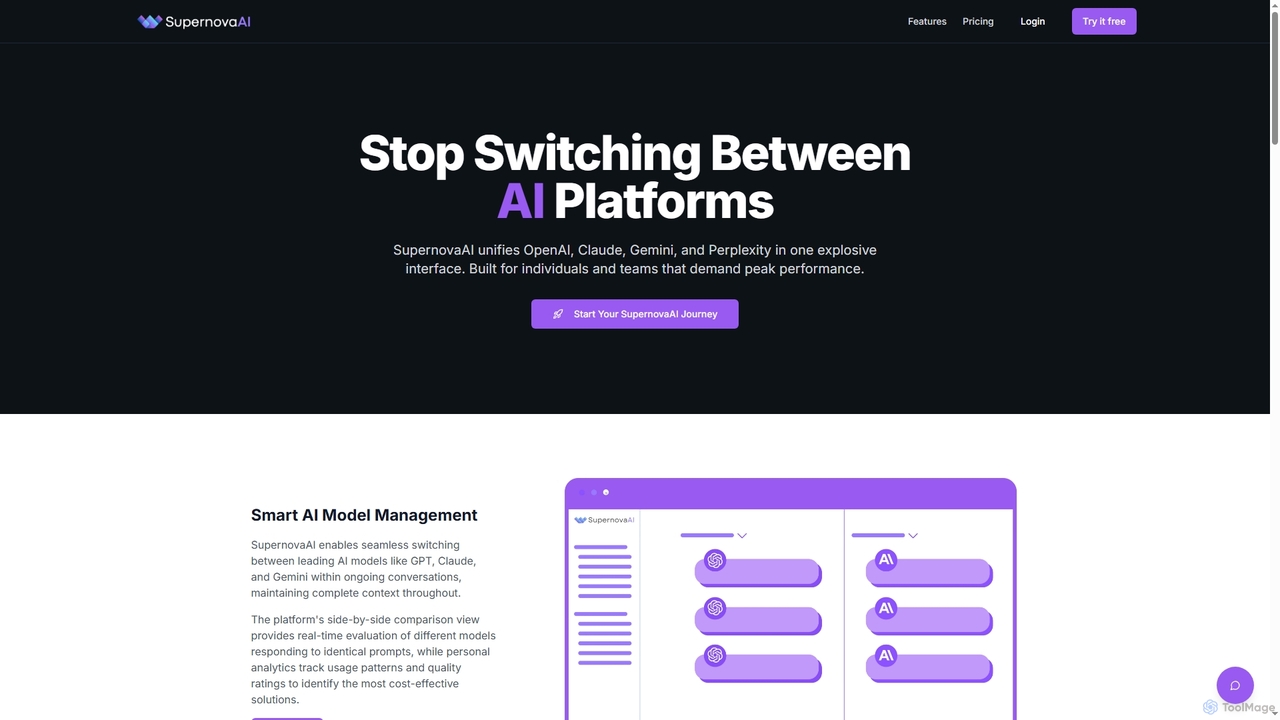
SupernovaAI is a unified platform that integrates leading AI models like OpenAI, Claude, Gemini, and Perplexity into a …
SupernovaAI is a unified platform that integrates leading AI models like OpenAI, Claude, Gemini, and Perplexity into a single, powerful interface. It enables seamless model switching, context retention, side-by-side response comparison, and cost optimization, designed for individuals and teams seeking peak AI performance and streamlined workflows.
DeepResearcher
DeepResearcher is an advanced AI research agent integrated within ChatGPT, powered by OpenAI's next-generation technology. It automates complex, …
DeepResearcher is an advanced AI research agent integrated within ChatGPT, powered by OpenAI's next-generation technology. It automates complex, multi-step research tasks by analyzing hundreds of web sources, PDFs, and other documents to generate comprehensive, analyst-grade reports with full citations.
mark_r
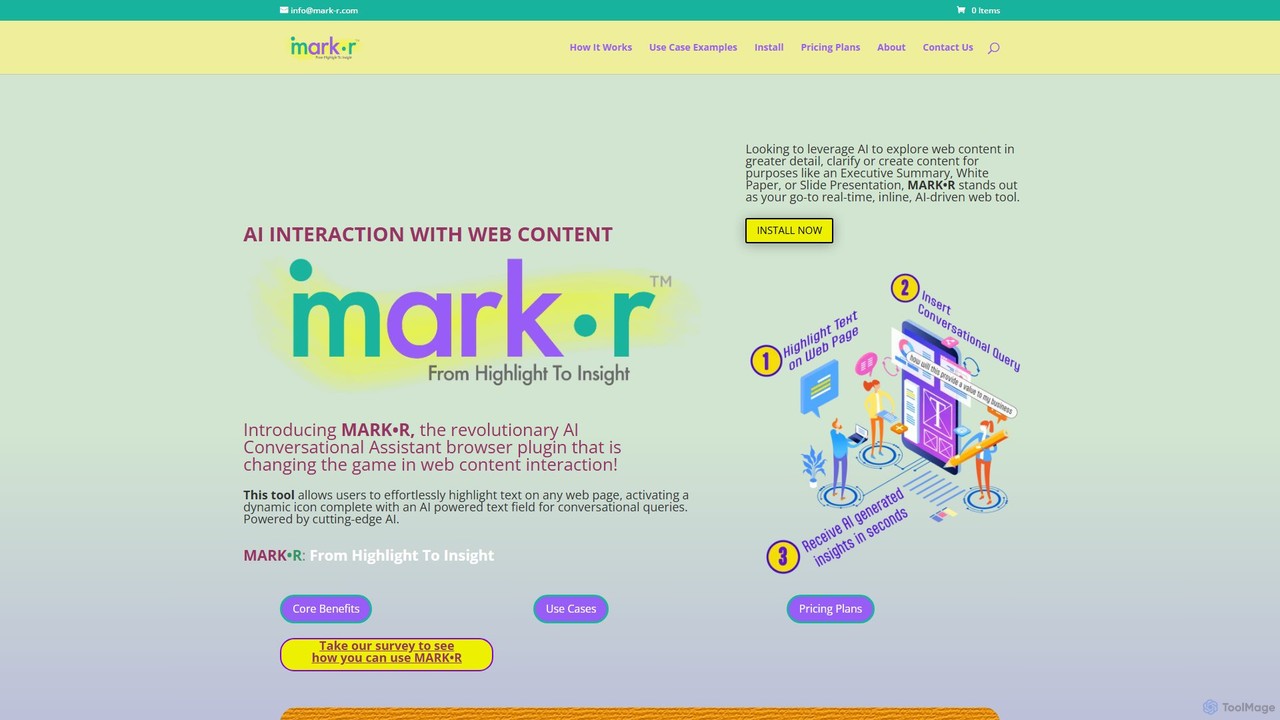
mark_r is a revolutionary AI browser extension that transforms how you interact with web content. Simply highlight text …
mark_r is a revolutionary AI browser extension that transforms how you interact with web content. Simply highlight text on any page to activate a conversational AI, allowing you to ask questions, summarize articles, clarify complex topics, and generate content. It analyzes both the highlighted text and the full page context to provide deep, accurate insights, turning passive reading into an active, engaging experience.
About Ai Assistant
AI Assistants are specialized tools designed to streamline and accelerate the research process by acting as an intelligent partner. They leverage large language models (LLMs) and natural language processing (NLP) to read, understand, and synthesize information from documents, data sets, and web sources. This enables users to quickly extract key insights, identify patterns, and generate summaries from vast amounts of information. Unlike general search engines, these assistants provide direct, context-aware answers based on the user's source materials.
Core Features
- Intelligent Document Analysis: Automatically summarize, explain complex concepts, and extract key data points from PDFs, reports, and academic papers.
- Cross-Source Synthesis: Compare and contrast information across multiple documents to identify recurring themes, conflicting arguments, and knowledge gaps.
- Natural Language Q&A: Ask direct questions about your uploaded documents and receive precise, source-backed answers with citations.
- Automated Literature Search: Discover relevant publications from academic databases and generate structured outlines or annotated bibliographies.
Use Cases
AI Assistants are widely used in academia for literature reviews and thesis preparation. In business, market analysts use them to synthesize competitor reports and industry trends. Legal professionals also leverage these tools to quickly analyze case law and contracts, while R&D teams use them to stay current with scientific publications.
How to Choose
When selecting an AI Assistant, consider the types of documents it supports (PDF, DOCX, URL). Evaluate its analytical capabilities—does it only summarize, or can it perform thematic analysis and data comparison? Check the accuracy of its citation generation and its ability to integrate with reference managers. Finally, assess the user interface and collaboration features if working in a team.
Ai AssistantUse Cases
Automating Academic Literature Reviews
A PhD student needs to review over 100 academic papers for their dissertation. Instead of manually reading each one, they upload the entire collection to an AI Assistant. The student then asks the assistant to identify the primary research methodologies, summarize key findings, and create a table comparing the conclusions of different authors. This process reduces the initial review time from several weeks to a few days, allowing the student to focus on critical analysis and writing rather than information gathering.
Analyzing Market Research Reports
A business analyst is tasked with creating a competitive landscape report. They gather dozens of industry reports, financial statements, and news articles. Using an AI Assistant, they upload all documents and ask specific questions like, "What are the top three market trends mentioned across these reports?" or "Summarize Company X's growth strategy based on their annual report." The assistant synthesizes the information and provides concise, sourced answers, enabling the analyst to produce a comprehensive report in a fraction of the time.
Accelerating Legal Case Research
A paralegal is preparing for a new case and needs to find relevant legal precedents. They upload hundreds of pages of case law documents into an AI Assistant. Instead of keyword searching, they can ask natural language questions like, "Find all cases that discuss 'breach of fiduciary duty' in the context of tech startups." The AI identifies relevant paragraphs across all documents, summarizes the legal arguments, and helps the paralegal quickly build a strong foundation for their case strategy, saving dozens of hours of manual research.
Supporting Student Essay Writing
A university student is writing an essay on a complex topic and struggles to synthesize information from various academic sources. They use an AI Assistant to upload their reading list. The student asks the tool to explain a difficult theory in simple terms, find quotes that support a specific argument, and check their draft for logical inconsistencies. The assistant acts as a 24/7 tutor, helping the student deepen their understanding and improve the quality of their writing without providing the final text, thus fostering critical thinking.
Streamlining R&D Scientific Discovery
A scientist in a pharmaceutical R&D lab needs to stay updated on the latest research in gene editing. They configure an AI Assistant to monitor new publications from top journals. The assistant automatically summarizes relevant papers, highlights novel experimental techniques, and flags studies with conflicting results. This allows the scientist to quickly grasp the state of the field and identify promising new research directions without spending hours each week manually sifting through databases and articles.
Extracting Data for Financial Due Diligence
A financial analyst conducting due diligence for an acquisition needs to extract specific financial data and risk factors from hundreds of pages of annual reports and SEC filings. They upload these documents to an AI Assistant and instruct it to extract all mentions of 'revenue by geographic segment' and list all 'forward-looking statements'. The tool populates a spreadsheet with the requested data in minutes, a task that would typically take a junior analyst a full day. This automation frees up the analyst to focus on higher-value strategic analysis.