ToolMage
Sign in

Best 33 Startup AI tools

Popular Startup AI tools include BigIdeasDB, mavtools, Progr.io, bizideas, ProdMoh AI, NameBrewery, grahamai, SubmitPro, PitchPal, and Blitzer, helping you work more efficiently.

Aurora
Paid

Aurora

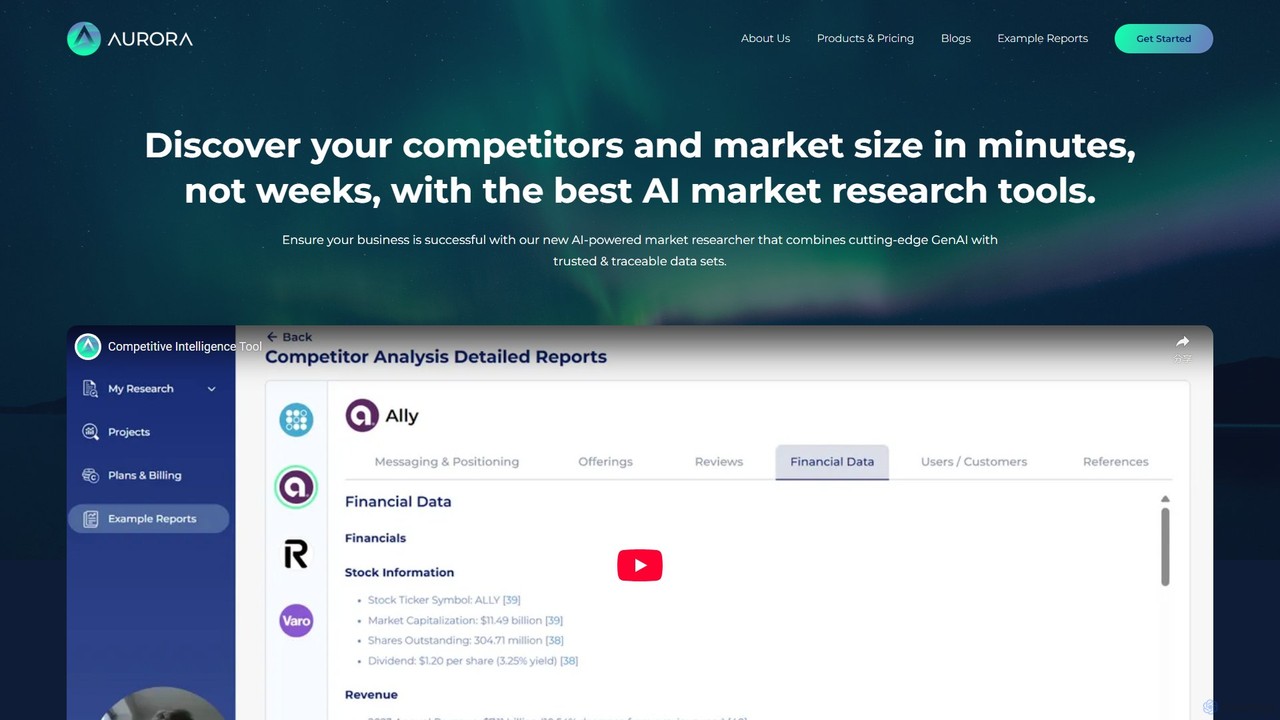
Aurora is an AI-powered market research platform that delivers in-depth competitive intelligence and market size analysis in minutes. It combines generative AI with trusted, traceable data sources to help businesses make data-driven decisions, validate ideas, and gain a competitive edge.

Competitive Intelligence
Visits 5.5KFavorites 139Likes 140

IdeaScore
Free

IdeaScore

IdeaScore is an AI-powered tool designed for entrepreneurs and innovators to validate their business ideas. By analyzing key factors like the problem statement, market demand, and solution uniqueness, it provides a comprehensive viability score and actionable feedback to help refine concepts before significant investment.

Planning
Visits 5.6KFavorites 178Likes 188
mavtools
Free

mavtools

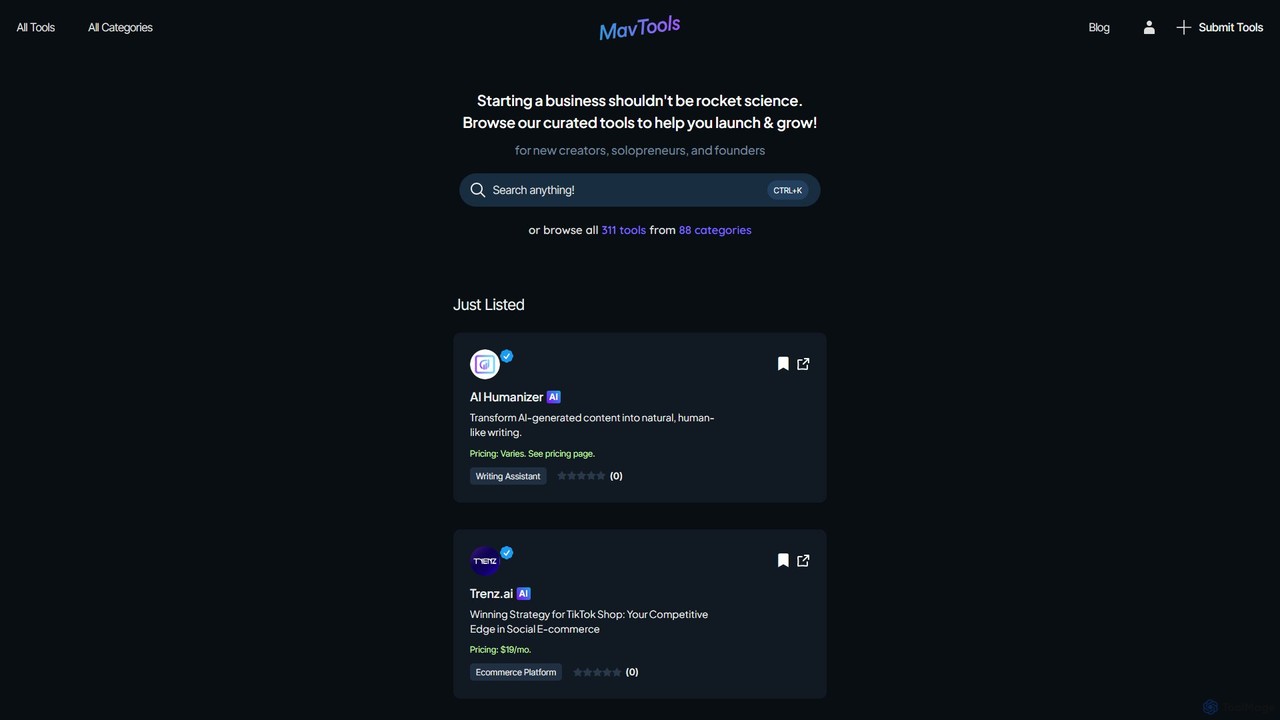
A curated directory of battle-tested SaaS, applications, and AI tools designed for new creators, solopreneurs, and founders. It simplifies the process of discovering and selecting the right software to launch and grow a business.

Tool Discovery
Visits 29.9KFavorites 121Likes 106
SubmitPro
Paid

SubmitPro

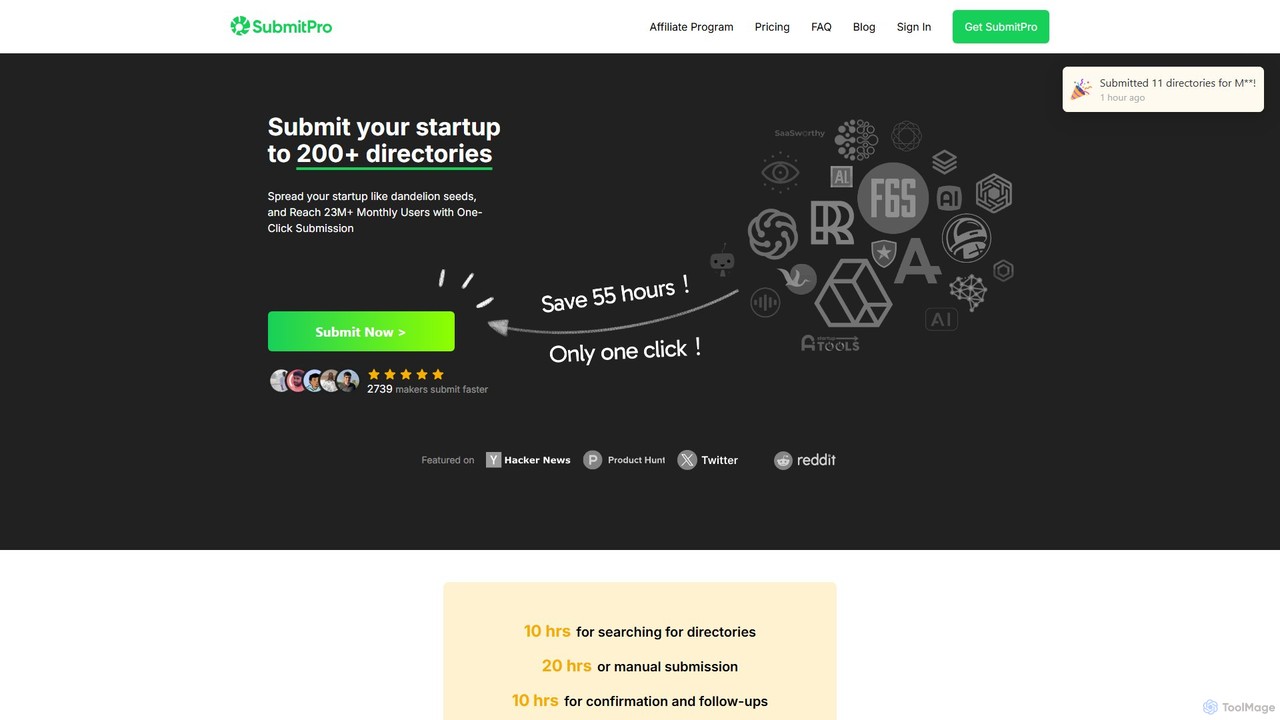
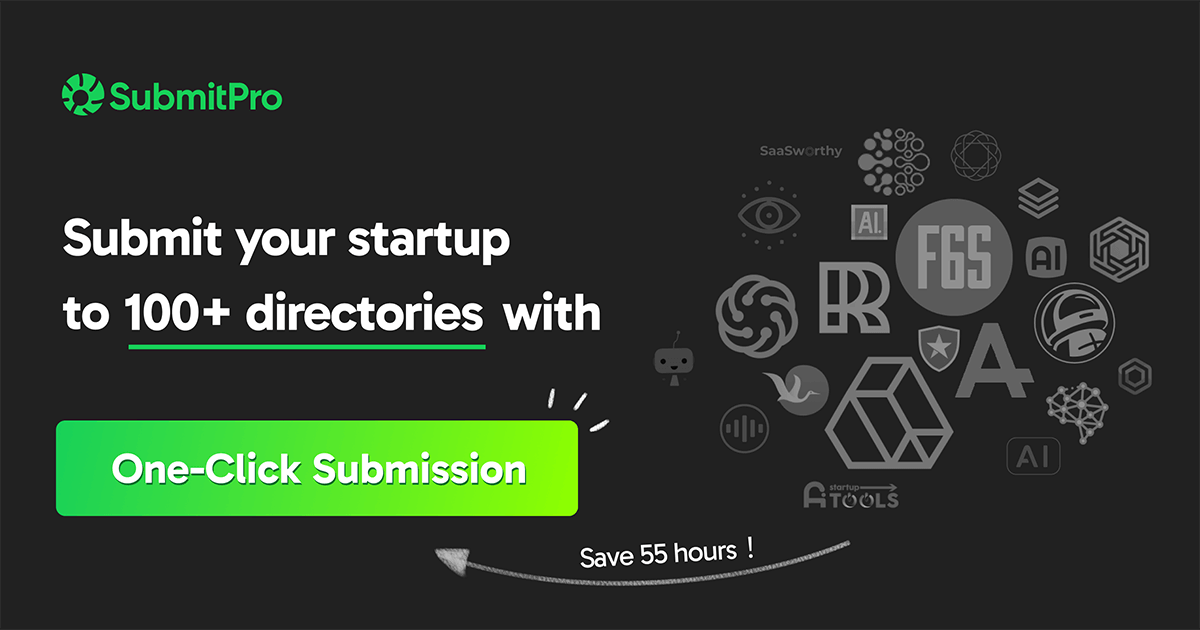
SubmitPro is an AI-powered service that automates the submission of your startup to over 200 online directories with a single click. It saves you 50+ hours of manual work, helping you gain instant traffic, build high-quality backlinks for SEO, and increase brand visibility. Ideal for founders, marketers, and indie hackers looking for an efficient launch strategy.

Link Building
Visits 7.1KFavorites 146Likes 147
yclens
Freemium

yclens

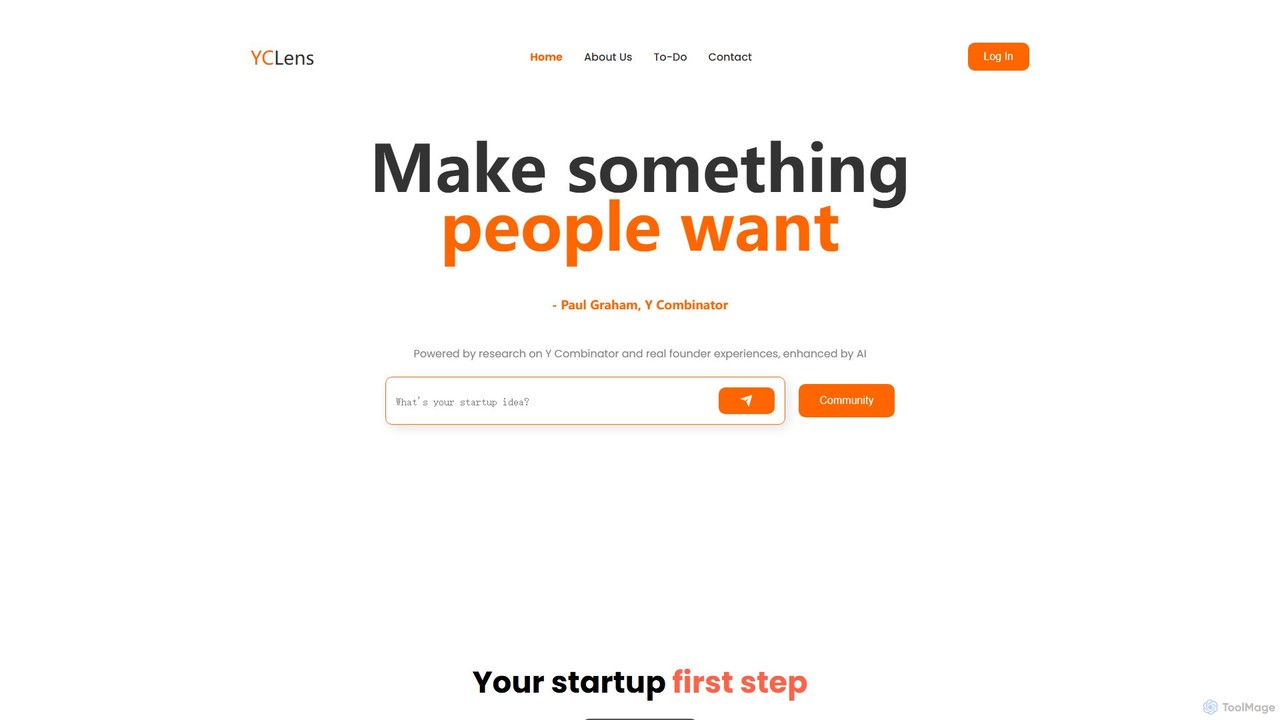
yclens is an AI-powered startup hub designed for entrepreneurs. It leverages insights from Y Combinator and real founder experiences to help you brainstorm, evaluate, and plan your startup idea, covering market research, profitability analysis, and business strategy.

Market Research
Visits 5.4KFavorites 138Likes 136
OnlyComs
Free

OnlyComs

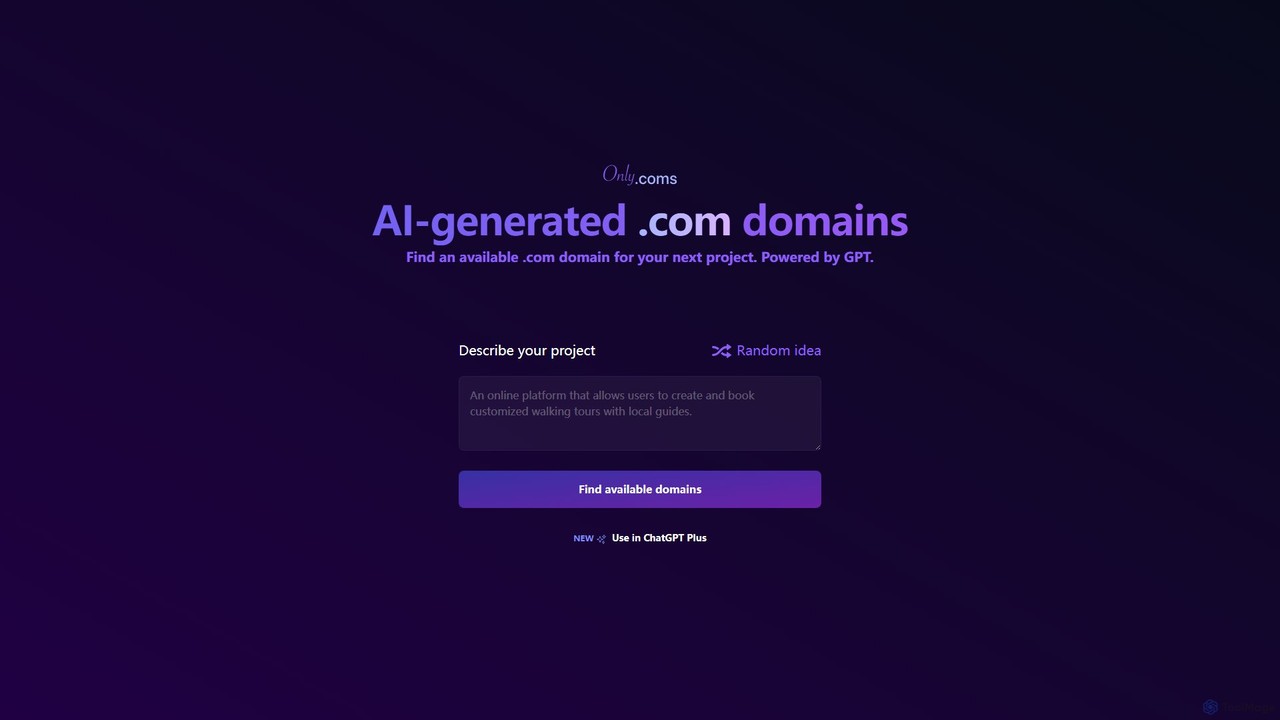
OnlyComs is an AI-powered domain name generator that specializes in finding creative, brandable, and available .com domains for your next project. Simply describe your idea, and the AI will instantly provide a list of unique domain suggestions, saving you hours of brainstorming.

Branding
Visits 5.8KFavorites 117Likes 123
Backdrop Build
Free

Backdrop Build

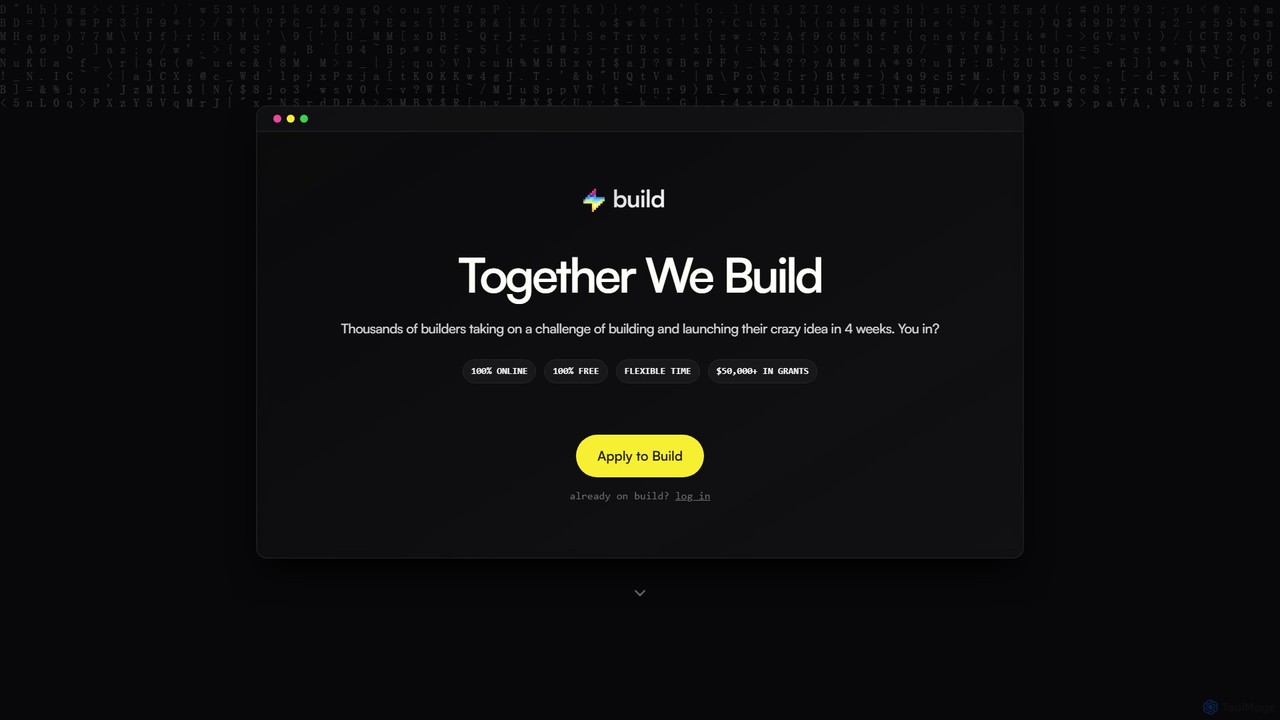
Backdrop Build is a free, 4-week online program for builders and developers to launch their ideas. It offers a supportive community, expert feedback, and over $50,000 in grants to help turn concepts in AI, Crypto, Gaming, and Open Source into reality.

Networking
Visits 6.7KFavorites 121Likes 123
MyHustleAI
Freemium

MyHustleAI

MyHustleAI is an AI-powered platform designed to help you discover personalized side hustle opportunities in under a minute. By analyzing your unique skills, interests, and financial goals, it generates a curated list of viable business ideas. Move beyond generic suggestions and find an actionable path to earning extra income that's perfectly suited to you, complete with initial steps and resource guidance.

Side Hustle
Visits 5.5KFavorites 122Likes 133
ideamate
Freemium

ideamate

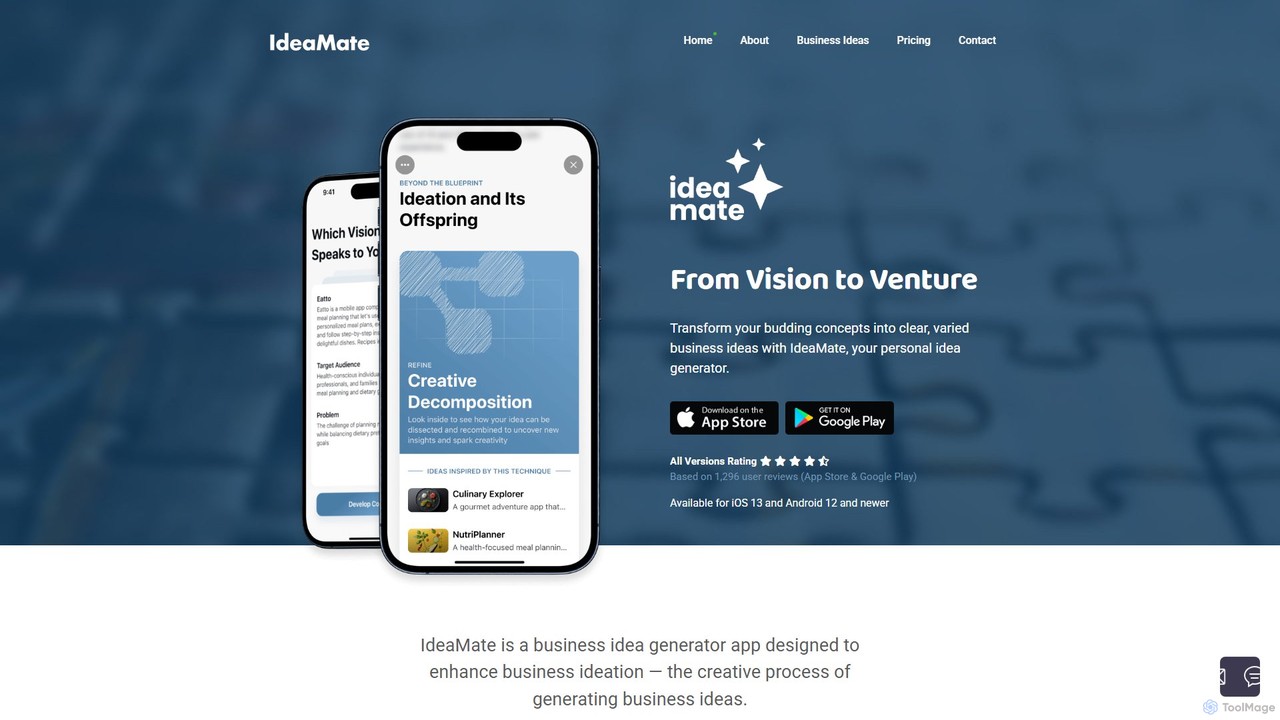
ideamate is an AI-powered mobile app designed for entrepreneurs to generate, refine, and brainstorm business ideas. It transforms initial concepts into well-structured, innovative ventures using creative thinking techniques like Six Thinking Hats and lateral thinking, providing a comprehensive toolkit for ideation, competitor analysis, and originality evaluation.

Market Research
Visits 5.4KFavorites 129Likes 117

About Startup

Startup AI tools are a category of artificial intelligence-powered solutions designed to accelerate growth, optimize operations, and streamline processes for new businesses. These tools leverage machine learning, natural language processing, and data analytics to provide actionable insights and automate repetitive tasks. They empower startups to validate ideas, analyze markets, create content, engage customers, and manage finances more efficiently, fostering rapid development and competitive advantage.

Core Features

  • Market Research & Validation: Analyze market trends, competitor data, and customer feedback to refine business ideas.
  • Automated Content Generation: Create marketing copy, social media posts, and email campaigns quickly and consistently.
  • Customer Engagement & Support: Deploy AI chatbots and virtual assistants for 24/7 customer service and personalized interactions.
  • Sales & Marketing Automation: Identify leads, personalize outreach, and automate campaign management to drive revenue.
  • Financial Modeling & Forecasting: Build accurate financial projections, manage budgets, and optimize resource allocation.

Use Cases

Startups across various industries utilize these tools to gain an edge. Founders use them for initial idea validation and market sizing. Marketing teams leverage AI for rapid content creation and targeted campaigns. Customer service departments deploy AI for efficient inquiry handling, while sales teams benefit from AI-driven lead qualification and personalized outreach strategies.

How to Choose

When selecting AI tools for your startup, consider scalability to match your growth trajectory and seamless integration with existing platforms. Evaluate the specific feature set against your immediate business needs and long-term goals. Assess the pricing model for cost-effectiveness and ensure the tool offers an intuitive user interface with minimal technical barriers for your team.

Featured tool rankings

Startup use cases

1

Market Validation & Idea Testing

Founders and product managers use AI tools to analyze vast datasets, including market trends, competitor strategies, and customer sentiment from social media and reviews. This helps validate new business ideas, identify unmet needs, and refine product-market fit before significant investment, reducing risk and accelerating development cycles.

2

Automated Marketing Content Creation

Startup marketing teams leverage AI content generators to produce high-quality blog posts, social media captions, email newsletters, and ad copy at scale. By inputting key messages and target audience profiles, they can quickly generate multiple content variations, saving hours of manual writing and ensuring consistent brand voice across all channels.

3

Streamlined Customer Support & Engagement

Early-stage companies deploy AI-powered chatbots and virtual assistants to provide instant, 24/7 customer support. These tools handle common inquiries, guide users through FAQs, and even personalize interactions based on past behavior, significantly improving response times and freeing up limited human resources for more complex customer issues.

4

Efficient Sales Lead Generation & Qualification

Sales development representatives (SDRs) and business development teams utilize AI to identify high-potential leads by analyzing demographic data, online behavior, and engagement signals. AI can also qualify prospects by assessing their likelihood to convert, allowing sales teams to focus their efforts on the most promising opportunities and accelerate the sales pipeline.

5

Financial Forecasting & Budget Optimization

Startup finance managers and founders employ AI-driven tools to create accurate financial models, forecast revenue, and manage expenses. By analyzing historical data and market indicators, these tools provide insights into cash flow, profitability, and resource allocation, enabling data-backed budgeting decisions and supporting sustainable growth strategies.

6

Automated Legal Document Review & Compliance

Startups, often with limited legal resources, use AI to review contracts, identify potential risks, and ensure compliance with regulations. These tools can quickly scan legal documents for specific clauses, inconsistencies, or non-compliance issues, significantly reducing the time and cost associated with legal due diligence and protecting the business from future liabilities.

Startup FAQ

What are AI tools for Startups?

AI tools for startups are specialized artificial intelligence applications designed to help new businesses grow rapidly, operate efficiently, and make data-driven decisions. They automate tasks, provide insights, and enhance various functions from marketing and sales to customer support and finance, enabling startups to compete effectively with limited resources.

How can startups choose the right AI tools?

When selecting AI tools, startups should prioritize solutions that offer scalability to grow with their business, seamless integration with existing software, and a clear return on investment. Evaluate the tool's specific features against your core needs, consider its ease of use for your team, and assess the vendor's support and pricing model for long-term viability.

What are the main benefits of using AI in a startup?

The primary benefits for startups include increased operational efficiency through automation, enhanced decision-making with data-driven insights, and improved customer experiences via personalized interactions. AI also helps reduce costs, accelerate product development, and gain a competitive edge by enabling faster innovation and market responsiveness.

Which areas of a startup can benefit most from AI?

AI can significantly benefit several key areas: marketing (content creation, personalization), sales (lead generation, qualification), customer service (chatbots, support automation), product development (idea validation, feature optimization), operations (workflow automation), and finance (forecasting, budgeting). Its versatility makes it valuable across the entire business lifecycle.

What challenges should startups consider when adopting AI?

Startups adopting AI should be mindful of challenges such as ensuring high-quality data for effective AI performance, managing the complexity of integrating new AI systems, and the initial costs associated with implementation and training. Additionally, finding skilled AI talent and addressing ethical considerations related to data privacy and algorithmic bias are crucial.