ToolMage
Sign in

Best 1 Generators for Utilities

Popular Generators in Utilities include cronbuilder, helping you work more efficiently.

cronbuilder
Free

cronbuilder

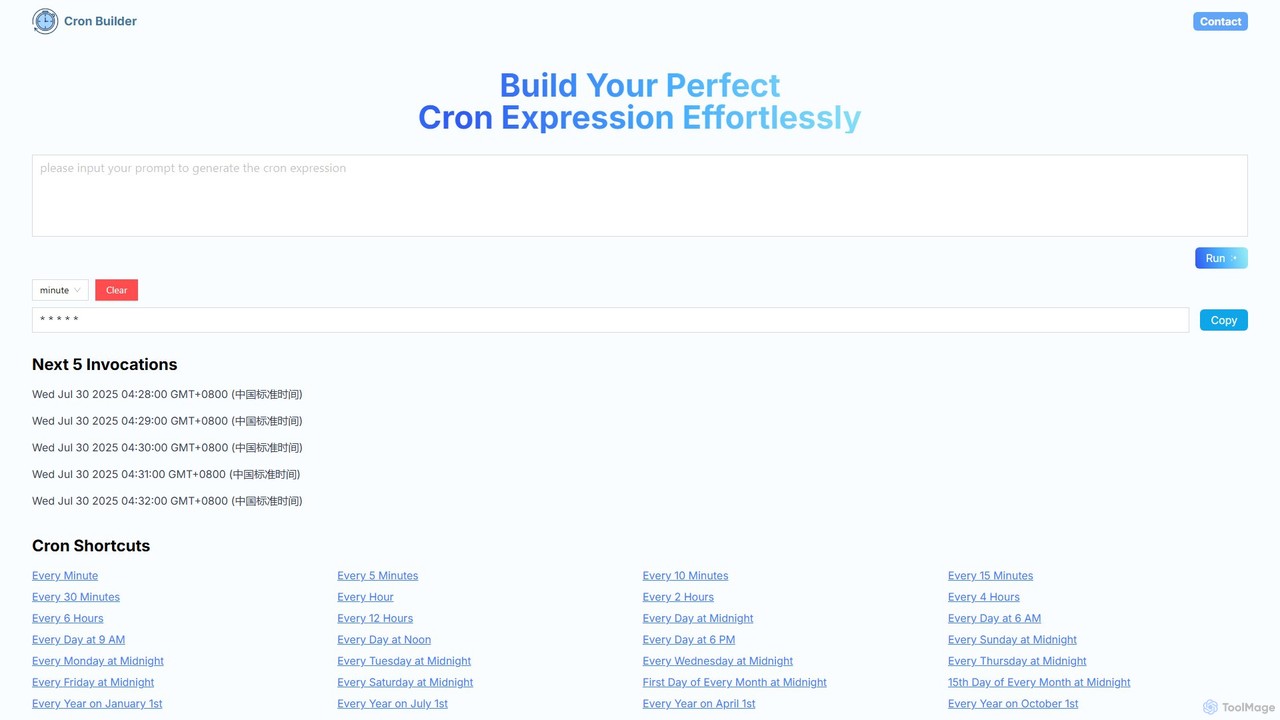
cronbuilder is an AI-powered tool that simplifies the creation of cron expressions. Simply describe your desired schedule in natural language, and the AI will instantly generate the correct cron syntax. It includes real-time validation by showing upcoming execution times and offers a vast library of presets for common tasks, making it ideal for developers, sysadmins, and DevOps engineers.

Task Scheduling
Visits 6.4KFavorites 106Likes 117

About Generators

Generators are AI-powered tools that create entirely new content, data, or assets from scratch based on user prompts or inputs. These tools typically leverage advanced deep learning models, such as Large Language Models (LLMs) for text or Generative Adversarial Networks (GANs) for images, to learn patterns from vast datasets and produce novel outputs. They significantly expand creative and production possibilities, enabling individuals and businesses to rapidly generate diverse forms of content like text, images, audio, video, and even code. As a vital part of the Utilities category, AI generators automate complex content creation workflows, dramatically boosting efficiency and fostering innovation across various industries.

Core Features

  • Text Generation: Automatically produces articles, emails, marketing copy, scripts, and code snippets.
  • Image Generation: Creates unique images, illustrations, concept art, and design elements from textual descriptions.
  • Audio & Music Generation: Composes background music, sound effects, and synthetic voices for various media projects.
  • Video Generation: Transforms text or images into short videos, animations, or dynamic visual content.
  • Code Generation: Assists developers by generating boilerplate code, functions, or entire scripts based on requirements.

Applicable Scenarios

AI Generators are indispensable for content creators, marketers, developers, and designers. They are used in scenarios requiring rapid content scaling, creative ideation, or the automation of repetitive creation tasks. From generating unique social media visuals for a marketing campaign to drafting personalized email sequences for customer outreach, these tools streamline workflows and accelerate output.

How to Choose

When selecting an AI Generator, consider the quality and fidelity of its output, the specific content types it supports (e.g., text, image, audio), and its customization options. Evaluate the ease of use, integration capabilities with existing tools, and the pricing model. Additionally, assess the tool's scalability to ensure it can meet your future content generation demands.

Generators use cases

1

Automating Marketing Content Creation

Marketing teams frequently face the challenge of producing a high volume of diverse content for various channels. AI generators enable them to rapidly create social media posts, generate multiple ad copy variations for A/B testing, and draft blog outlines or email newsletters. This significantly streamlines the content pipeline, ensures a consistent brand voice, and allows marketers to focus on strategy rather than repetitive writing tasks, ultimately boosting campaign efficiency and reach.

2

Accelerating Graphic Design & Concept Art

For designers and artists, AI generators are powerful tools for accelerating the ideation and creation process. They can be used to generate initial concept art for video game characters or film environments, produce unique textures and patterns, or quickly develop various design elements for websites and mobile applications. This capability allows creatives to explore numerous visual directions in a fraction of the time, fostering innovation and reducing the manual effort involved in early-stage design.

3

Drafting Personalized Business Communications

Business professionals, including sales representatives, customer service agents, and HR personnel, can leverage AI generators to craft highly personalized communications. This includes drafting tailored email responses to customer inquiries, generating unique sales pitches based on client profiles, or summarizing complex reports into concise internal memos. By automating the initial drafting, these tools save considerable time, ensure consistency in messaging, and allow professionals to focus on relationship building and strategic decision-making.

4

Enhancing Software Development Productivity

Developers can significantly boost their productivity by integrating AI code generators into their workflow. These tools can automatically create boilerplate code for common functions, generate test data for various scenarios, or even suggest entire code snippets based on natural language descriptions of desired functionality. This reduces the need for repetitive manual coding, minimizes errors, and allows developers to concentrate on more complex problem-solving and architectural design, accelerating project timelines.

5

Producing Unique Audio & Video Assets

Content creators, podcasters, and filmmakers often require unique audio and visual elements for their projects. AI generators can compose royalty-free background music tailored to specific moods or genres, generate custom sound effects for animations, or even create short animated video clips from text prompts. This capability provides a cost-effective and efficient way to enrich multimedia content, offering a vast library of original assets without the need for extensive manual production or licensing fees.

6

Scaling E-commerce Product Descriptions

E-commerce businesses with large product catalogs face the daunting task of writing unique and engaging descriptions for each item. AI generators excel in this area by automatically generating compelling and SEO-optimized product descriptions based on key features and attributes. This not only saves immense manual effort and time but also ensures consistency, improves search engine visibility, and helps drive conversion rates by providing detailed and attractive product information to potential customers at scale.

Generators FAQ

What are AI Generators?

AI Generators are artificial intelligence tools designed to create new, original content or data from scratch, rather than editing existing material. They leverage advanced machine learning models, like LLMs for text or GANs for visuals, to understand patterns and generate outputs such as articles, images, music, or code. These tools are invaluable for automating creative tasks and scaling content production efficiently.

How do AI Generators work?

AI Generators operate by training on vast datasets of existing content (e.g., text, images, audio). Through deep learning, they learn the underlying patterns, styles, and structures within this data. When given a prompt or input, the AI model uses its learned knowledge to synthesize entirely new content that aligns with the input and its training, effectively "generating" something original.

What types of content can AI Generators create?

AI Generators are highly versatile and can create a wide array of content types. This includes text (e.g., articles, emails, code, scripts), images (e.g., digital art, photos, logos, concept designs), audio (e.g., music, sound effects, voiceovers), and even short videos or animations. The specific capabilities depend on the generator's specialized training and design.

How do I choose the best AI Generator for my needs?

To select the best AI Generator, first identify your primary content creation needs (e.g., text, images, audio). Evaluate the quality and consistency of the generator's output, its customization options, and the ease of use of its interface. Consider its integration capabilities with your existing workflows and tools, as well as its pricing structure and scalability to match your project demands.

What's the difference between AI Generators and AI Editors?

The fundamental difference lies in their primary function: AI Generators *create* new content from nothing, based on prompts or parameters, producing original outputs. In contrast, AI Editors *modify, enhance, or transform* existing content. For example, an image generator creates a new image, while an image editor might remove a background or adjust colors on an existing photo. Generators are focused on creation, while editors focus on refinement.