DocPDFHub
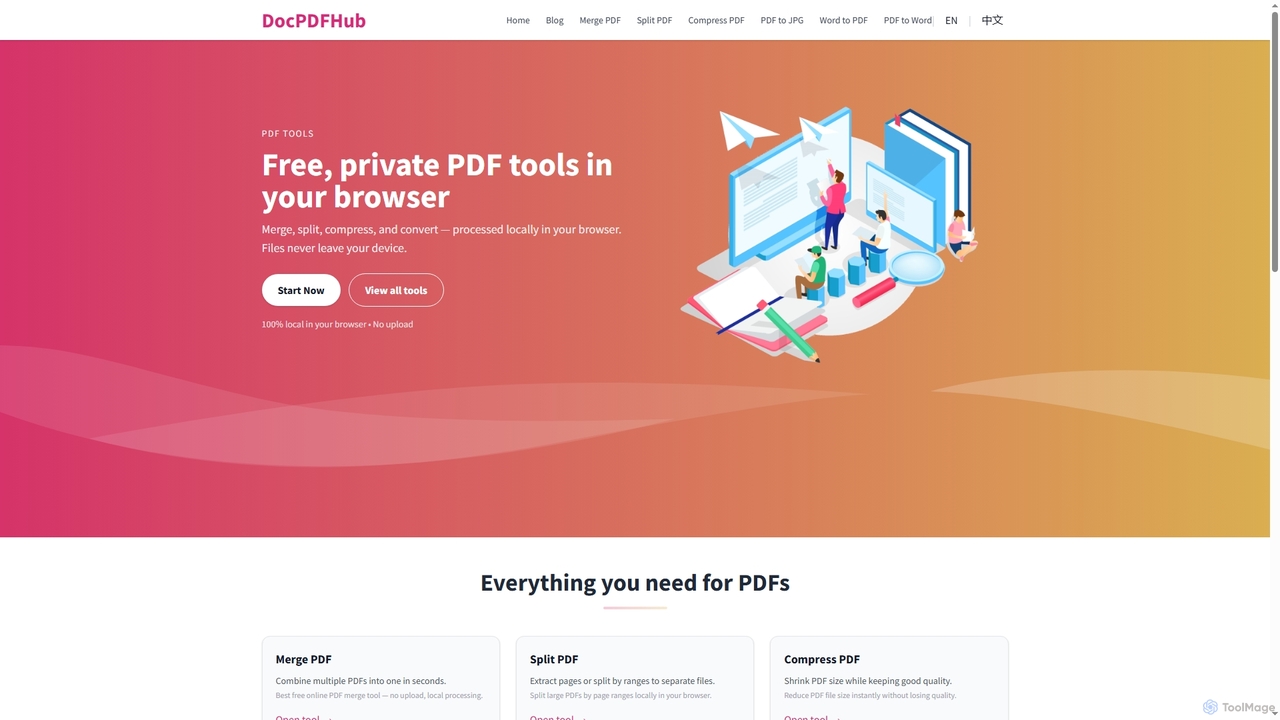
DocPDFHub is a suite of free, privacy-focused online PDF and Word tools that process documents entirely within your …
DocPDFHub is a suite of free, privacy-focused online PDF and Word tools that process documents entirely within your browser. It offers essential functionalities like merging, splitting, compressing PDFs, and converting between PDF, Word, and JPG formats, ensuring your files never leave your device. Designed for speed, simplicity, and security, it's ideal for everyday document management without uploads or sign-ups.
About Privacy Tools
Privacy Tools are specialized AI-powered solutions designed to safeguard digital privacy for individuals and organizations. Leveraging advanced encryption, data anonymization, secure browsing, and access control mechanisms, these tools actively protect sensitive information from unauthorized access, tracking, and misuse. They are crucial for maintaining confidentiality, preventing identity theft, and ensuring compliance with evolving data protection regulations in an increasingly interconnected world.
Core Features
- Data Encryption: Secures communications and stored data, rendering it unreadable to unauthorized parties.
- Secure Browsing & VPNs: Masks IP addresses, encrypts internet traffic, and blocks trackers to ensure anonymous online activity.
- Identity Protection: Monitors for personal data breaches and helps manage digital footprints to prevent identity theft.
- Data Anonymization: Transforms identifiable data into anonymous formats for analysis without compromising individual privacy.
- Privacy Auditing & Compliance: Scans systems and data practices to identify vulnerabilities and ensure adherence to privacy laws like GDPR or CCPA.
Applicable Scenarios
Individuals concerned about online surveillance and data breaches utilize privacy tools for secure browsing and personal data protection. Businesses handling sensitive customer information deploy these tools to encrypt communications, anonymize data for analytics, and ensure regulatory compliance. Developers integrate privacy-by-design principles using these tools to build secure applications.
How to Choose
When selecting Privacy Tools, consider the specific privacy threats you face and the level of protection required. Evaluate features like encryption strength, VPN server locations, data anonymization capabilities, and ease of integration with existing systems. Prioritize tools with strong security audits, transparent data handling policies, and a proven track record of protecting user privacy, ensuring they align with your budget and technical expertise.

Privacy ToolsUse Cases
Protecting Personal Identity During Online Browsing
An individual concerned about online tracking and data collection can utilize privacy tools like VPNs and secure browsers. By encrypting internet traffic and masking their IP address, these tools prevent websites, advertisers, and internet service providers from monitoring their online activities, ensuring anonymity and protecting personal browsing habits from being profiled or exploited.
Protecting Personal Online Activity
An individual user concerned about online tracking and data collection employs a privacy tool with VPN and ad-blocking features. By activating the VPN, their IP address is masked, and internet traffic is encrypted, preventing internet service providers and advertisers from monitoring their browsing habits. The ad blocker further enhances privacy by stopping intrusive ads and trackers, resulting in a significantly more private and secure online experience.
Ensuring Corporate Data Compliance and Governance
A compliance officer in a multinational corporation uses privacy tools to scan internal systems and external data flows for potential GDPR or CCPA violations. These tools automatically identify sensitive data, flag non-compliant practices, and generate reports, significantly reducing the manual effort required to maintain regulatory adherence and mitigate legal risks associated with data breaches.
Securing Sensitive Business Communications
A small business handling confidential client data needs to ensure secure communication channels. They implement an email encryption tool that automatically encrypts all outgoing messages and attachments. This ensures that only the intended recipient with the correct decryption key can access the content, safeguarding sensitive client information from potential eavesdropping or data breaches during transmission, thereby maintaining client trust and regulatory compliance.
Secure Communication and File Sharing for Sensitive Information
Journalists or legal professionals often need to share highly sensitive documents and communicate securely. Privacy tools offer end-to-end encrypted messaging platforms and secure file transfer services that ensure only authorized recipients can access the content. This prevents eavesdropping and unauthorized data interception, safeguarding sources and confidential case details.
Anonymizing Customer Data for Market Research
A marketing analyst needs to conduct market research using customer demographic and purchasing data without violating individual privacy. They utilize a data anonymization tool to strip identifiable information (like names, addresses, or specific IDs) from the dataset, replacing it with pseudonyms or aggregated values. This allows for robust statistical analysis and trend identification while ensuring that no individual customer can be re-identified, adhering to privacy regulations.
Managing and Minimizing Digital Footprint
Individuals wanting to reduce their online presence and prevent personal data from being publicly accessible can use privacy tools designed for digital footprint management. These tools help identify where personal information exists online (e.g., old accounts, public records) and assist in requesting its removal or anonymization, enhancing personal control over digital identity.
Preventing Digital Fingerprinting and Tracking
A privacy-conscious user wants to minimize their digital footprint and prevent websites from creating unique profiles based on their browser and device characteristics. They use a browser extension privacy tool that actively spoofs browser fingerprints, blocks third-party cookies, and randomizes user-agent strings. This makes it significantly harder for advertisers and data brokers to track their online movements across different sites, enhancing their anonymity.
Conducting Privacy Impact Assessments for New Products
A product development team launching a new service that collects user data employs privacy assessment tools. These tools help analyze the data collection methods, storage, and processing to identify potential privacy risks early in the development cycle. They provide recommendations for privacy-by-design implementation, ensuring the product is compliant and trustworthy from inception.
Managing and Deleting Personal Data Online
An individual wants to exercise their "right to be forgotten" and remove old, irrelevant personal information from various online platforms and data brokers. They use a digital identity management tool that scans the web for their personal data, identifies where it's stored, and automates or facilitates the process of requesting data deletion from websites and data aggregators. This helps them regain control over their online presence and reduce exposure to privacy risks.
Anonymizing Data for Research and Analytics
Researchers or data scientists working with large datasets containing personal information can use privacy tools to anonymize the data before analysis. These tools apply techniques like k-anonymity or differential privacy to obscure individual identities while preserving the statistical utility of the dataset. This enables valuable insights to be extracted without compromising the privacy of the subjects.
Ensuring GDPR/CCPA Compliance for Enterprises
A multinational corporation operating in regions with strict data protection laws (like GDPR or CCPA) needs to demonstrate compliance. They deploy an enterprise-grade privacy auditing tool that continuously monitors data flows, access logs, and storage locations for sensitive personal data. The tool generates compliance reports, identifies non-compliant data practices, and helps automate data subject access requests, significantly reducing legal risks and potential fines.