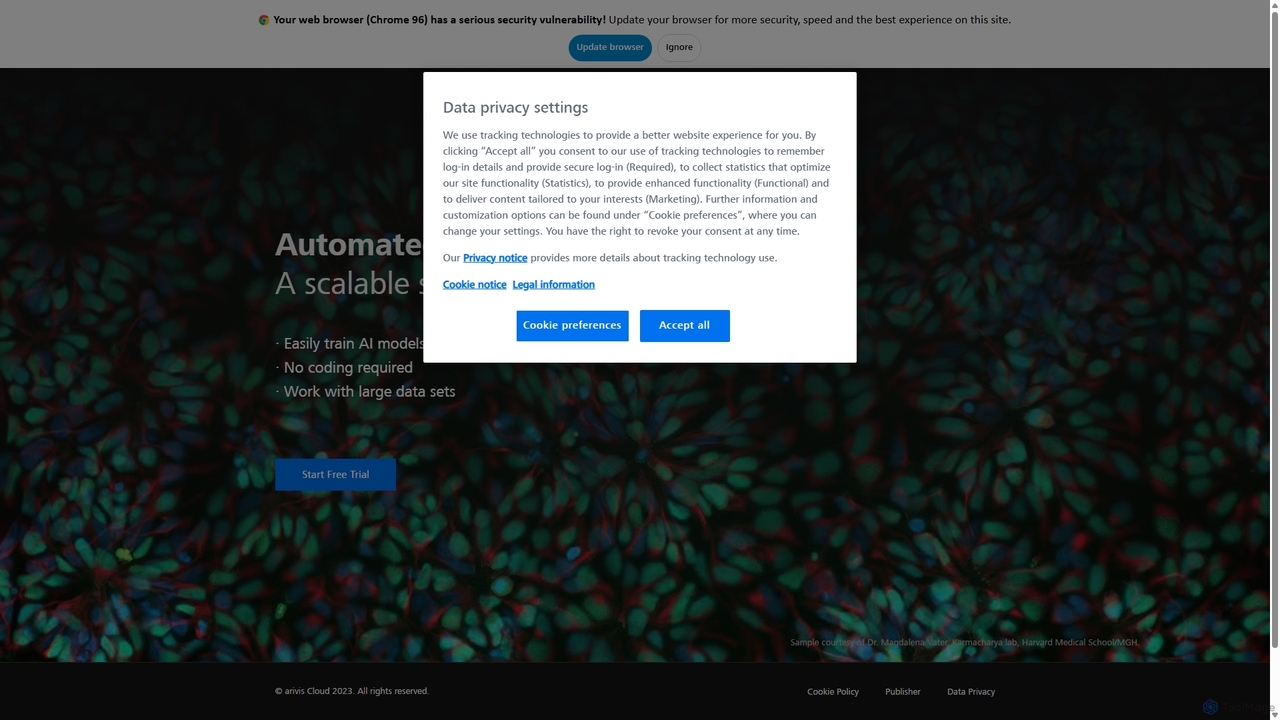
APEER (now part of arivis Cloud) is an AI-powered, cloud-based platform for automated scientific image analysis. It empowers researchers in biology and biotech to leverage deep learning for complex tasks like image segmentation and object detection without coding. It streamlines workflows, increases throughput, and ensures reproducible results for microscopy and cell analysis.

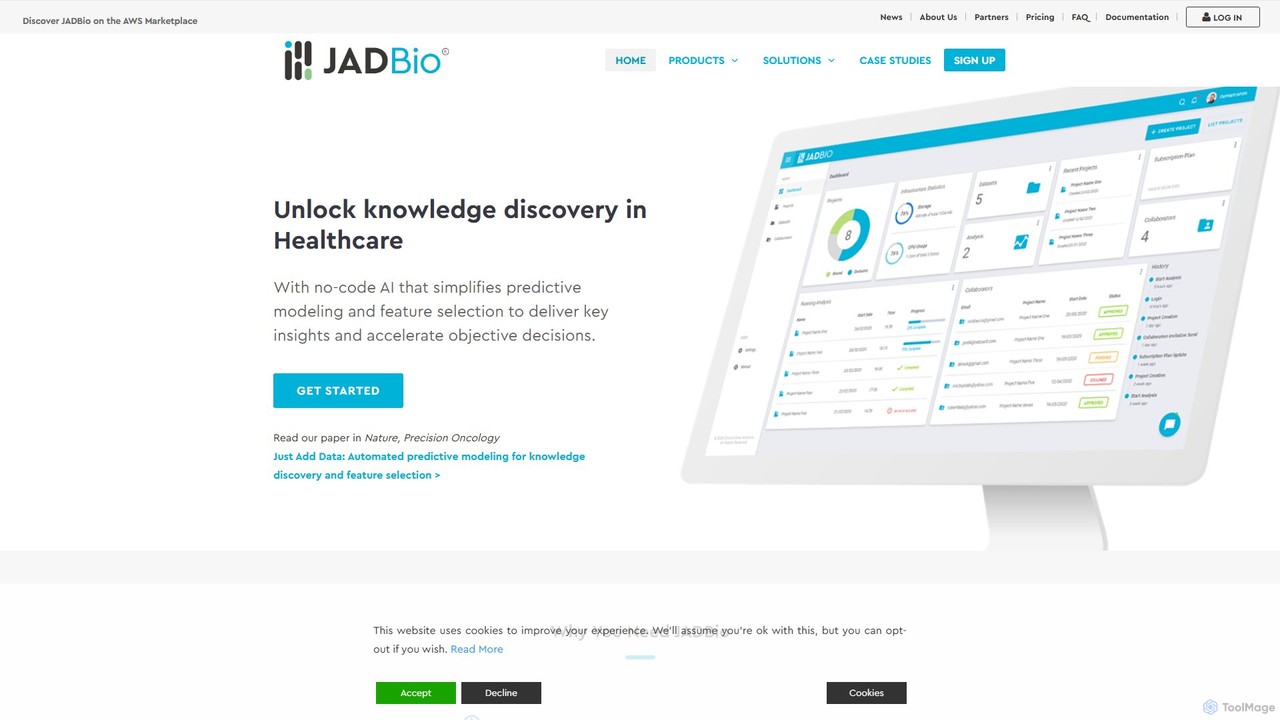
JADBio is a no-code Automated Machine Learning (AutoML) platform designed for life sciences and biotechnology. It specializes in analyzing complex, high-dimensional biological data (omics) to accelerate biomarker discovery, identify predictive biosignatures, and build accurate predictive models for precision medicine and translational research.
Product overview
APEER Product overview
APEER (now part of arivis Cloud) is an AI-powered, cloud-based platform for automated scientific image analysis. It empowers researchers in biology and biotech to leverage deep learning for complex tasks like image segmentation and object detection without coding. It streamlines workflows, increases throughput, and ensures reproducible results for microscopy and cell analysis.
JADBio Product overview
JADBio is a no-code Automated Machine Learning (AutoML) platform designed for life sciences and biotechnology. It specializes in analyzing complex, high-dimensional biological data (omics) to accelerate biomarker discovery, identify predictive biosignatures, and build accurate predictive models for precision medicine and translational research.
Detailed feature comparison
| Feature | APEER | JADBio |
|---|---|---|
| Primary category | Image Processing | Machine Learning |
| Added | 2025-09-13 | 2025-08-15 |
| Pricing | Freemium | Freemium |
| Official website | apeer.com | jadbio.com |
| Product type | Website | Website |
| Performance data | ||
| User rating | Not verified | Not verified |
| Comments | 0 | 0 |
| Monthly visits | 4.2K | 2.4K |
| Monthly growth | Not verified | -26.8% |
| Favorites | 100 | 98 |
| Details | View details | View details |
APEER vs JADBio monthly traffic
Compare APEER and JADBio by monthly reach, traffic trend, visit depth, top regions, and acquisition sources.
How to interpret the traffic data
In the APEER vs JADBio monthly traffic comparison, APEER currently shows 4.2K visits and JADBio shows 2.4K; APEER has about 1.7 times the visible traffic of JADBio, an absolute difference of about 1.8K visits. This reflects visible reach, not feature quality or paid users.
Only JADBio has complete third-party traffic details; APEER uses visits recorded inside ToolMage. These scopes cannot estimate market share directly, and on-site views should not be treated as the product’s total website traffic.
APEER monthly traffic:
Latest traffic
JADBio monthly traffic:
Latest traffic
Monthly traffic trend
- 2025/9: 8.8K Monthly visits
- 2026/1: 4.2K Monthly visits
- 2026/2: 2.8K Monthly visits
- 2026/3: 3.3K Monthly visits
- 2026/4: 3.3K Monthly visits
- 2026/5: 2.4K Monthly visits
Top regions
Top 5 countries/regions
| Country/region | Percentage | Traffic |
|---|---|---|
| 🇮🇳India | 57.58% | 1.4K |
| 🇺🇸United States | 42.42% | 1K |
Search keywords
Usage comparison
Compare the core capabilities of APEER and JADBio
APEER Core features
JADBio Core features
Use cases
APEER Use cases
JADBio Use cases
Best suited roles
APEER Best suited roles
JADBio Best suited roles
APEER vs JADBio:In-depth comparison and selection guidance
First decide whether the products solve the same kind of need
This in-depth APEER vs JADBio comparison uses only the product records, taxonomy, audience, traffic, and community signals available on this page. APEER is primarily listed under “Image Processing”, while JADBio is primarily listed under “Machine Learning”, so the first decision is whether your actual task matches their recorded scope.
The structured fields currently show these decision-relevant differences: Primary category (APEER: Image Processing; JADBio: Machine Learning); Monthly visits (APEER: 4.2K; JADBio: 2.4K); Favorites (APEER: 100; JADBio: 98); Website (APEER: apeer.com; JADBio: jadbio.com); Added (APEER: 2025-09-13; JADBio: 2025-08-15). These facts are more useful for selection than brand visibility alone.
What market visibility and monthly traffic mean
In the APEER vs JADBio monthly traffic comparison, APEER currently shows 4.2K visits and JADBio shows 2.4K; APEER has about 1.7 times the visible traffic of JADBio, an absolute difference of about 1.8K visits. This reflects visible reach, not feature quality or paid users.
Only JADBio has complete third-party traffic details; APEER uses visits recorded inside ToolMage. These scopes cannot estimate market share directly, and on-site views should not be treated as the product’s total website traffic.
The current traffic scope is not sufficient for a reliable product ranking. Treat monthly visits as a market-interest signal, then decide using taxonomy, use cases, pricing, and a like-for-like trial rather than reading exposure as product capability.
Product positioning, use cases, and roles
APEER and JADBio currently overlap in shared categories: Biotechnology and Biology. This can place both on the same shortlist, but it does not prove equal implementation, depth, or cost.
APEER's unique categories/tags are Image Processing, automated analysis, biotechnology, cell biology, cloud computing, deep learning, image analysis, and image segmentation; JADBio's are Machine Learning, AutoML, bioinformatics, biomarker discovery, data analysis, genomics, machine learning, and no-code. These unique fields are the strongest differentiators: validate the product whose recorded scope matches the task instead of following traffic alone.
What ratings, comments, and favorites can tell you
APEER has no verified rating, 0 comments, 100 favorites, and 112 likes;JADBio has no verified rating, 0 comments, 98 favorites, and 115 likes。
Neither product has enough rating or comment samples for a credible reputation ranking.
Selection guidance by actual need
When to evaluate APEER first
Put APEER on the priority trial list when the task aligns with “Image Processing” and especially Image Processing, automated analysis, biotechnology, cell biology, cloud computing, and deep learning, or the users include Bioinformatician, Biologist, Data Analyst (Life Sciences), and Lab Manager. This follows recorded positioning and does not imply unlisted capabilities are absent.
APEER also currently records: pricing is freemium, product type is website, 4.2K on-site monthly views, no verified user rating. Verify any hard requirement around price, platform, or reach before trial, and do not let sparse review data substitute for testing.
When to evaluate JADBio first
Put JADBio on the priority trial list when the task aligns with “Machine Learning” and especially Machine Learning, AutoML, bioinformatics, biomarker discovery, data analysis, and genomics. This follows recorded positioning and does not imply unlisted capabilities are absent.
JADBio also currently records: pricing is freemium, product type is website, 2.4K verified monthly visits, no verified user rating. Verify any hard requirement around price, platform, or reach before trial, and do not let sparse review data substitute for testing.
How to validate the recommendation before deciding
The available data describes positioning, public visibility, and community signals, but it cannot prove output quality, speed, integration effort, privacy, or long-term cost in your workflow. Before deciding, run the same representative tasks in APEER and JADBio, then record completion time, accuracy, manual corrections, and the real paid threshold. A like-for-like trial turns this comparison into a defensible adoption decision.
Comparison FAQ
How should I choose between APEER and JADBio?
Where does this comparison data come from?
What do unknown fields mean?
Related AI tools

BioGPT
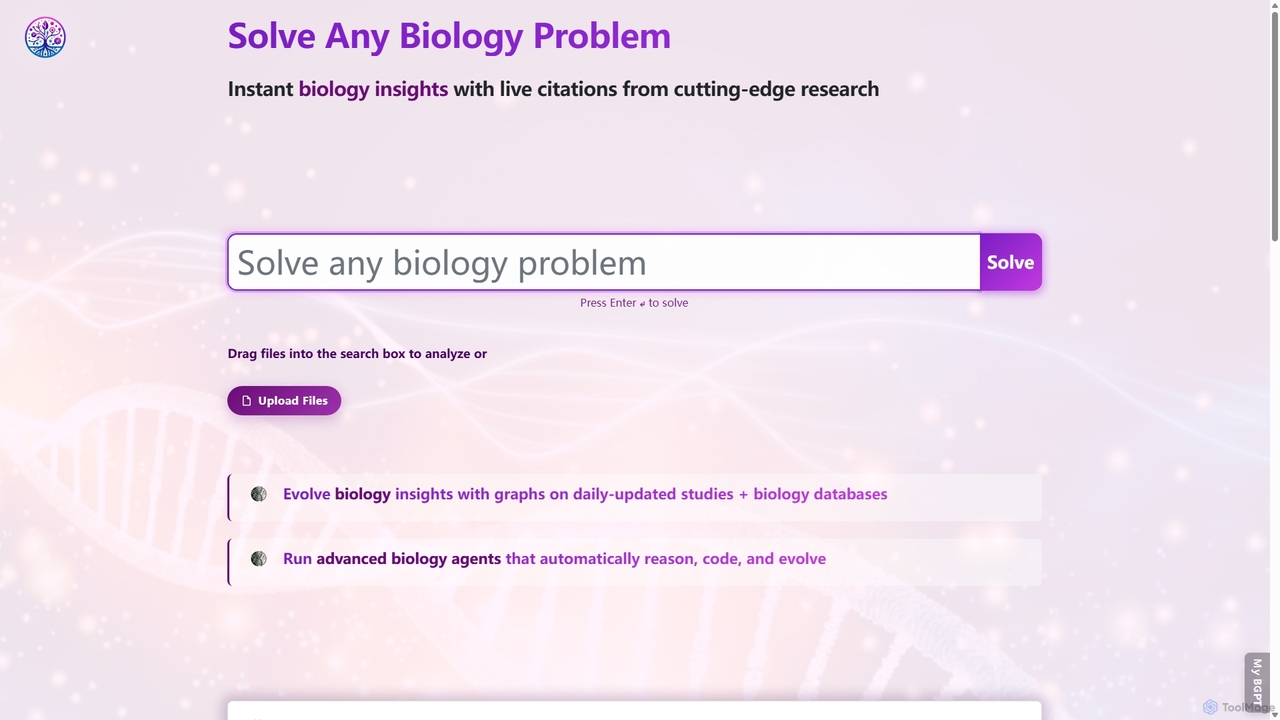
BioGPT is a specialized AI assistant for biologists, researchers, and students. It accelerates scientific discovery by solving complex biology problems, reviewing papers, analyzing data, visualizing results, designing experiments, and testing hypotheses across fields like genomics, neuroscience, and cancer biology.
Research
floatz
floatz is an AI-powered platform for the biotech and pharmaceutical industries, specializing in target validation and prioritization. It provides a "Foundational Evidence Audit" to de-risk R&D pipelines, using computational due diligence to assess the biological relevance and commercial viability of therapeutic targets, helping companies secure funding and make confident investment decisions.
Biotechnology
Zeon Systems
Zeon Systems is an AI-powered, full-stack lab automation platform designed for accessibility. It combines intelligent software with off-the-shelf robotic arms to automate complex experiments in biology, chemistry, and materials science. Users can describe protocols in plain English, and the system translates them into precise robotic actions, eliminating the need for coding or specialized training.
No Code
BioGPT
BioGPT is an AI-powered research assistant designed for the biology and life sciences community. It helps researchers, students, and professionals solve complex biological problems by analyzing scientific papers, designing experiments, interpreting data, generating hypotheses, and creating lab protocols, all based on cutting-edge research.
Learning
InsightAI
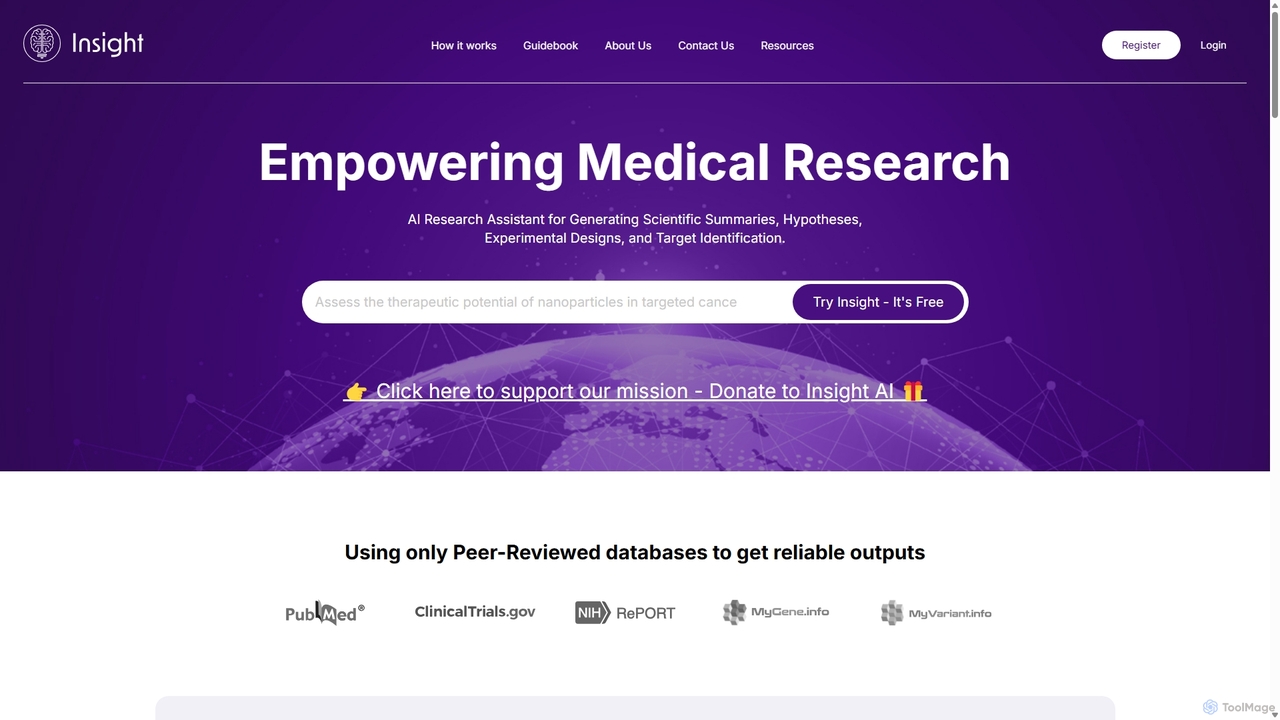
InsightAI is an AI-powered research assistant designed for the medical and life sciences fields. It streamlines the research process by generating scientific summaries, formulating hypotheses, creating experimental designs, and identifying potential drug targets. By integrating with peer-reviewed databases like PubMed, NIH Clinical Trials, and MyGene, InsightAI provides reliable, data-driven insights, saving researchers significant time on literature reviews and data analysis, thereby accelerating scientific discovery.
Academic
Neural Designer
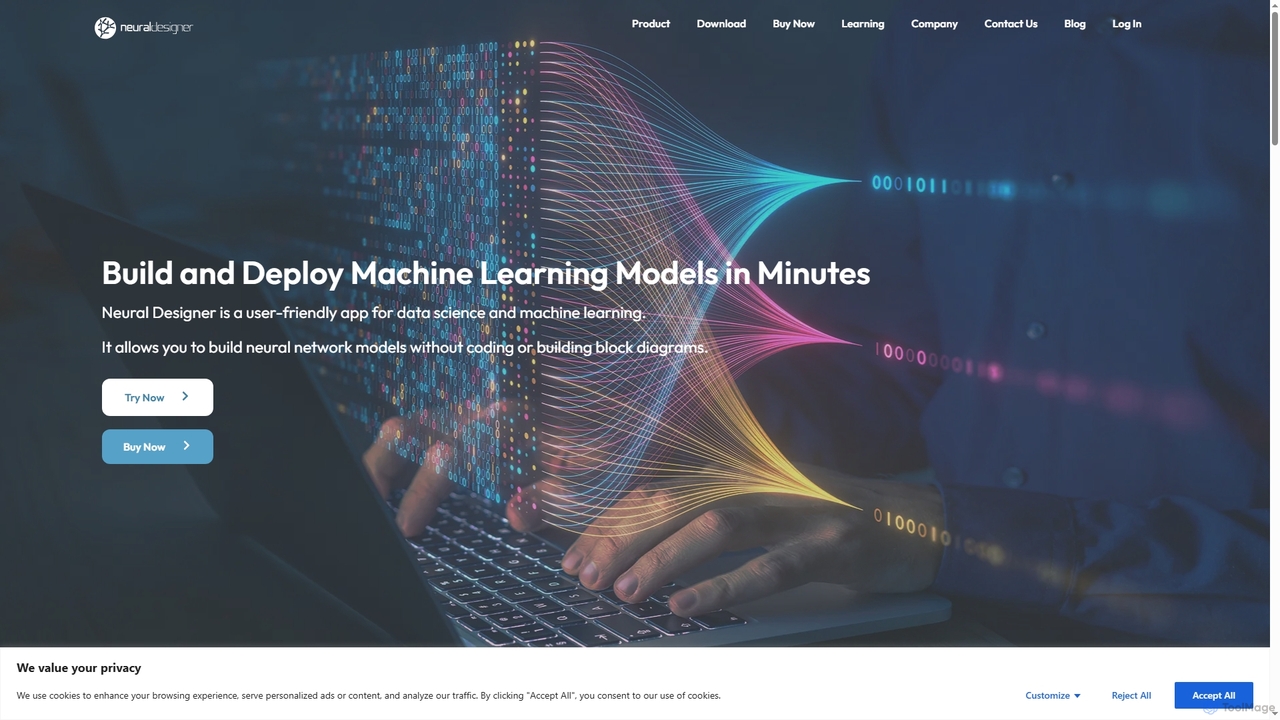
Neural Designer is a user-friendly, no-code machine learning platform specializing in neural networks. It enables users to build, train, and deploy advanced AI models for approximation, classification, and forecasting without writing any code or complex block diagrams. Designed for data scientists and organizations, it offers high performance, energy efficiency, and superior accuracy across various industries.
Predictive Analytics
emlylabs
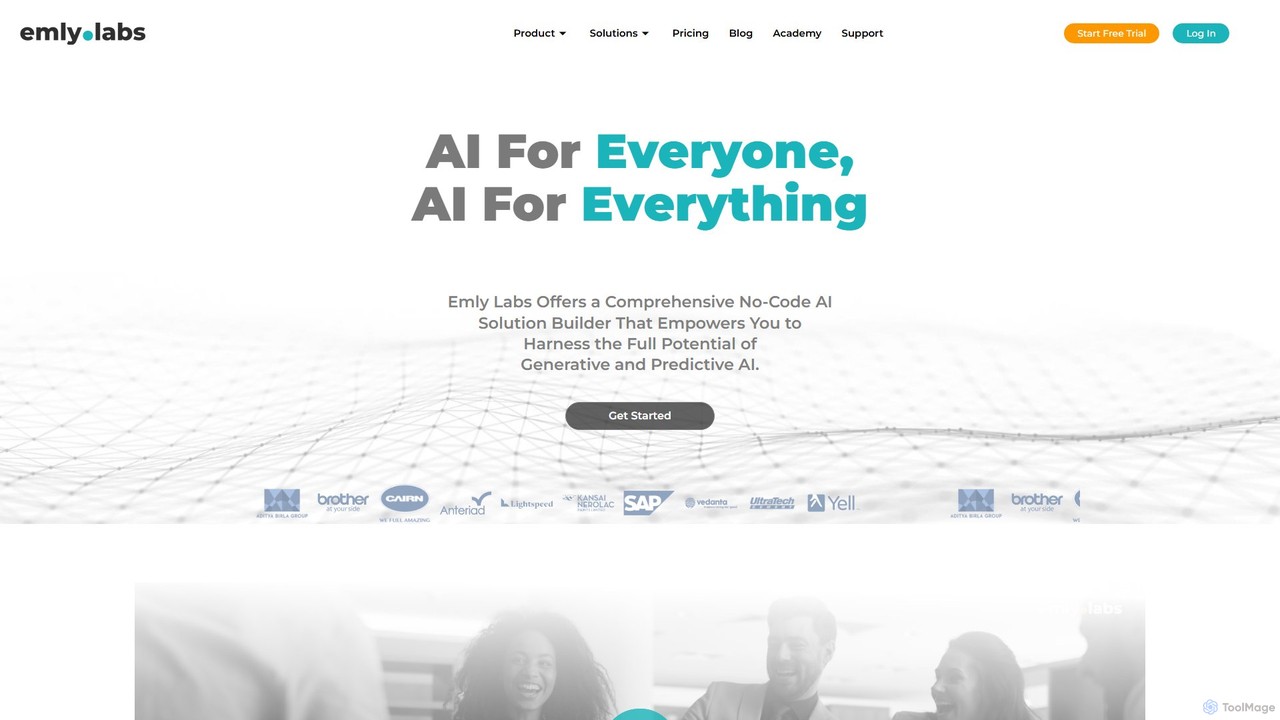
emlylabs is a comprehensive no-code AI platform that empowers users to build, deploy, and manage both generative and predictive AI solutions without writing any code. It's designed for businesses and individuals to harness AI for data preparation, model building, and project management, making advanced AI accessible to everyone.
Data Analysis
Constellab
Constellab is a sovereign AI and data science platform designed for the life sciences and biotechnology sectors. It provides a collaborative, no-code environment for data analysis, visualization, and project management, with flexible deployment options (cloud, on-premise) to ensure data security, traceability, and regulatory compliance.
Low Code No Code
Codenull.ai
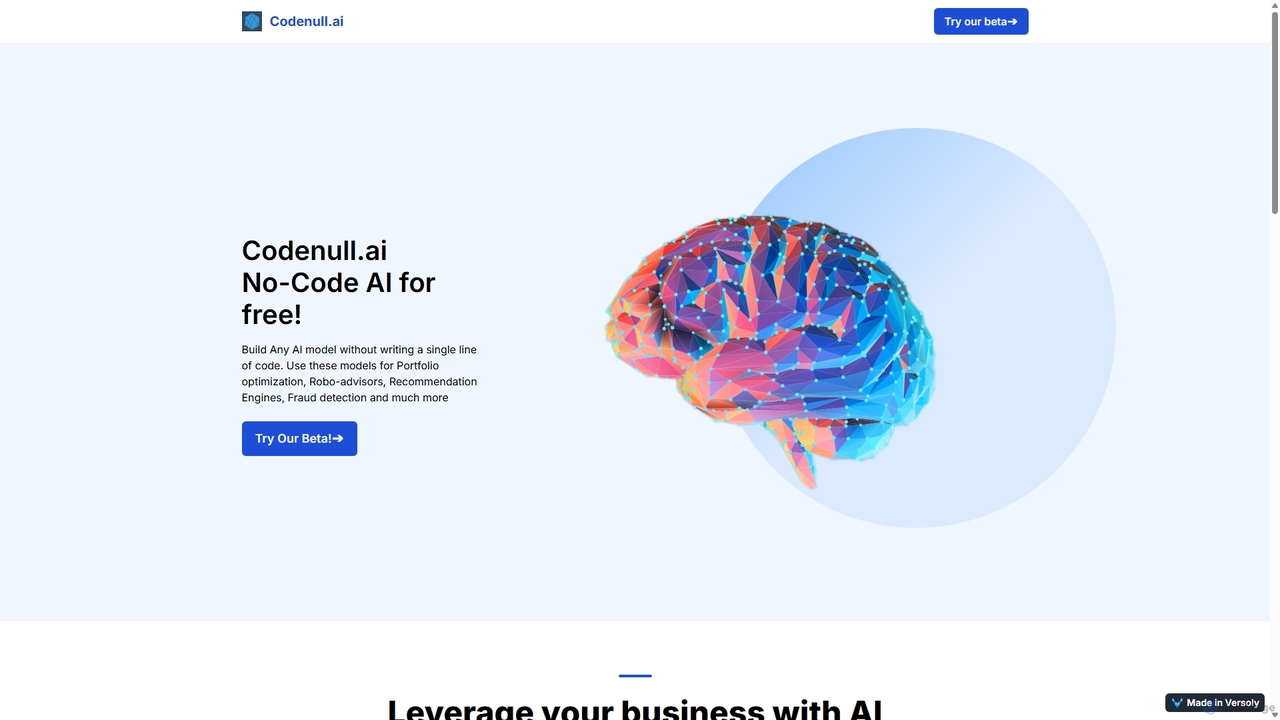
Codenull.ai is a no-code AI platform that empowers businesses to build, train, and deploy custom machine learning models without writing a single line of code. It transforms your business data into actionable predictions for sales forecasting, medical classification, portfolio optimization, and more, making advanced AI accessible to everyone.
Predictive Analytics
Platforma
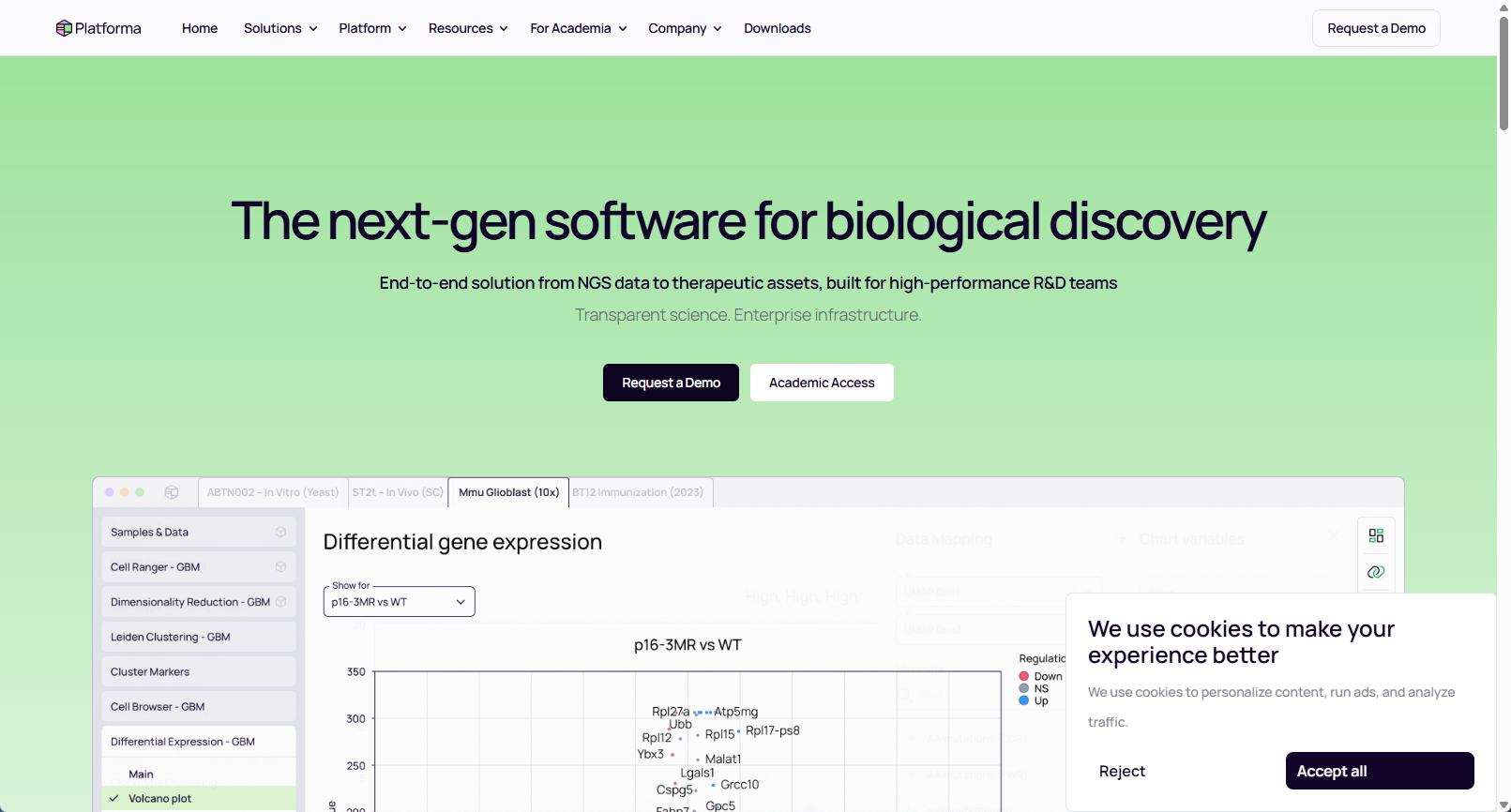
No-code bioinformatics platform for NGS data analysis, unifying antibody discovery, translational research, and multi-omics into one governed ecosystem.
Antibody Discovery
Reshape Biotech
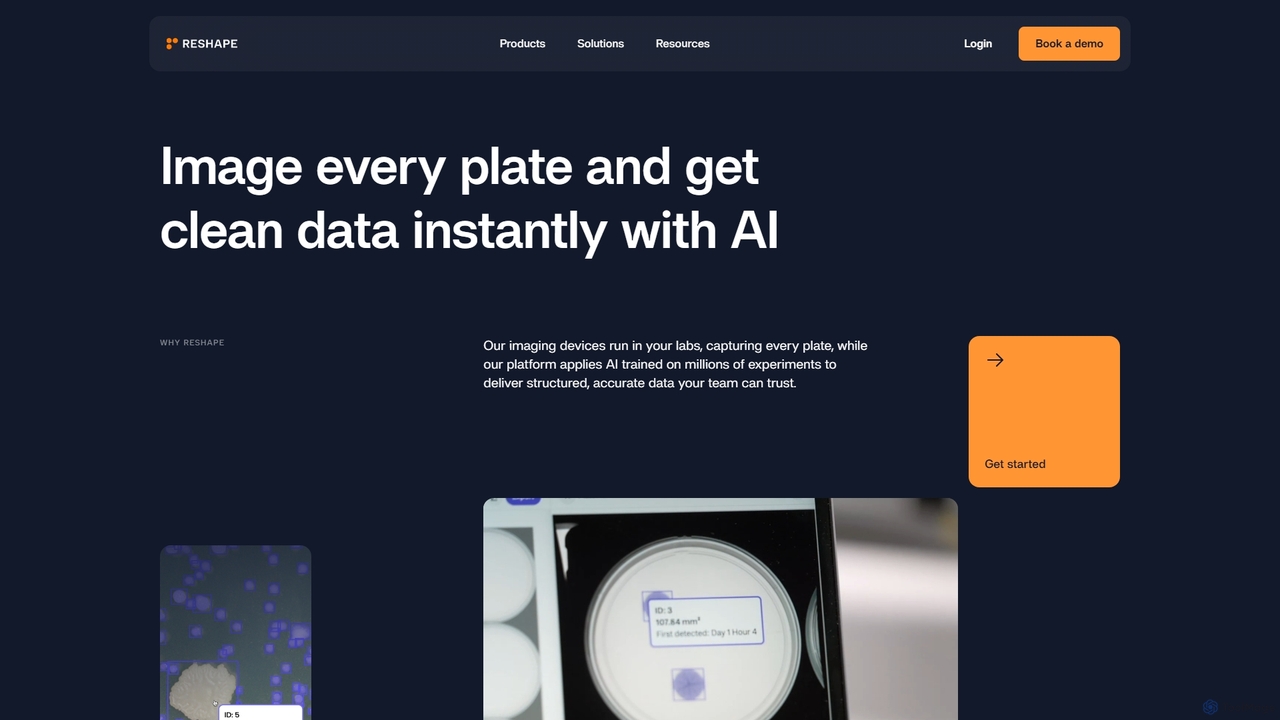
Reshape Biotech provides an AI-powered lab automation platform that combines automated imaging hardware with a cloud-based analysis system. It's designed for R&D and QC labs in biotechnology, agriculture, and food science to automate plate imaging, analyze experiments with AI, and generate structured, reproducible data, significantly accelerating research and development cycles.
Laboratory Automation
Verge Genomics
Verge Genomics is a biotechnology company leveraging an all-in-human, AI-powered platform, CONVERGE®, to discover and develop drugs for complex diseases. By analyzing vast human genomic datasets, it aims to accelerate the creation of effective treatments for conditions like ALS, Parkinson's, and Frontotemporal Dementia, moving from discovery to clinic significantly faster than traditional methods.
Machine Learning
Nahseo
Nahseo is an AI research environment that deploys autonomous agents to accelerate scientific discovery. It helps researchers overcome human bandwidth limitations by automating literature analysis, hypothesis generation, and experiment design, fostering data-driven decision-making across various scientific domains.
Autonomous Agents
Kaggle
Kaggle is the world's largest online community for data scientists and machine learning practitioners. Owned by Google, it provides a platform to explore datasets, build models in a web-based environment, compete in machine learning challenges, and access educational resources. It offers free access to powerful computational resources, including GPUs and TPUs, making it an essential tool for anyone from beginners to seasoned experts in the AI and data science fields.
Datasets
HEROZ
HEROZ is a leading Japanese AI technology company that provides advanced B2B solutions across various industries. Leveraging core technologies developed from its world-champion Shogi (Japanese chess) AI, HEROZ offers custom AI development, data analysis, and generative AI platforms to drive business transformation in finance, construction, entertainment, and more.
Ai Solutions