Arkhet is an AI-first prototyping platform designed for product teams, enabling visual thinkers to generate interactive UI prototypes and user flows rapidly. It transforms wireframes and contextual annotations into high-fidelity designs, integrating design systems and real-time collaboration.
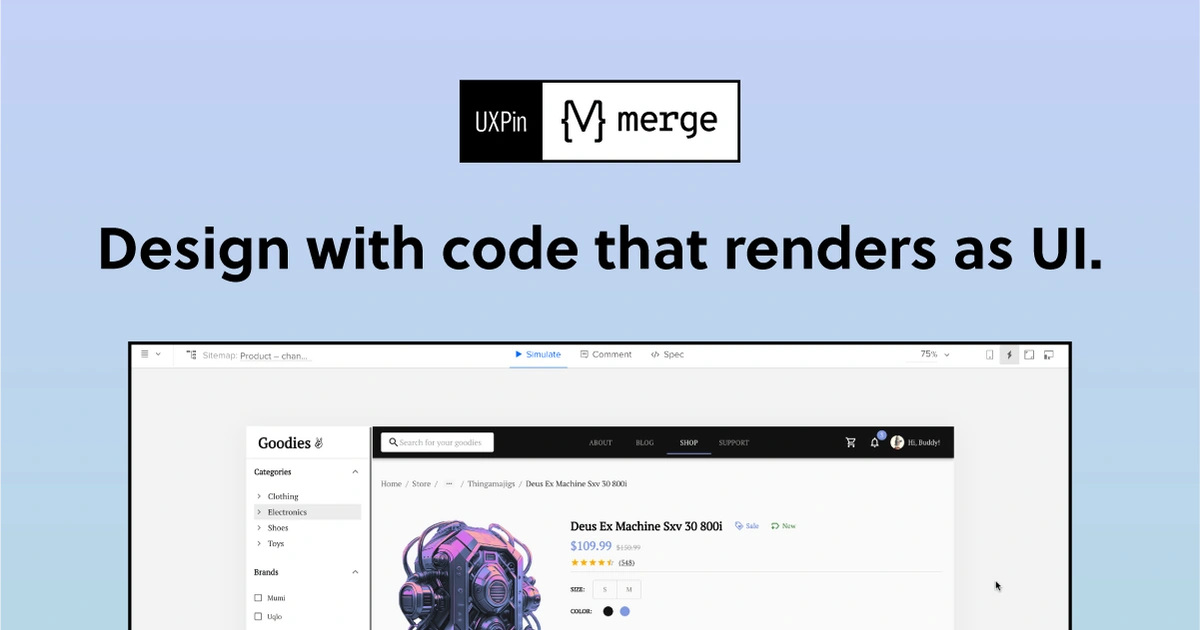
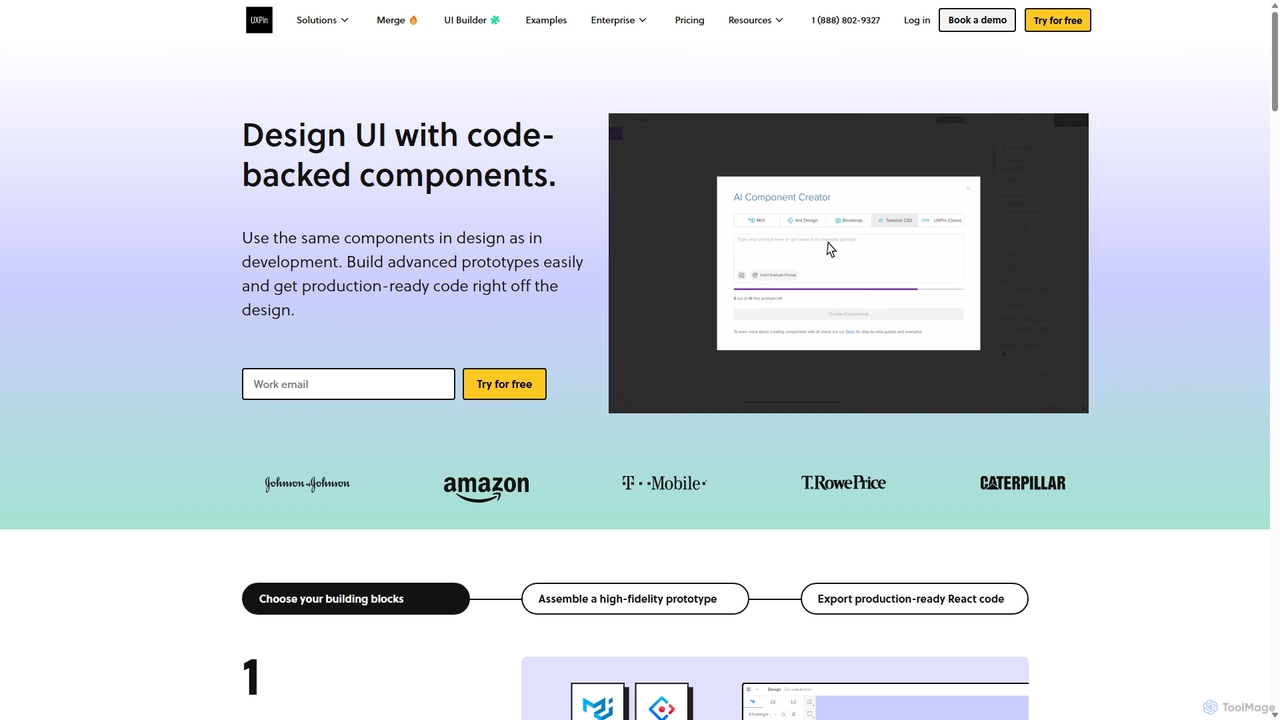
UXPin is a code-based design and prototyping tool that bridges the gap between design and engineering. It enables teams to create high-fidelity, interactive prototypes using real code components, ensuring consistency and dramatically speeding up the product development lifecycle from concept to launch.
Product overview
Arkhet Product overview
Arkhet is an AI-first prototyping platform designed for product teams, enabling visual thinkers to generate interactive UI prototypes and user flows rapidly. It transforms wireframes and contextual annotations into high-fidelity designs, integrating design systems and real-time collaboration.
UXPin Product overview
UXPin is a code-based design and prototyping tool that bridges the gap between design and engineering. It enables teams to create high-fidelity, interactive prototypes using real code components, ensuring consistency and dramatically speeding up the product development lifecycle from concept to launch.
Detailed feature comparison
| Feature | Arkhet | UXPin |
|---|---|---|
| Primary category | Generative Design | Prototyping |
| Added | 2025-12-10 | 2025-09-14 |
| Pricing | Freemium | Freemium |
| Official website | www.arkhet.com | uxpin.com |
| Product type | Website | Website |
| Performance data | ||
| User rating | Not verified | Not verified |
| Comments | 0 | 0 |
| Monthly visits | 816 | 225.3K |
| Monthly growth | -60.2% | 12.1% |
| Favorites | 104 | 130 |
| Details | View details | View details |
Arkhet vs UXPin monthly traffic
Compare Arkhet and UXPin by monthly reach, traffic trend, visit depth, top regions, and acquisition sources.
How to interpret the traffic data
In the Arkhet vs UXPin monthly traffic comparison, Arkhet currently shows 816 visits and UXPin shows 225.3K; UXPin has about 276.2 times the visible traffic of Arkhet, an absolute difference of about 224.5K visits. This reflects visible reach, not feature quality or paid users.
Both tools provide verified traffic details, so monthly trends, visit depth, regions, and acquisition sources can be compared on the same basis.
Arkhet monthly traffic:
Latest traffic
Monthly traffic trend
- 2026/1: 0 Monthly visits
- 2026/2: 438 Monthly visits
- 2026/3: 1.3K Monthly visits
- 2026/4: 2K Monthly visits
- 2026/5: 816 Monthly visits
Top regions
Top 5 countries/regions
| Country/region | Percentage | Traffic |
|---|---|---|
| ๐จ๐ฆCanada | 100% | 816 |
UXPin monthly traffic:
Latest traffic
Monthly traffic trend
- 2025/9: 295.1K Monthly visits
- 2026/1: 319.7K Monthly visits
- 2026/2: 250.5K Monthly visits
- 2026/3: 235.7K Monthly visits
- 2026/4: 201K Monthly visits
- 2026/5: 225.3K Monthly visits
Top regions
Top 5 countries/regions
| Country/region | Percentage | Traffic |
|---|---|---|
| ๐บ๐ธUnited States | 32.31% | 72.8K |
| ๐ฎ๐ณIndia | 23.87% | 53.8K |
| ๐ง๐ทBrazil | 18.29% | 41.2K |
| ๐ฏ๐ตJapan | 14.1% | 31.8K |
| ๐ฉ๐ชGermany | 11.43% | 25.8K |
Traffic sources
| Source type | Percentage | Traffic |
|---|---|---|
| Direct | 72.64% | 163.7K |
| Referral | 25.14% | 56.7K |
| 2.22% | 5K |
Search keywords
Usage comparison
Compare the core capabilities of Arkhet and UXPin
Arkhet Core features
UXPin Core features
Use cases
Arkhet Use cases
UXPin Use cases
Best suited roles
Arkhet Best suited roles
UXPin Best suited roles
Arkhet vs UXPin๏ผIn-depth comparison and selection guidance
First decide whether the products solve the same kind of need
This in-depth Arkhet vs UXPin comparison uses only the product records, taxonomy, audience, traffic, and community signals available on this page. Arkhet is primarily listed under โGenerative Designโ, while UXPin is primarily listed under โPrototypingโ, so the first decision is whether your actual task matches their recorded scope.
The structured fields currently show these decision-relevant differences: Primary category (Arkhet: Generative Design; UXPin: Prototyping); Monthly visits (Arkhet: 816; UXPin: 225.3K); Monthly growth (Arkhet: -60.2%; UXPin: 12.1%); Favorites (Arkhet: 104; UXPin: 130); Website (Arkhet: www.arkhet.com; UXPin: uxpin.com). These facts are more useful for selection than brand visibility alone.
What market visibility and monthly traffic mean
In the Arkhet vs UXPin monthly traffic comparison, Arkhet currently shows 816 visits and UXPin shows 225.3K; UXPin has about 276.2 times the visible traffic of Arkhet, an absolute difference of about 224.5K visits. This reflects visible reach, not feature quality or paid users.
Both tools provide verified traffic details, so monthly trends, visit depth, regions, and acquisition sources can be compared on the same basis.
If public market visibility is an important first-pass criterion, investigate UXPin first. The final choice should still follow taxonomy, use case, and a real trial because higher traffic does not prove broader capabilities or better workflow fit.
Product positioning, use cases, and roles
Arkhet and UXPin currently overlap in shared categories: Prototyping; shared tags: interactive prototypes, ui design, and ux design; shared roles: Product Designer, Product Manager, and UX Designer. This can place both on the same shortlist, but it does not prove equal implementation, depth, or cost.
Arkhet's unique categories/tags are Generative Design, Team Workflow, Product Management, AI prototyping, Amazon Bedrock, component library, designers, and design systems; UXPin's are Ui Frameworks, Collaboration, AI component, code-based design, collaboration, design system, developer handoff, and prototyping. These unique fields are the strongest differentiators: validate the product whose recorded scope matches the task instead of following traffic alone.
What ratings, comments, and favorites can tell you
Arkhet has no verified rating, 0 comments, 104 favorites, and 100 likes๏ผUXPin has no verified rating, 0 comments, 130 favorites, and 135 likesใ
Neither product has enough rating or comment samples for a credible reputation ranking.
Selection guidance by actual need
When to evaluate Arkhet first
Put Arkhet on the priority trial list when the task aligns with โGenerative Designโ and especially Generative Design, Team Workflow, Product Management, AI prototyping, Amazon Bedrock, and component library, or the users include Agency, Design Studio, Founder, and Software Engineer. This follows recorded positioning and does not imply unlisted capabilities are absent.
Arkhet also currently records: pricing is freemium, product type is website, 816 verified monthly visits, no verified user rating. Verify any hard requirement around price, platform, or reach before trial, and do not let sparse review data substitute for testing.
When to evaluate UXPin first
Put UXPin on the priority trial list when the task aligns with โPrototypingโ and especially Ui Frameworks, Collaboration, AI component, code-based design, collaboration, and design system, or the users include Design Leader, Front-end Developer, Software Developer, and UI Designer. This follows recorded positioning and does not imply unlisted capabilities are absent.
UXPin also currently records: pricing is freemium, product type is website, 225.3K verified monthly visits, no verified user rating. Verify any hard requirement around price, platform, or reach before trial, and do not let sparse review data substitute for testing.
How to validate the recommendation before deciding
The available data describes positioning, public visibility, and community signals, but it cannot prove output quality, speed, integration effort, privacy, or long-term cost in your workflow. Before deciding, run the same representative tasks in Arkhet and UXPin, then record completion time, accuracy, manual corrections, and the real paid threshold. A like-for-like trial turns this comparison into a defensible adoption decision.
Comparison FAQ
How should I choose between Arkhet and UXPin?
Where does this comparison data come from?
What do unknown fields mean?
Related AI tools

Magic Patterns
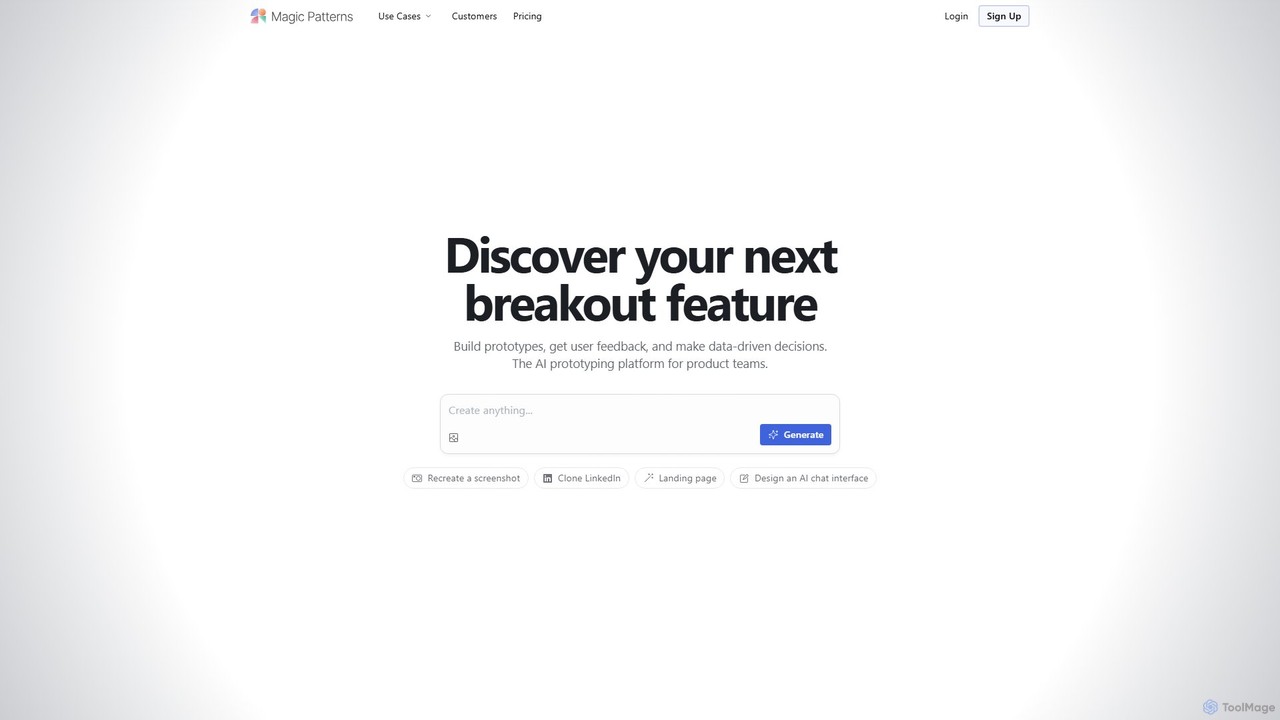
Magic Patterns is an AI-powered prototyping platform for product teams, designers, and developers. It accelerates UI creation by generating interactive prototypes and production-ready code (React, Tailwind CSS) from text prompts, screenshots, or existing websites. It helps teams iterate faster, gather user feedback, and make data-driven decisions.
Prototyping
Ideator
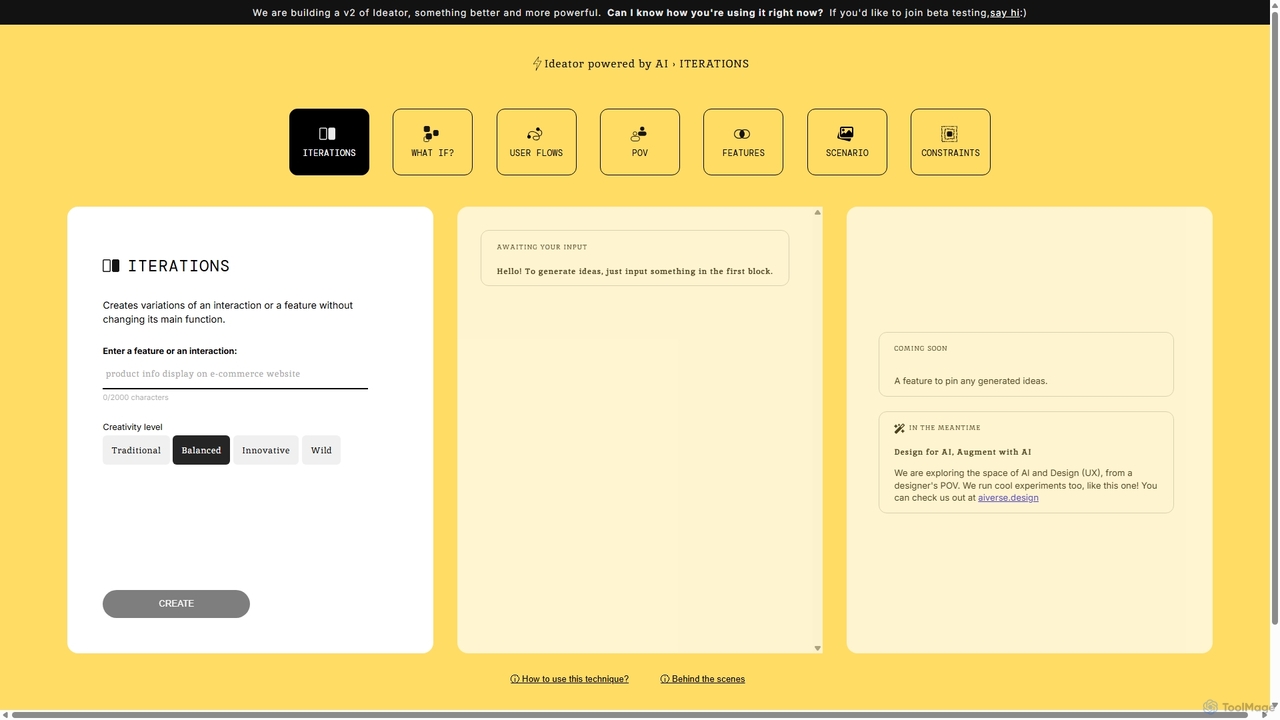
Ideator is an AI-powered brainstorming tool designed for UX/UI designers and innovators. It generates creative variations of a user-inputted feature or interaction, helping to overcome creative blocks and accelerate the ideation process. Users can adjust the creativity level from traditional to wild to explore a wide spectrum of design possibilities.
Idea Generation
MasterGo
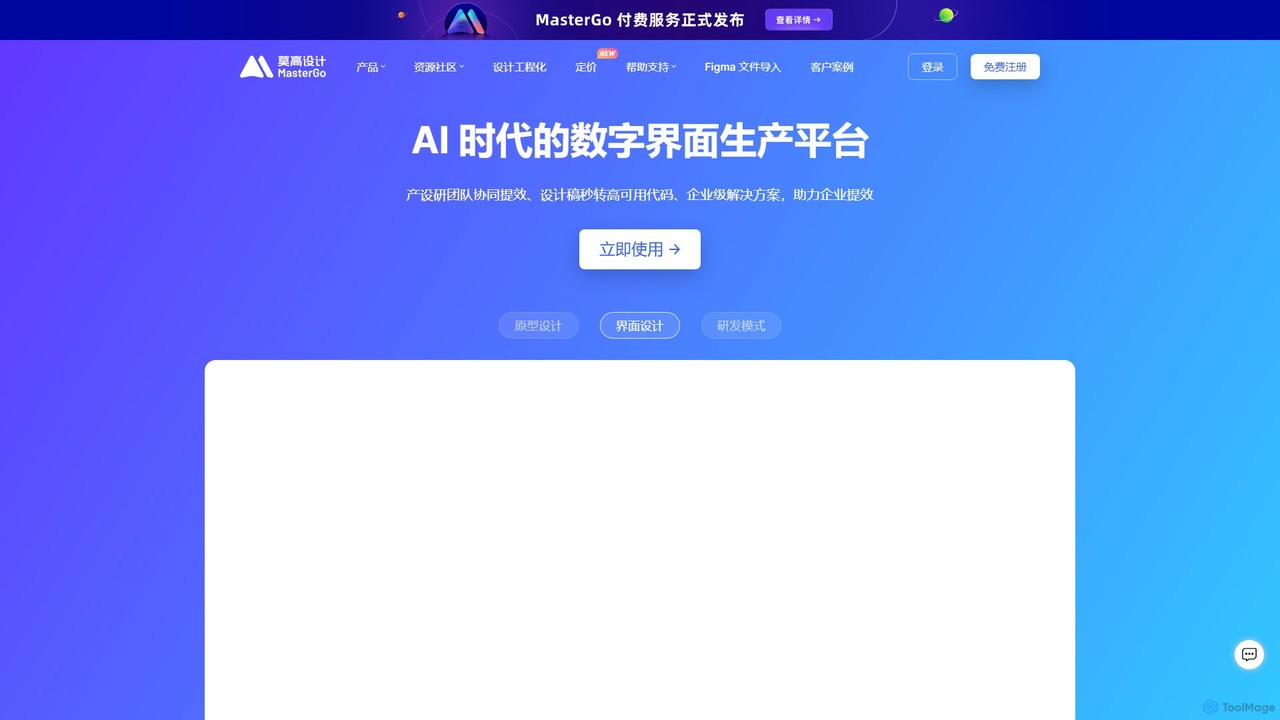
MasterGo is an AI-powered, all-in-one collaborative UI/UX design platform. It streamlines the entire workflow from prototyping and interface design to developer handoff. Built for real-time collaboration, it helps teams create, iterate, and manage digital products efficiently with features like design systems, AI-assisted generation, and enterprise-level security.
Ui Ux
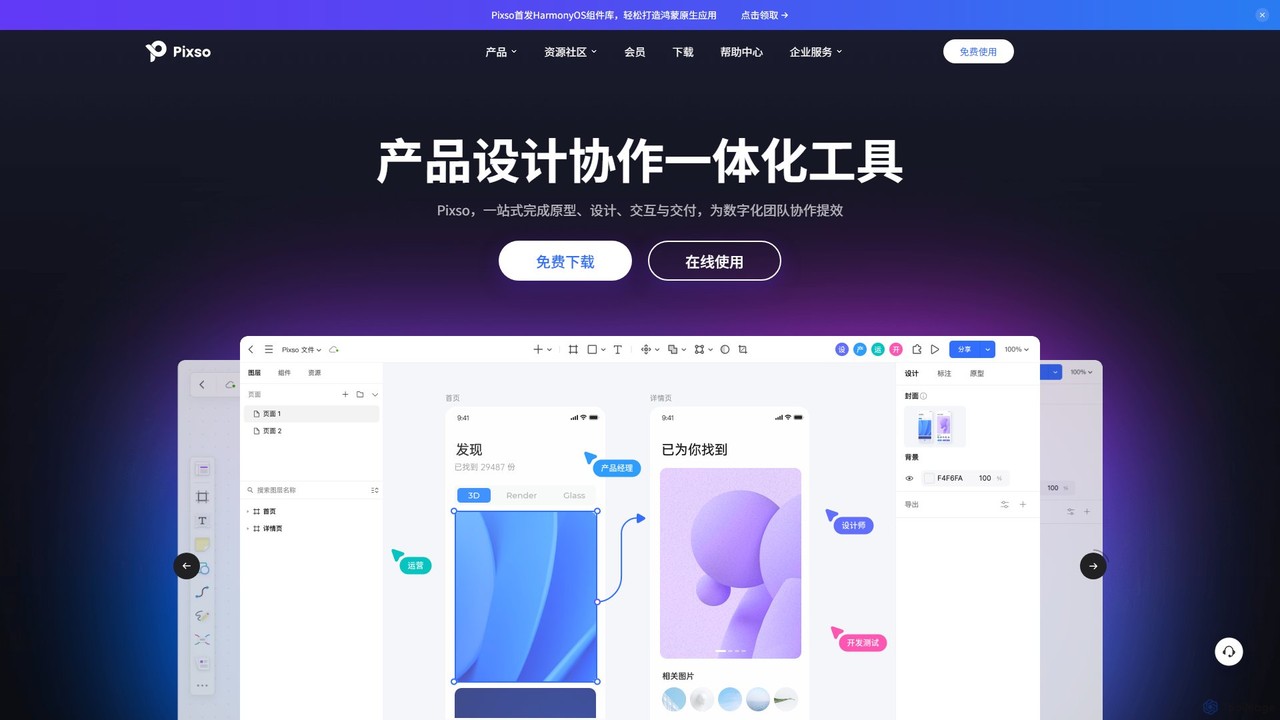
Pixso
Pixso is an all-in-one, cloud-based collaborative product design platform for UI/UX design, prototyping, and developer handoff. It integrates design tools, interactive prototyping, and an online whiteboard, positioning itself as a powerful, real-time alternative to Figma and Sketch, built to enhance team efficiency.
Ui Ux
Creatie
Creatie is an intuitive, AI-powered product design and collaboration platform. It enables teams to move from wireframes to high-fidelity mockups, interactive prototypes, and developer handoff seamlessly. Featuring AI tools like a mockup wizard, icon generator, and image enhancer, it's designed to accelerate the UI/UX workflow for designers, product managers, and developers.
Icon Generation
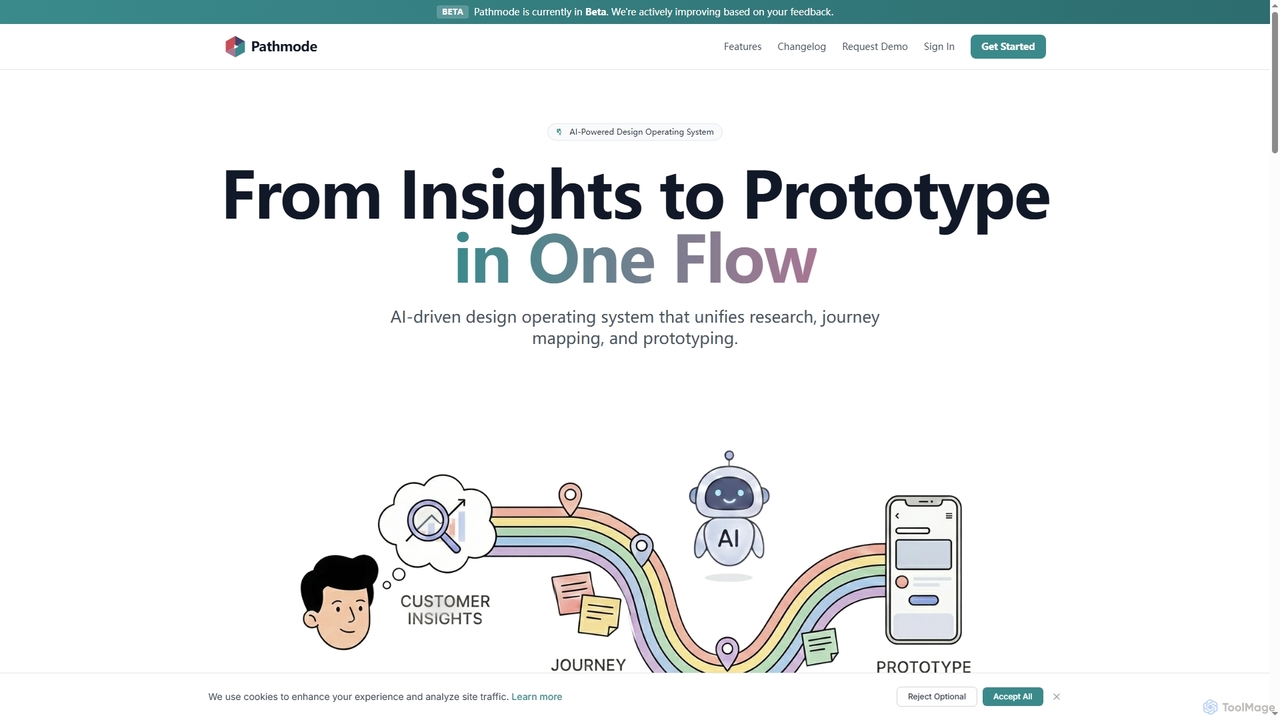
Pathmode
Pathmode is an AI-powered design operating system that unifies user research, automated journey mapping, and prototype specification into a single, seamless workflow. It transforms raw insights into actionable UI design specifications, eliminating manual handoffs and driving efficient product execution.
Design Assistant
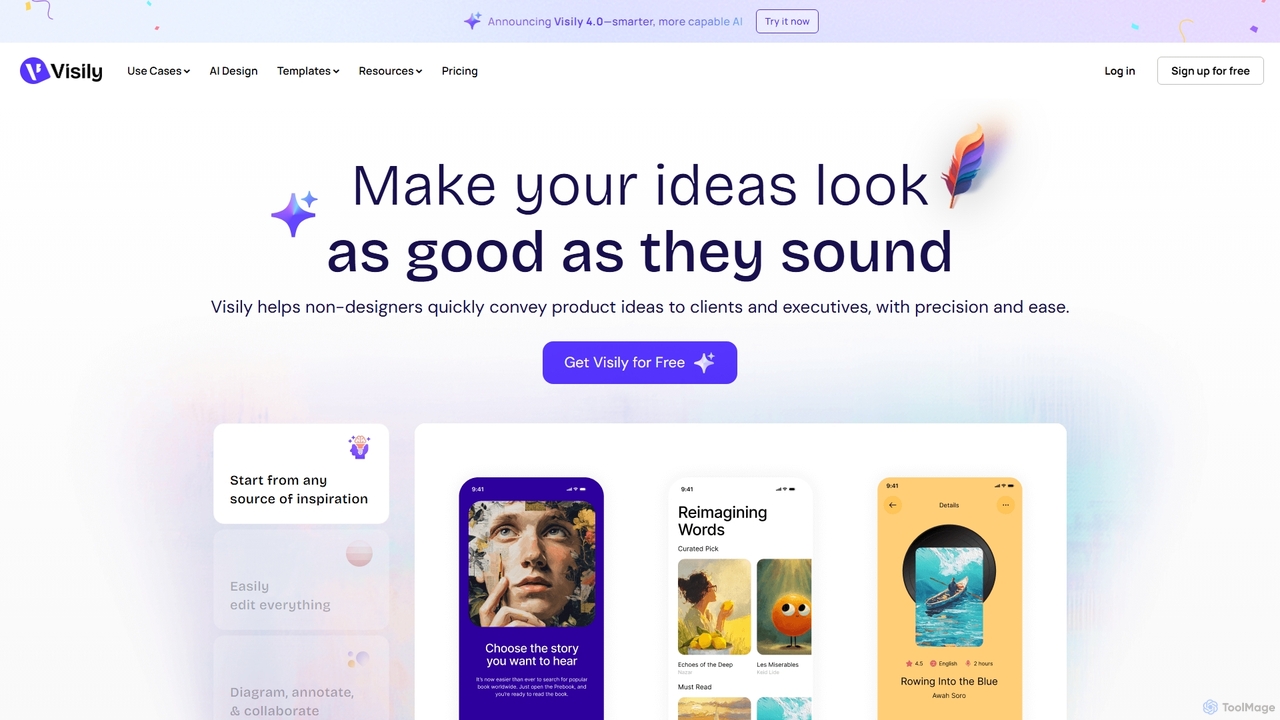
Visily
Visily is an AI-powered UI design and prototyping tool specifically created for non-designers. It enables teams to quickly transform ideas, screenshots, or text prompts into high-fidelity wireframes and mockups. With its intuitive interface and powerful collaboration features, Visily streamlines the process of visualizing product concepts and gathering feedback, bridging the gap between ideas and execution without a steep learning curve.
Ui Ux
AIDesigner
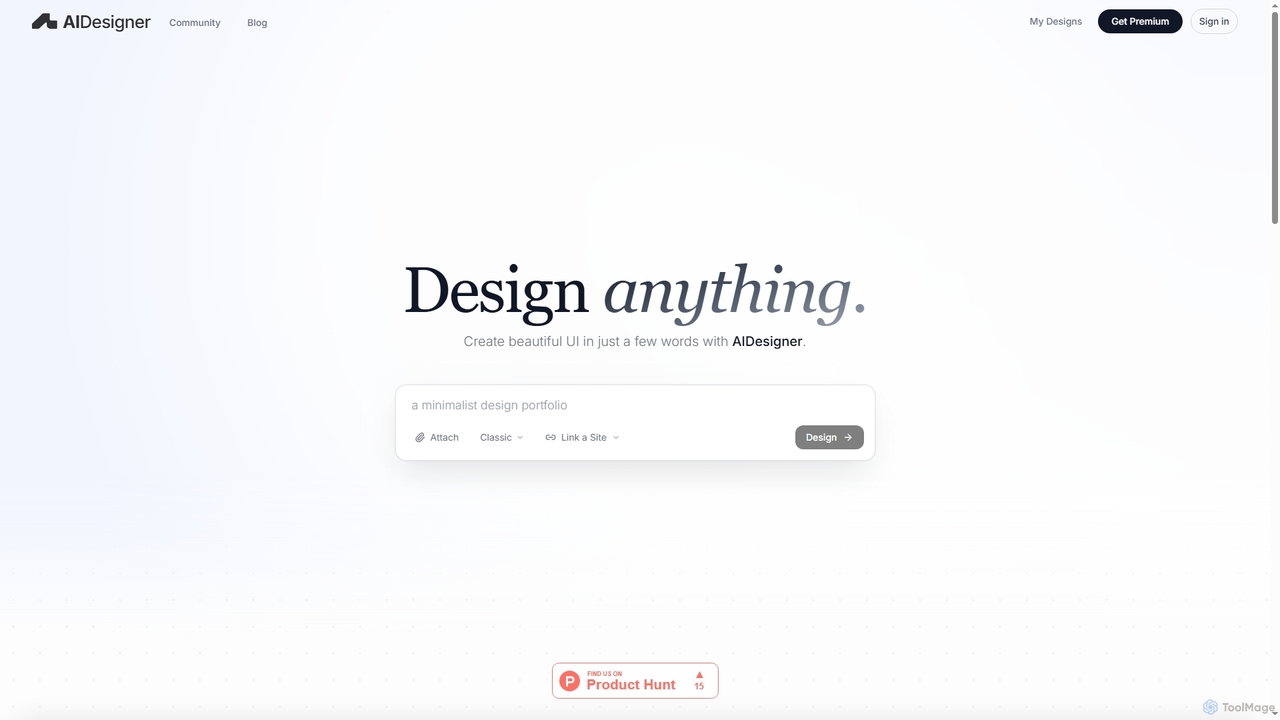
AIDesigner is an advanced AI-powered platform that transforms textual descriptions into stunning UX/UI designs. It offers a unique approach to design generation, enabling users to create beautiful websites, mobile apps, and portfolios without the generic 'AI look.' With a rich library of production-ready templates and powerful customization options, AIDesigner empowers creators to rapidly prototype and launch visually distinctive digital experiences.
User Experience
Figma
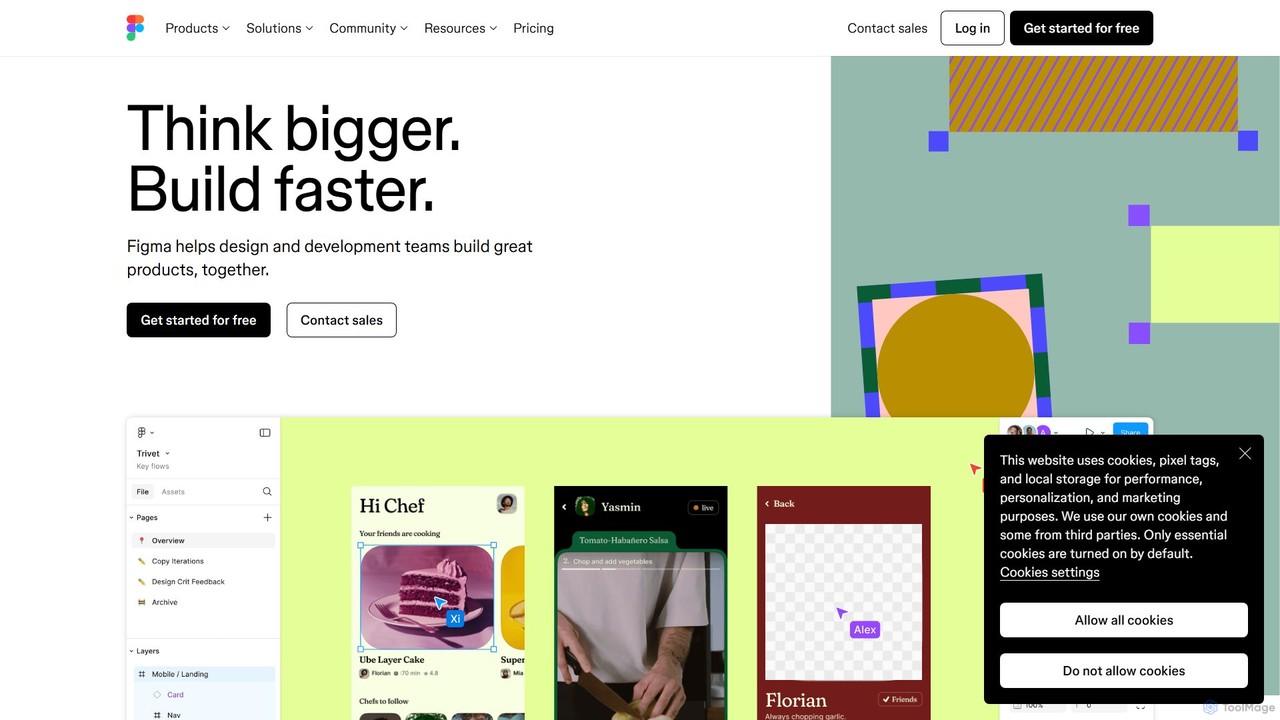
Figma is a leading collaborative interface design platform that allows teams to design, prototype, and gather feedback in one place. Powered by AI, it accelerates workflows from brainstorming in FigJam to creating high-fidelity designs and handing off to developers with Dev Mode, unifying the entire product development process.
Ui Ux Design
Relume
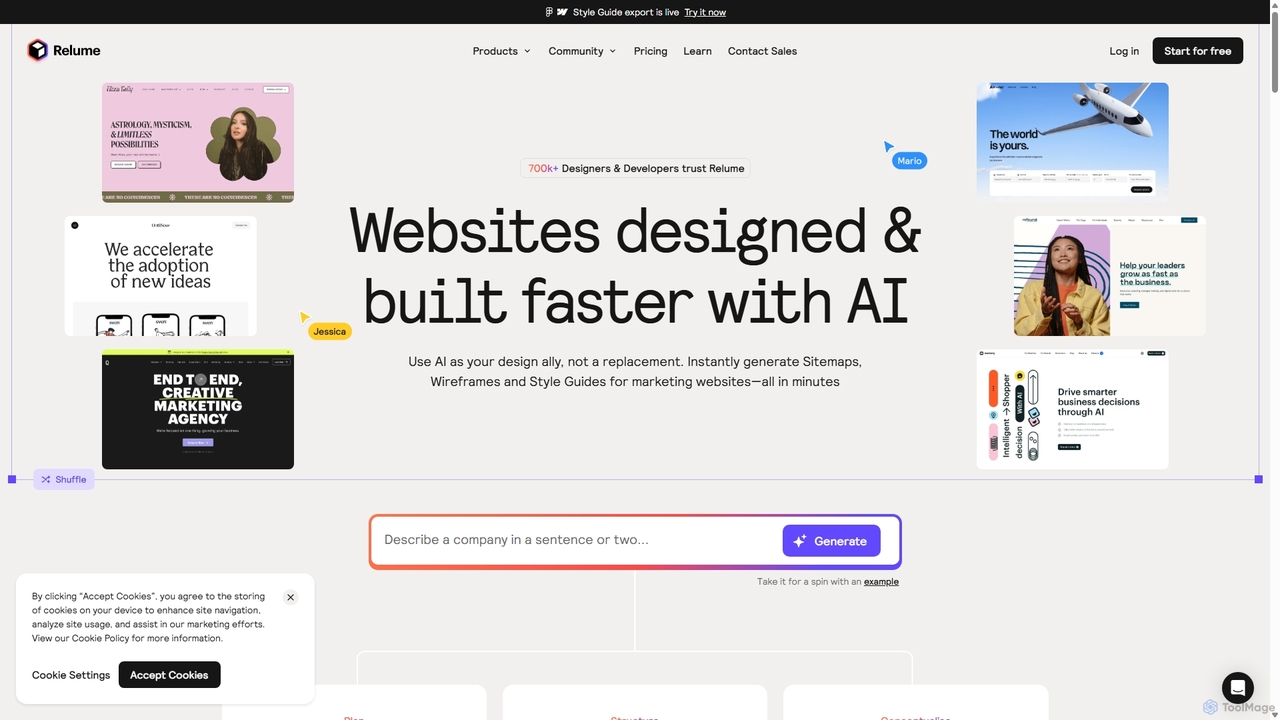
Relume is an AI-powered website builder designed to accelerate the web design and development process. It enables users to generate sitemaps and wireframes from simple text prompts, create comprehensive style guides, and utilize a vast library of over 1,000 components for Figma, Webflow, and React. Relume streamlines the entire workflow from initial concept to final export, empowering designers, developers, and agencies to build high-quality websites faster.
Web Design
Knapsack
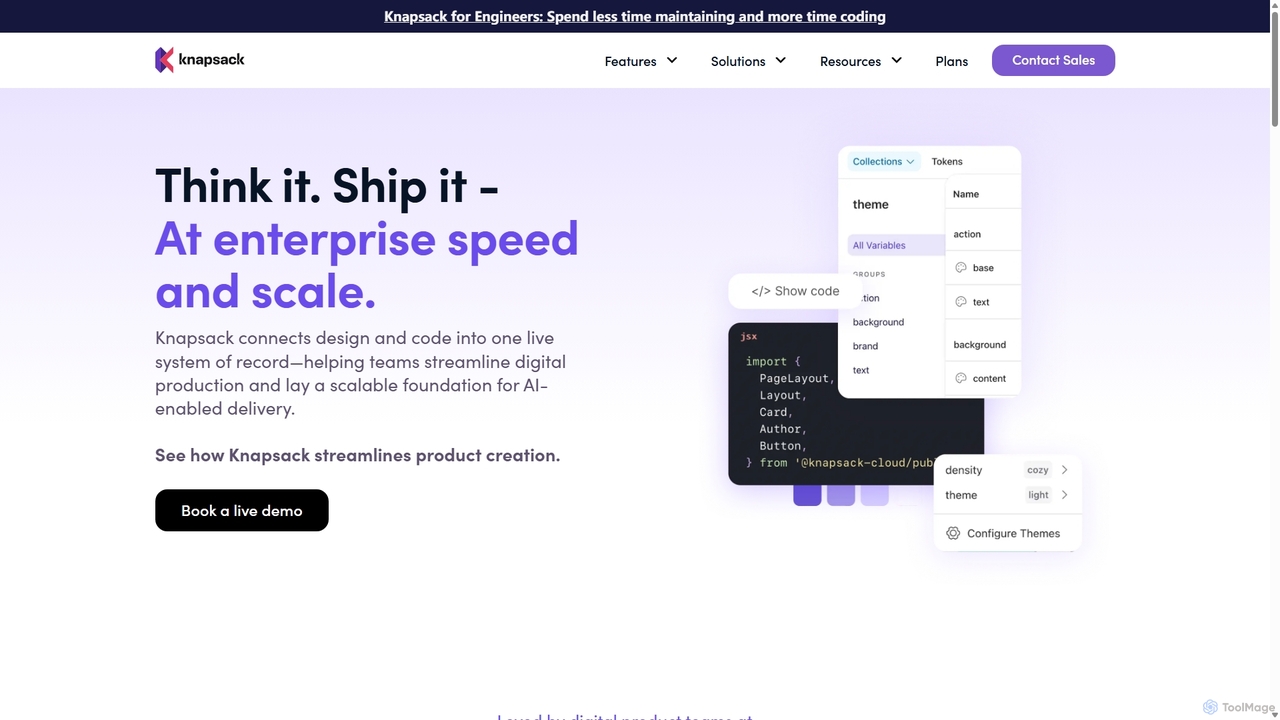
Knapsack is an enterprise-grade digital production platform that connects design, code, and documentation into a unified, AI-ready system of record. It streamlines workflows, accelerates product delivery, and ensures brand consistency at scale by creating a single source of truth for reusable components and design tokens.
Prototyping
Atheros
Atheros is an online educational platform designed to equip tech professionals with future-ready, AI-driven skills in design and development. Through its 'Atheros Pass' subscription, it provides unlimited access to expert-led video courses, ebooks, and hands-on projects. The curriculum focuses on practical skills like UX/UI design, frontend development (HTML, CSS, GraphQL), and no-code web design, preparing students for the AI era with community and mentor support.
Ux & Ui
Figr
Figr is an AI-powered design suite that accelerates the product design workflow. It specializes in creating production-grade design systems directly within Figma, automating the generation of design tokens, components, and documentation. It's built for product thinkers, designers, and teams to transform research and context into clear, consistent, and scalable user interfaces with remarkable speed.
Ui Ux
Motiff
Motiff is an AI-powered professional interface design tool that accelerates the entire workflow. It enables users to generate UIs from text and images, iterate on designs with AI assistance, and collaborate in real-time. Combining robust design tools, prototyping, and a developer-friendly handoff mode, Motiff serves as a comprehensive, high-performance platform for modern product teams.
Ui Ux
UX Design GPT
UX Design GPT is a personal AI assistant for designers, built on the Design Thinking framework. Powered by OpenAI and enriched with over 6 years of the creator's real-world expertise, it guides users through research, ideation, prototyping, and testing to streamline the entire UX design workflow.
Chatbot